Vowel Diphthongs Worksheets for Ages 3-9 - Page 2
27 filtered results
-
From - To
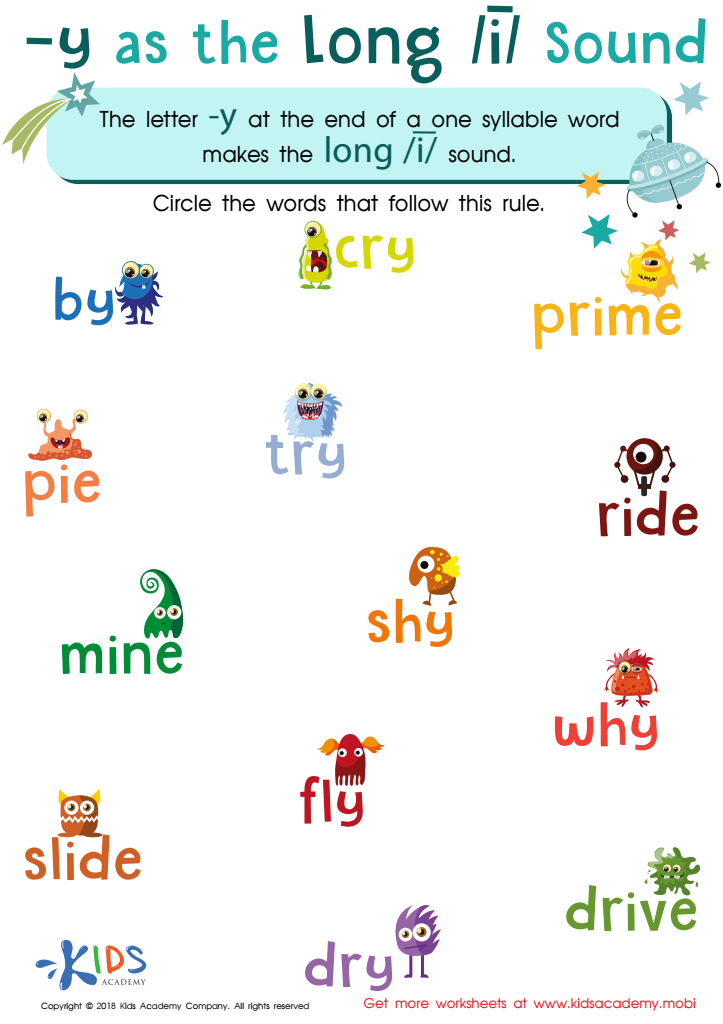
Reading: Y as Long I Worksheet
 Assign to My Students
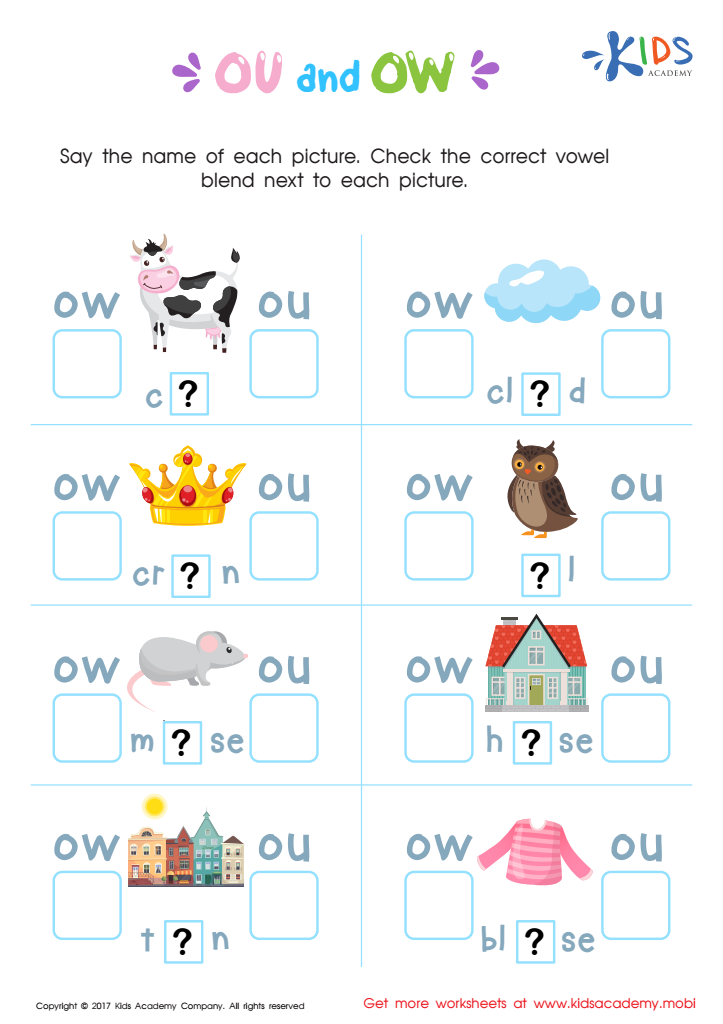
OU and OW Words Worksheet
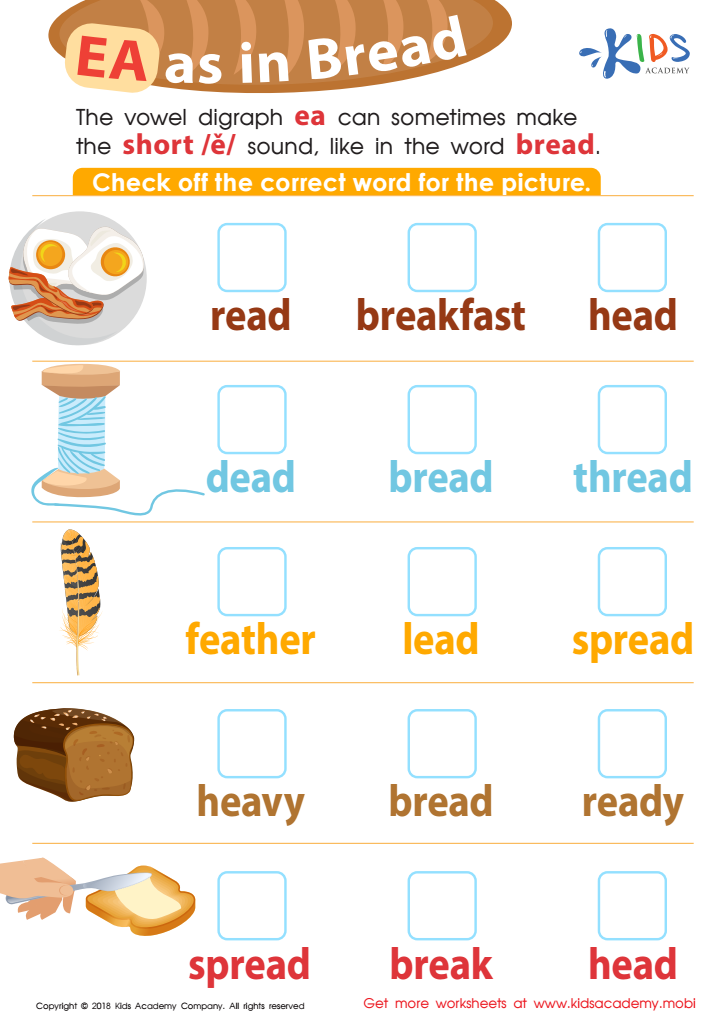
Reading: EA as in Bread Worksheet


Vowel diphthongs are crucial for early literacy development, especially for children aged 3-9. Understanding diphthongs, which are complex vowel sounds formed by the glide from one vowel to another within a single syllable (such as the "oy" in "boy" or the "ow" in "cow"), plays a significant role in reading and pronunciation.
Parents and teachers should care about vowel diphthongs because they enhance children's phonemic awareness, a foundational skill necessary for fluent reading and spelling. By recognizing and practicing these vowel combinations, children can improve their decoding skills and become more confident readers. Early exposure to diphthongs also aids in preventing reading difficulties as children progress to more advanced materials.
Additionally, mastering diphthongs enriches a child's spoken vocabulary, enabling them to articulate a broader range of words and concepts, which strengthens language comprehension and communication skills. Engaging in activities that focus on diphthongs—like rhymes, songs, and games—can make learning enjoyable and interactive, fostering a love for language from a young age. In sum, prioritizing vowel diphthongs in early education equips children with essential tools for lifelong literacy and language mastery.