2D Shapes Worksheets for Ages 3-9 - Page 4
75 filtered results
-
From - To
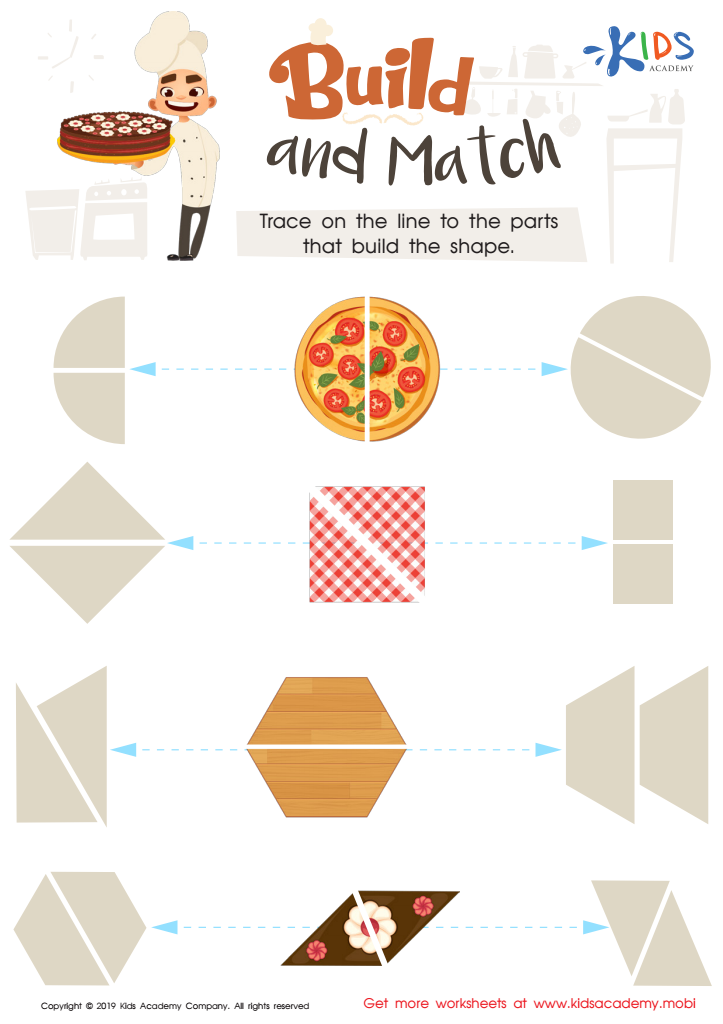
Build and Match Worksheet
 Assign to My Students











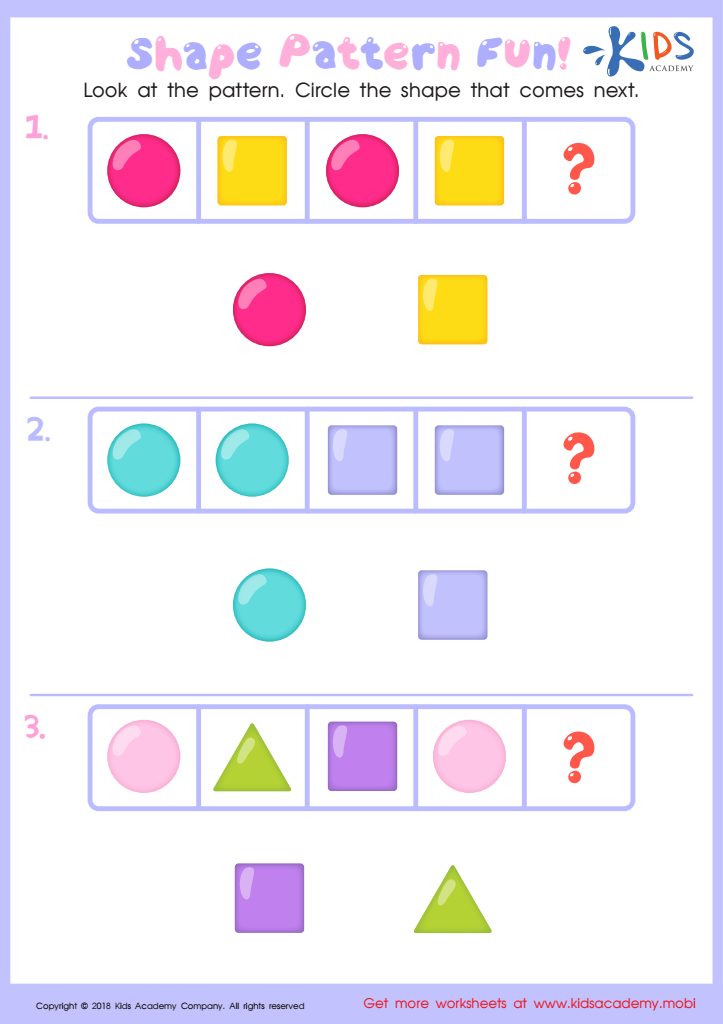
Shape Pattern Fun Worksheet
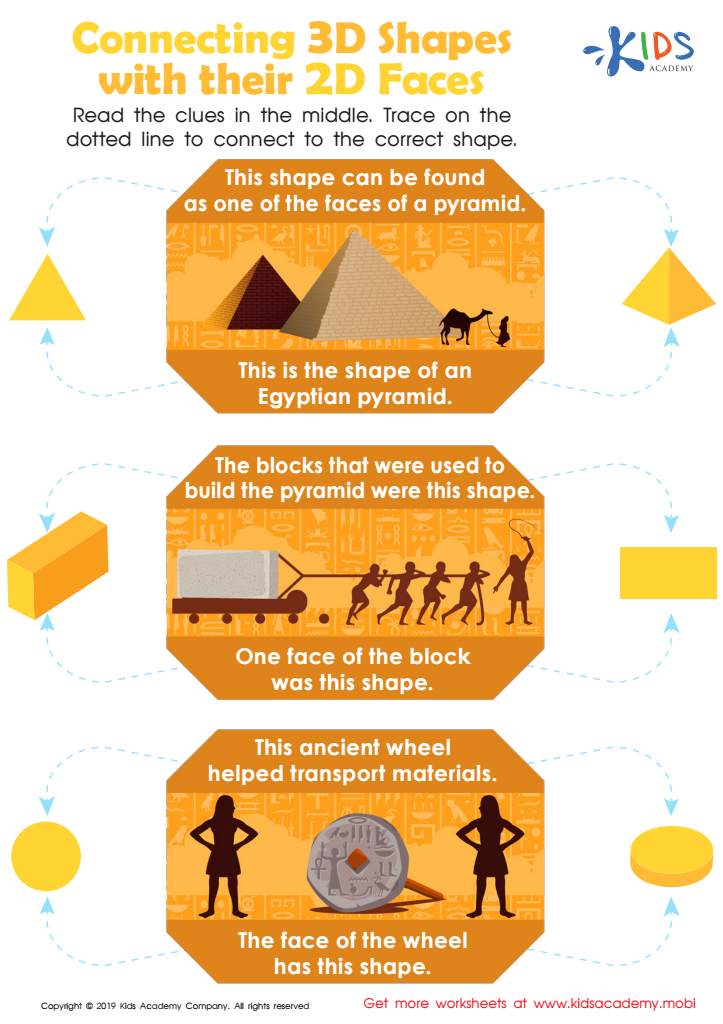
Connecting 3D Shapes with Their 2d Faces Worksheet








Understanding 2D shapes is foundational for young children's cognitive development and everyday life skills. For children aged 3-9, learning about shapes helps to enhance their spatial awareness, critical thinking, and problem-solving abilities. Recognizing shapes lays the groundwork for more complex mathematical concepts, such as geometry, which they will encounter later in their education.
Parents and teachers should prioritize shape recognition as it directly impacts children’s ability to perceive and navigate the world around them. Shapes are ubiquitous—found in buildings, art, nature, and everyday objects—so being able to identify them strengthens observational skills. Additionally, introducing 2D shapes through fun activities, like drawing or engaging with educational games, makes learning enjoyable and interactive, fostering a love for learning.
Moreover, discussions around shapes can spark conversations about sorting, categorizing, and combining shapes, further enhancing cognitive growth. By caring about 2D shapes, parents and teachers equip children with important skills that not only aid academic achievement but also empower them to express creativity and make connections in the real world. Ultimately, a solid grasp of shapes sets the stage for lifelong learning and exploration in mathematics and beyond.








