Time Worksheets for Ages 3-9 - Page 2
25 filtered results
-
From - To
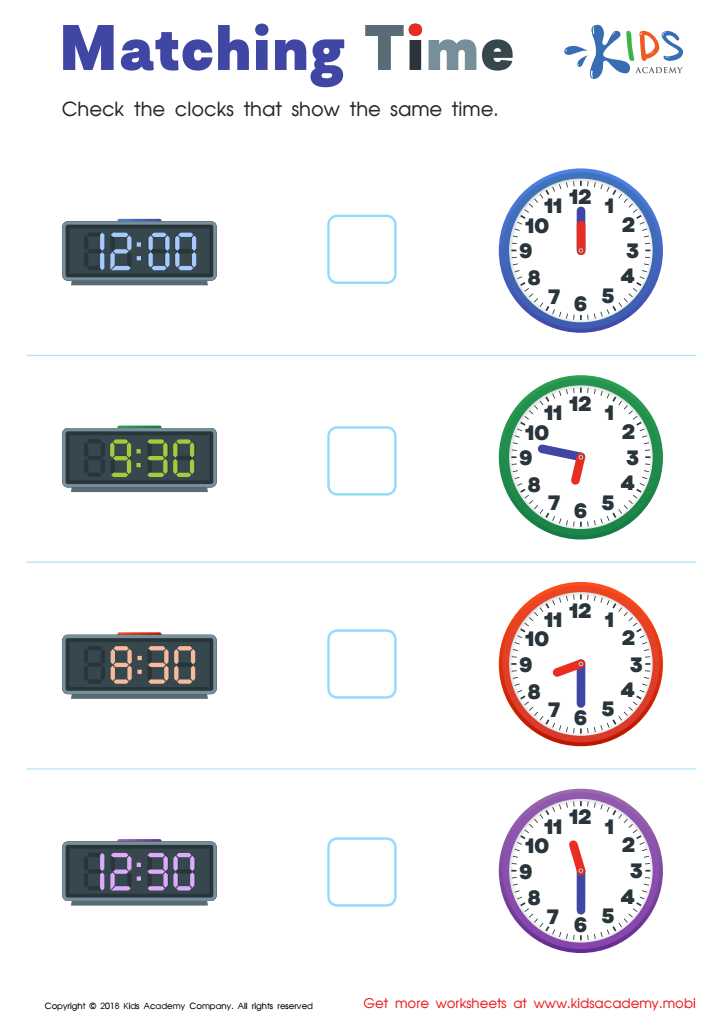
Matching Time Worksheet
 Assign to My Students







Understanding the concept of time is crucial for children aged 3-9 as it lays a foundational element for their cognitive development and daily functioning. For parents and teachers, emphasizing the importance of time management, routines, and schedules enhances a child's ability to comprehend sequences of events and develop organizational skills. At this impressionable age, children are not only learning to tell time but also to grasp the concept of past, present, and future, which is pivotal for their sense of stability and security.
Teaching kids about time fosters their independence and responsibility. When children know what to expect throughout their day—such as meal times, play times, and bedtimes—they develop a sense of order and control, which can reduce anxiety and improve behavior. Clear structures help set expectations, promoting consistency that is easy for young minds to follow.
Moreover, understanding time is key to education, affecting everything from the ability to stay on task in the classroom to completing homework within deadlines. Early time management skills can instill habits that influence long-term academic achievement and success. Therefore, by creating environments that teach and reinforce the concept of time, parents and teachers are investing in children's overall growth and future competence.








