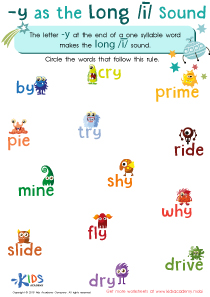
Silent Vowels Worksheets for Ages 4-6
3 filtered results
-
From - To
Unlock the magic of reading with our "Silent Vowels Worksheets for Ages 4-6"! These engaging and interactive worksheets are designed to help young learners discover the concept of silent vowels in a fun and approachable way. Perfectly tailored for children aged 4 to 6, each activity aims to enhance phonemic awareness and improve reading fluency. Through tracing, matching, and colorful illustrations, your child will gain confidence in spotting silent vowels within words. Join the journey to effective early literacy and make learning a delightful adventure with our expertly crafted worksheets. Start today and watch your little reader thrive!
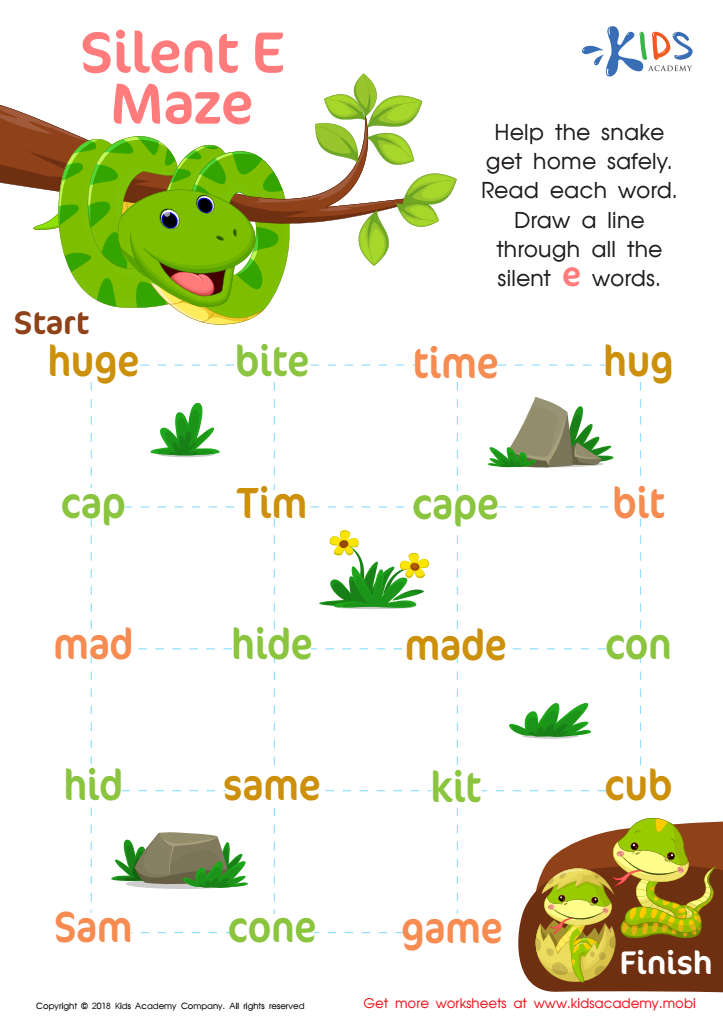
Silent E Maze Worksheet
 Assign to My Students
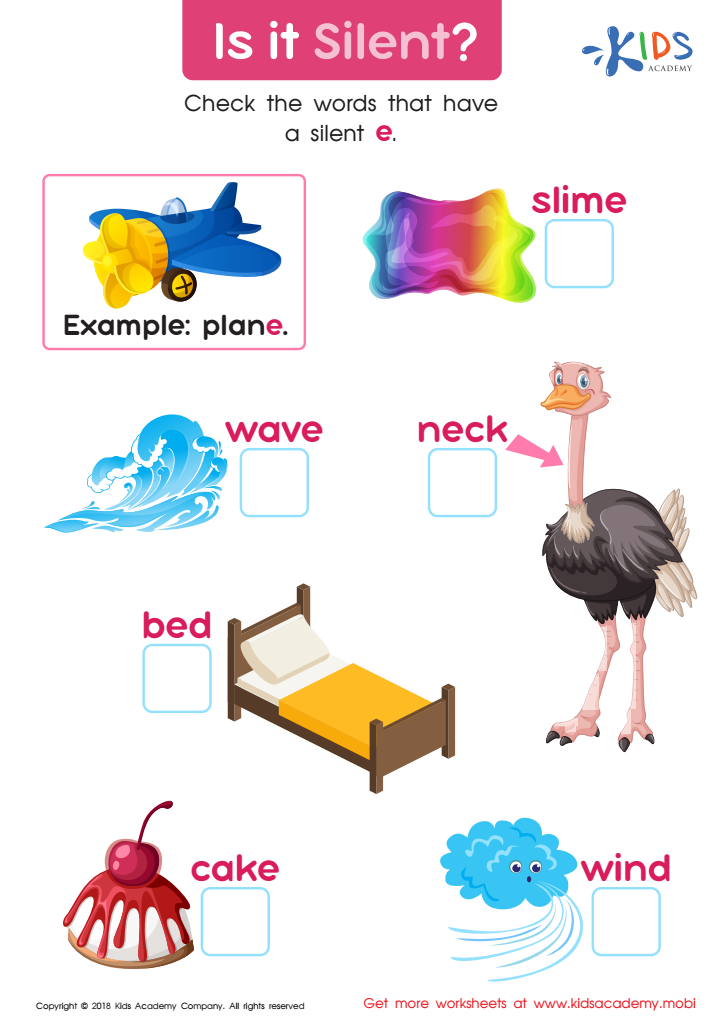
Is It Silent? Worksheet
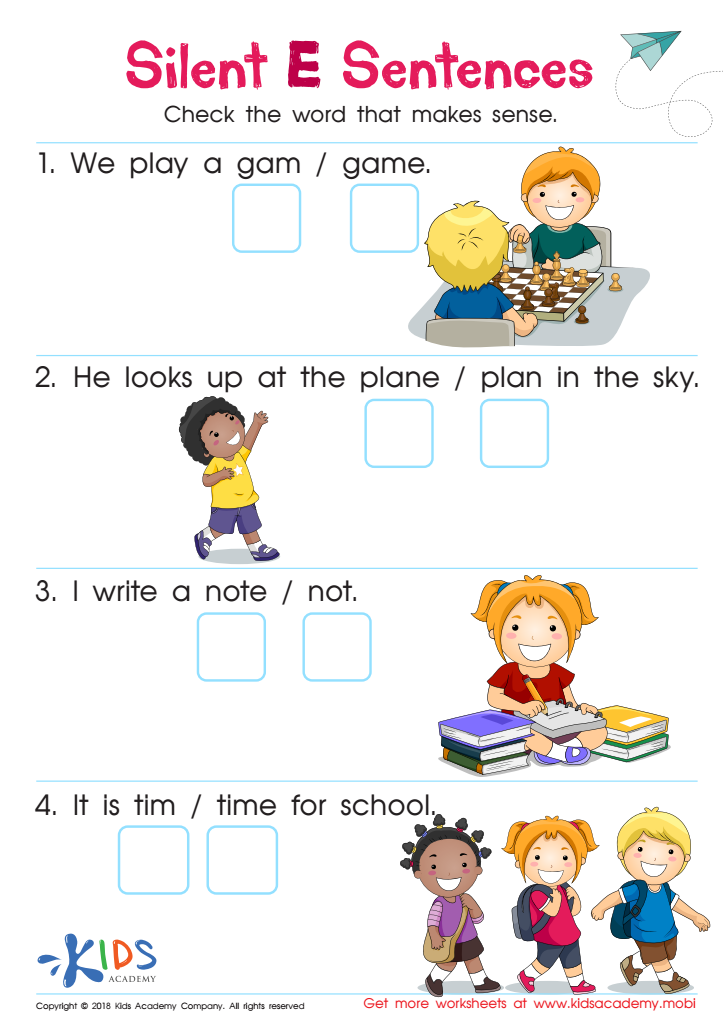
Silent E Sentences Worksheet


Understanding silent vowels is important for young learners because it sets a foundation for their reading and writing skills. For children aged 4-6, absorbing basic language principles aids their literacy development. One aspect of the English language that may initially confuse them is the presence of silent vowels, such as the 'e' in "cake" or the 'a' in "bread." Recognizing these silent vowels helps kids decode words more accurately, promoting smoother reading experiences. This early clarity can prevent common literacy issues.
For parents, being aware of silent vowels can make their support at home more effective. Engaged parents who understand phonics can provide better aid with homework and storytime, reinforcing classroom learning. Meanwhile, teachers familiar with this concept can create specific strategies to address it, incorporating activities and games that highlight silent vowels, thus capturing the child's interest. Early exposure to these principles reduces frustration, increases confidence, and encourages a love of reading. Solid literacy skills are crucial for academic success across all subjects. By prioritizing the understanding of silent vowels, parents and teachers give children valuable tools that support their ongoing education journey.