Chess Worksheets for Ages 4-6 - Page 4
86 filtered results
-
From - To
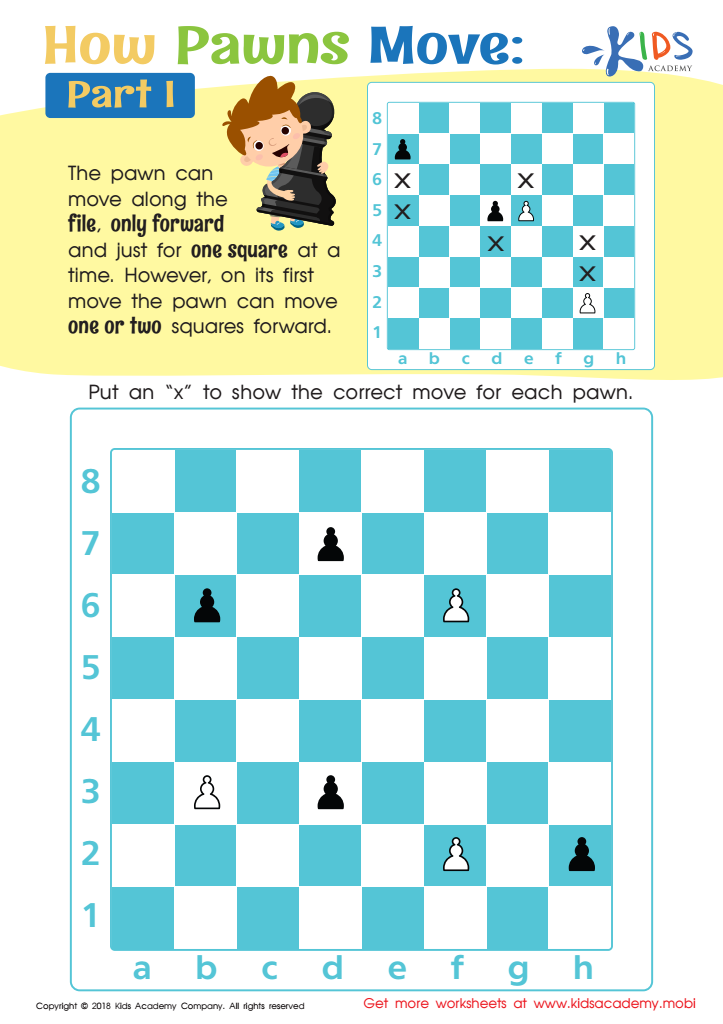
How Pawns Move: Part I Worksheet
 Assign to My Students
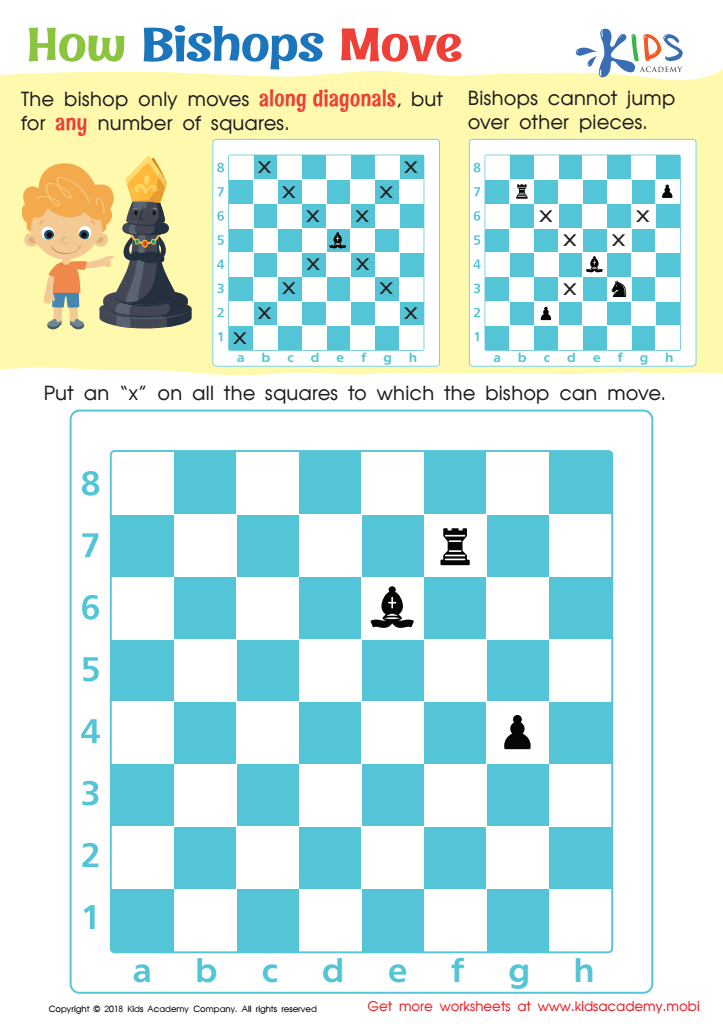
How Bishops Move Worksheet
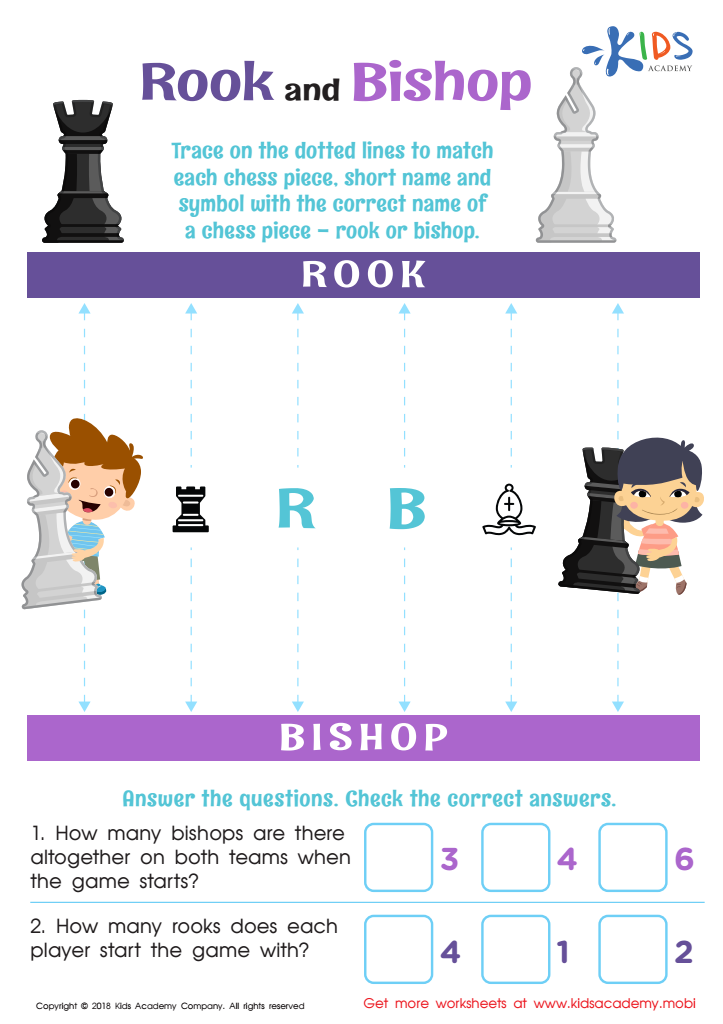
Rook and Bishop Worksheet
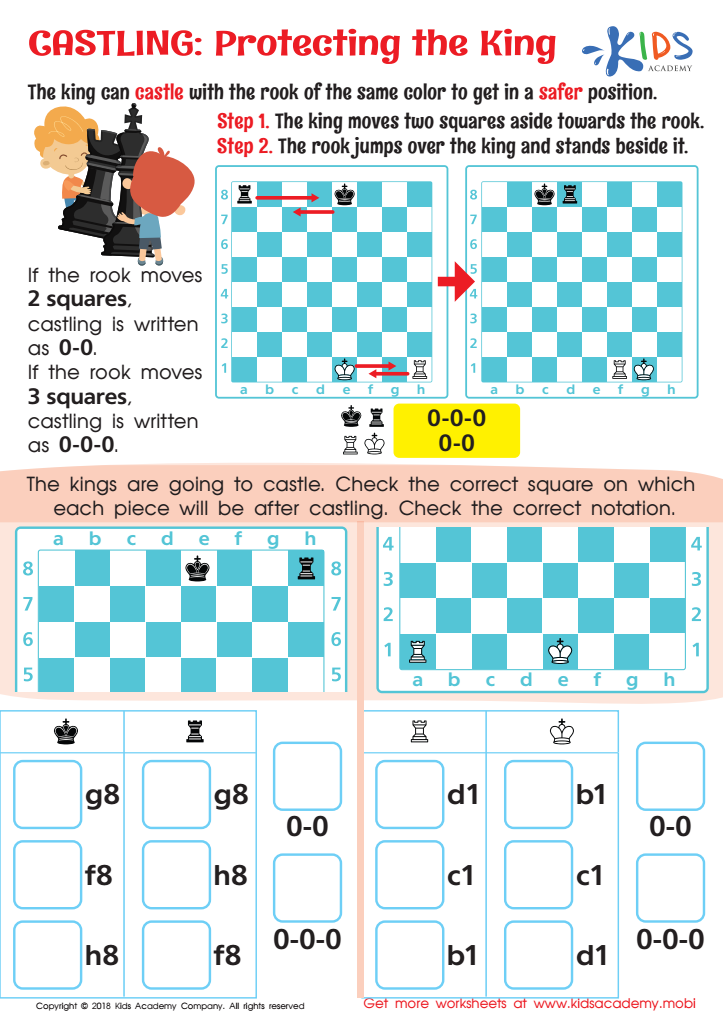
Castling: Protecting the King Worksheet
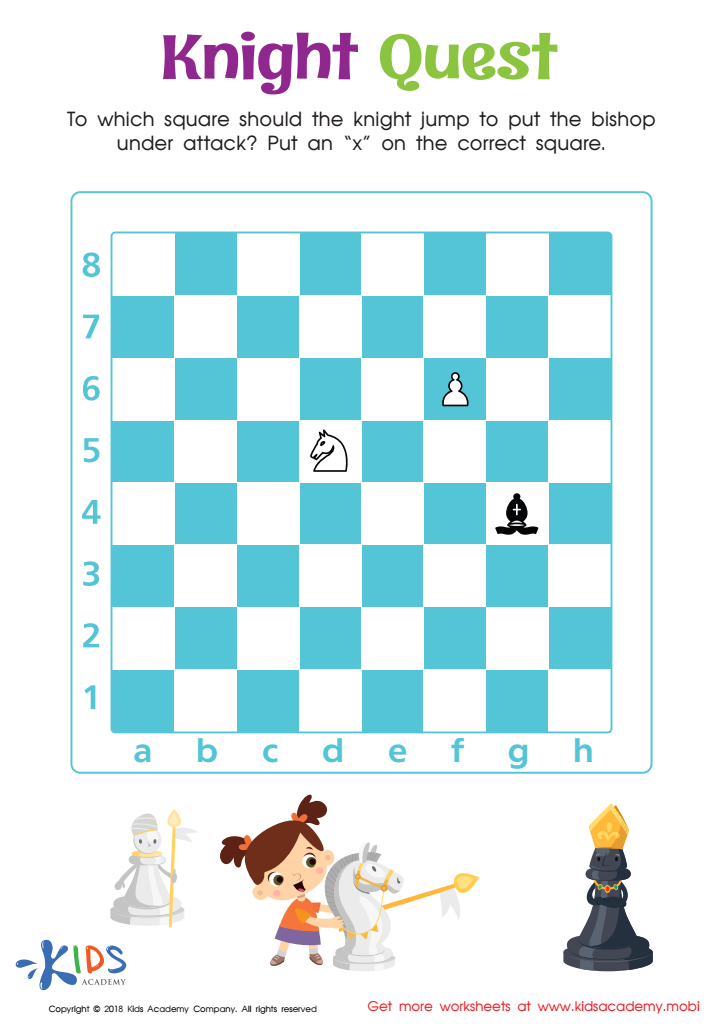
Knight Quest Worksheet
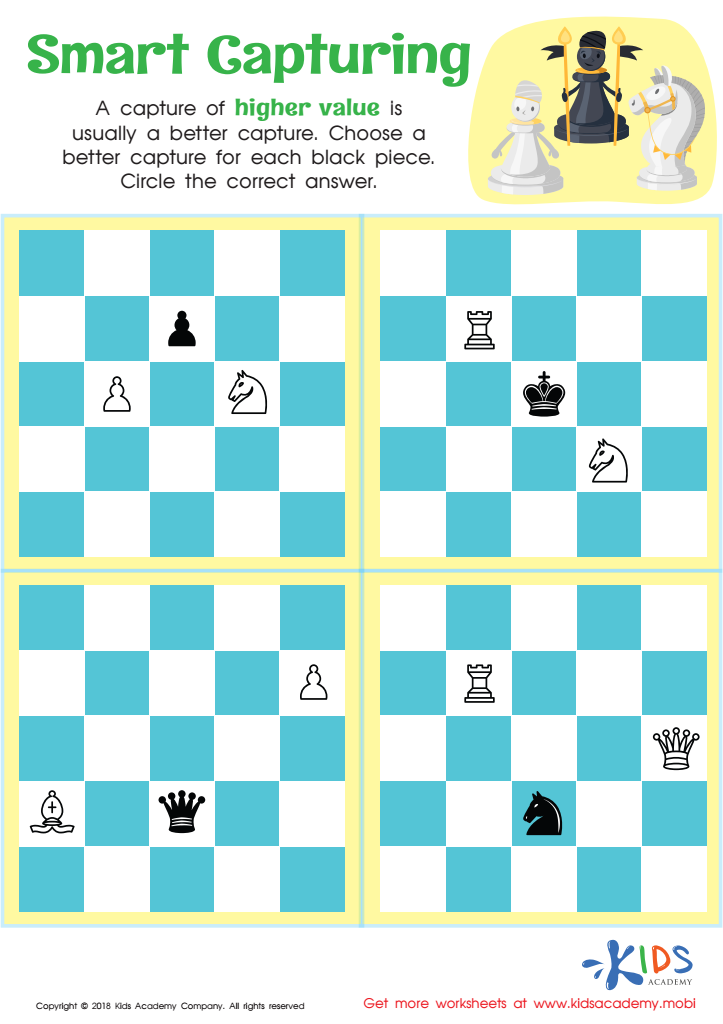
Smart Capturing Worksheet
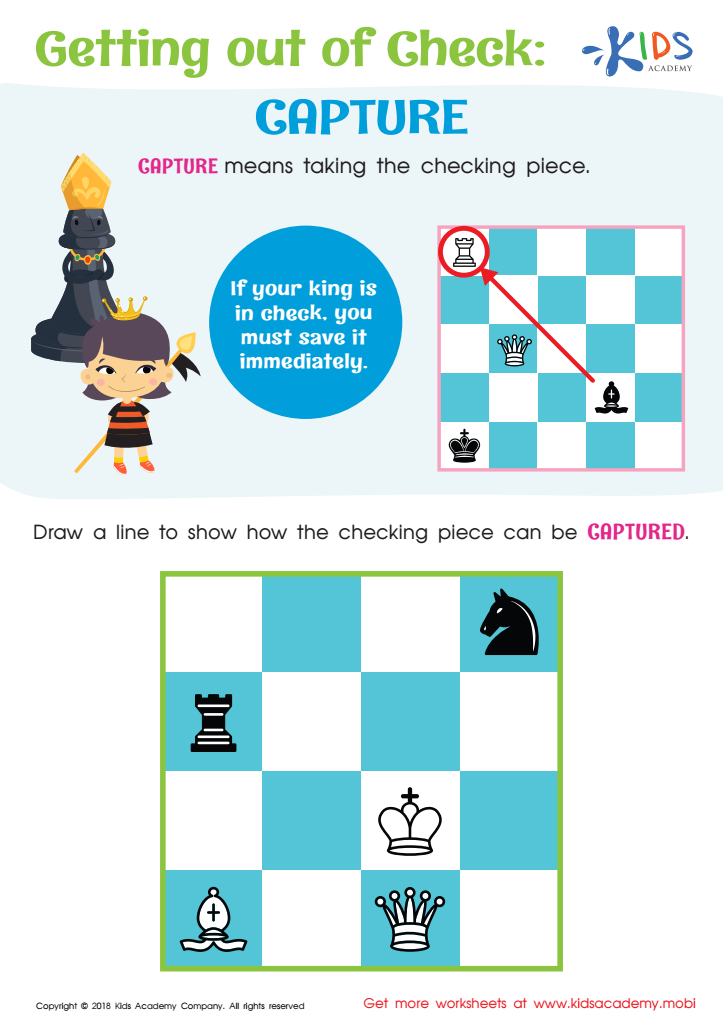
Getting out of Check: Capture
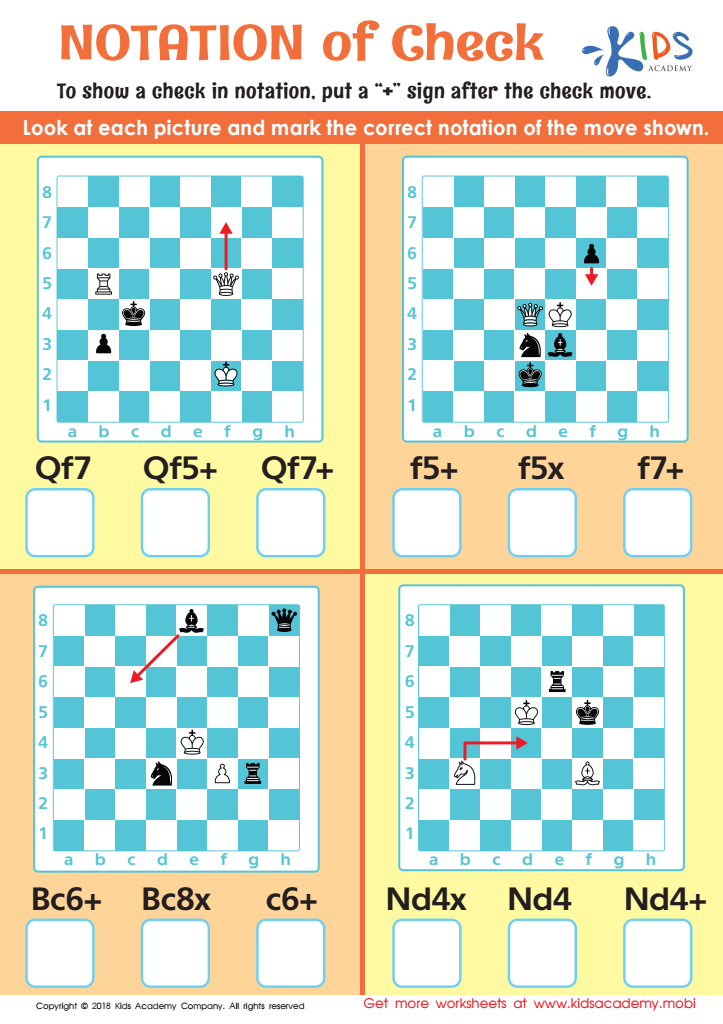
Notation of Check Worksheet
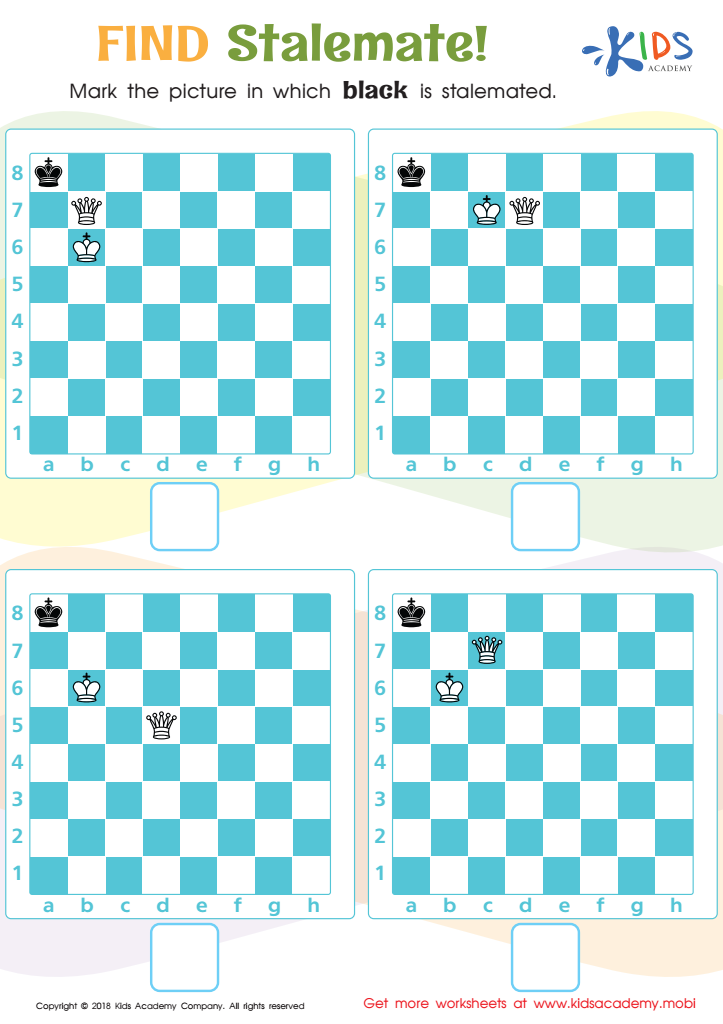
Find Stalemate! Worksheet
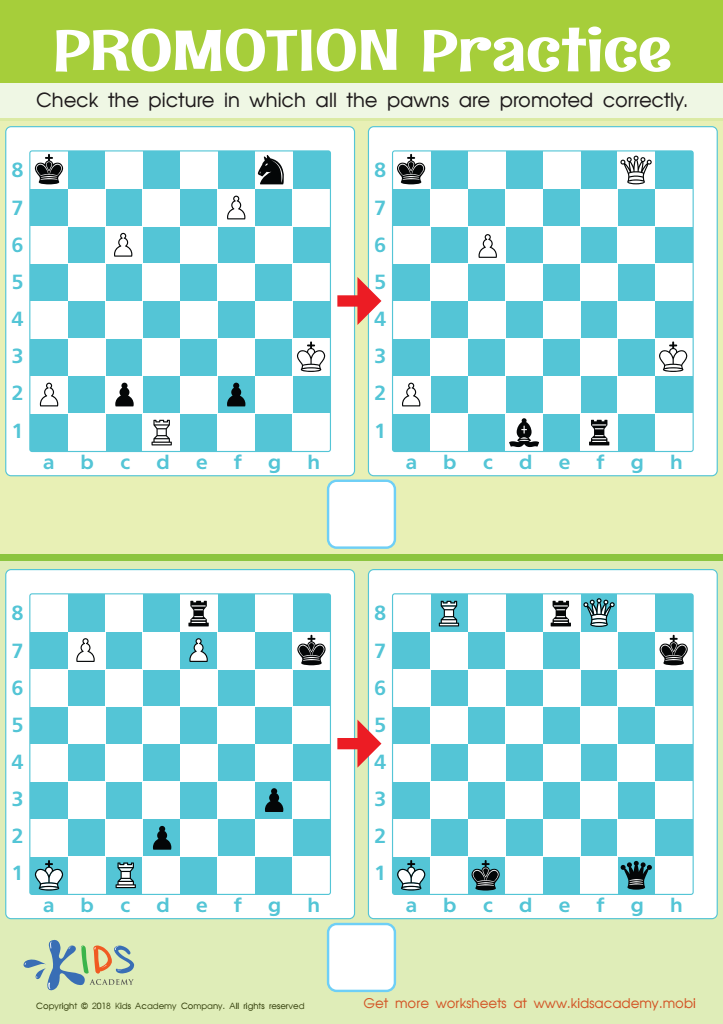
Promotion Practice Worksheet
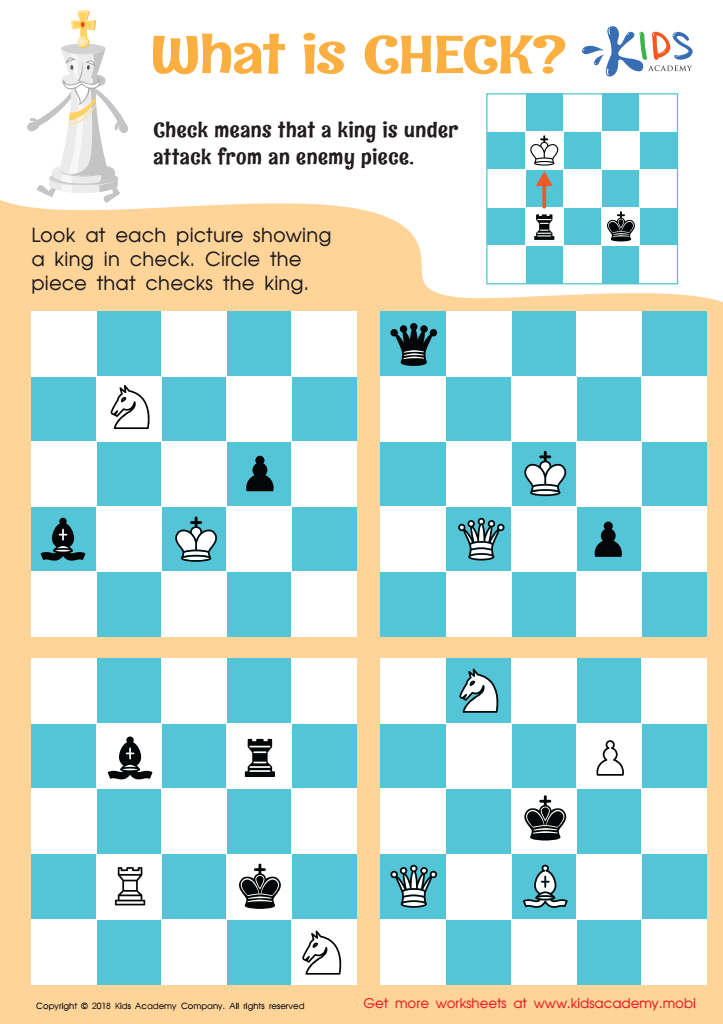
What is Check? Worksheet
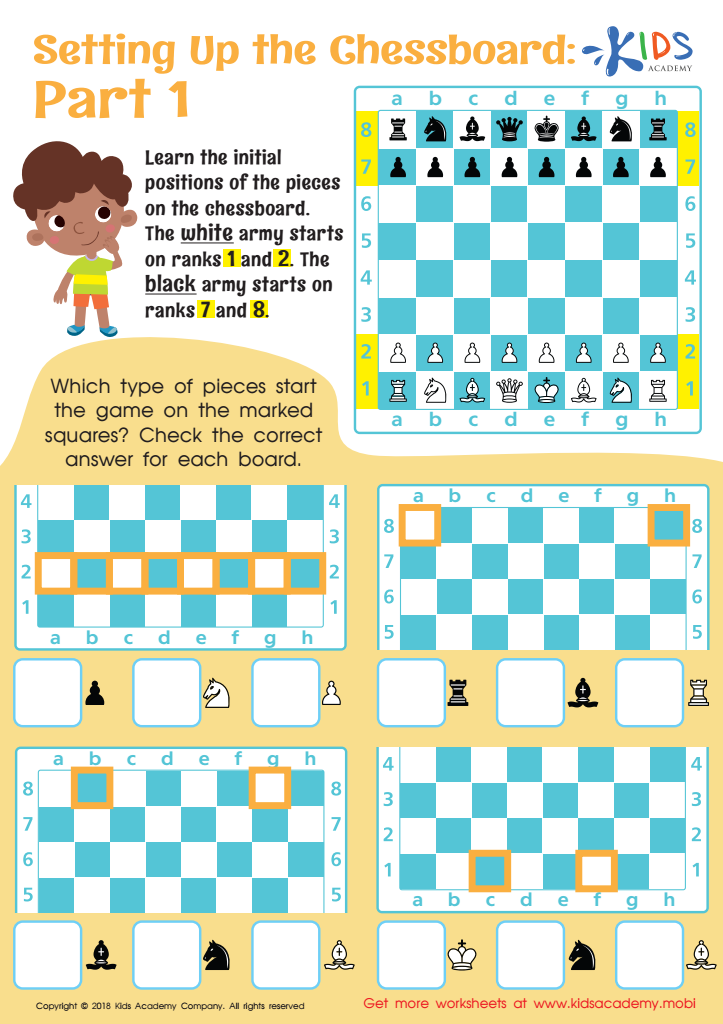
Setting up the Chessboard: Part 1 Worksheet
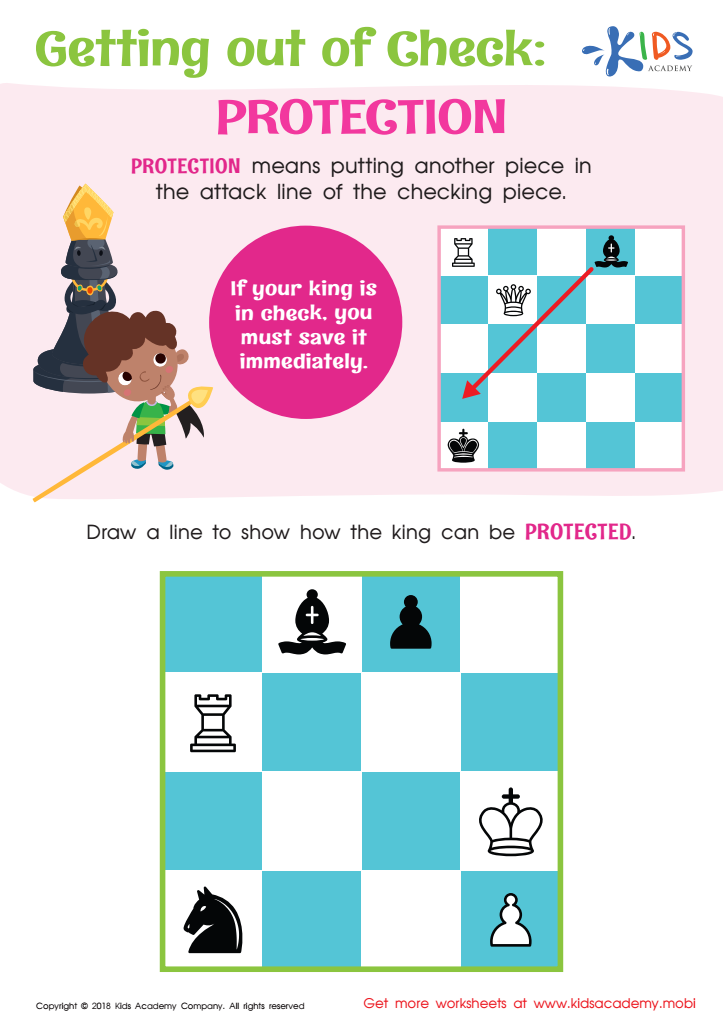
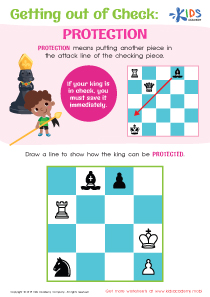
Getting out of Check: Protection
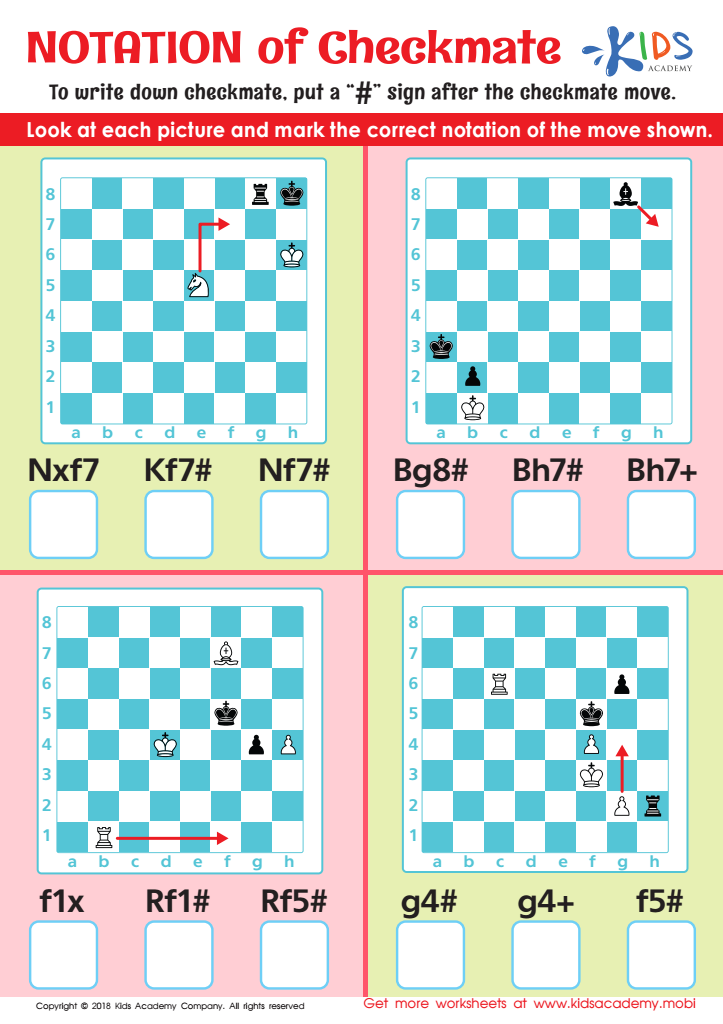
Notation of Checkmate Worksheet







Chess is an invaluable tool for children aged 4-6, offering numerous cognitive and social benefits crucial for their development. Engaging in chess helps young learners enhance problem-solving abilities, critical thinking, and strategic planning. While seemingly a simple game, chess promotes pattern recognition and decision-making skills, as children must evaluate their options and predict outcomes based on their moves.
Moreover, chess equips young players with patience and the ability to focus, crucial traits in an age marked by numerous distractions. Through the game, children learn to think ahead and weigh consequences, fostering emotional intelligence as they experience both winning and losing. This early exposure to competition in a controlled environment teaches resilience and sportsmanship—skills that translate into various aspects of life.
Furthermore, chess offers social opportunities as children learn to play in groups, cultivating teamwork and communication skills. As they engage with peers, they develop a sense of community and friendship.
Introducing chess in early childhood lays a strong foundation for lifelong learning and social interaction. For parents and teachers, encouraging this game means investing in a child's cognitive growth, emotional well-being, and interpersonal skills, all of which are essential for thriving in today’s complex world.