Patterns Worksheets for Ages 4-7
6 filtered results
-
From - To
Discover our engaging Patterns Worksheets designed specifically for children aged 4-7! These printable activities focus on recognizing, creating, and extending patterns, fostering essential early math skills. Our worksheets are colorful and interactive, making learning fun while enhancing cognitive development. Each activity encourages critical thinking and problem-solving as young learners explore various types of patterns using shapes, colors, and images. Perfect for parents and teachers alike, these resources support classroom learning and at-home practice. With straightforward instructions, your child will gain confidence in pattern recognition and development. Access our comprehensive selection of worksheets to spark your child's creativity and mathematical curiosity today!
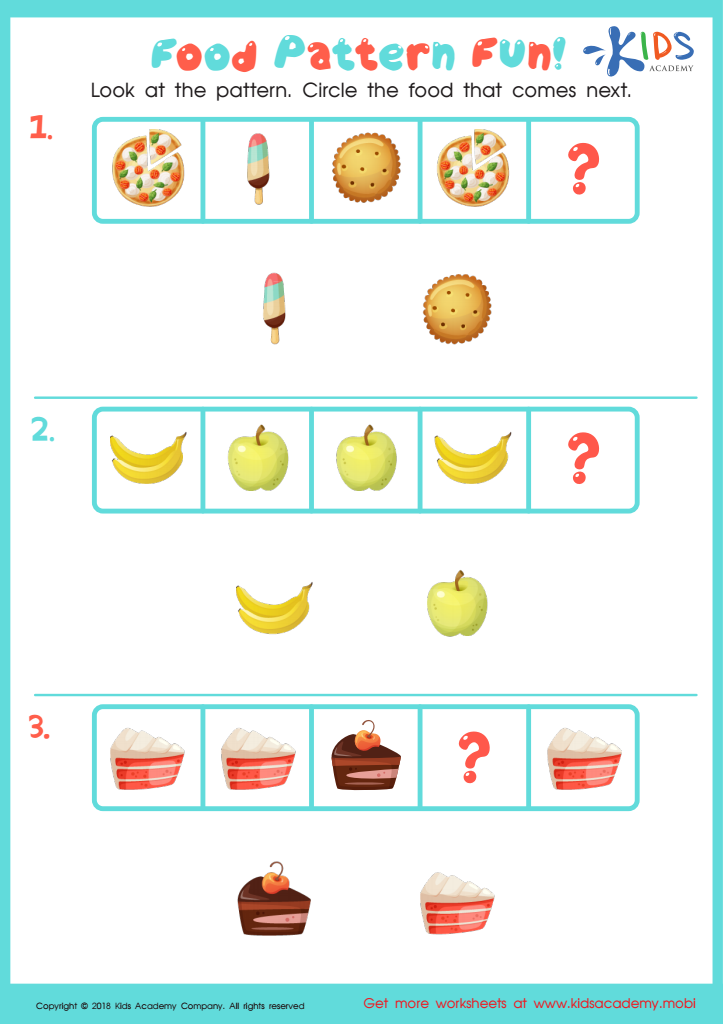
Food Pattern Fun Worksheet
 Assign to My Students
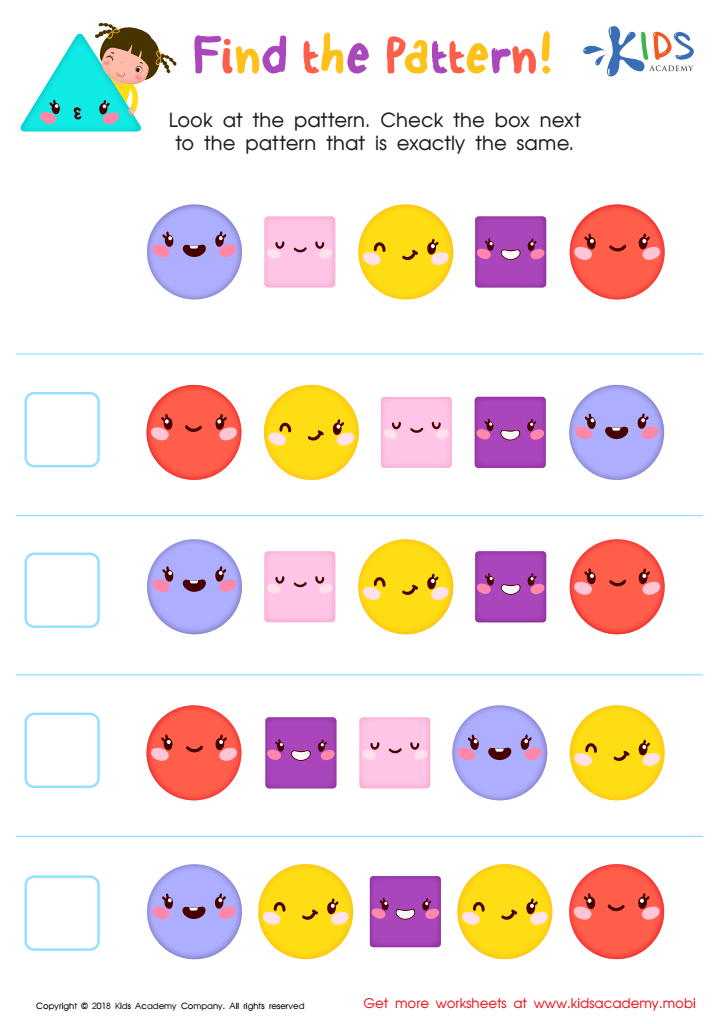
Find the Pattern Worksheet
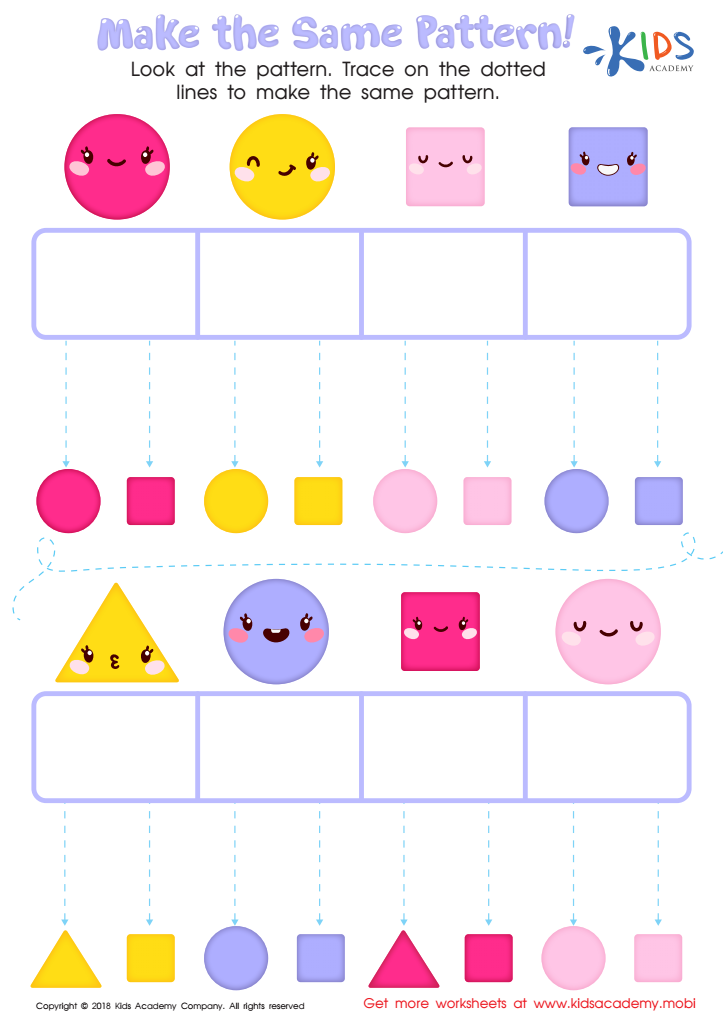
Make the Same Pattern Worksheet
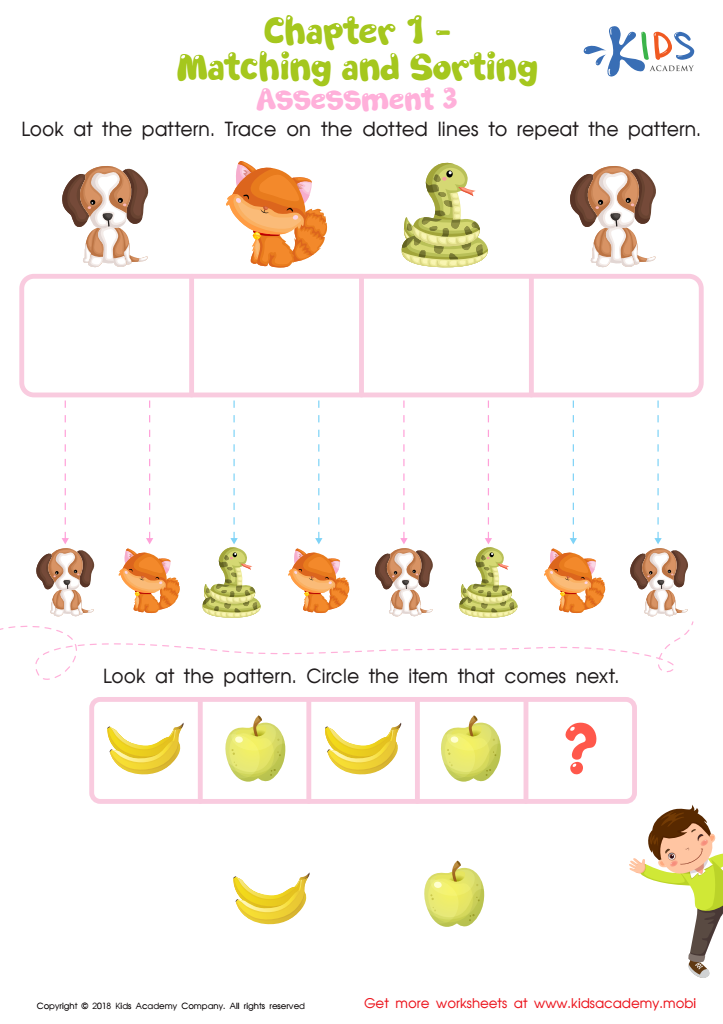
Matching and Sorting for Preschool: Assessment 3 Worksheet
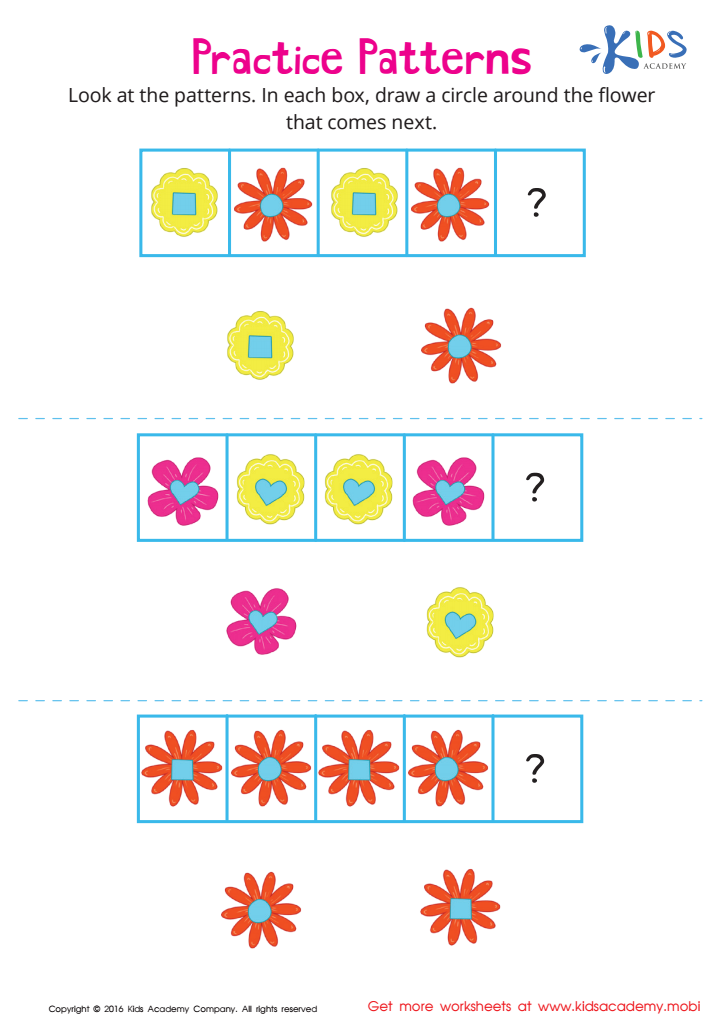
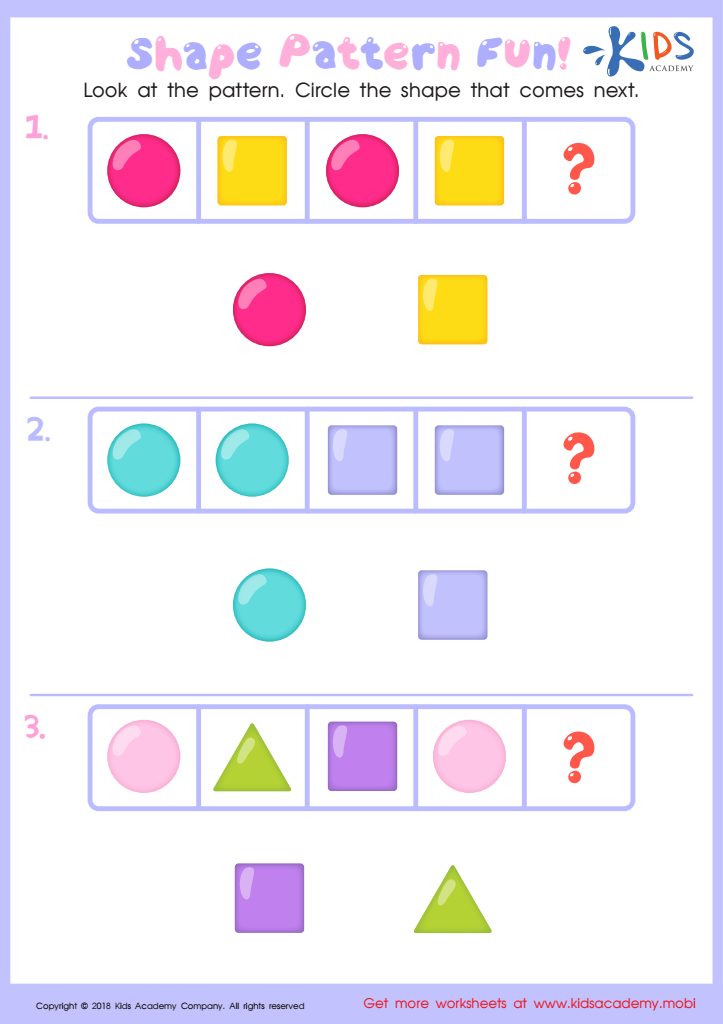
Shape Pattern Fun Worksheet








Patterns are foundational in early childhood education and play a crucial role in cognitive development for children aged 4-7. Understanding patterns helps children develop critical thinking and problem-solving skills, as it involves recognizing sequences, categorizing objects, and anticipating what comes next. This skill set lays the groundwork for more complex mathematical concepts, such as addition, subtraction, and even algebra in later years.
Furthermore, recognizing patterns enhances a child's ability to make connections between ideas, fostering creativity and reasoning. For instance, when children recognize color sequences or rhythmic patterns in music, they learn to predict outcomes and explore variations. Exposure to patterns also aids in language development; children begin to notice repetitions in stories and songs, which can improve their reading skills.
Aside from academic benefits, engaging with patterns encourages perseverance and patience, traits that are invaluable as they progress through education. By nurturing an understanding of patterns, parents and teachers empower children with essential skills for academic success and everyday problem-solving. Ultimately, fostering a love for patterns builds a strong cognitive foundation, preparing children not just for math, but for logical thinking in various aspects of life.








