Reading Worksheets for Ages 4-7 - Page 18
411 filtered results
-
From - To
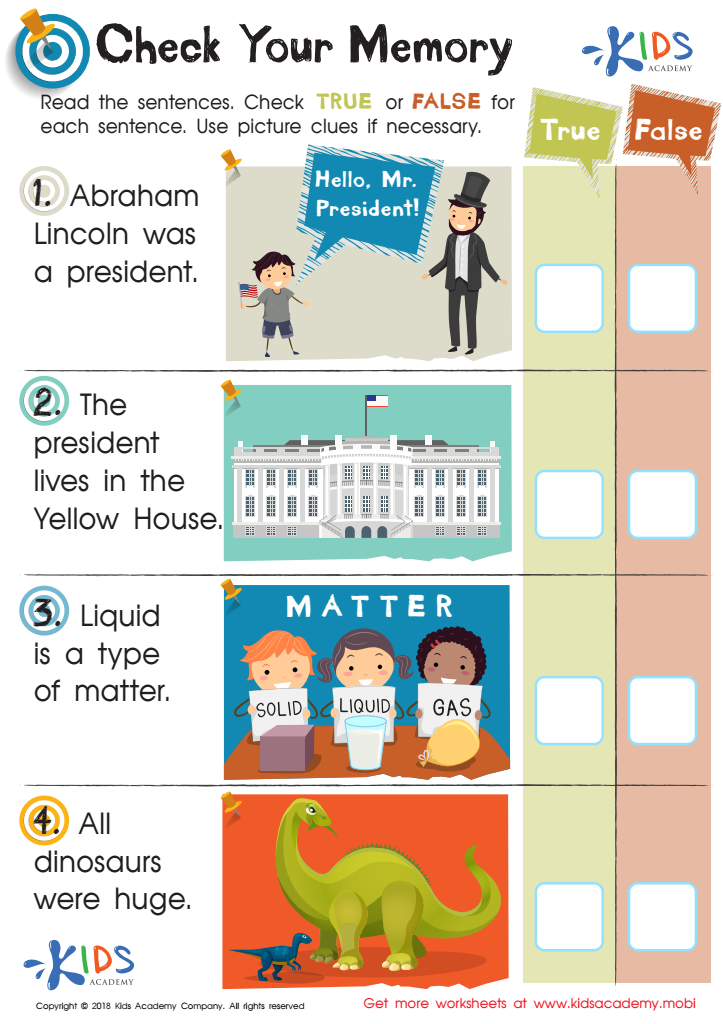
Check Memory Worksheet
 Assign to My Students
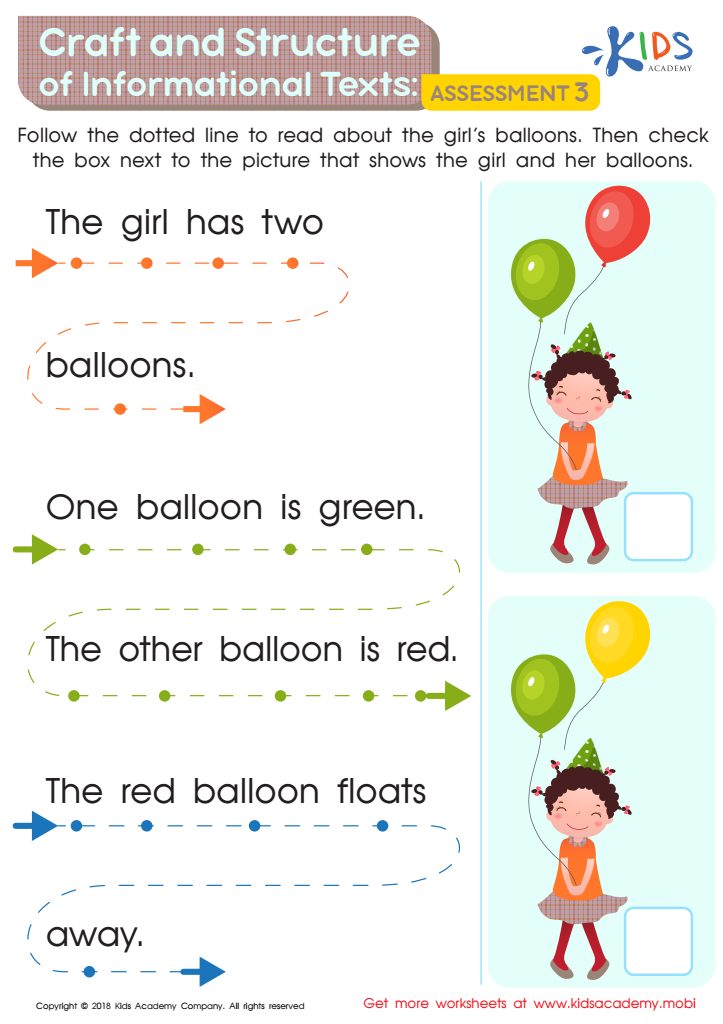
Craft and Structure of Informational Texts: Assessment 3 Worksheet
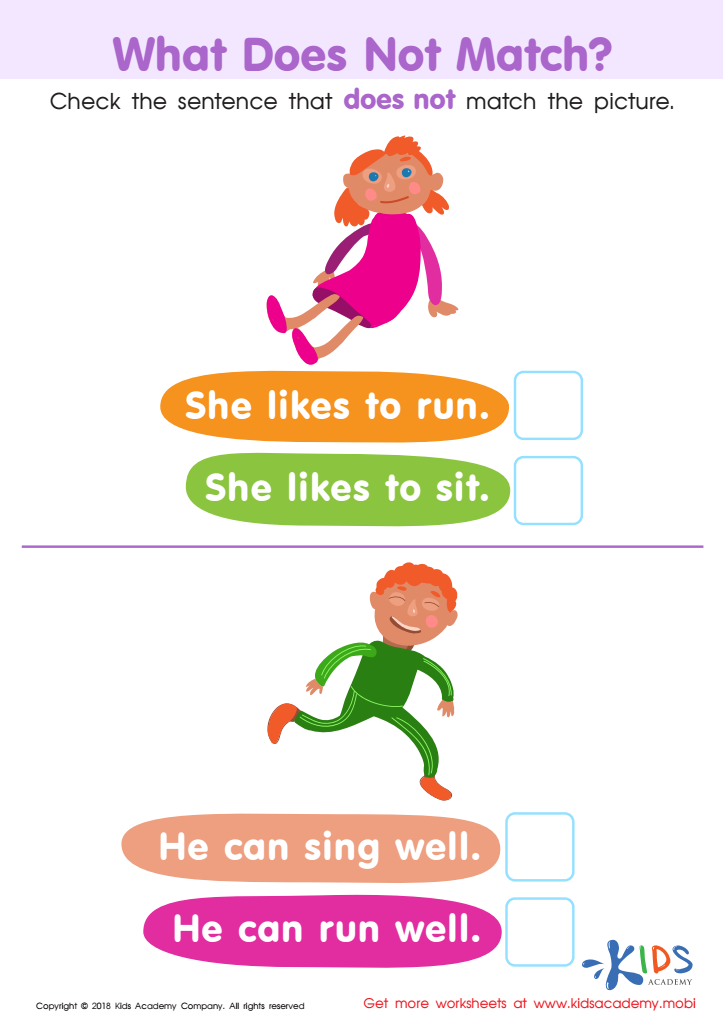
What Does Not Match? Worksheet





.jpg)


Fostering a love for reading in children aged 4-7 is crucial for their overall development and future success. During these formative years, a child's brain is exceptionally receptive to learning new skills, and reading plays a pivotal role in cognitive, linguistic, and social-emotional development.
Reading expands vocabulary and language comprehension, equipping children with the necessary tools for effective communication. It also enhances their ability to understand and process information, laying a strong foundation for academic achievement across all subjects. Storybooks, in particular, nurture imagination and creativity by exposing children to different worlds and scenarios, enriching their inner lives and helping them to think critically and empathetically.
Moreover, reading together strengthens the parent-child or teacher-student bond. It provides opportunities for adults to model good reading habits and share valuable cultural and moral lessons. Consistent reading routines instill discipline and focus in young minds, qualities that are essential for lifelong learning.
In a world increasingly dominated by screens, nurturing a reading habit ensures a balanced development and reduces the likelihood of screen addiction. By investing time and effort in reading from ages 4-7, parents and teachers lay the groundwork for a child's future academic success, curiosity, and a lifelong love for learning.








