Long Vowels Worksheets for Ages 4-8 - Page 2
29 filtered results
-
From - To
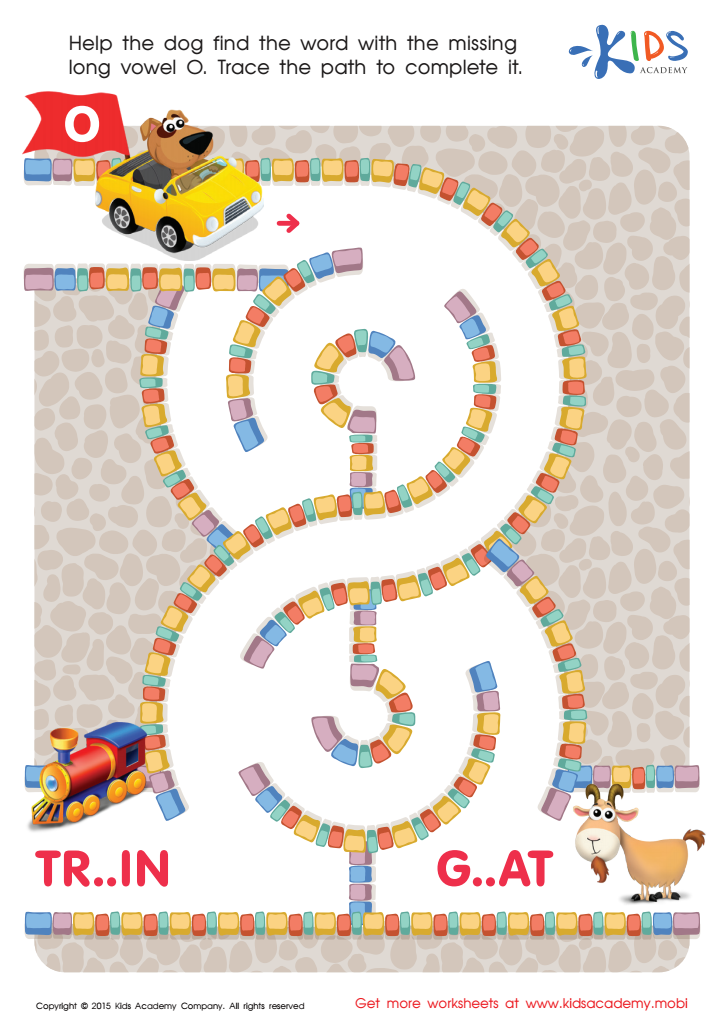
Long Vowel Sound O Worksheet
 Assign to My Students
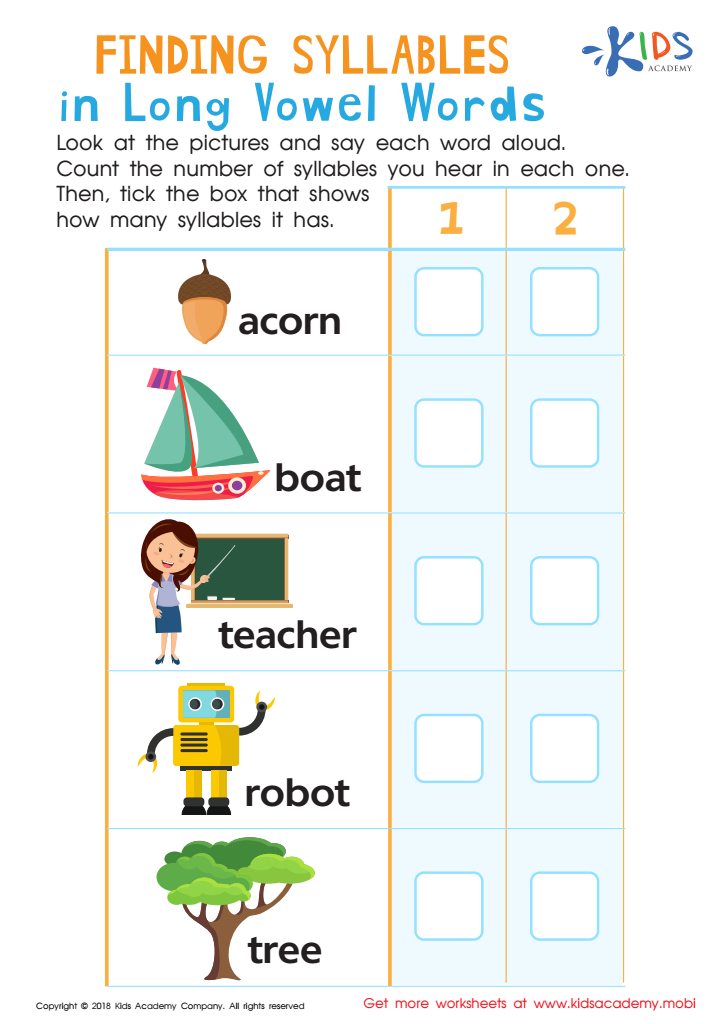
Finding Syllables in Long Vowel Words Worksheet
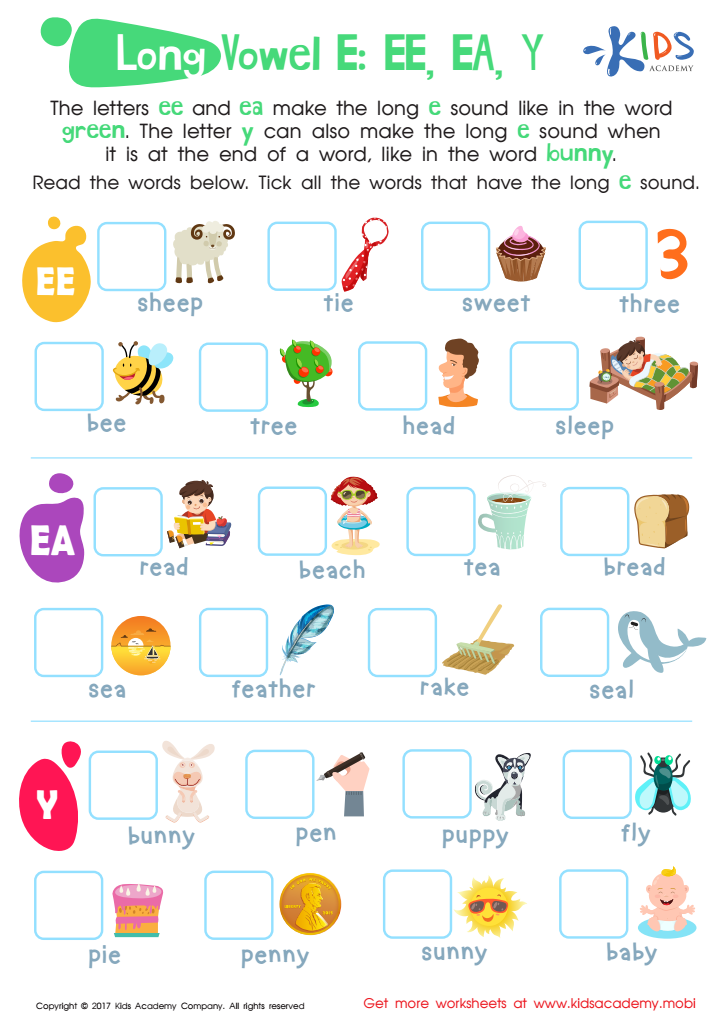
Long Vowel E Printable
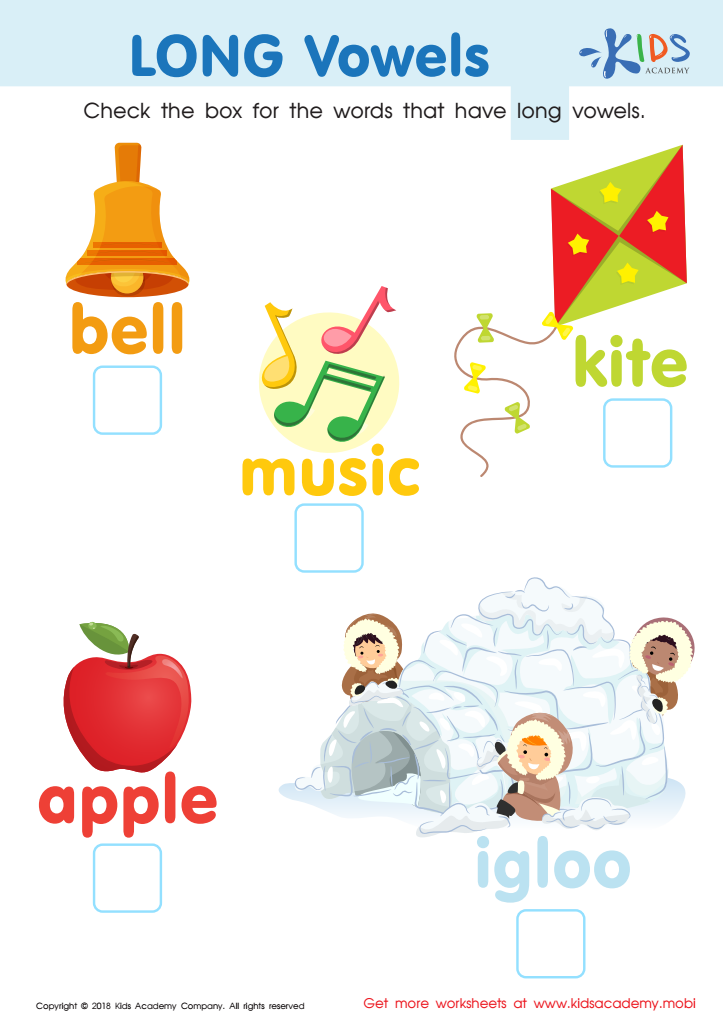
long vowels Worksheet
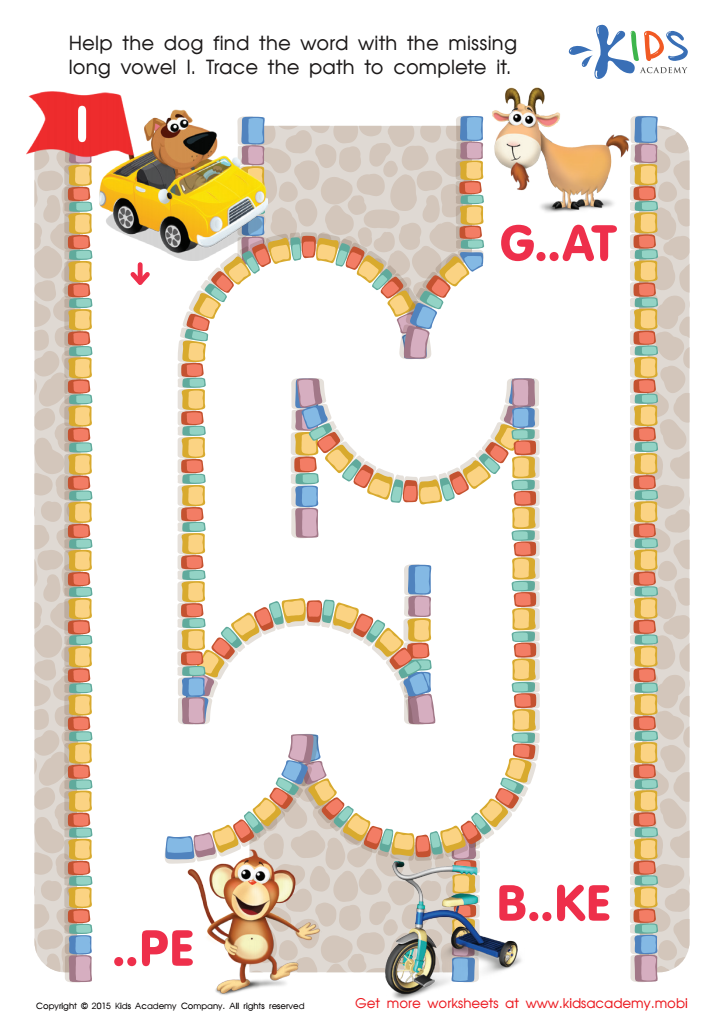
Long Vowel Sound I Worksheet



Understanding long vowels is essential for children ages 4-8 because it lays the foundation for strong reading and writing skills. Long vowels, where the vowel sound is the same as the letter's name (like 'a' in "cake" or 'i' in "bike"), are crucial components of the English language. When children grasp the concept of long vowels, they can more easily decode words, leading to smoother reading experiences and increased comprehension.
Long vowel knowledge enables young readers to recognize and pronounce words correctly. This proficiency not only builds confidence but also fosters a love for reading. It helps prevent frustration and confusion, keeping the learning journey enjoyable. For writing, understanding long vowels assists children in spelling words more accurately, promoting clearer communication.
For teachers, focusing on long vowels can streamline instruction by providing clear, consistent rules that students can apply across vast arrays of words. Similarly, parents can reinforce these skills at home with reading activities and games, creating a consistent learning environment that bridges school and home education.
Moreover, mastering foundational skills like long vowels at an early age boosts cognitive development, aiding in the child's overall academic success. Thus, caring about long vowels ensures children build essential literacy skills, setting them up for future educational achievement and lifelong learning.








