Vowel Diphthongs Worksheets for Ages 4-8 - Page 2
27 filtered results
-
From - To
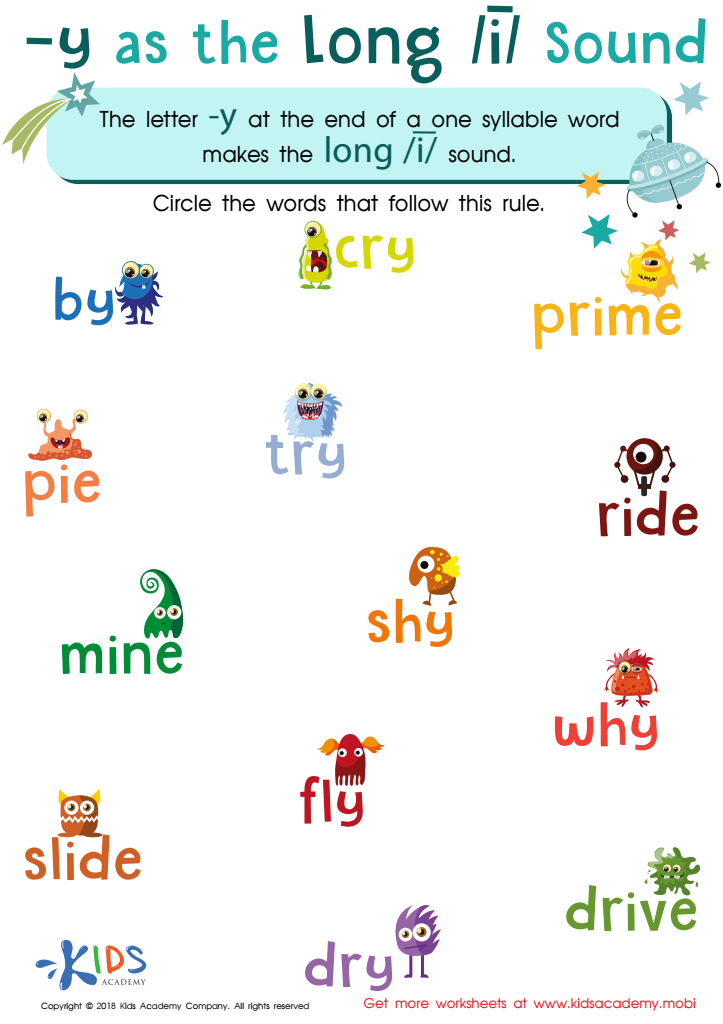
Reading: Y as Long I Worksheet
 Assign to My Students
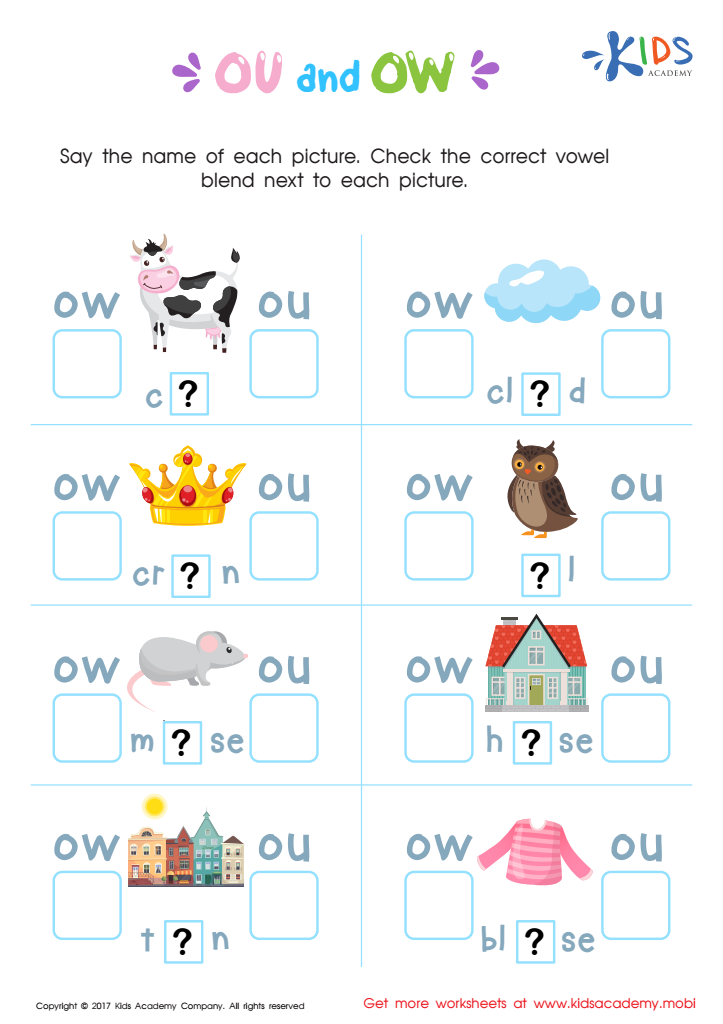
OU and OW Words Worksheet
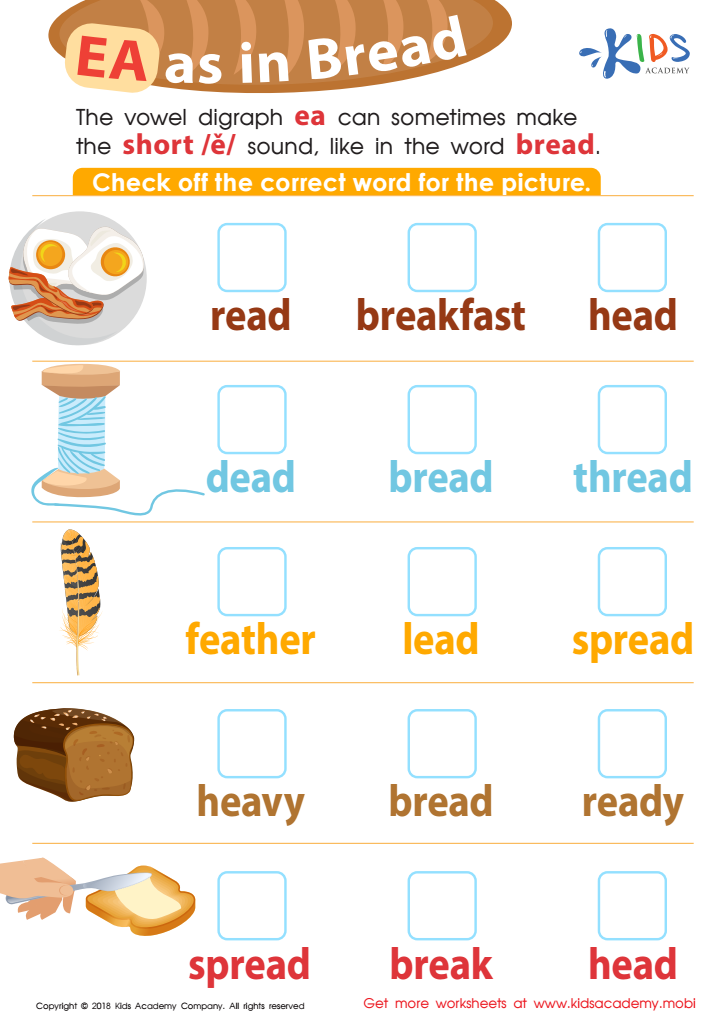
Reading: EA as in Bread Worksheet


Vowel diphthongs are essential for early literacy development and play a crucial role in phonics, particularly for children aged 4-8. These sounds, formed by the blending of two vowel sounds within a single syllable, are foundational in helping young learners decode words, enhancing their reading and writing skills. Understanding diphthongs assists children in recognizing patterns in language, which can boost their confidence when confronted with new words.
Parents and teachers should prioritize vowel diphthongs because they directly impact a child’s ability to spell correctly and communicate effectively. Mastery of diphthongs enriches vocabulary, allowing children to express themselves more clearly and expansively. Moreover, exposure to these phonetic combinations supports critical listening and articulation skills, which are vital during conversational exchanges.
By integrating fun activities that promote the recognition and use of diphthongs, educators can create a dynamic learning environment that engages students. This engagement not only enhances literacy skills but also fosters a love for reading. In summary, focusing on vowel diphthongs is pivotal for helping young learners develop strong foundational language skills, paving the way for their future academic success and effective communication.