Consonants Worksheets for Ages 4-9 - Page 2
34 filtered results
-
From - To
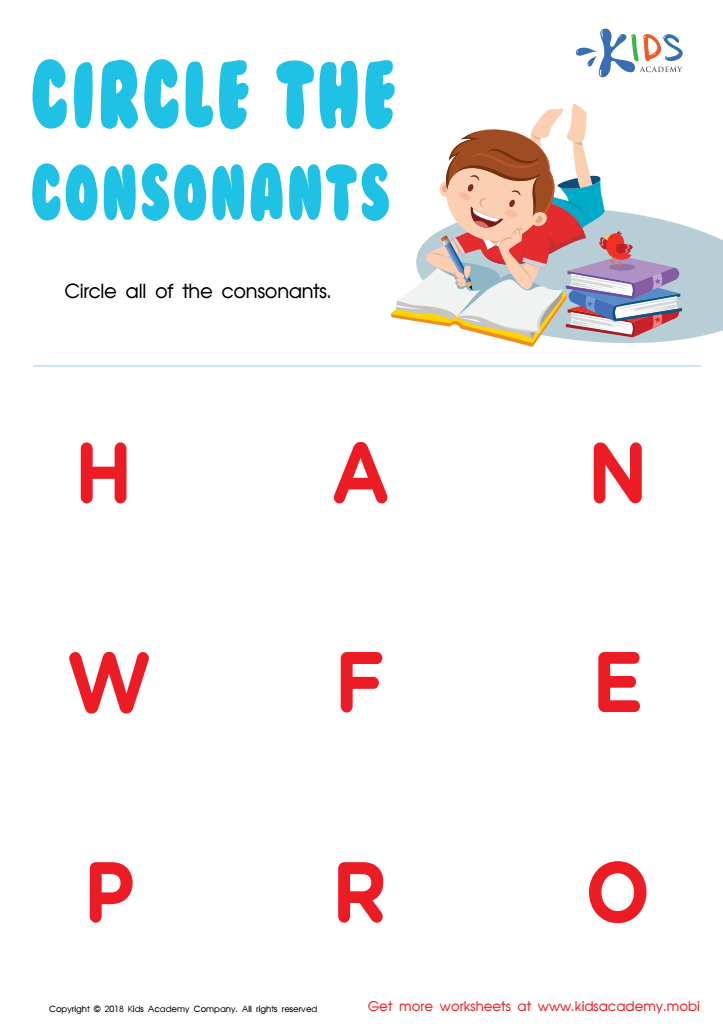
Circle the Consonants Worksheet
 Assign to My Students
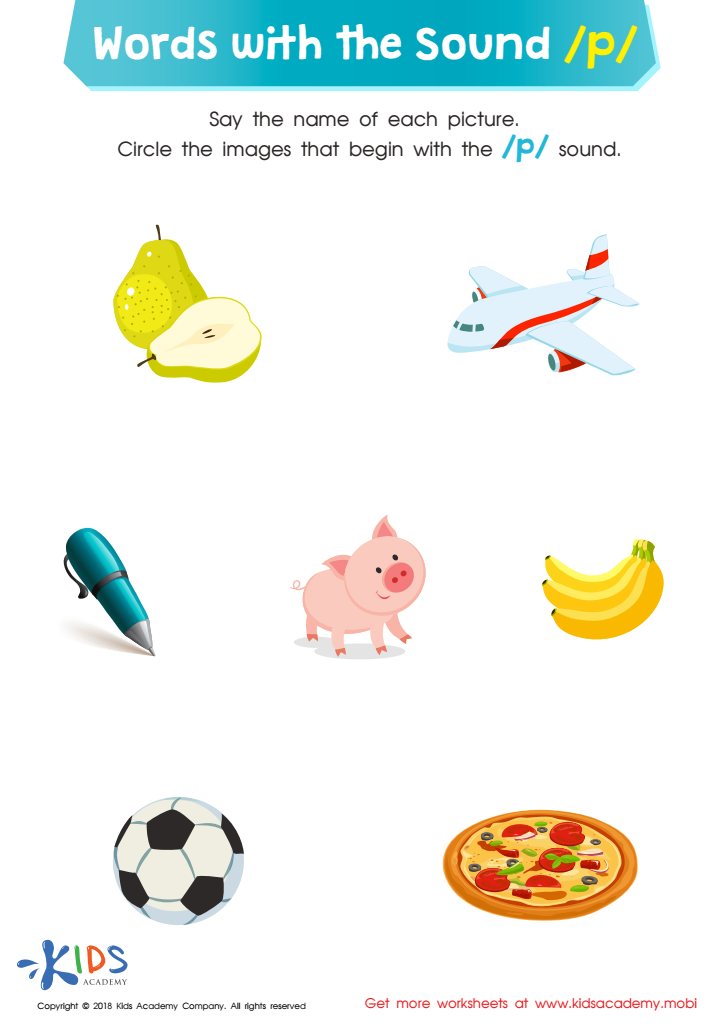
Words with sound p Reading Worksheet
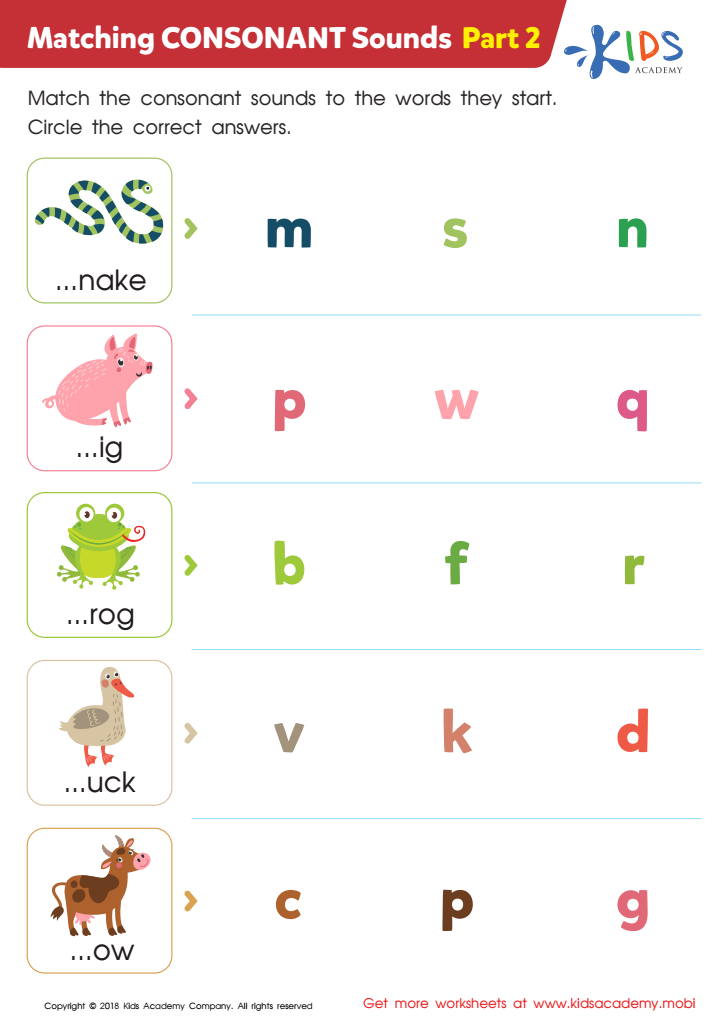
Matching Consonant Sounds: Part 2 Worksheet
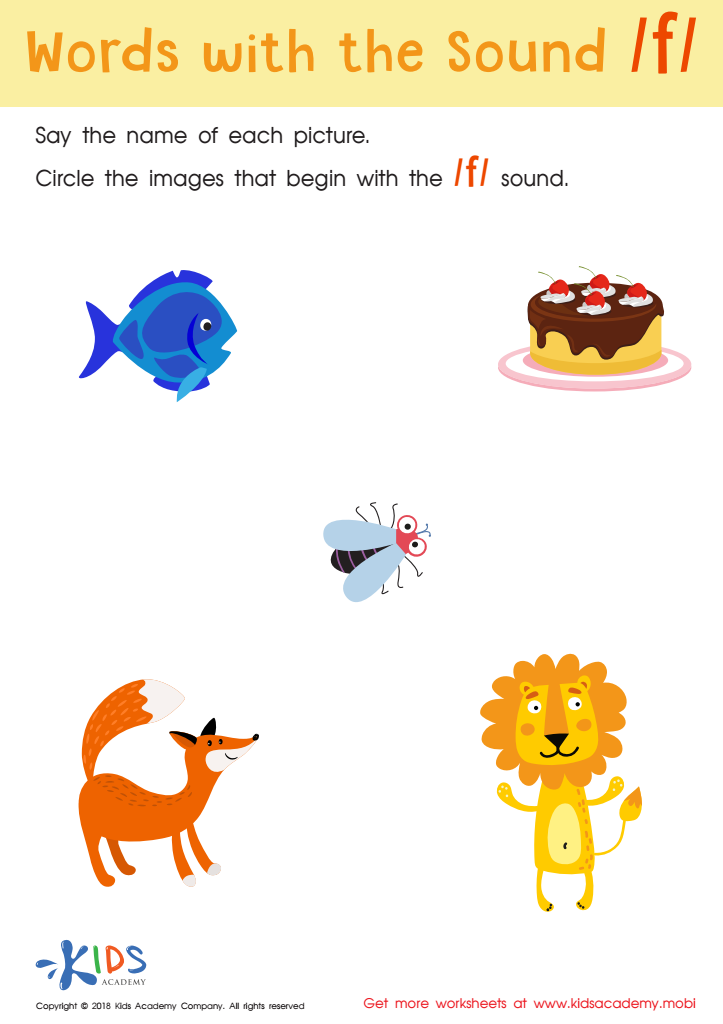
Words with sound f Reading Worksheet
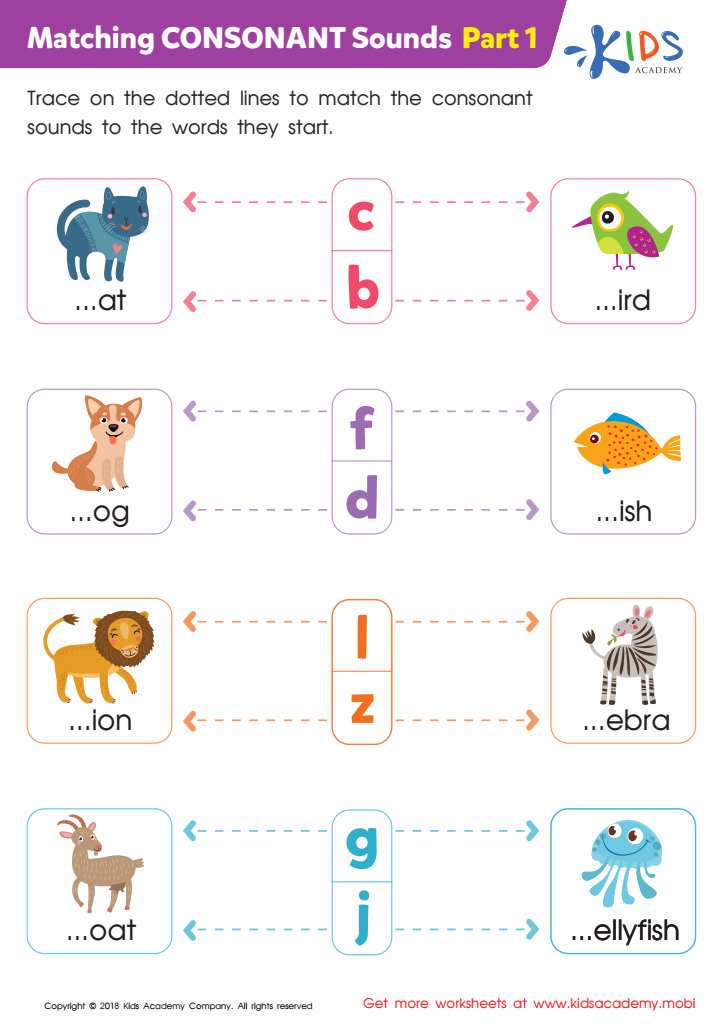
Matching Consonant Sounds: Part 1 Worksheet
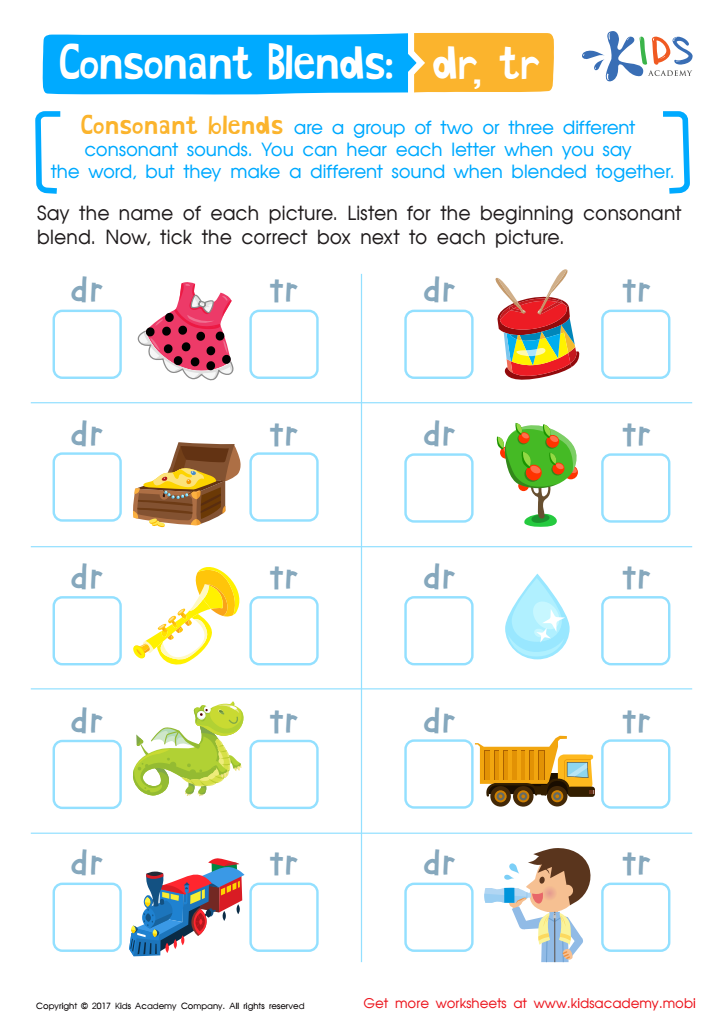
Consonant Blends: "Dr" and "Tr" Printable
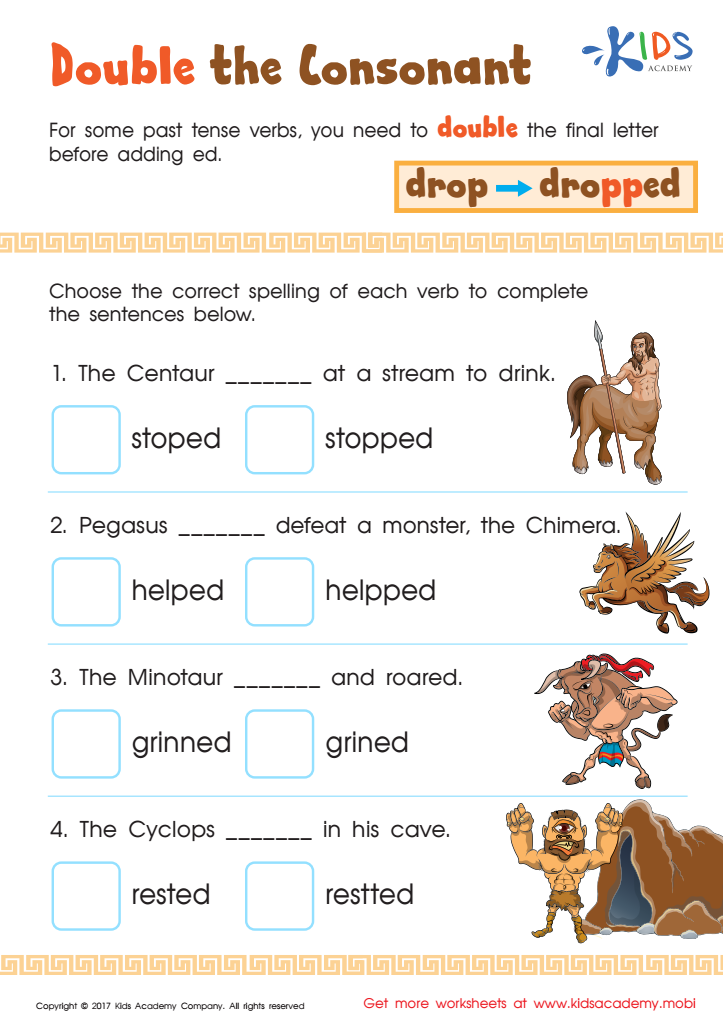
Double Consonant Spelling Worksheet
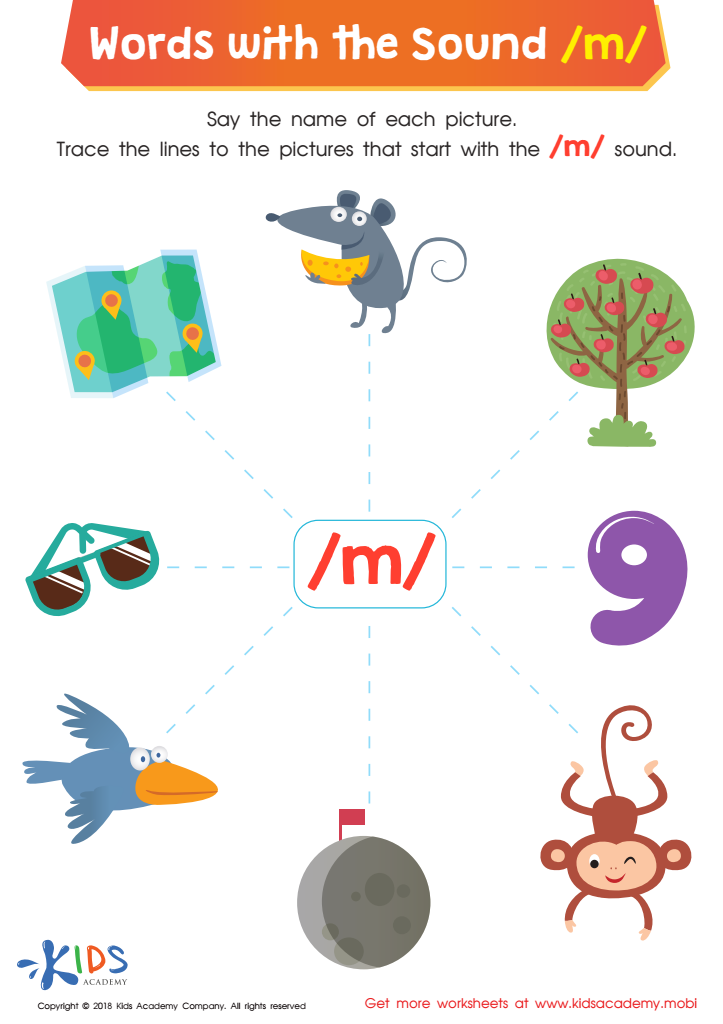
Words with Sound M Reading Worksheet
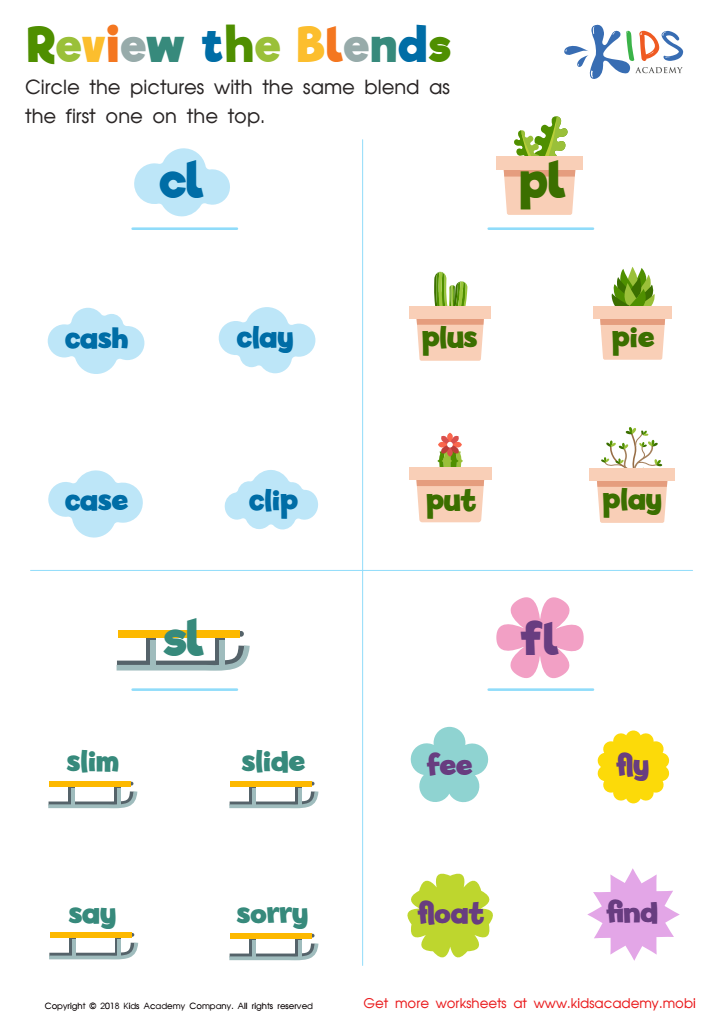
Review the Blends Worksheet
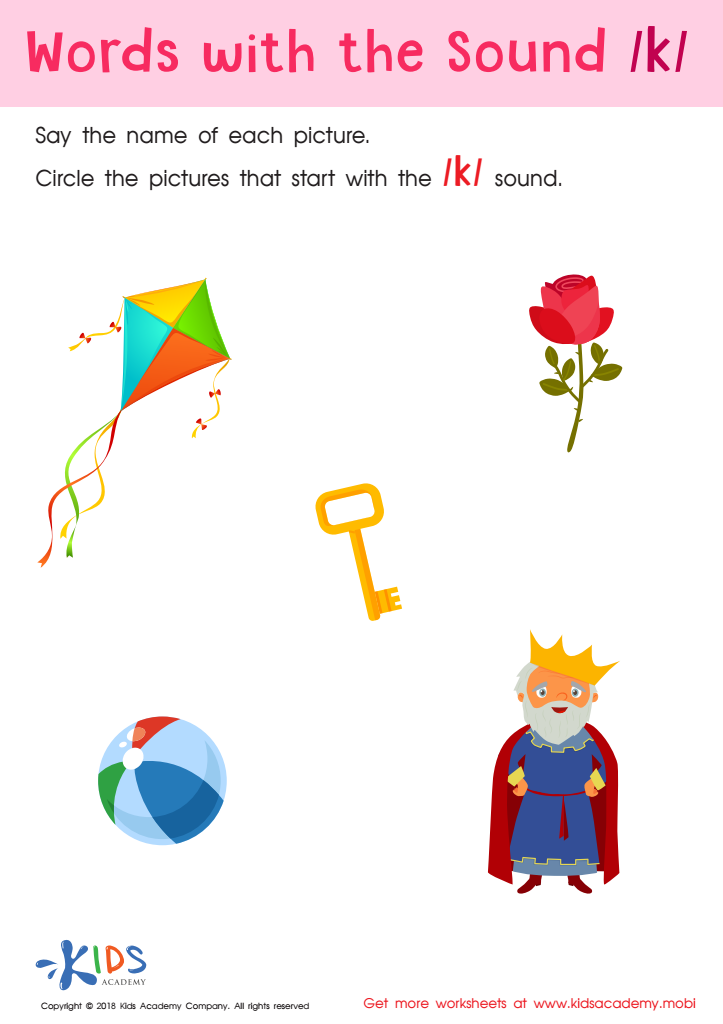
Words with sound k Reading Worksheet



Understanding consonants is fundamental for children aged 4-9 as it forms the building blocks of literacy and communication. At this stage, children begin to recognize, pronounce, and use consonants in their vocabulary, which enhances their reading and writing skills. Consonants are essential sounds in our language, and developing phonemic awareness helps children decode words, a skill crucial for early literacy.
Parents and teachers should engage with consonant education because it aids in phonics instruction, making reading more accessible and enjoyable for children. Breaking words down into their constituent sounds empowers children to tackle new vocabulary and understand spelling patterns. Mastery of consonants promotes confidence in both speaking and writing as children begin to express themselves more clearly.
Furthermore, consonant knowledge fosters cognitive development. Identifying and manipulating these sounds helps children with problem-solving and analytical skills. It allows for interactive learning experiences, such as rhyme and alliteration, which can make learning fun. Lastly, a solid foundation in consonants can influence children’s comprehension and overall academic success, instilling a lifelong love for learning and effective communication skills. Thus, early attention to consonants is an investment in a child’s future literacy and cognitive growth.







