Filters

131 filtered results

Clear all filters
Favorites
With answer key
Interactive

131 filtered results

Difficulty Level

Grade


Check out this FREE Trial Lesson on Reading Fiction for age 5-7!

Identify Characters, Settings, and Major Events in a Story

Favorites
With answer key
Interactive
  • 5-7
  • With answer key
  • Reading Fiction
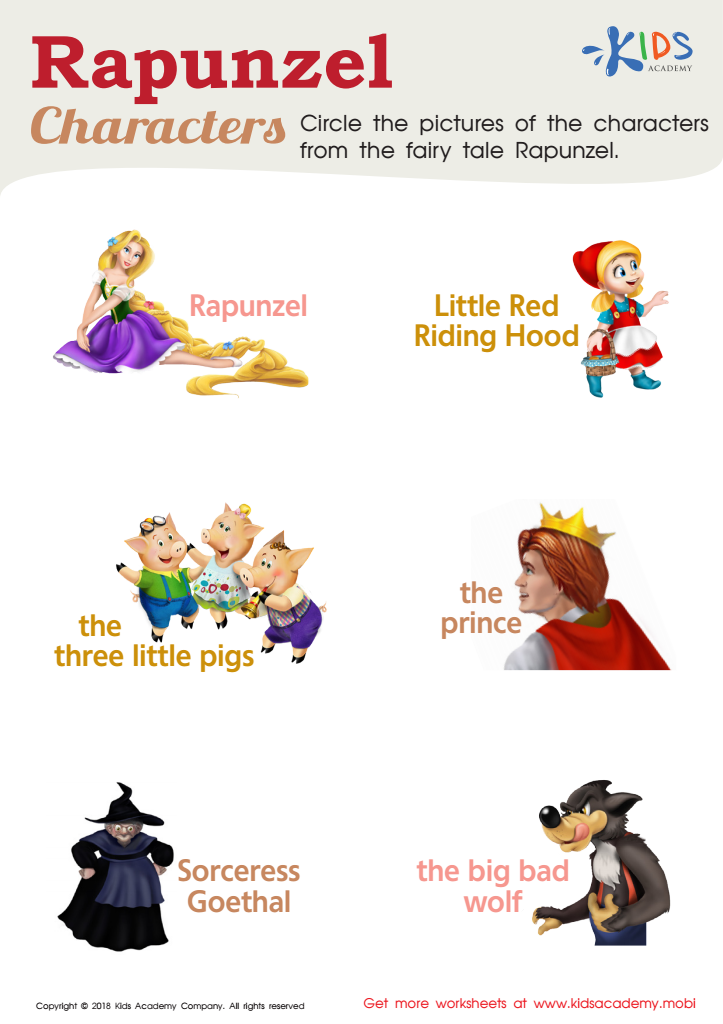
Rapunzel Characters Worksheet

Rapunzel Characters Worksheet

This fun and colourful worksheet is perfect to see what your kids have learned from story time. Test their knowledge with a Rapunzel-themed exercise! Ask them to circle the pictures of the characters from the fairy tale. Helping them to remember the lessons taught in the stories you have read.
Rapunzel Characters Worksheet
Worksheet
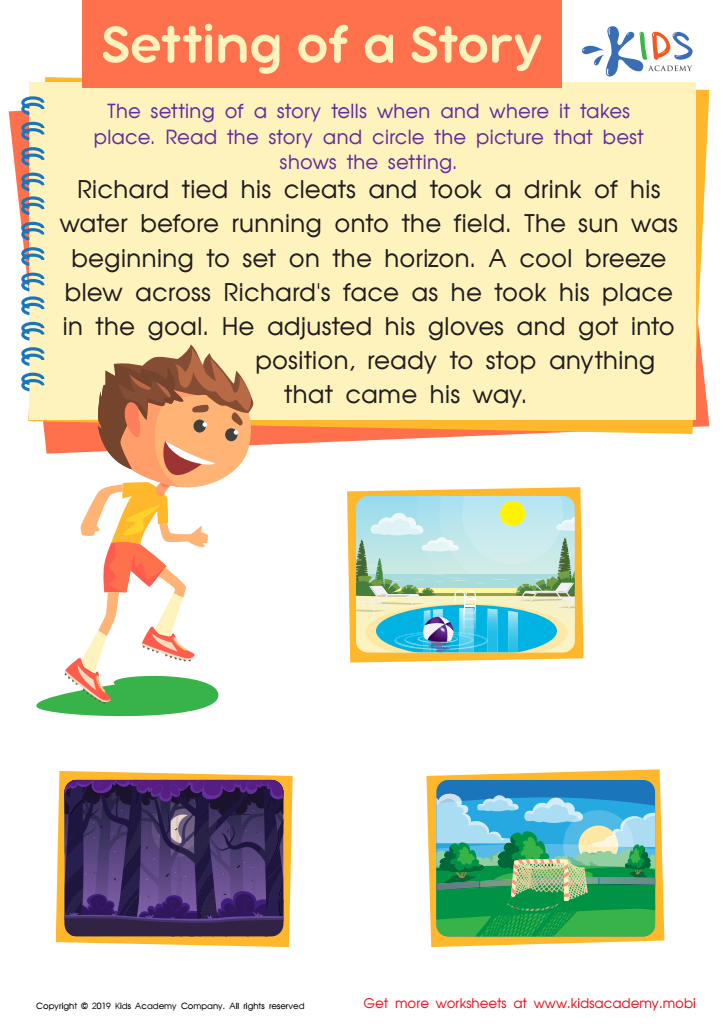
Setting of a Story Worksheet

Setting of a Story Worksheet

You need characters, theme, POV, plot and setting to tell a good story. Ask your kids to explain them and use this worksheet with a story to teach them about setting. Read the story with your kids, then have them circle the picture that best shows the setting.
Setting of a Story Worksheet
Worksheet
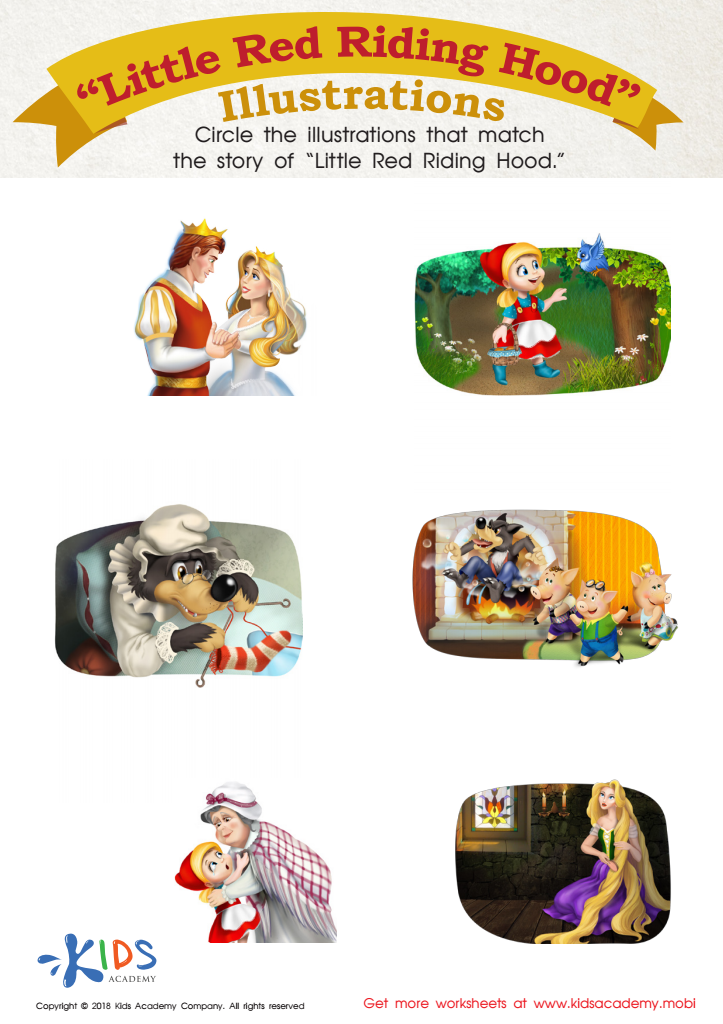
Little Red Riding Hood: Illustrations Worksheet

Little Red Riding Hood: Illustrations Worksheet

This worksheet encourages children to analyze illustrations from familiar fairy tales, such as Little Red Riding Hood, and decide which ones match the story and which don't. It's a great way to help them recall and retell stories they've heard or read. Illustrations are important elements that help children comprehend advanced readings.
Little Red Riding Hood: Illustrations Worksheet
Worksheet
Look at the Pictures: The Princess and the Pea Worksheet

Look at the Pictures: The Princess and the Pea Worksheet

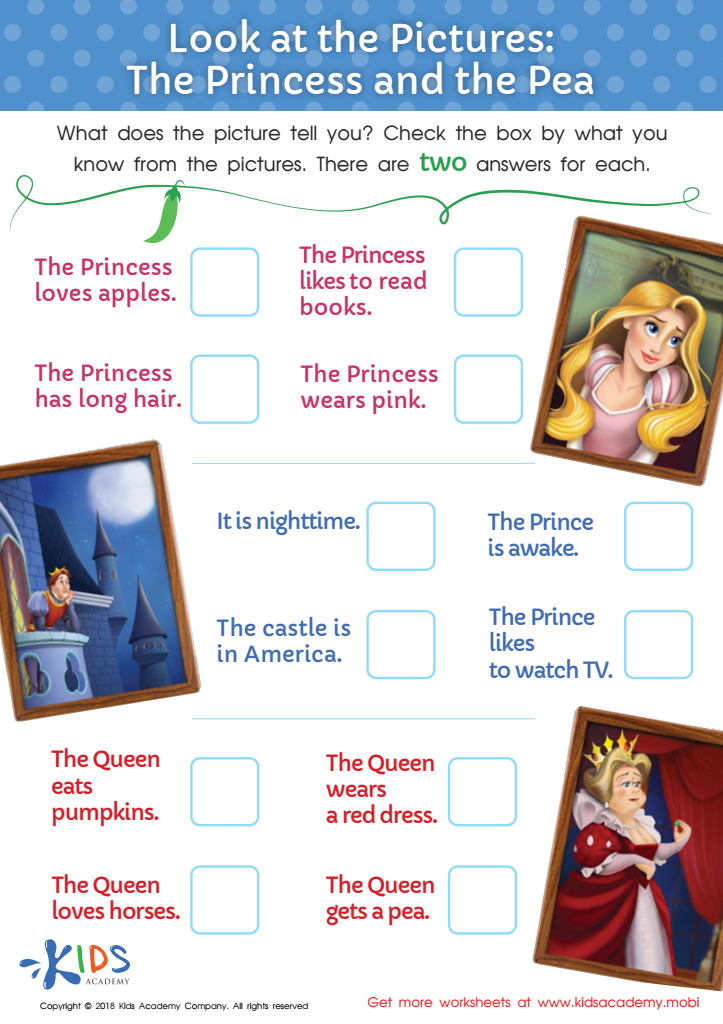
Early readers can benefit from picture clues to understand stories and text. Looking at images helps them learn the meaning of words and comprehend events. Use this worksheet on The Princess and the Pea to let students observe and learn from the pictures. It's a great way to help them comprehend early reading materials.
Look at the Pictures: The Princess and the Pea Worksheet
Worksheet
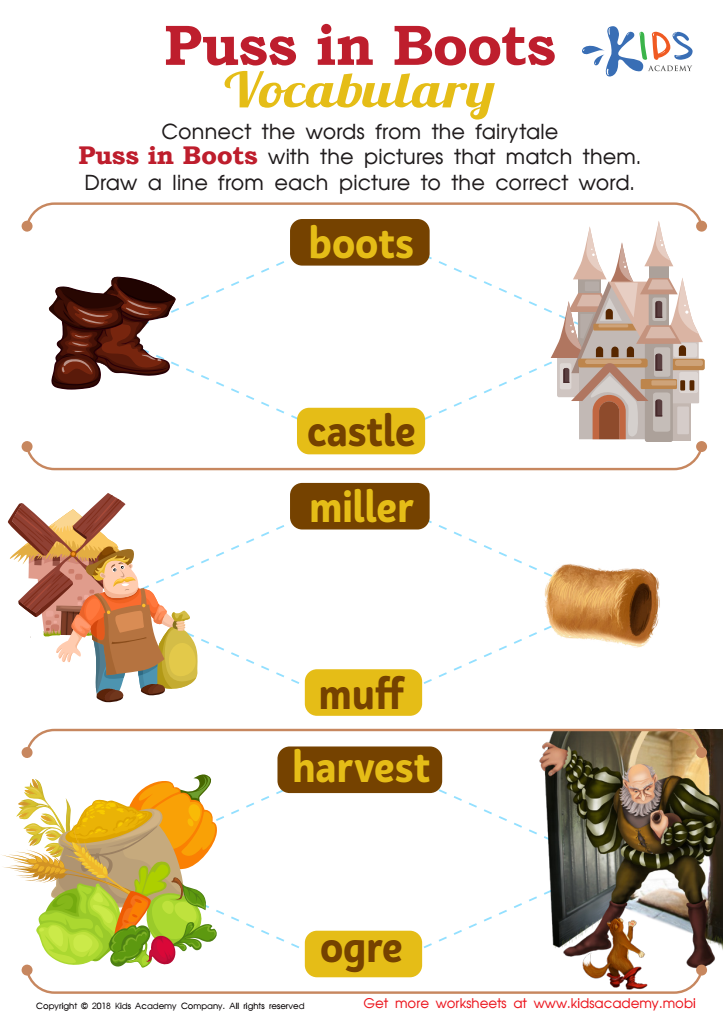
Puss in Boots Vocabulary Worksheet

Puss in Boots Vocabulary Worksheet

Let your kids enjoy story-telling while learning at the same time. Help them learn from the fairytale, Puss in Boots, by connecting words from the worksheet with the matching pictures. Ask them to draw a line between each picture and corresponding word to build their vocabulary.
Puss in Boots Vocabulary Worksheet
Worksheet
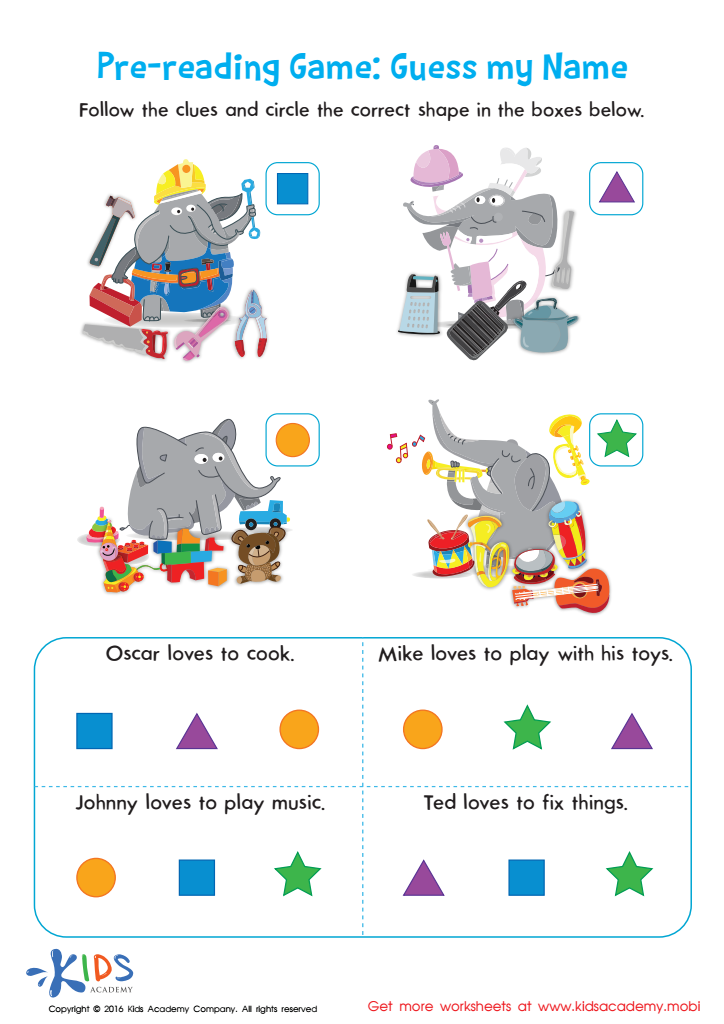
Pre reading worksheet guess my name

Pre Reading Worksheet Guess My Name

Guess My Name is a fun way to practice inference skills. Guess My Name is a fun pre-reading game to help your child practice drawing inferences from clues. With colorful illustrations, they'll use clues to match each elephant with its sentence and sharpen their inference skills.
Pre Reading Worksheet Guess My Name
Worksheet
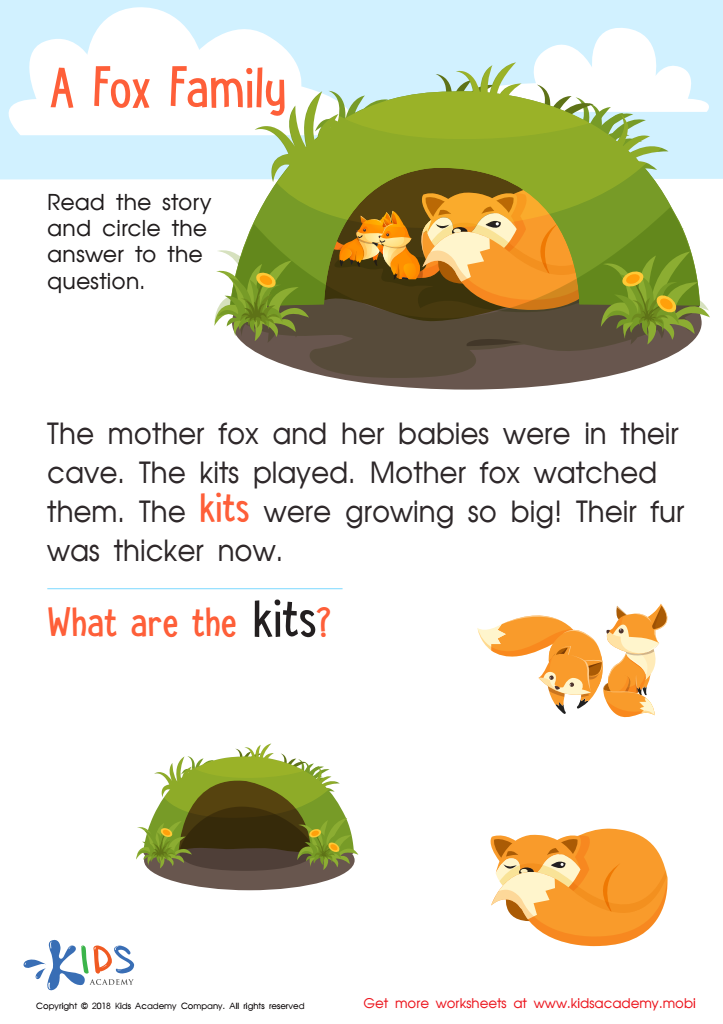
A Fox Family Worksheet

A Fox Family Worksheet

Reading is an easy way to learn new words. This worksheet introduces an interesting story about a fox family, teaching your child that "kits" refers to baby foxes. Read the text together and circle the picture to answer the question.
A Fox Family Worksheet
Worksheet
Reading Comprehension Worksheet: Aladdin

Story Elements Printable

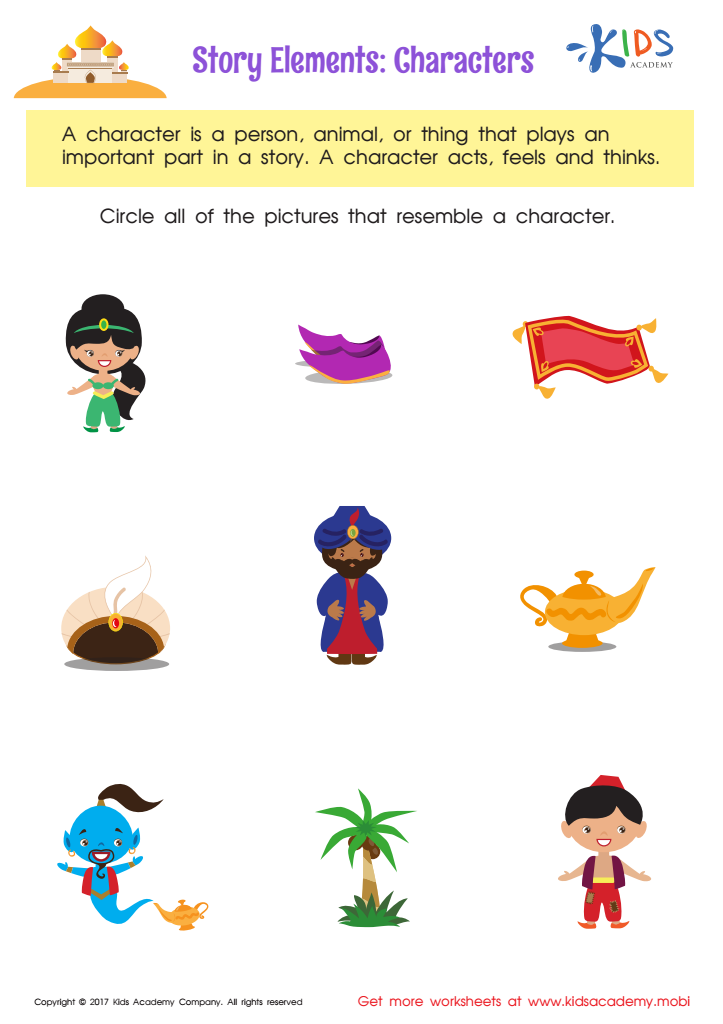
Read the text and review the characters, settings and plot in a guided discussion. Take your child on a journey to the Middle East and review the characters, settings and plot of their favorite childhood stories with this Aladdin-themed worksheet! It'll help them master early analysis skills and learn about characterization. Enjoy a fun, guided discussion with your child as you review important story elements.
Story Elements Printable
Worksheet
Princess and the Pea Questions Worksheet

Princess and the Pea Questions Worksheet

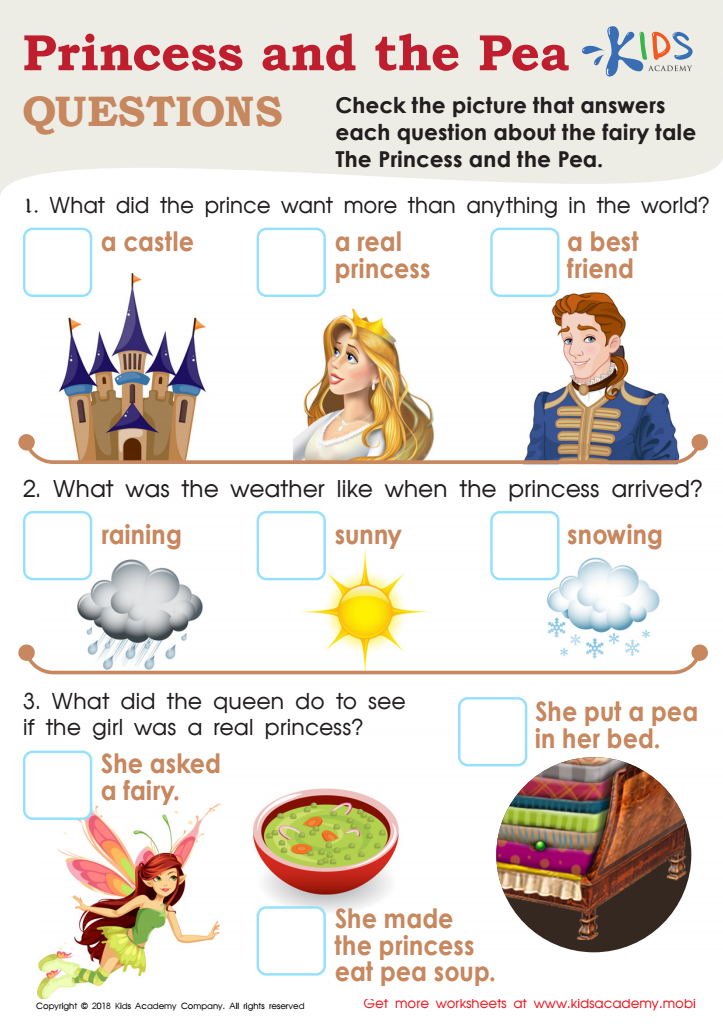
Your kid knows The Princess and the Pea inside-out? Test their knowledge with this worksheet. Ask your little one to read the questions and match each one to the picture. It's a fun way to see just how much attention they've paid to their bedtime story.
Princess and the Pea Questions Worksheet
Worksheet
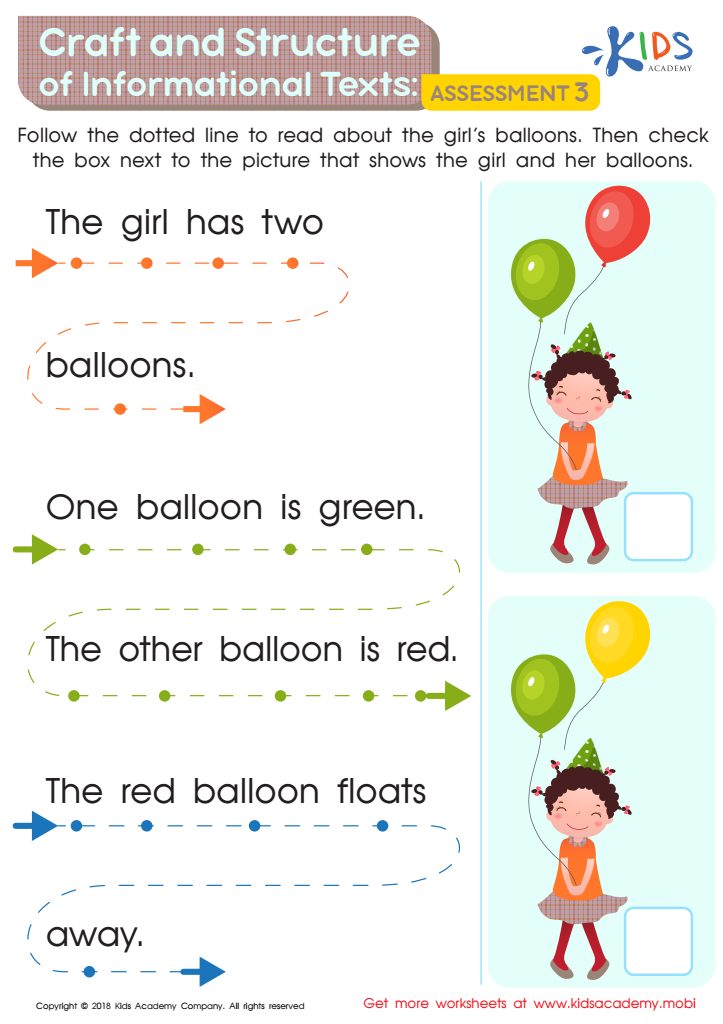
Craft and Structure of Informational Texts: Assessment 3 Worksheet

Craft and Structure of Informational Texts: Assessment 3 Worksheet

Test your beginning reader's understanding of left-to-right directionality and use of details from informational texts with this fun worksheet. Follow the traceable paths to find the right picture for each sentence. This will help your child gain confidence and be successful as a reader.
Craft and Structure of Informational Texts: Assessment 3 Worksheet
Worksheet
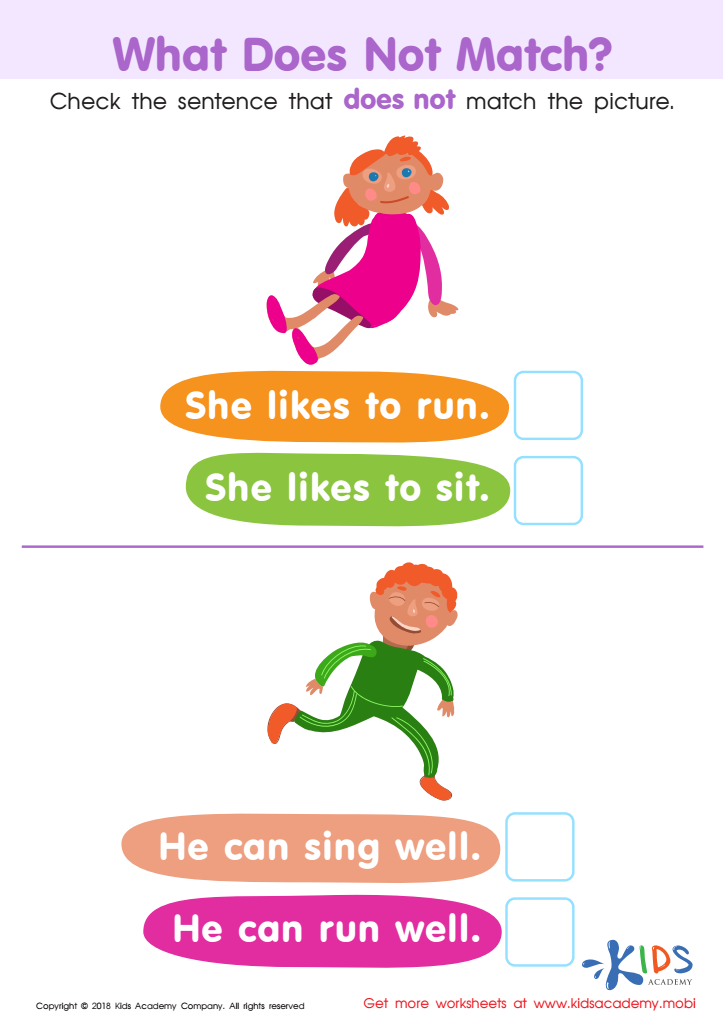
What Does Not Match? Worksheet


What Does Not Match? Worksheet

Emerging readers need to practice using visual cues and repetitive text. This colorful PDF provides them with an opportunity to look at pictures, use discrimination and discern which phrase does not match. It also enables them to gain familiarity with high-frequency words to aid decoding longer sentences.
What Does Not Match? Worksheet
Worksheet


... 5 6

Parents and teachers should prioritize reading fiction for children ages 5-7 because it plays a crucial role in cognitive, emotional, and social development. At this stage, children are developing their language skills, and exposure to stories enriches their vocabulary and enhances comprehension. Fiction often introduces new concepts, cultures, and experiences, expanding their understanding of the world.

Moreover, reading fiction fosters imagination and creativity, allowing children to visualize scenarios and characters, which enriches their problem-solving skills. These narratives also help children recognize and express emotions, teaching them empathy by relating to diverse characters and their journeys.

Books can serve as tools for discussing complex themes like friendship, bravery, and resilience in a context that children can grasp, promoting moral development and critical thinking skills. Establishing a routine of reading fiction can also encourage a lifelong love for literature, aiding academic performance as children progress.

In addition, shared reading experiences enhance bonding between parents or teachers and children, creating a nurturing environment that fosters a sense of security. Ultimately, encouraging young readers is an investment in their future, equipping them with essential tools for success both in and out of the classroom.