Governance and Civics Worksheets for Ages 5-8 - Page 3
51 filtered results
-
From - To
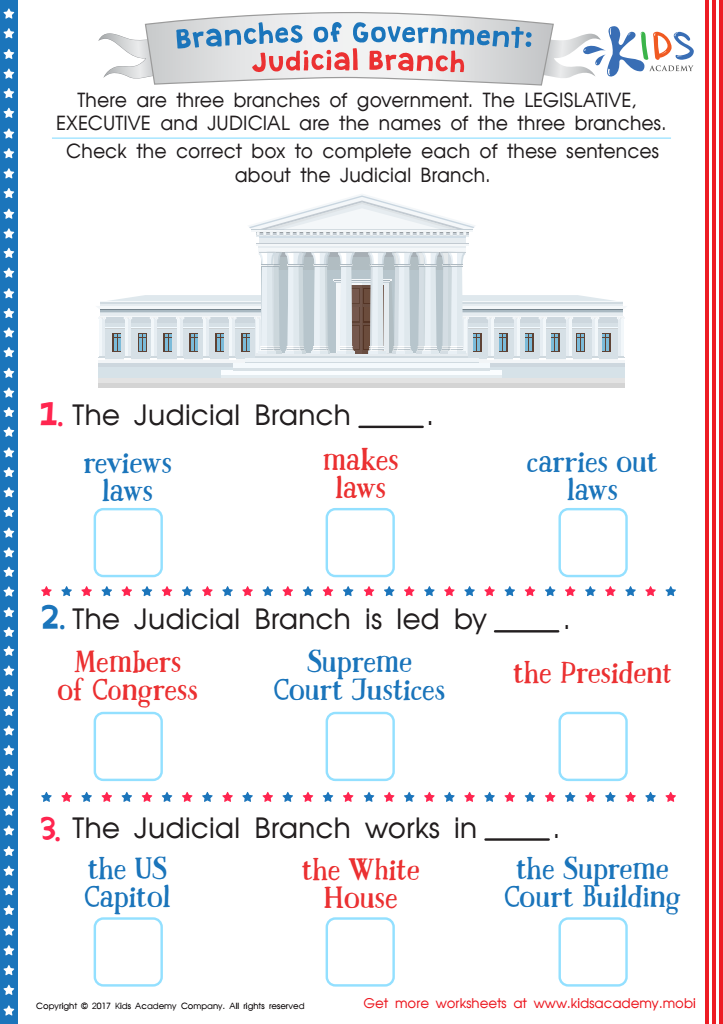
Braches of the Government: Judicial Branch Worksheet
 Assign to My Students
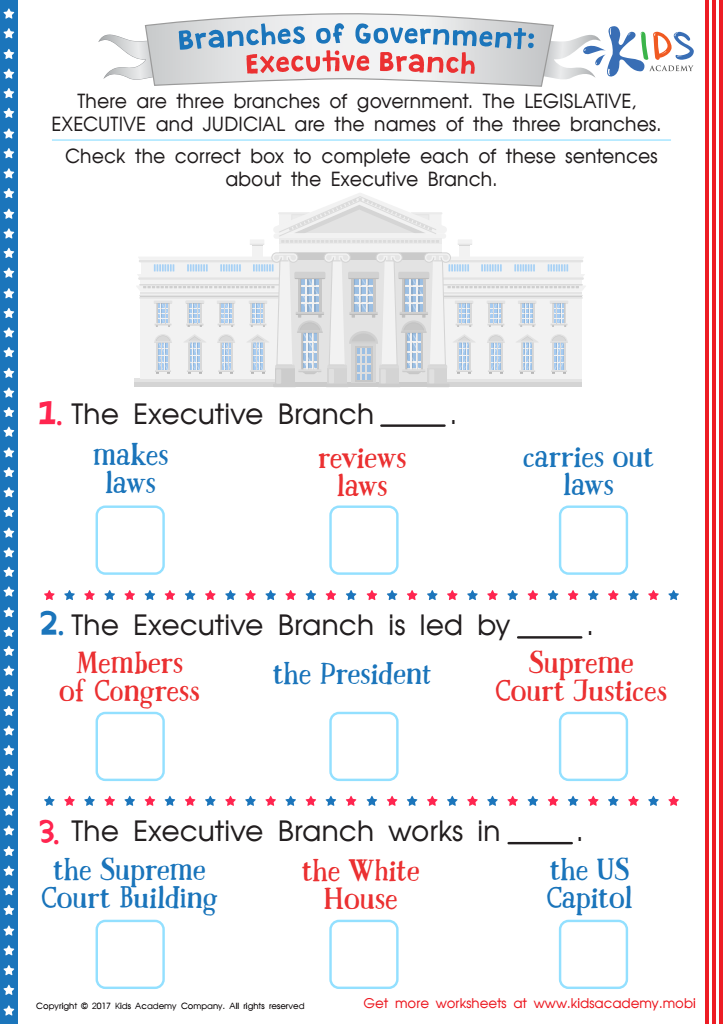
Branches of the Government: Executive Branch Printable
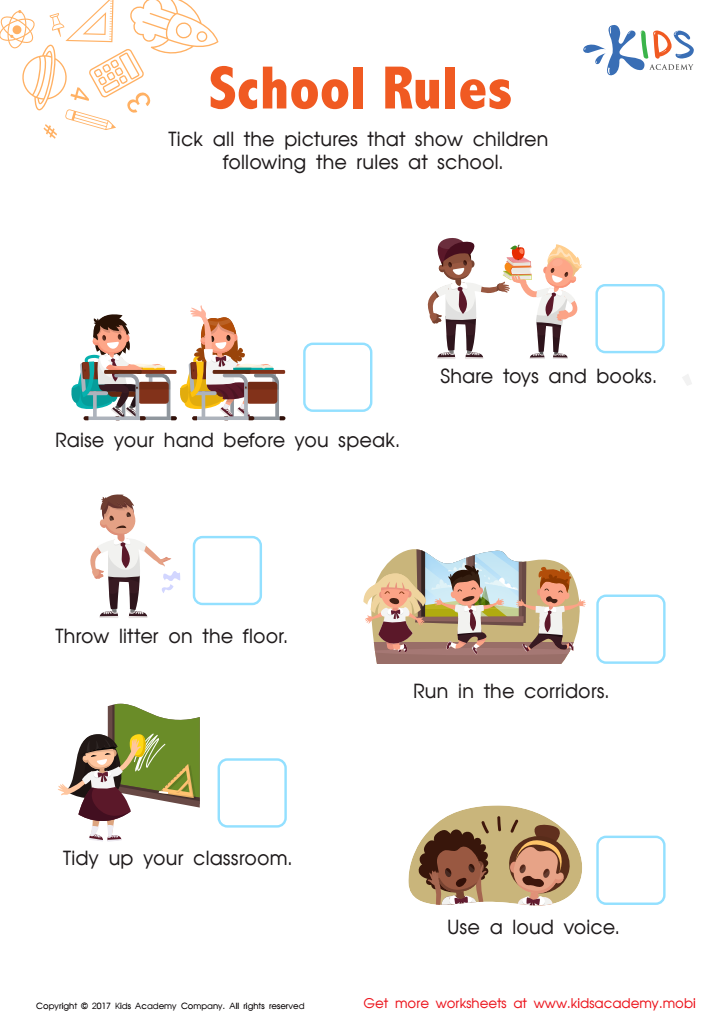
School Rules Worksheet


Governance and civics education for children ages 5-8 is crucial for fostering informed, responsible future citizens. At this young age, children begin to develop core social skills and values that can shape their understanding of society. Introducing concepts of governance, such as rules, fairness, and cooperation, helps them navigate their environment and relate to peers.
Teaching civics empowers children to understand their roles and responsibilities within their families, classrooms, and communities. For instance, when kids comprehend the importance of rules and decision-making, they cultivate respect for authority and the ability to engage in constructive dialogue. Such skills promote empathy and help them appreciate diversity and inclusion, creating a more harmonious social atmosphere.
Moreover, early exposure to governance and civics encourages critical thinking and active participation. They learn about the importance of community service, leadership, and how their voices matter. By engaging children in discussions about rights, responsibilities, and community roles, parents and teachers lay the groundwork for future civic engagement.
In summary, emphasizing governance and civics helps children develop essential life skills, nurtures responsibility, and builds a foundation for informed citizenship, making it vital for parents and teachers to prioritize these lessons early on.








