
Money Worksheets for Ages 5-9
16 filtered results
Difficulty Level
Grade
Age
-
From - To
Subject
Activity
Standards
Discover our engaging Money Worksheets designed for children aged 5-9! These interactive resources help young learners master essential money skills, from identifying coins to simple addition and subtraction with prices. With colorful visuals and fun activities, kids will enjoy practicing their math skills while becoming confident in their understanding of money. Ideal for home or classroom use, these worksheets also promote real-world applications of math concepts. Encourage financial literacy early on and watch your child’s confidence grow as they tackle each worksheet. Browse our collection today and support your child’s journey in learning about money in a fun and effective way!
Favorites
With answer key
Interactive
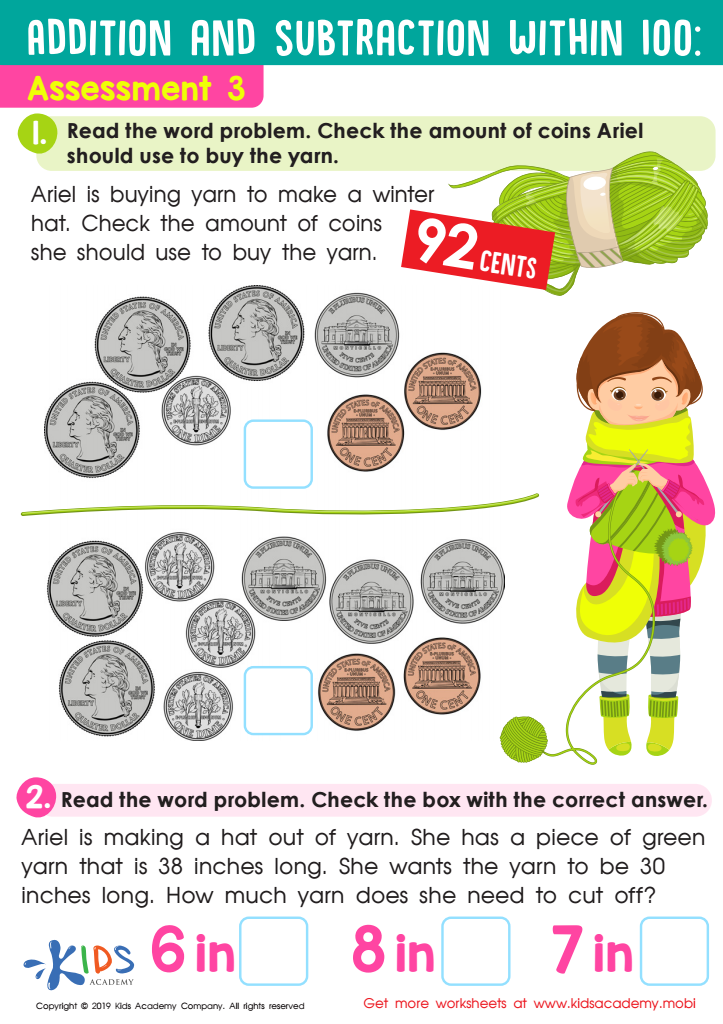
Assessment 3 Math Worksheet
Ariel needs to buy yarn. Do your kids know what yarn is? If they've seen you knit, they will. Help them solve the two word problems to figure out how many coins Ariel needs to buy it.
 Assign to My Students
Assessment 3 Math Worksheet
Worksheet
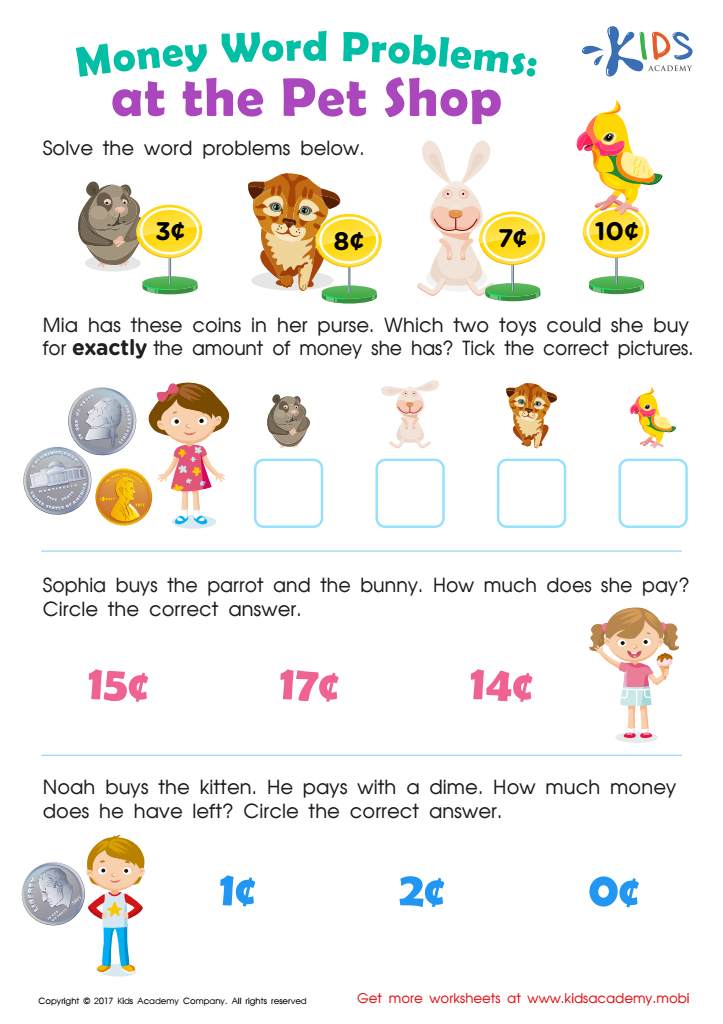
Pet Shop Worksheet
Teach your child a key life skill: counting and managing money. With this worksheet, they'll learn to count coins and calculate purchases at the pet shop. Give them colorful, fun math practice!
Pet Shop Worksheet
Worksheet
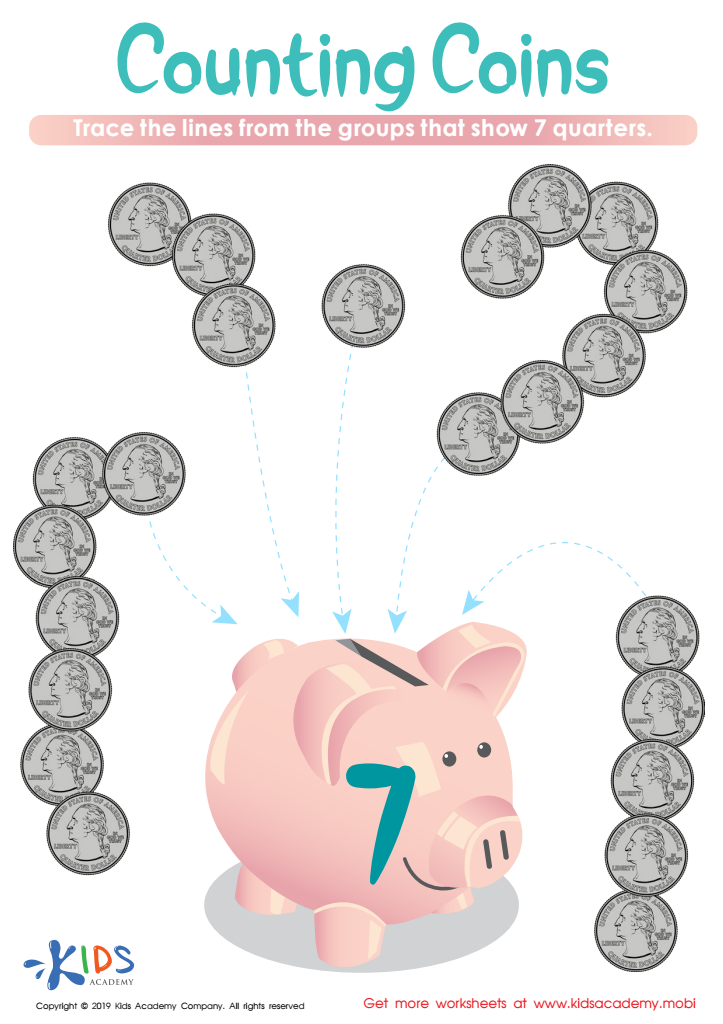
Counting Coins Worksheet
Help your students overcome their fear or aversion of counting and learning numbers with this fun worksheet! It features colorful pictures with four groups of coins. Ask the students to count each group, then trace the lines to the piggy bank. Show them it's easy to count and learn numbers!
Counting Coins Worksheet
Worksheet
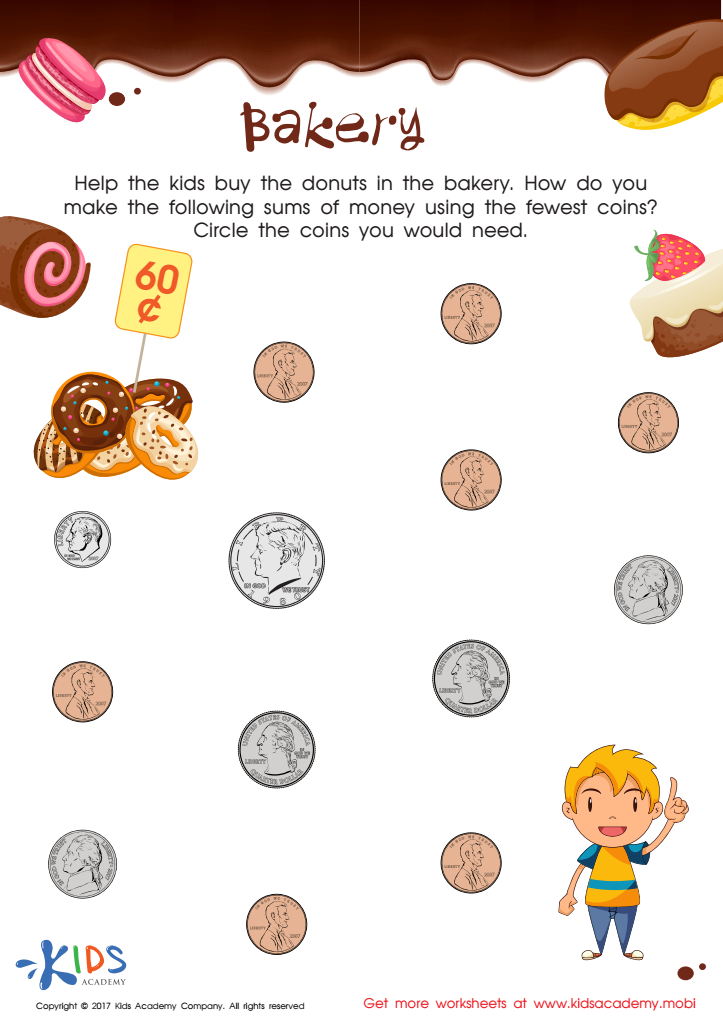
Counting Coins Worksheet
It will challenge them to spend a given amount using the least coins possible. Perfect for 2nd grade.
Help your child learn to count coins with this fun bakery-themed worksheet. It's perfect for 2nd graders and will challenge them to use the least coins possible to spend a set amount. Develop a valuable life skill and have fun while doing it!
Counting Coins Worksheet
Worksheet
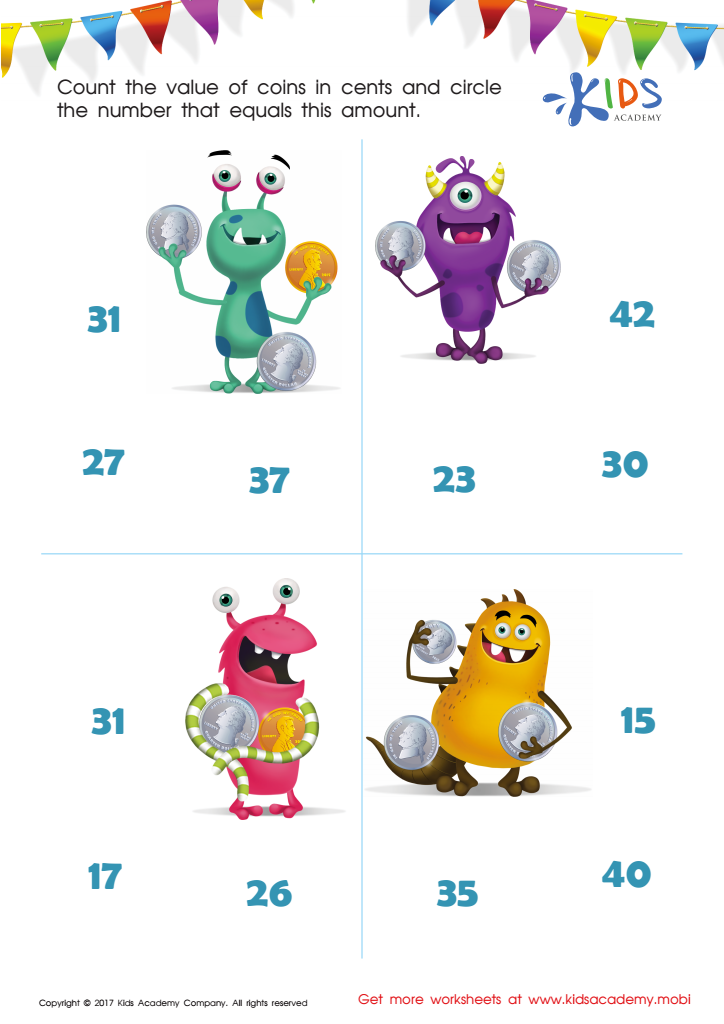
How Many Coins Money Worksheet
Have fun while counting coins: look at the monsters and count the coins in their hands. Challenge your little learners to count and write down the number of coins each one has. Enjoy the time together!
How Many Coins Money Worksheet
Worksheet
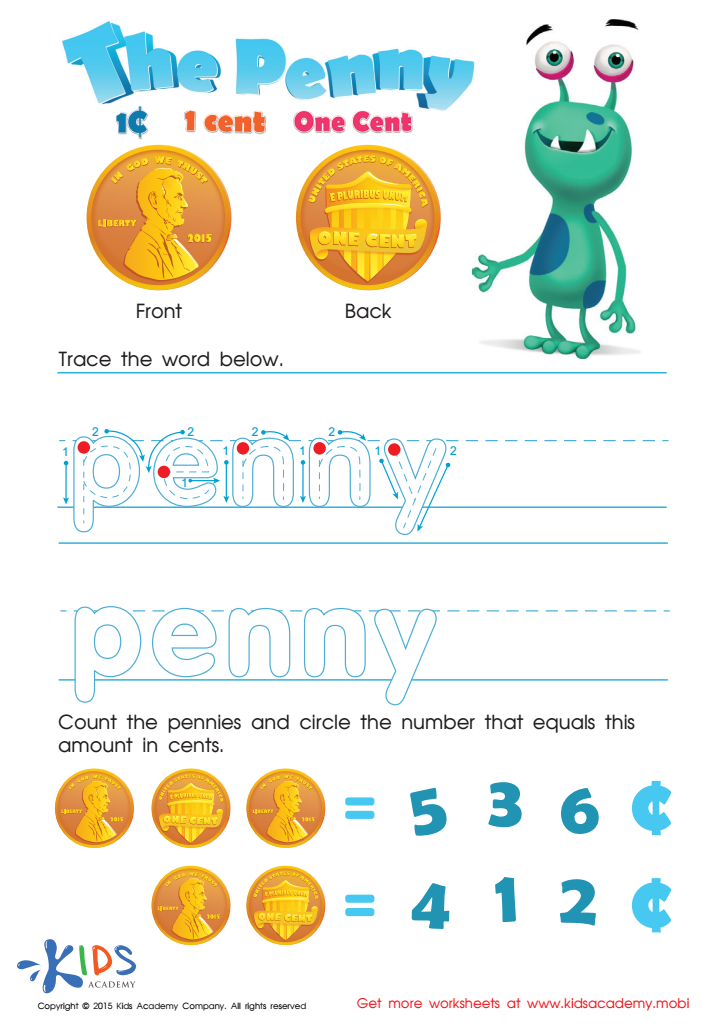
One Cent or the Penny Money Worksheet
Counting money made easy with Kids Academy's new collection of worksheets! Start with the one cent coin, or "Penny": trace it and count the pennies to work out the total. Visit our site for more free, printable money worksheets.
One Cent or the Penny Money Worksheet
Worksheet
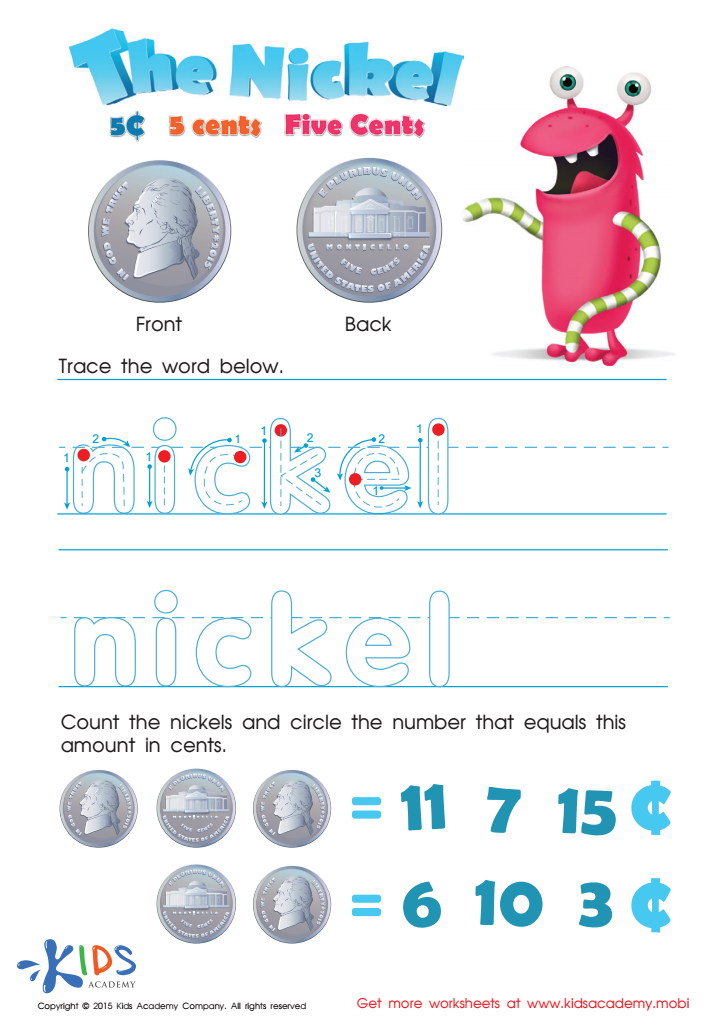
Five Cents or the Nickel Money Worksheet
Counting money games help kids make learning money fun and easy. Next up: the 5 cent coin, or nickel. Look at both sides and remember them. Then, trace the word "nickel" to help you remember. Finally, count the nickels and work out amounts in cents. Let's do this! Kids Academy helps make money learning easy and fun!
Five Cents or the Nickel Money Worksheet
Worksheet
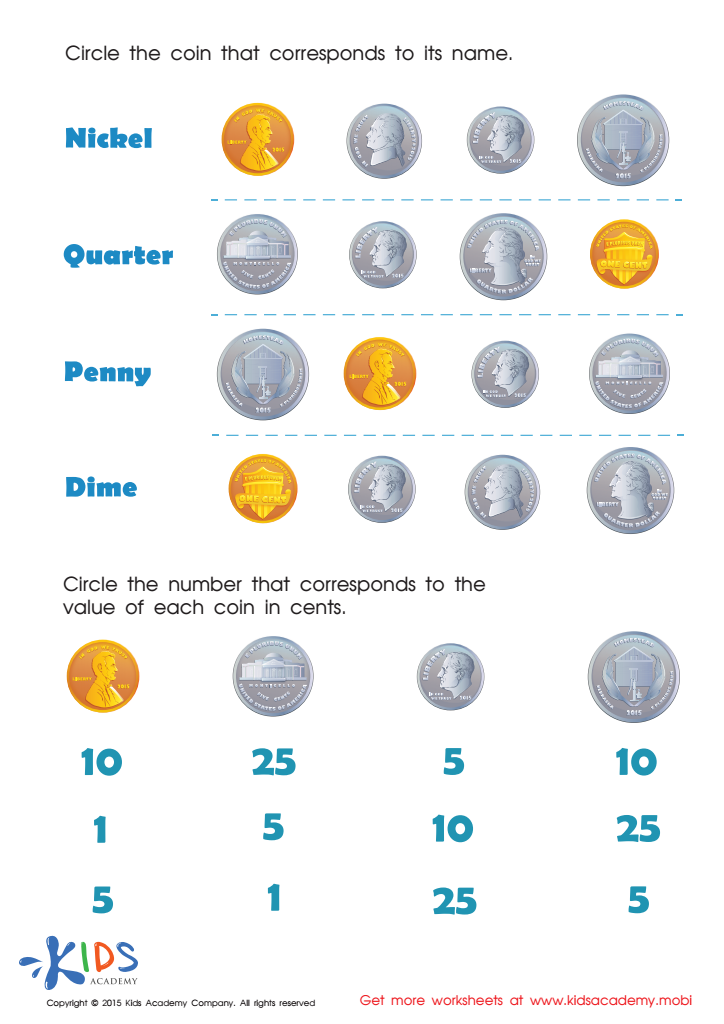
Coin Names and Values Money Worksheet
Learning about money can be easy, interesting and fun! Start by memorizing names and values of coins and then try matching pictures of coins to the right names and values. Find a great selection of counting money worksheets at our web site and keep learning.
Coin Names and Values Money Worksheet
Worksheet
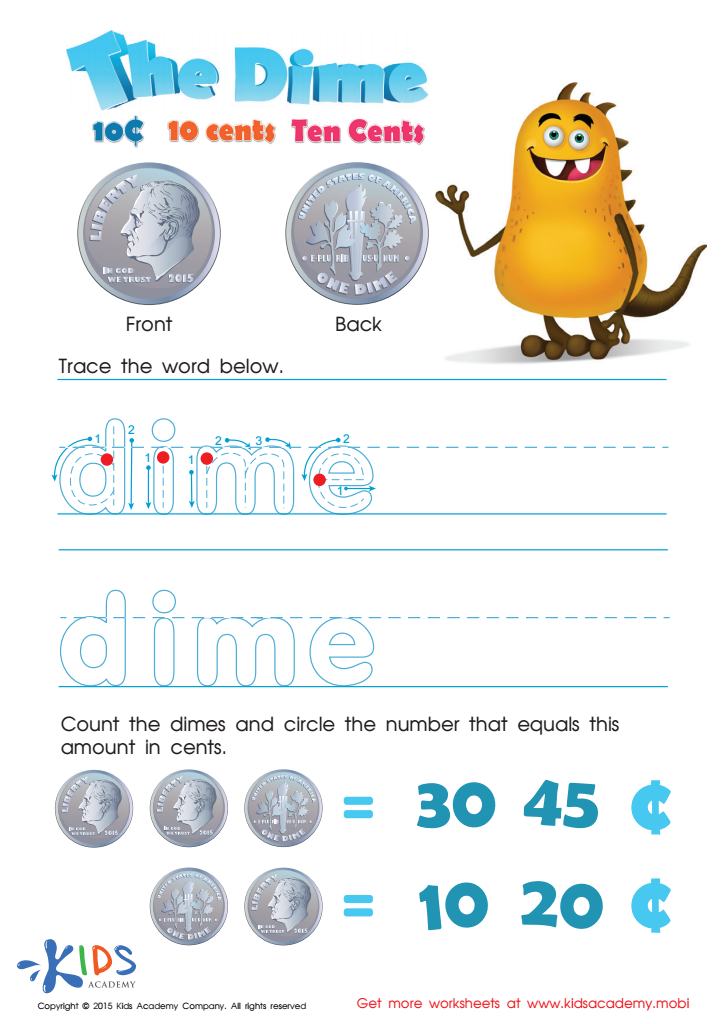
Ten Cents or the Dime Money Worksheet
Introduce your kids to coin games! Start with a dime: trace the word on both sides and count the dimes. Kids Academy has printable worksheets to help your kids learn how to count money.
Ten Cents or the Dime Money Worksheet
Worksheet
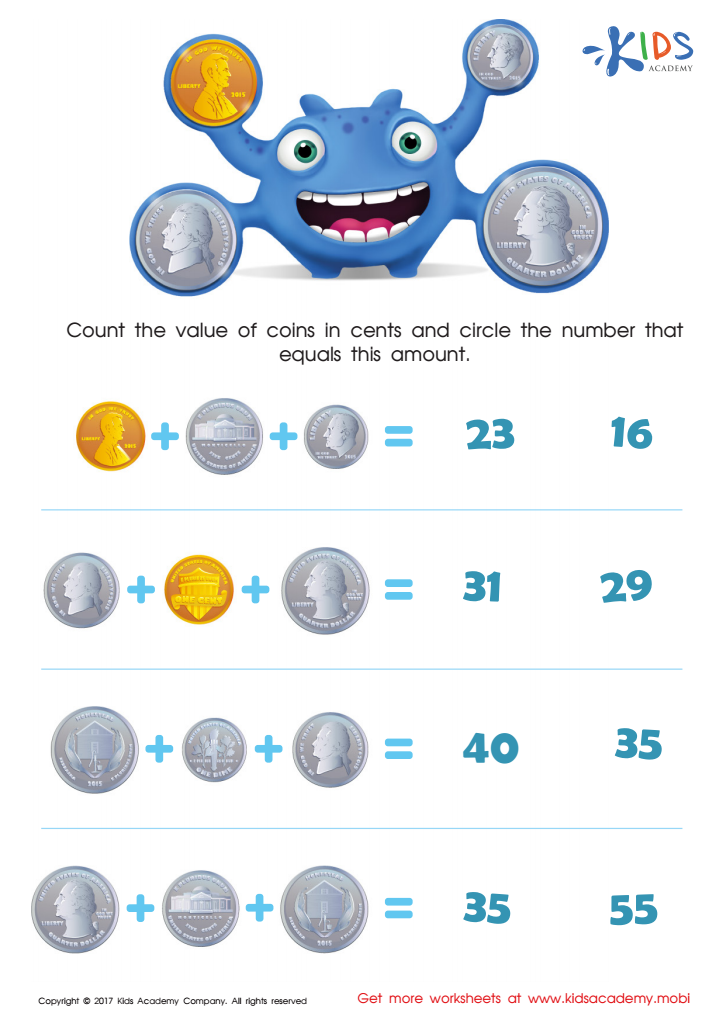
Counting the Coins Money Worksheet
Count coins quickly and work out sums in cents. Remember the value of each coin!
Counting the Coins Money Worksheet
Worksheet
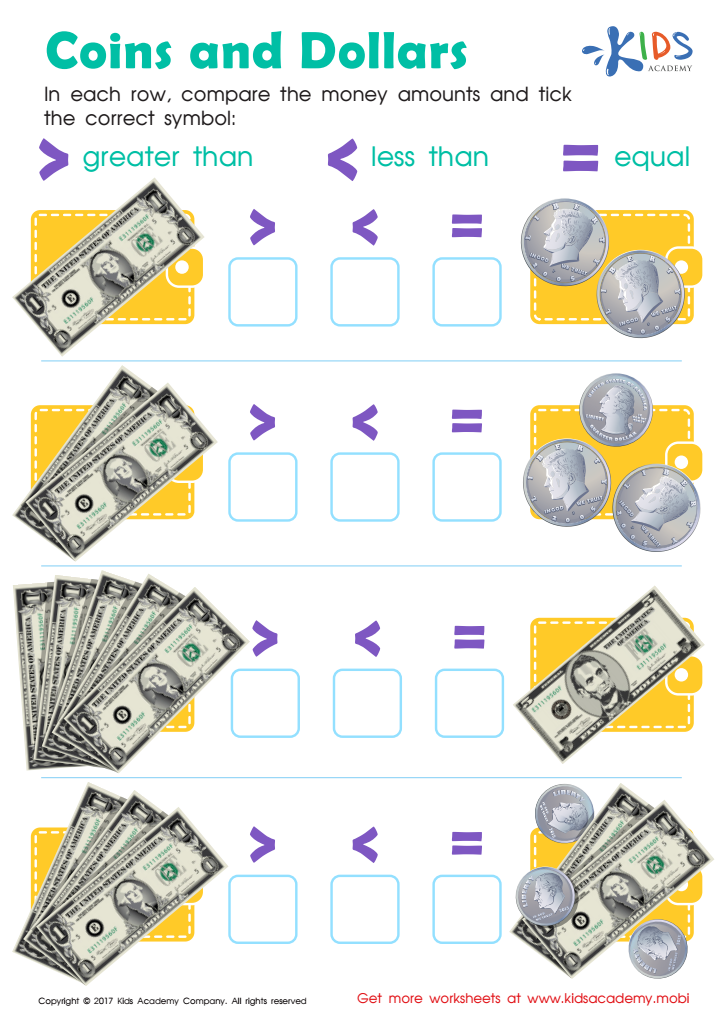
Money: Coins Dollars Printable
Motivate your kid to learn and practise essential math skills, like 'greater than' and 'less than', by introducing the importance of money! The money worksheet "Coins and Dollars" will give them a hands-on experience of counting coins and dollars, making math symbols more memorable.
Money: Coins Dollars Printable
Worksheet
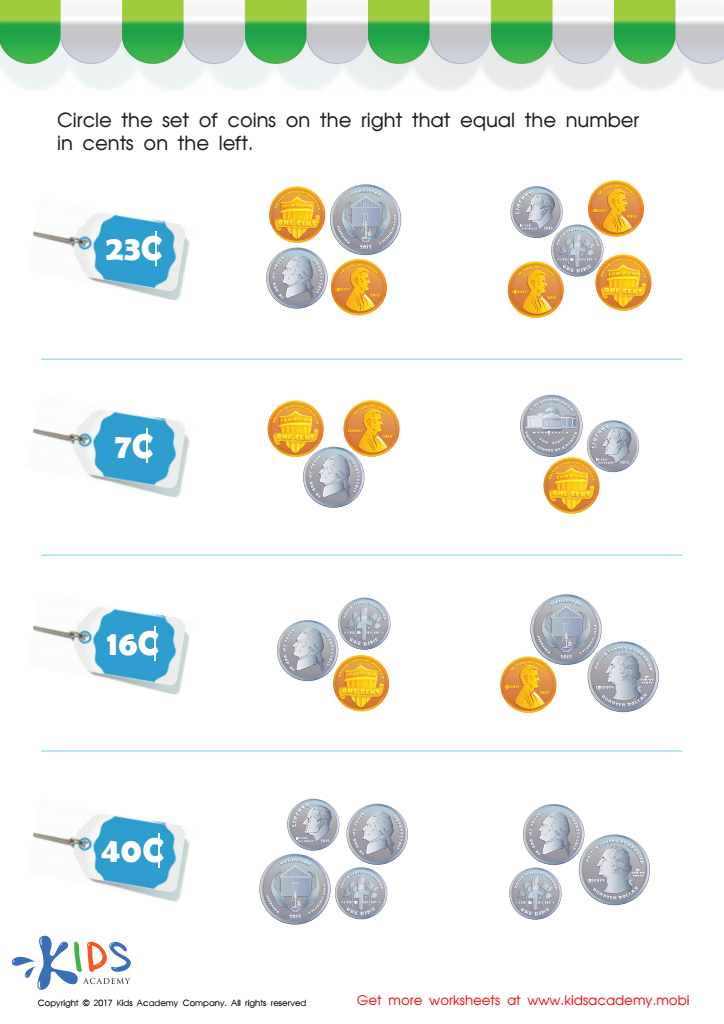
Picking the Coins You Need Money Worksheet
Let's learn to count money with Parents and Kids Academy! Investigate a real shop together: buy a globe, pencils, books, and a school bag using coins. Then, circle the coins you'll need. Visit our website for more free and fun money games for kids!
Picking the Coins You Need Money Worksheet
Worksheet
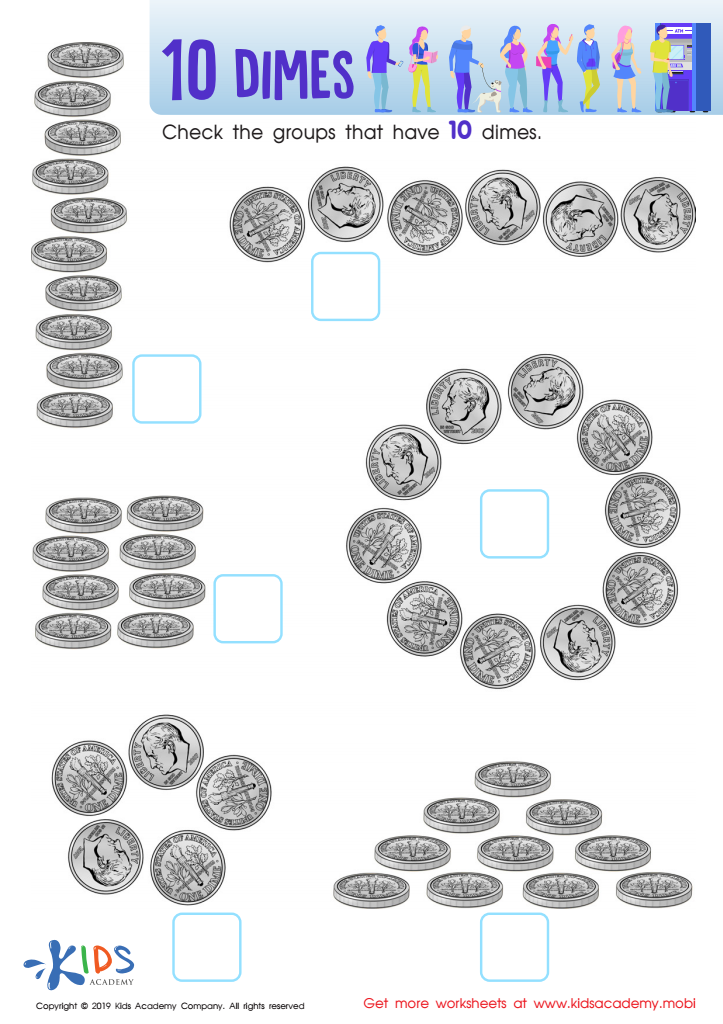
10 Dimes Worksheet
Get your students ready for the task by asking them to count as high as they can. Familiar objects are stacked in groups. Look at the picture and help them count the dimes. Circle the groups of 10. This worksheet will help kindergartners practice counting up to and recognizing 10 dimes.
10 Dimes Worksheet
Worksheet
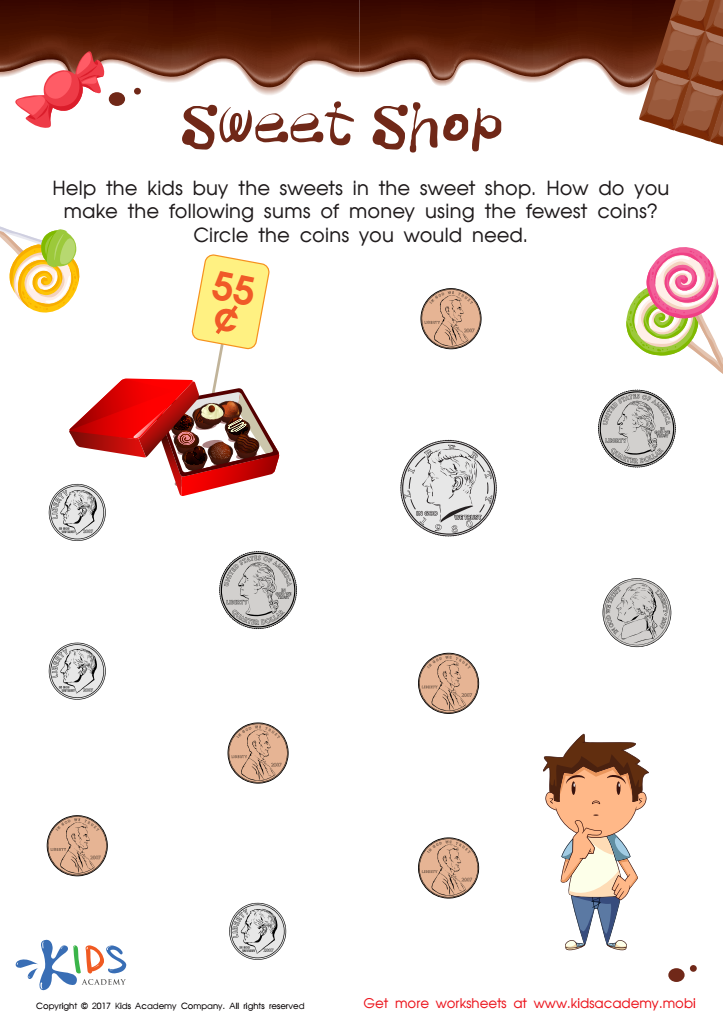
Sweet Shop – Counting Coins Worksheet
Help your child get ready to buy sweet treats with this coin counting worksheet. It'll challenge them to use the fewest coins possible. With knowledge of coin values, they'll work out the right combination to get the sweets!
Sweet Shop – Counting Coins Worksheet
Worksheet
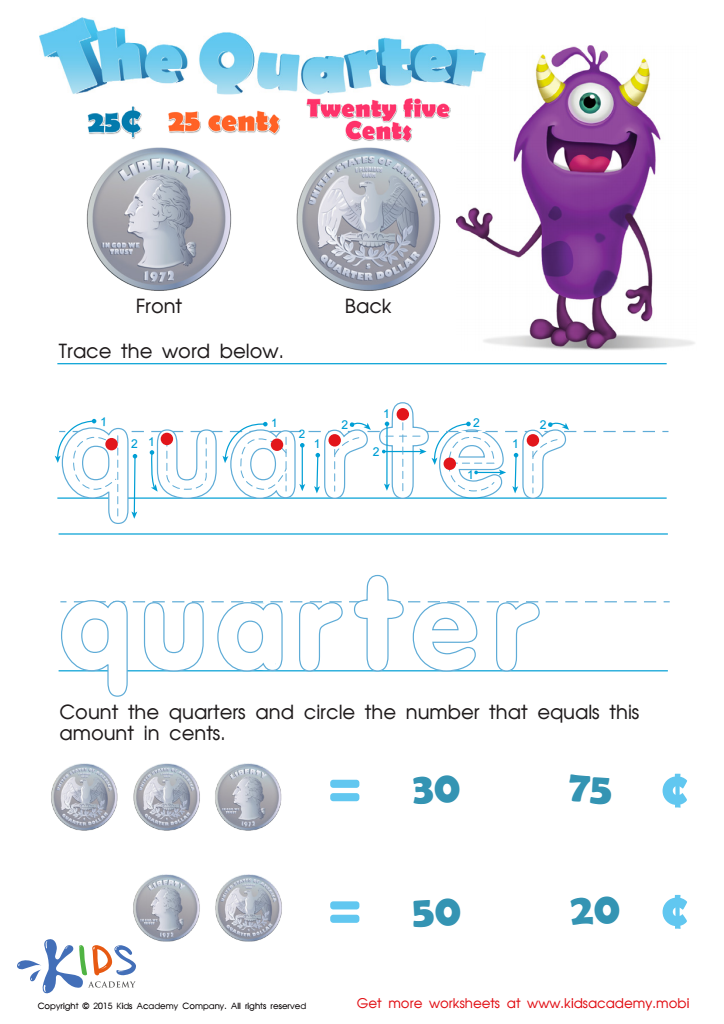
Twenty Five Cents or the Quarter Money Worksheet
Check out our new printable money games - learn to count money easily! With quarters, trace the word, count them and calculate the amount in cents. More worksheets at our website. Give it a try!
Twenty Five Cents or the Quarter Money Worksheet
Worksheet
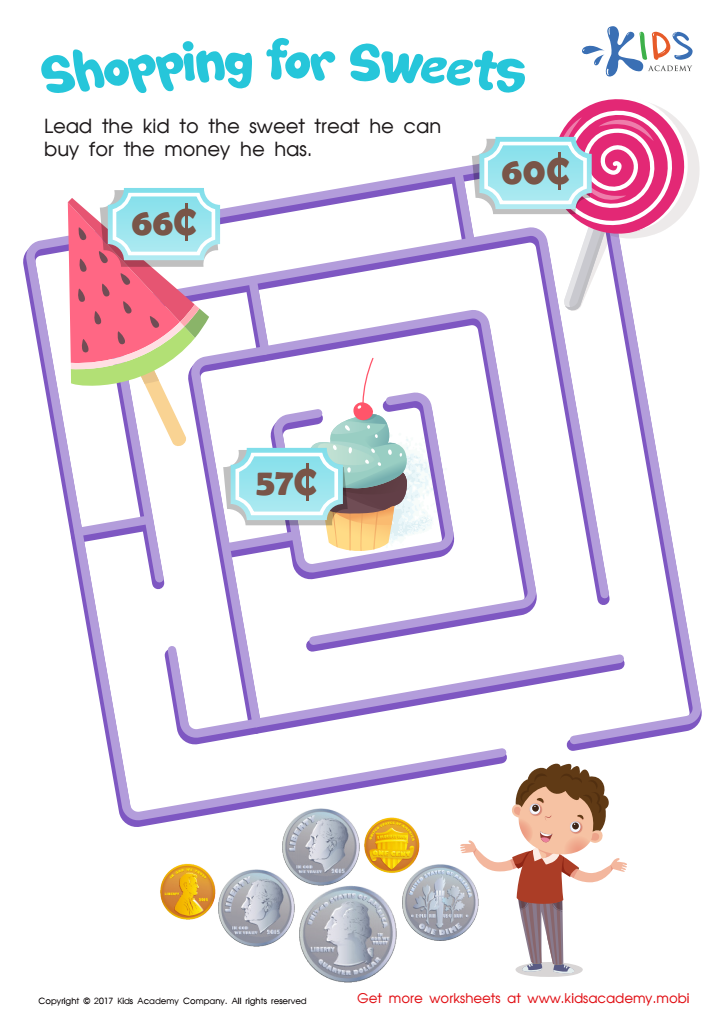
Shopping for Sweets Worksheet
Help your child hone their math and money skills with Shopping for Sweets! They'll count coins, work their way through a maze, and find the amount of money. Fun and educational - perfect for kids!
Shopping for Sweets Worksheet
Worksheet
Join Kids Academy for Free
Who is primarily going to use this learning content?








Teaching children about money from ages 5 to 9 is crucial for their financial literacy and lifelong skills. In this formative stage, children develop foundational understanding of money, including concepts like saving, spending, and sharing. When parents or teachers introduce these ideas, they lay the groundwork for responsible financial behavior in adulthood.
At this age, children are naturally curious and eager to learn. Engaging them in discussions about money can enhance their mathematical skills and critical thinking. For example, understanding the value of coins and bills can reinforce counting skills and basic arithmetic.
Moreover, early lessons about budgeting and prioritizing needs vs. wants can foster decision-making skills. Children who grasp these concepts are more likely to grow into financially savvy adults who make informed choices about spending and saving.
Addressing money matters also supports character development, encouraging values such as delayed gratification, generosity, and teamwork when discussing sharing resources. Ultimately, by caring about financial education now, parents and teachers empower children to manage their money responsibly in the future, leading to healthier financial habits and improved overall well-being. Investing in financial literacy today prepares children for tomorrow’s economic challenges and opportunities.








