Filters

27 filtered results

Clear all filters
Favorites
With answer key
Interactive

27 filtered results

Difficulty Level

Grade


Subject

    Check out this FREE Trial Lesson on Graphs for age 5-9!

    Making Precise Line Plots

    Favorites
    With answer key
    Interactive
    • 5-9
    • With answer key
    • Graphs
    African Animal Safari Worksheet
    African Animal Safari Worksheet

    African Animal Safari Worksheet

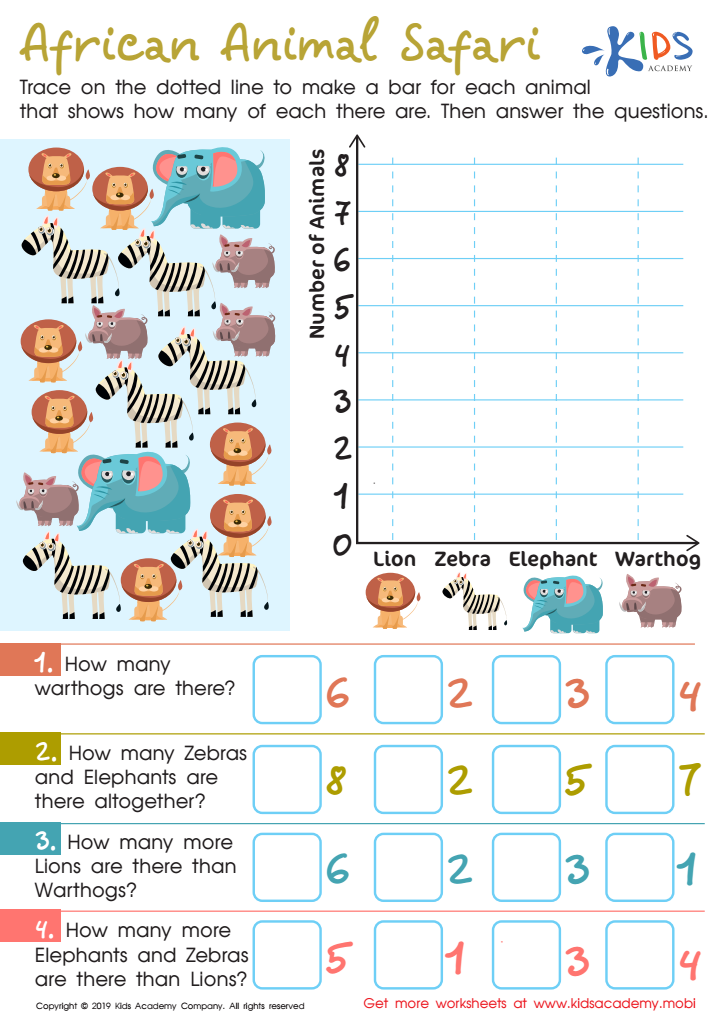
    Help students learn geography and math, with this worksheet. Examine the graph and ask your students questions. Have them answer using the graph and addition/subtraction exercises. This can help them name continents, countries, and animals unique to each.
    African Animal Safari Worksheet
    Worksheet
    Leaf Measure Line Plot Worksheet
    Leaf Measure Line Plot Worksheet

    Leaf Measure Line Plot Worksheet

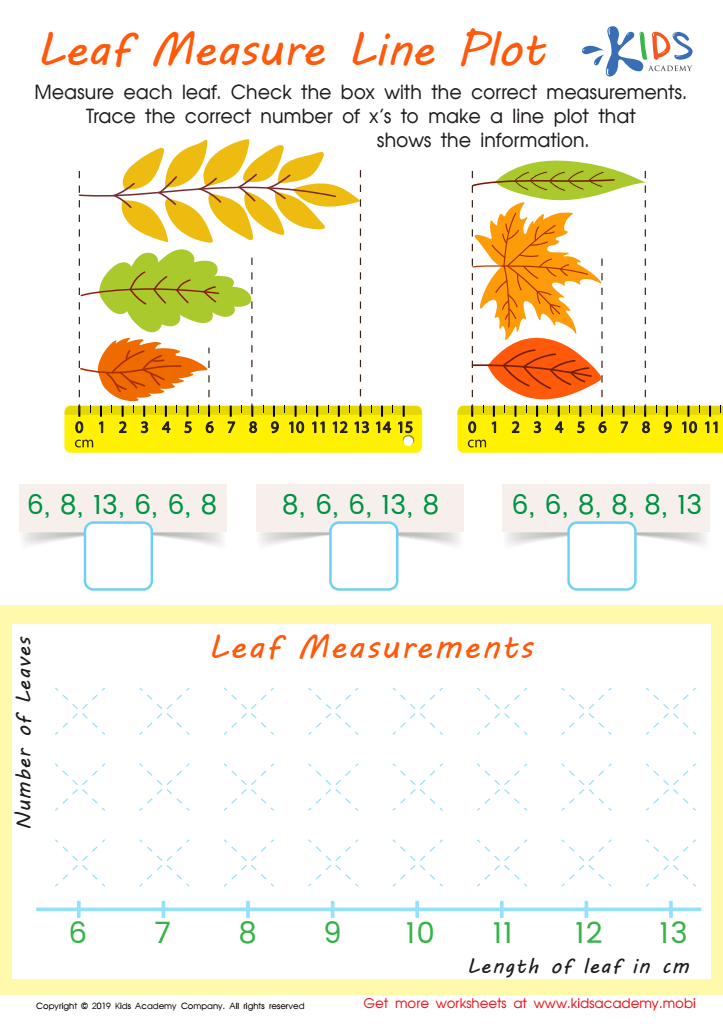
    Help your third grader measure each of the four leaves, and check the box with the correct measurements. Then, trace the right number of x's to make a line plot showing the data. This exercise will engage your students and make it easier for them to grasp the concept of line plots.
    Leaf Measure Line Plot Worksheet
    Worksheet
    Picture graph worksheet PDF
    Picture graph worksheet PDF

    Football Math Worksheet

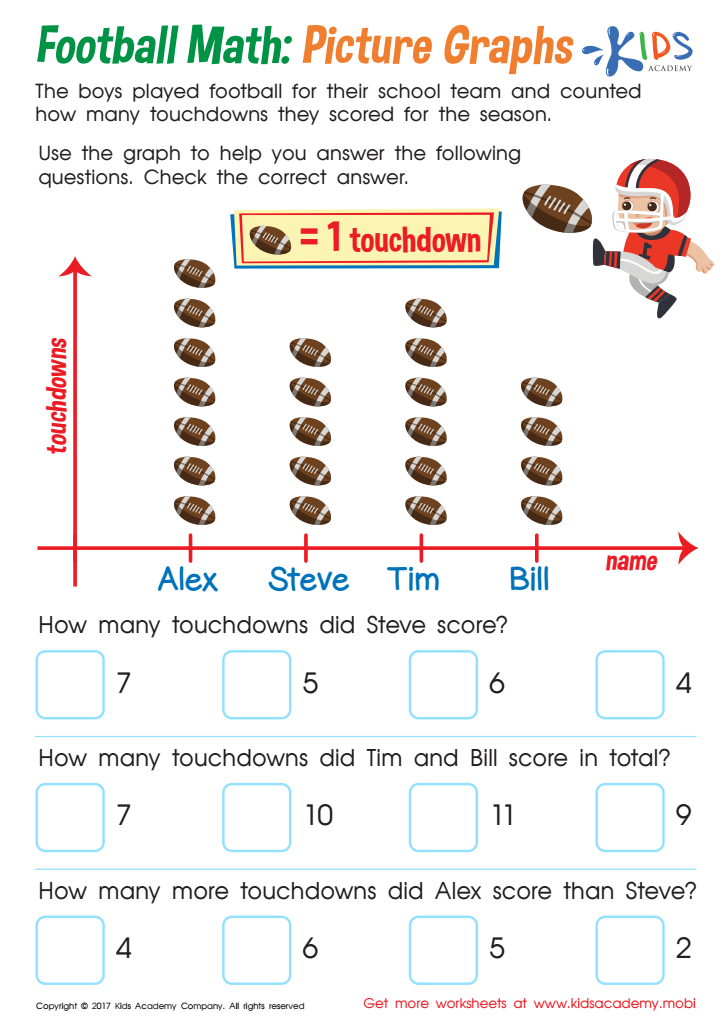
    It uses football-themed data to compare teammates' touchdowns. Perfect for motivating your child and helping them learn to read graphs in a fun way! Motivate your child to learn to read graphs with this fun and sporty picture graph worksheet! Football-themed data is used to compare teammates and their touchdowns, sure to delight your little sports fan. Perfect for teaching data analysis in an engaging way!
    Football Math Worksheet
    Worksheet


    Graphs are valuable tools for young learners aged 5-9, as they facilitate critical thinking, data literacy, and effective communication skills. Understanding graphs helps children to visualize information in a clear and organized manner, making complex data more accessible. This foundational skill is essential as it forms the basis for more advanced mathematical concepts later on.

    By introducing graphs, parents and teachers can cultivate curiosity and encourage children to explore patterns, relationships, and trends within data. This engagement with graphs promotes analytical thinking, empowering children to make sense of the world around them. For example, students can use bar graphs, pictographs, or line graphs to represent their favorite fruits or the weather throughout a week, making learning both fun and relevant.

    Furthermore, discussing graphs in the classroom or at home encourages teamwork and communication, as students often collaborate to gather and interpret data. By caring about graphs, parents and teachers not only enhance mathematical competencies but also foster process-driven discussions that are integral to developing informed, critical thinkers. Overall, graph literacy is essential for nurturing young minds and preparing them for an increasingly data-driven world.