Measurement Worksheets for Ages 6-7 - Page 5
99 filtered results
-
From - To
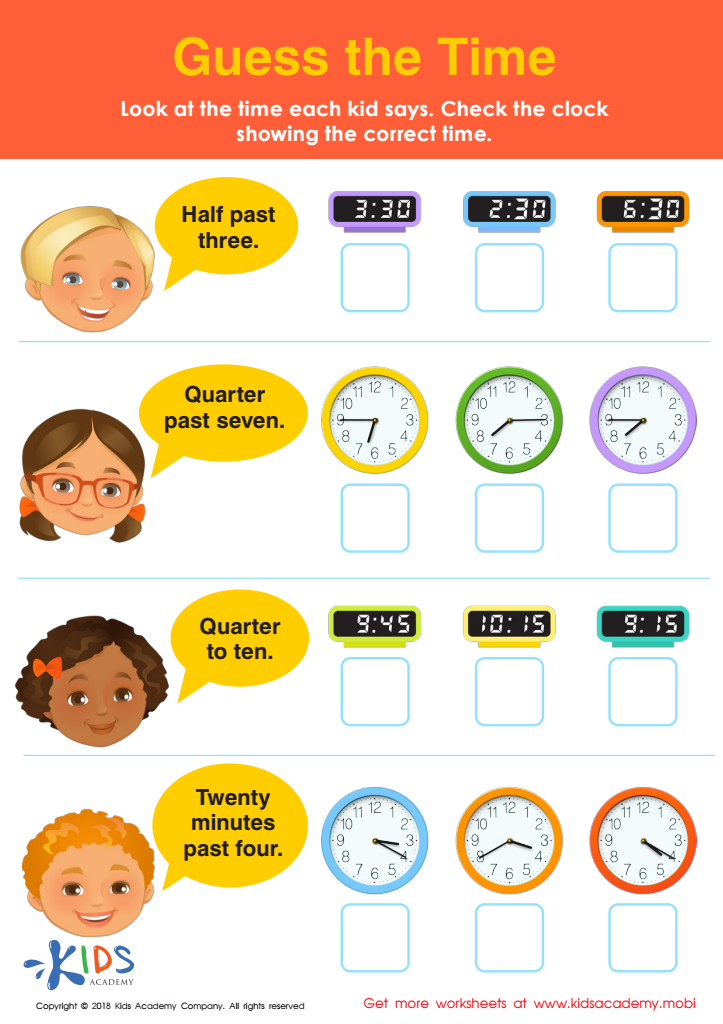
Guess the Time Worksheet
 Assign to My Students
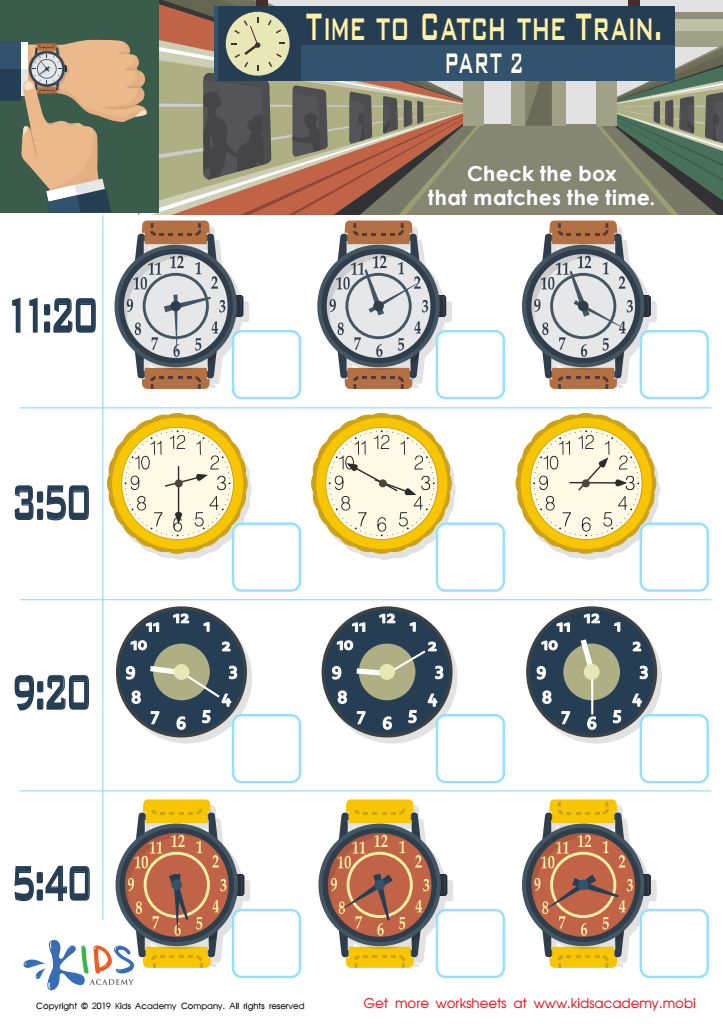
Time to Catch the Train Part 2 Worksheet
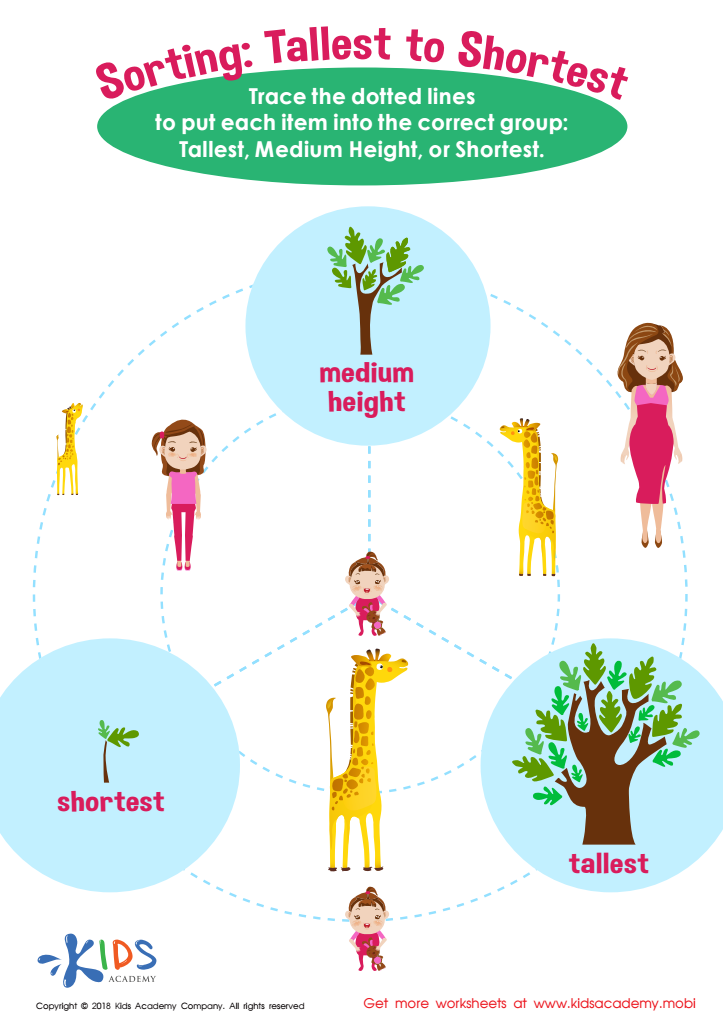
Sorting: Tallest to Shortest Worksheet








Measurement for Ages 6-7 is an essential concept that lays the foundation for children's understanding of the world around them. Worksheets on this topic are incredibly useful for several reasons. First, they introduce young learners to the basics of measurement, including length, height, weight, and volume, in a manner that is engaging and age-appropriate. This early exposure helps children to start thinking analytically and critically about the objects and spaces around them.
Moreover, worksheets designed for ages 6-7 are crafted with the developmental stage of the children in mind. They include colorful illustrations and real-life examples that make learning about measurement relatable and fun. By solving problems on these worksheets, children gradually build confidence in their ability to estimate, compare, and understand the concept of measurement.
Additionally, measurement activities foster practical mathematical skills. They not only align with educational standards but also enhance problem-solving abilities, attention to detail, and logical thinking. Through repetitive practice on worksheets, children become familiar with the units of measurement and the tools used, such as rulers, scales, and measuring cups, thereby developing a practical skill set that is applicable in their daily lives.
In summary, worksheets on Measurement for Ages 6-7 offer a foundational step towards a comprehensive understanding of measurement. These tools are indispensable in making the learning process interactive, enjoyable, and deeply informative for young minds.








