Seasons Worksheets for Ages 6-8
7 filtered results
-
From - To
Discover the perfect tool for young learners aged 6-8 to explore the wonders of seasons with our engaging seasons worksheets! Designed by education experts, these worksheets blend fun activities and educational content to help children grasp the concepts of spring, summer, fall, and winter. Your child will enhance their understanding of weather patterns, seasonal changes, and the natural world. Through interactive coloring, matching, and problem-solving exercises, your little one will develop critical thinking skills and foster a love for science. Let’s make learning about seasons an exciting adventure with our dynamic, easy-to-use worksheets!
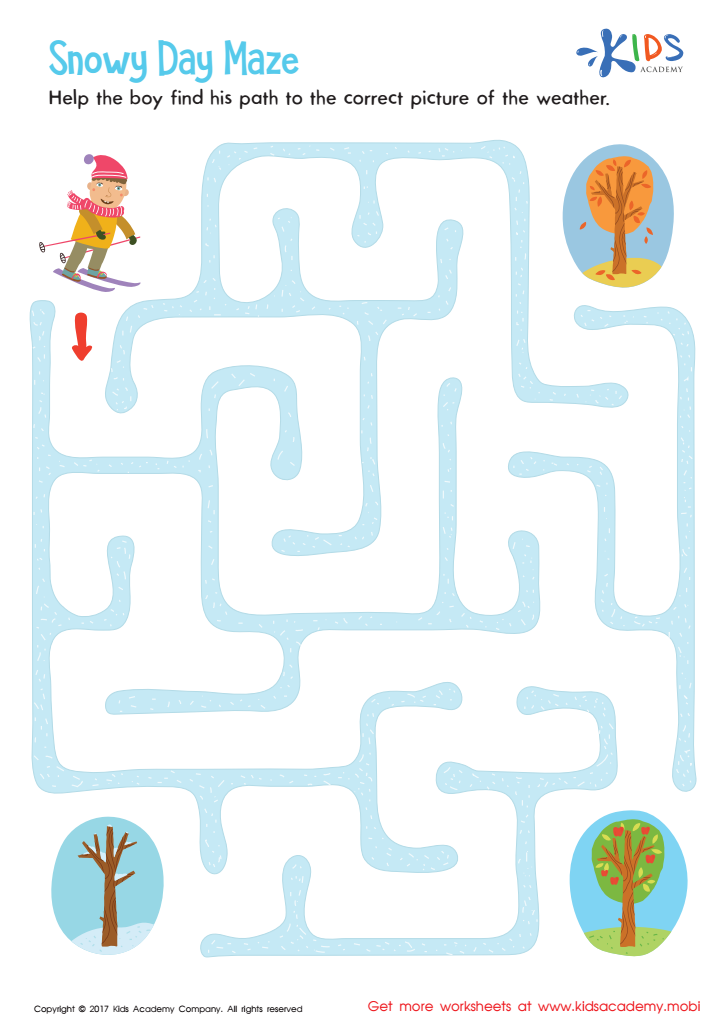
 Assign to My Students
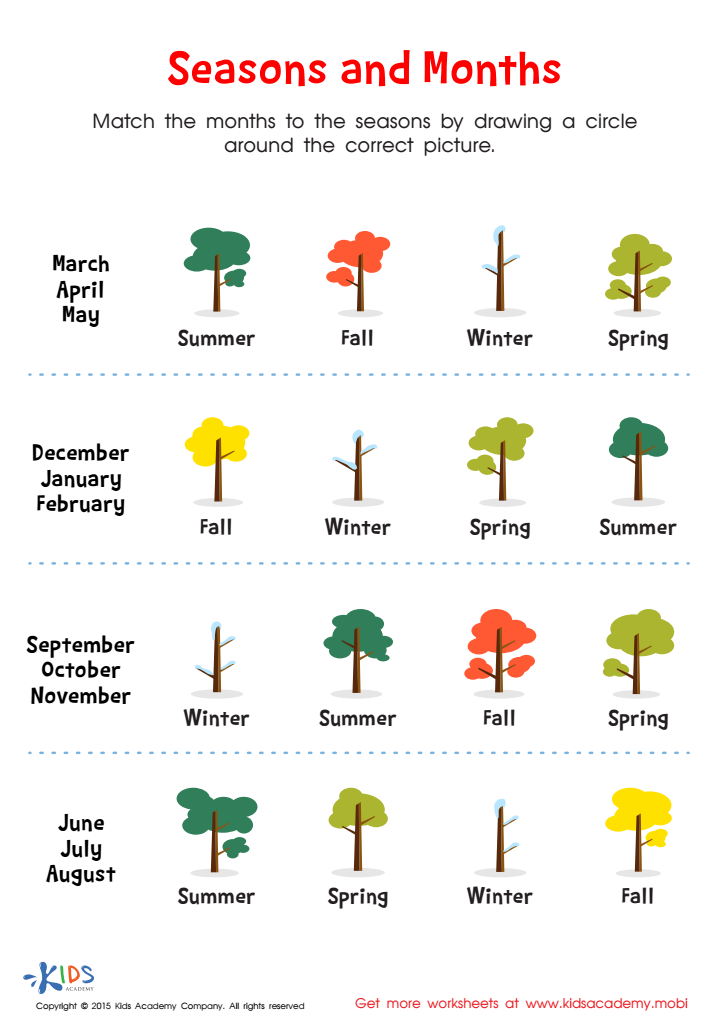
Seasons and Months Worksheet
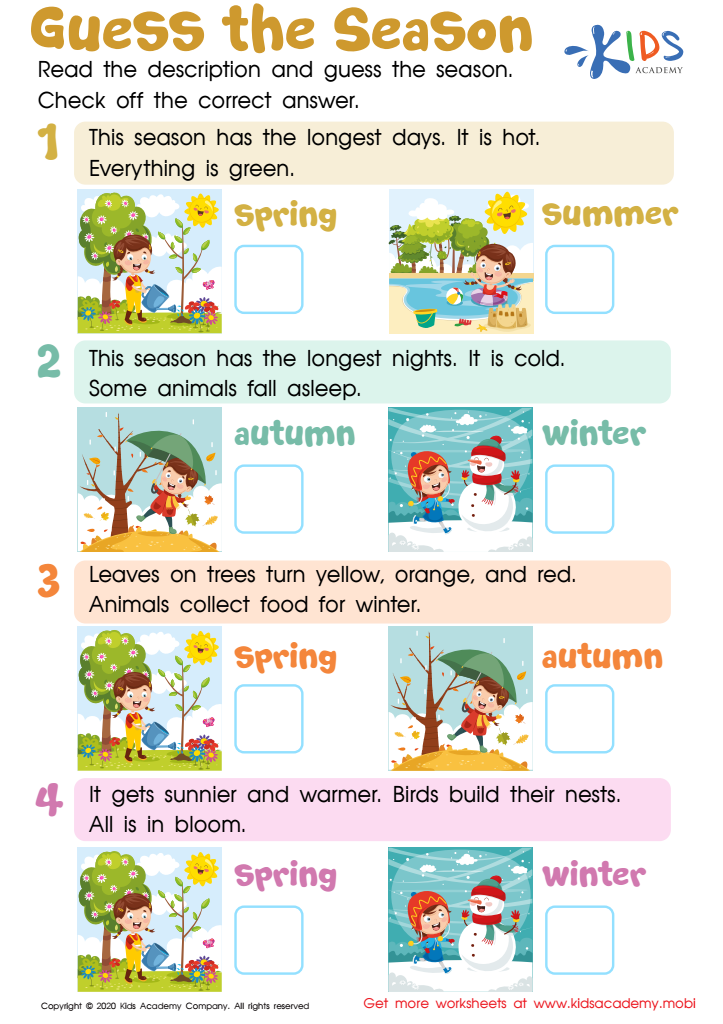
Guess the Season Worksheet
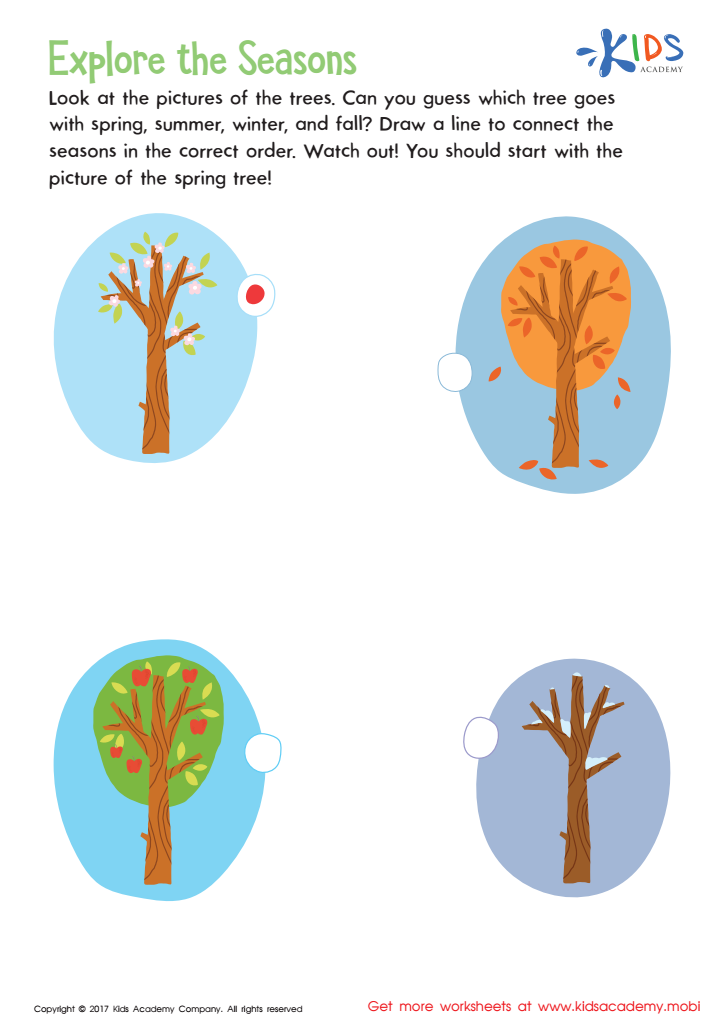
Explore the Seasons Worksheet
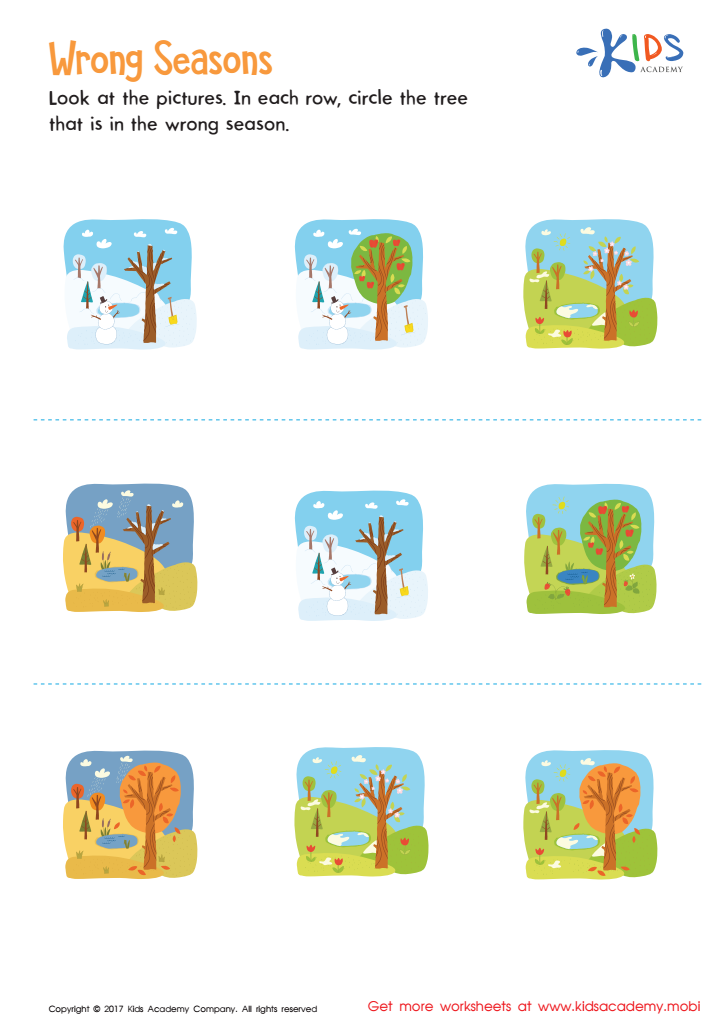
Wrong Seasons Worksheet
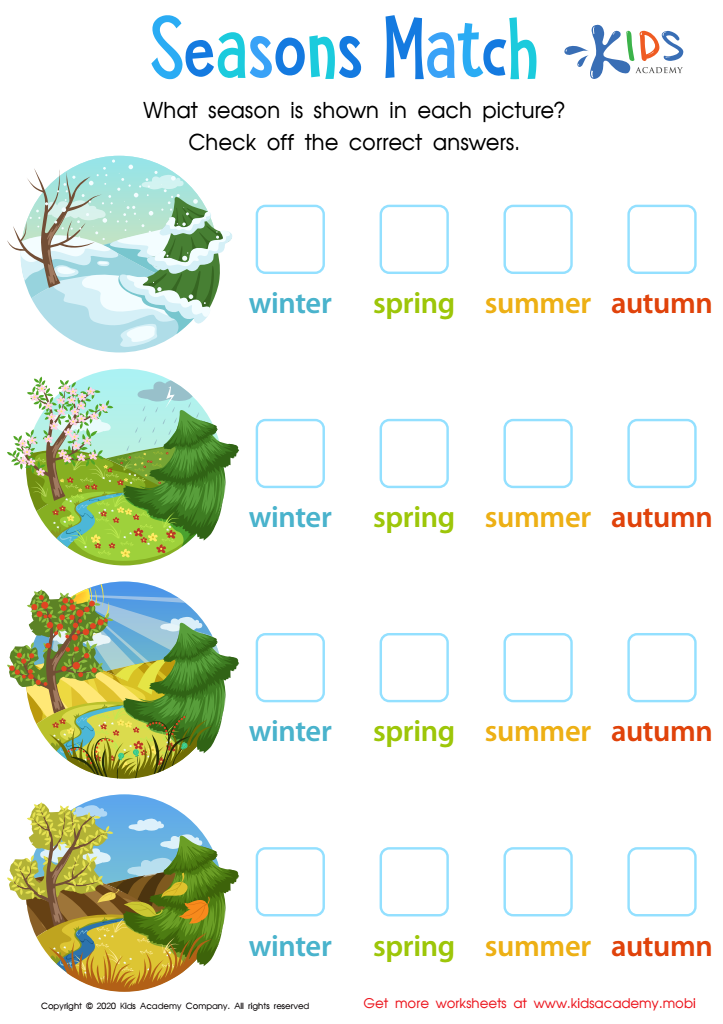
Seasons Match Worksheet
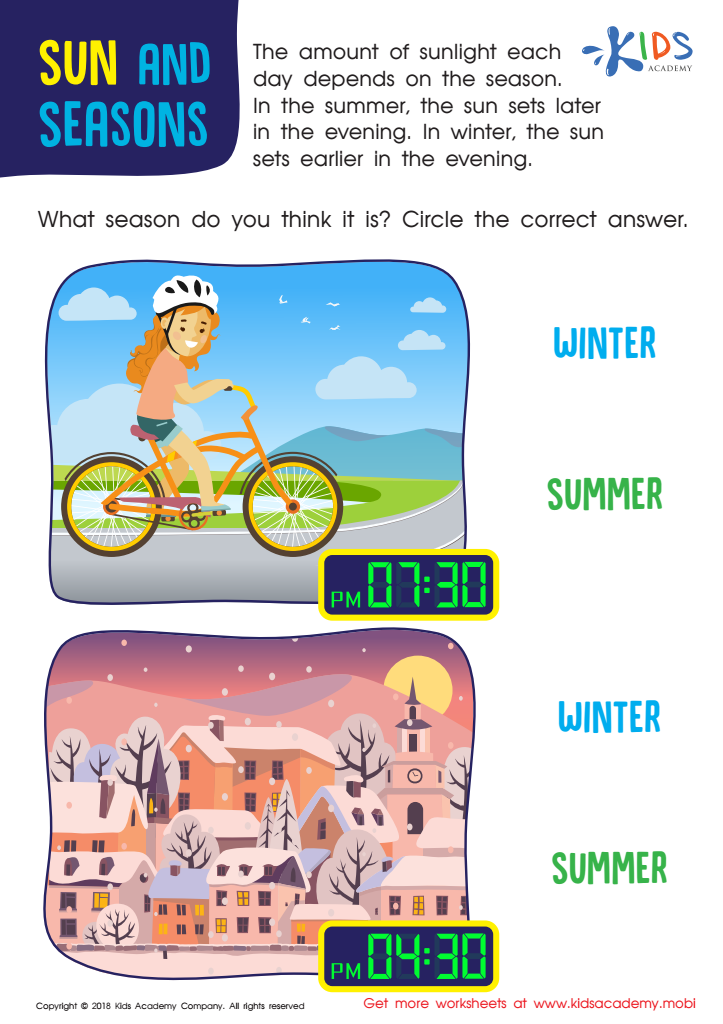
Sun and Seasons Worksheet



%20(1).jpg)
The concept of seasons is crucial for children aged 6-8 as it forms a foundational element of their understanding of the natural world. Parents and teachers should prioritize teaching about seasons because this knowledge aids in cognitive development and fosters curiosity. Each season brings specific environmental changes that offer unique learning opportunities. For instance, children can explore subjects like plant life cycles, weather patterns, and animal behaviors.
Understanding seasons helps children make sense of the world around them. It contextualizes holidays, fashion choices, and daily activities. For example, knowing why we wear coats in winter or plants bloom in spring links them to broader scientific principles. This comprehension lays the groundwork for more complex academic pursuits in science and geography.
Moreover, teaching about seasons creates emotional and social stability. Predictable seasonal changes and related activities—such as apple picking in fall or beach trips in summer—create a rhythm in children’s lives that can be comforting. Classroom activities centered around seasons, such as crafts or field trips, promote social interaction and teamwork.
Lastly, understanding seasons helps children appreciate nature, fostering lifelong environmental awareness. This early education about the cyclic nature of our environment encourages respect for the Earth, promoting eco-friendly behaviors from a young age.
Thus, seasons should be an integral part of early education for holistic development.







