Coins Worksheets for Ages 6-9
13 filtered results
-
From - To
Welcome to our "Coins Worksheets for Ages 6-9" page! Here, you'll find a variety of engaging and educational worksheets designed to help young learners develop essential money skills. Tailored for children aged 6 to 9, these worksheets feature colorful illustrations and interactive exercises focused on identifying, counting, and understanding the value of coins. Our resources promote hands-on learning, allowing kids to grasp financial literacy concepts in a fun and approachable way. Perfect for both classroom and home use, these worksheets enhance math proficiency while building confidence in handling money. Explore our collection today and watch your child's skills grow!
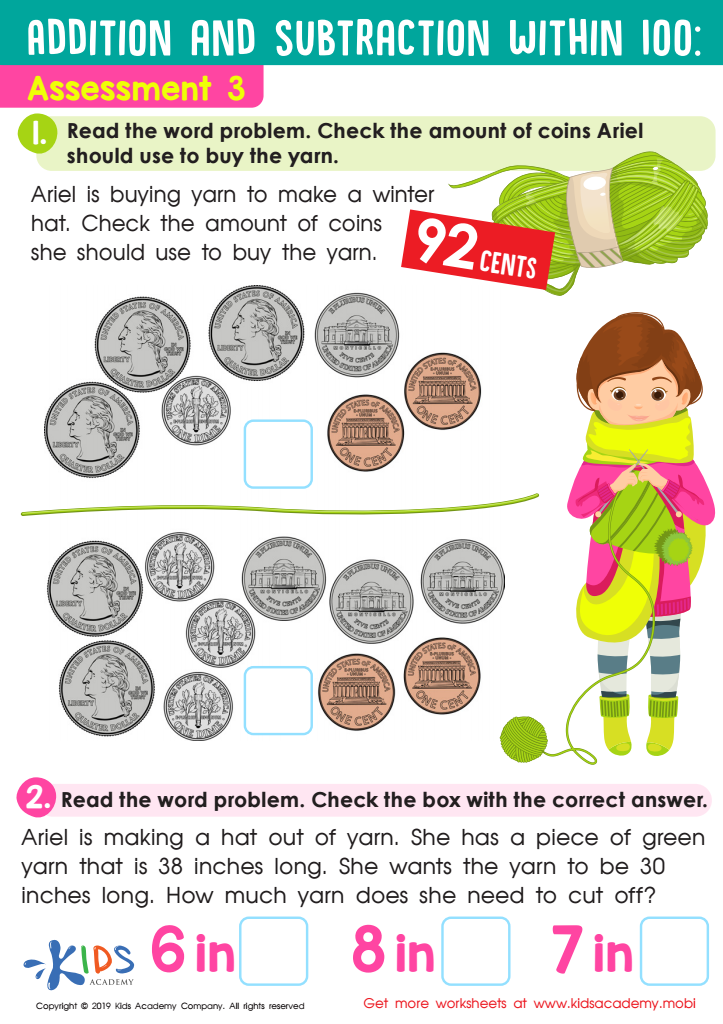
Assessment 3 Math Worksheet
 Assign to My Students
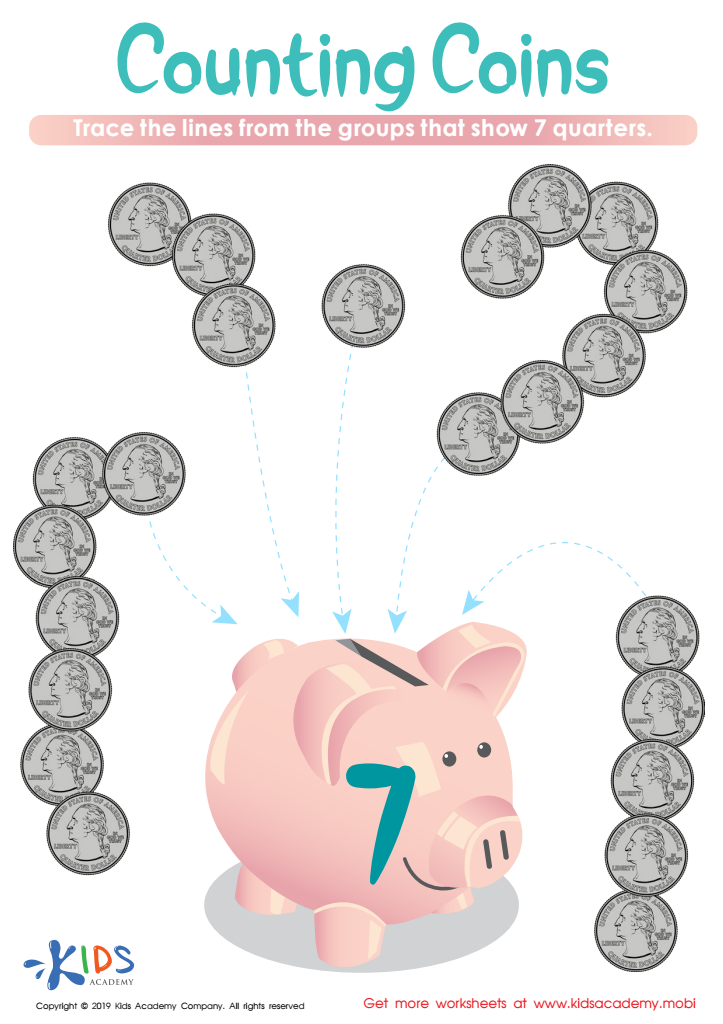
Counting Coins Worksheet
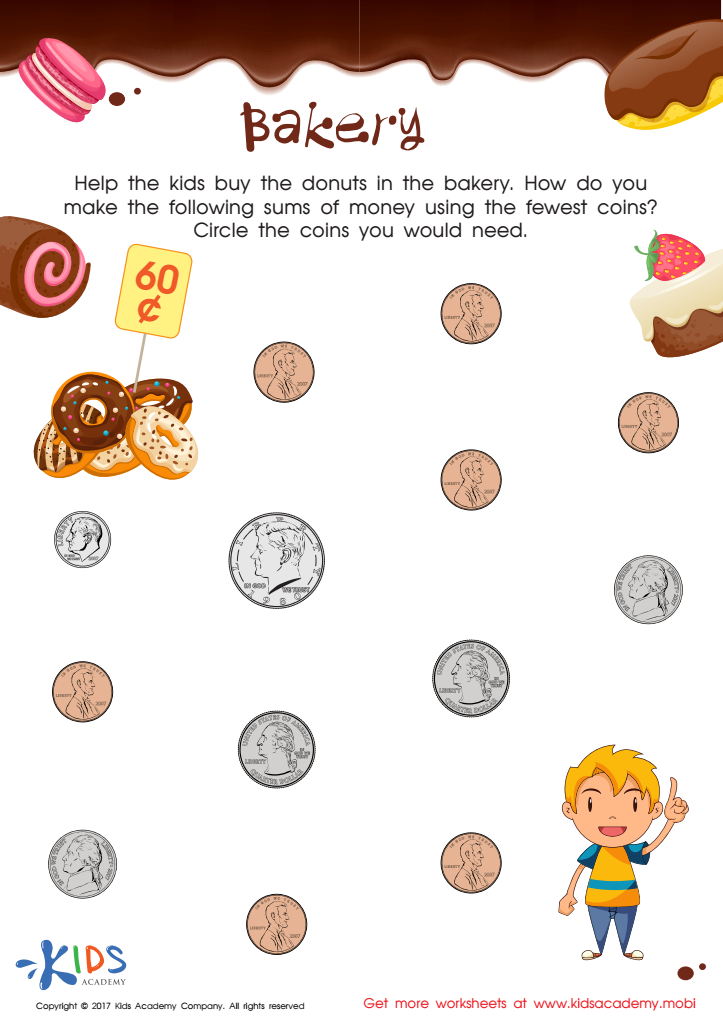
Counting Coins Worksheet
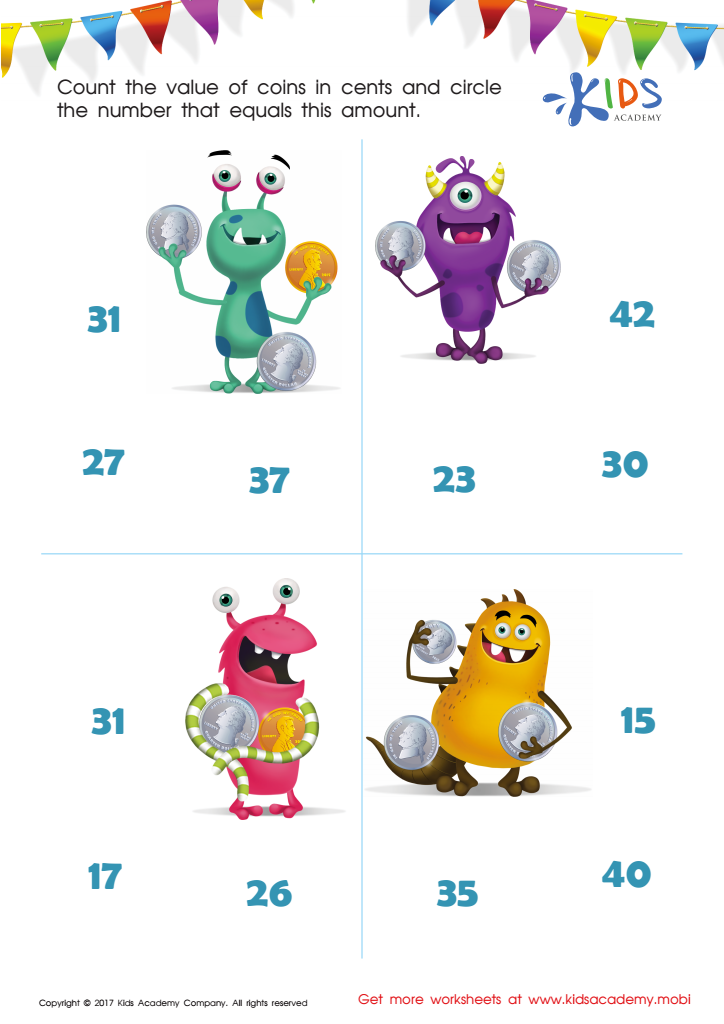
How Many Coins Money Worksheet
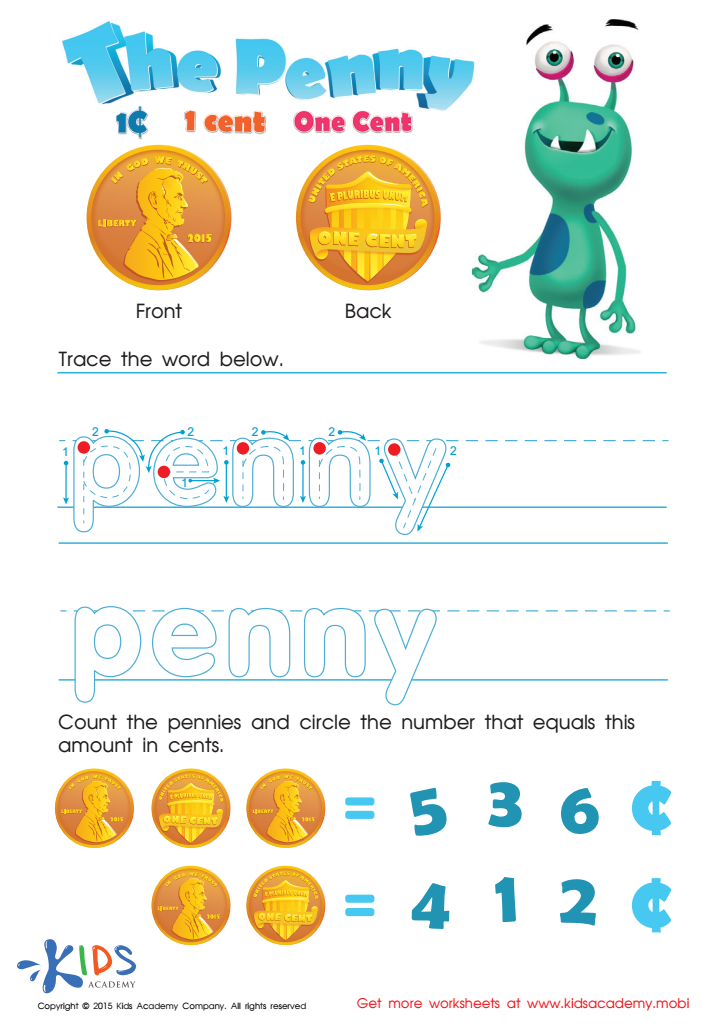
One Cent or the Penny Money Worksheet
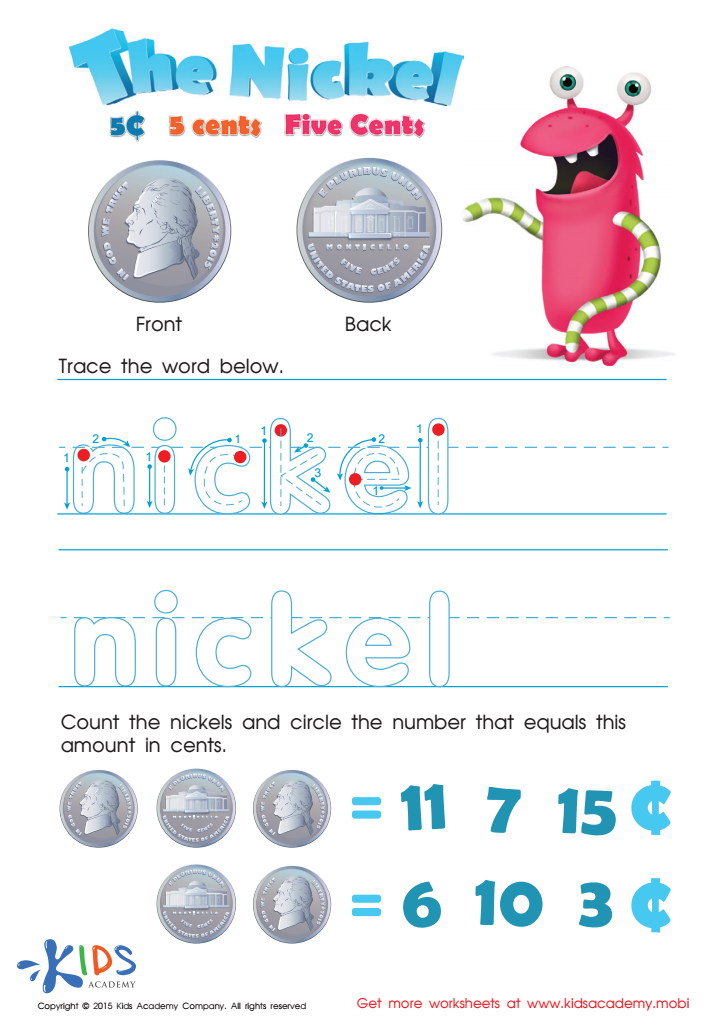
Five Cents or the Nickel Money Worksheet
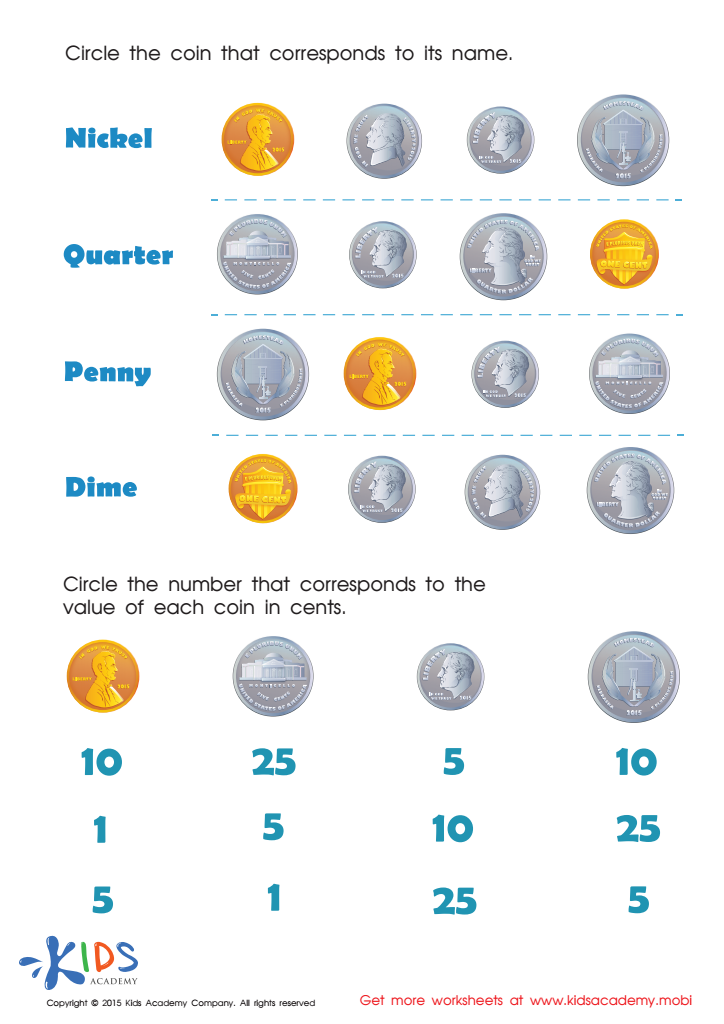
Coin Names and Values Money Worksheet
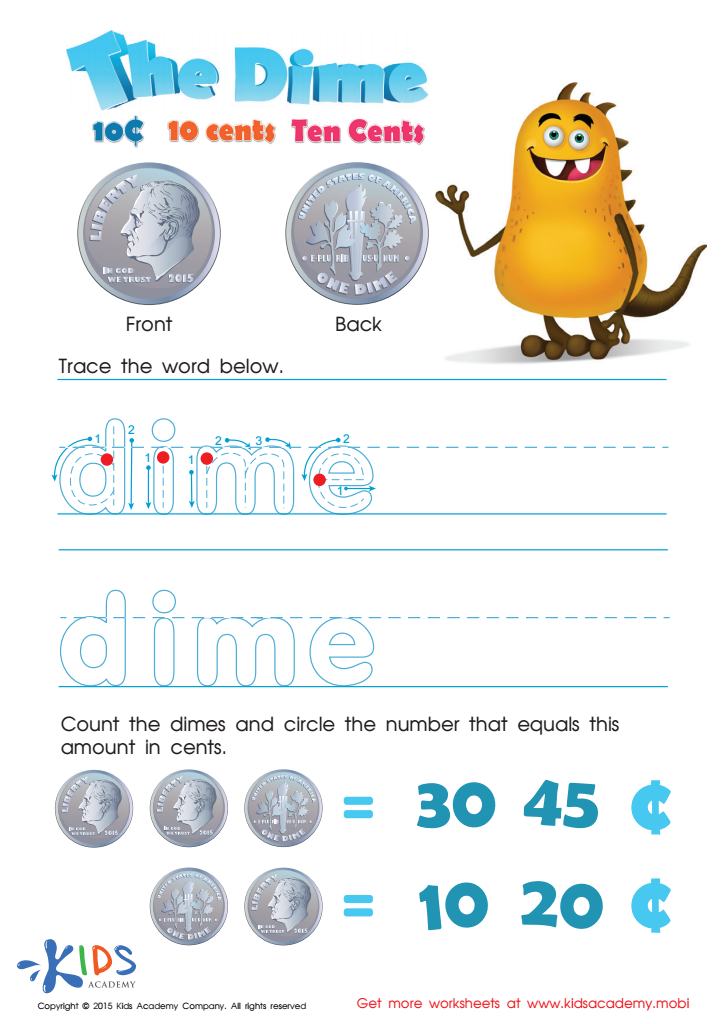
Ten Cents or the Dime Money Worksheet
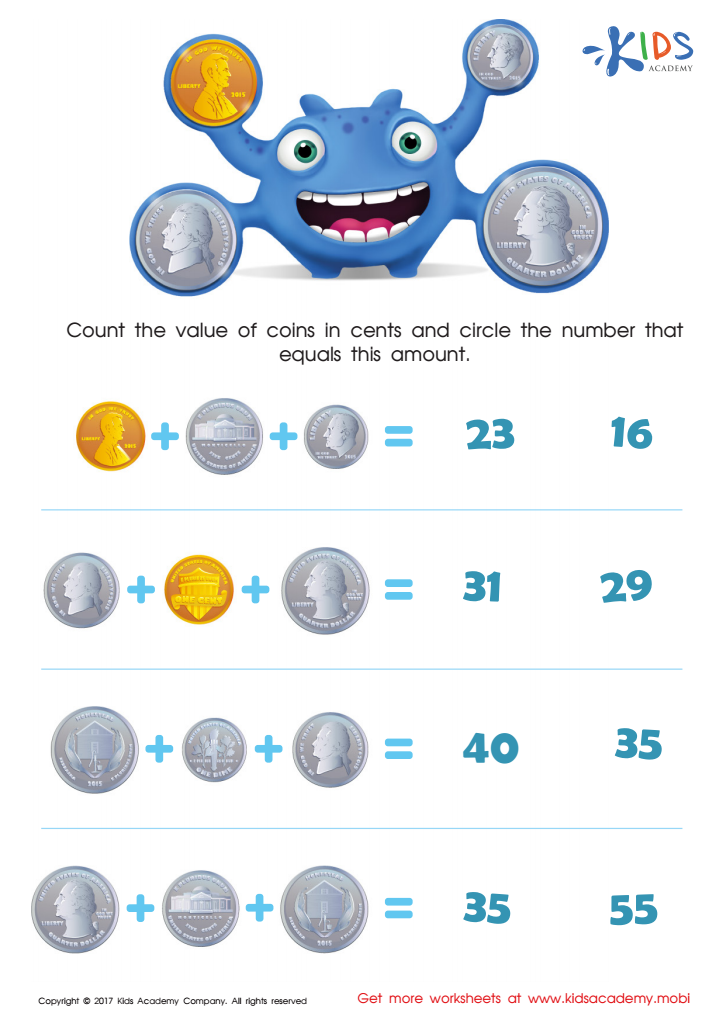
Counting the Coins Money Worksheet
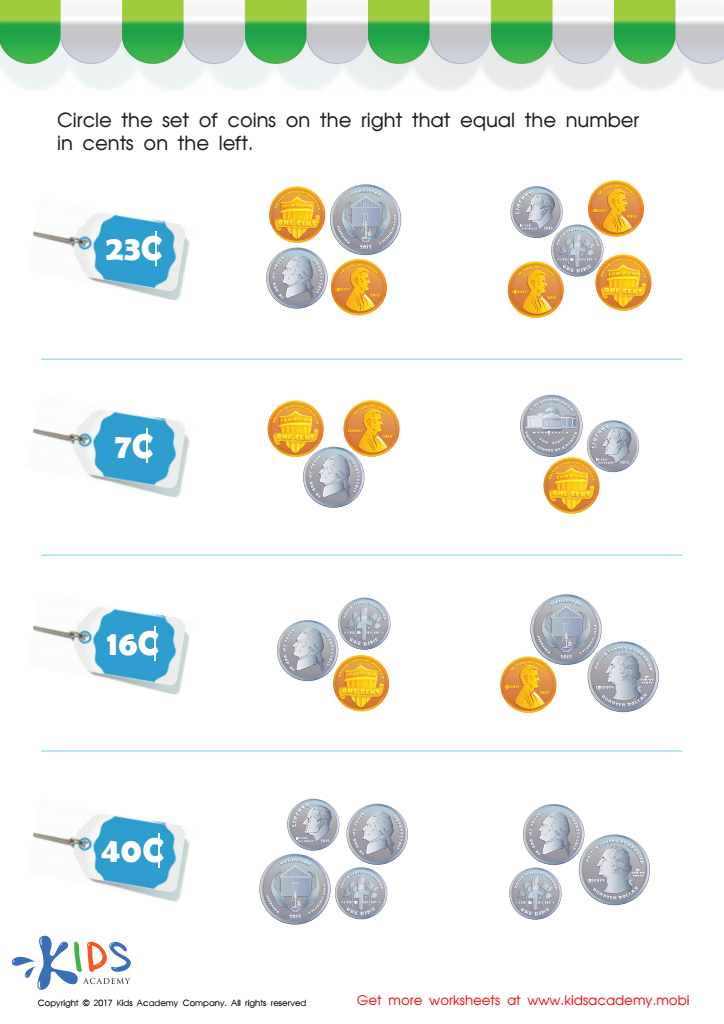
Picking the Coins You Need Money Worksheet
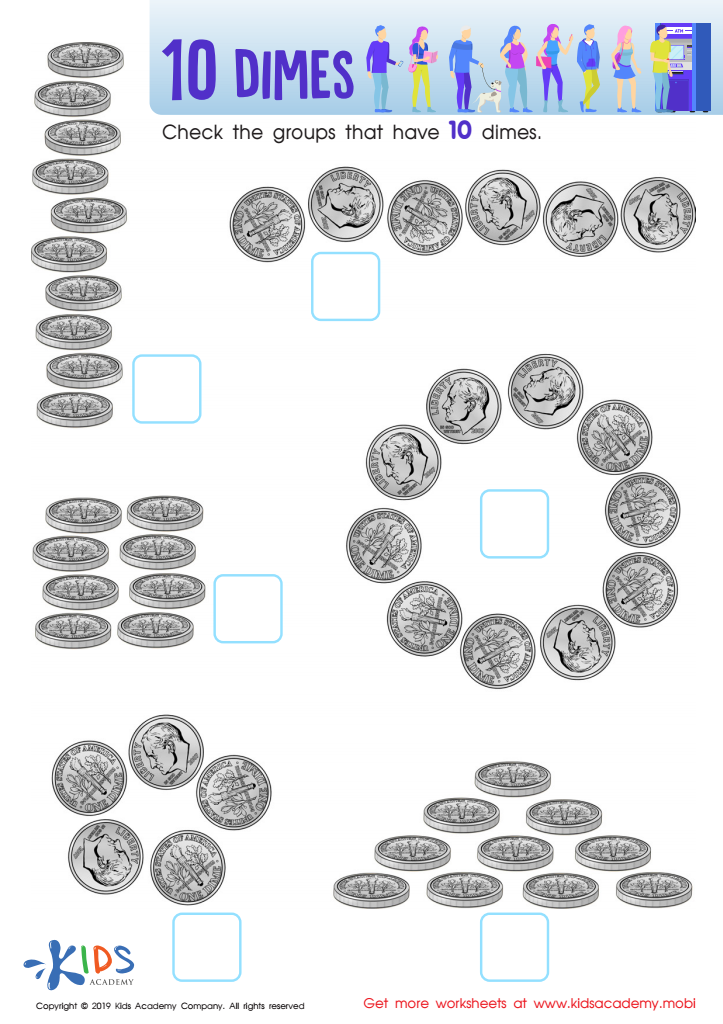
10 Dimes Worksheet
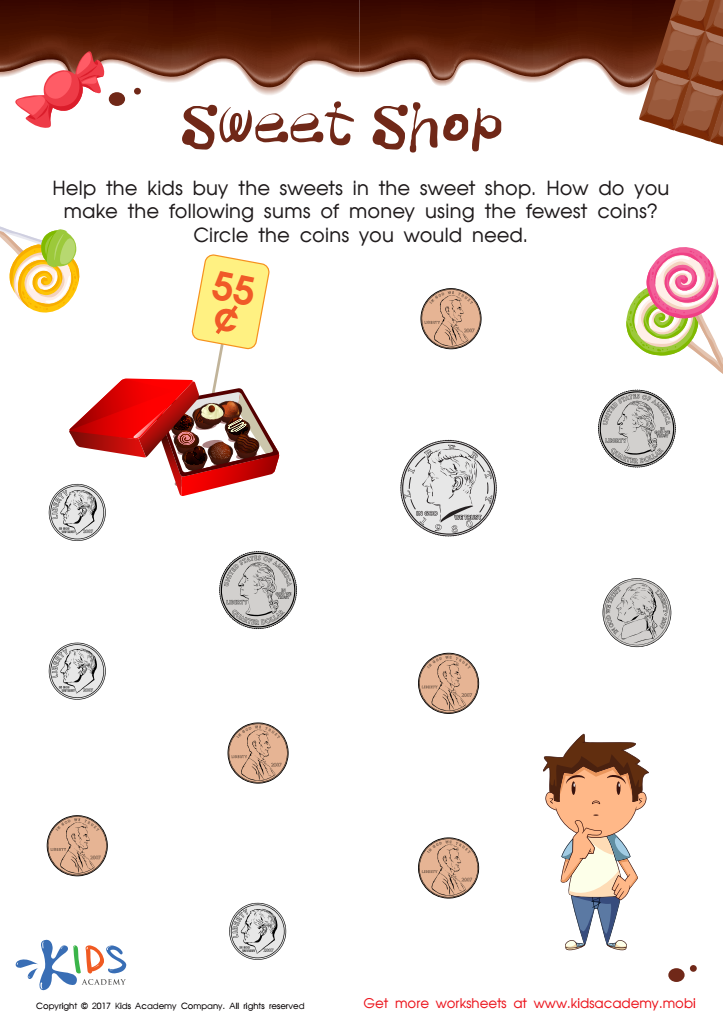
Sweet Shop – Counting Coins Worksheet
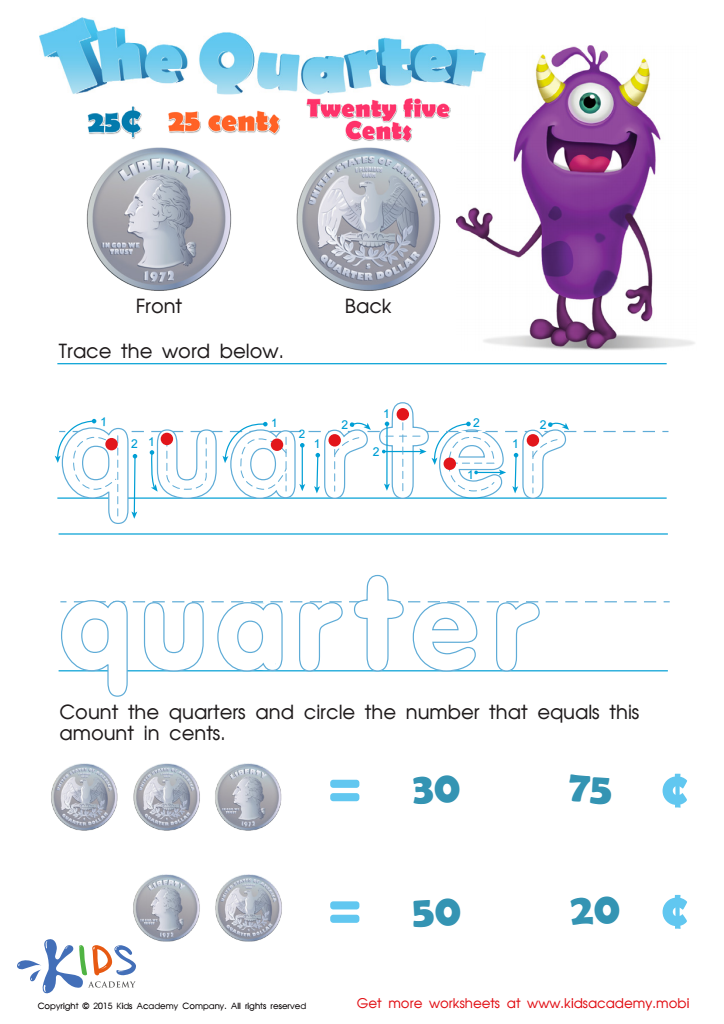
Twenty Five Cents or the Quarter Money Worksheet








Coins for ages 6-9 serve as a vital educational tool that enhances both cognitive and socio-emotional development in young children. Understanding coins helps children grasp essential mathematical concepts, such as counting, addition, and subtraction, laying a strong foundation for future math skills. Handling money aids in developing numerical literacy, encouraging children to recognize values, compare amounts, and solve basic problems in everyday contexts.
Moreover, learning about coins teaches important life skills, such as budgeting and saving, which are crucial as children grow older. This financial literacy fosters a sense of independence and responsibility, empowering children to make informed decisions about money. Engaging with coins also encourages hands-on learning, promoting fine motor skills as children interact with physical money.
From a social perspective, activities involving coins can enhance communication and collaborative skills. Group games or projects centered around money help children develop teamwork and negotiation skills, foundational for their interpersonal interactions.
Incorporating coins into everyday activities fosters curiosity and critical thinking, making the learning process enjoyable and relevant. Therefore, parents and teachers should prioritize the introduction of coins in playful, educational contexts, setting the stage for children’s success in mathematics and life skills.








