Filters

35 filtered results

Clear all filters
Favorites
With answer key
Interactive

35 filtered results

Difficulty Level

Grade


Subject

Check out this FREE Trial Lesson on 2D Shapes for age 7-9!

Draw and Name Shapes up to 6 Sided Shapes & Cubes

Favorites
With answer key
Interactive
  • 7-9
  • With answer key
  • 2D Shapes
Recognizing Shape Sides Worksheet

Recognizing Shape Sides Worksheet

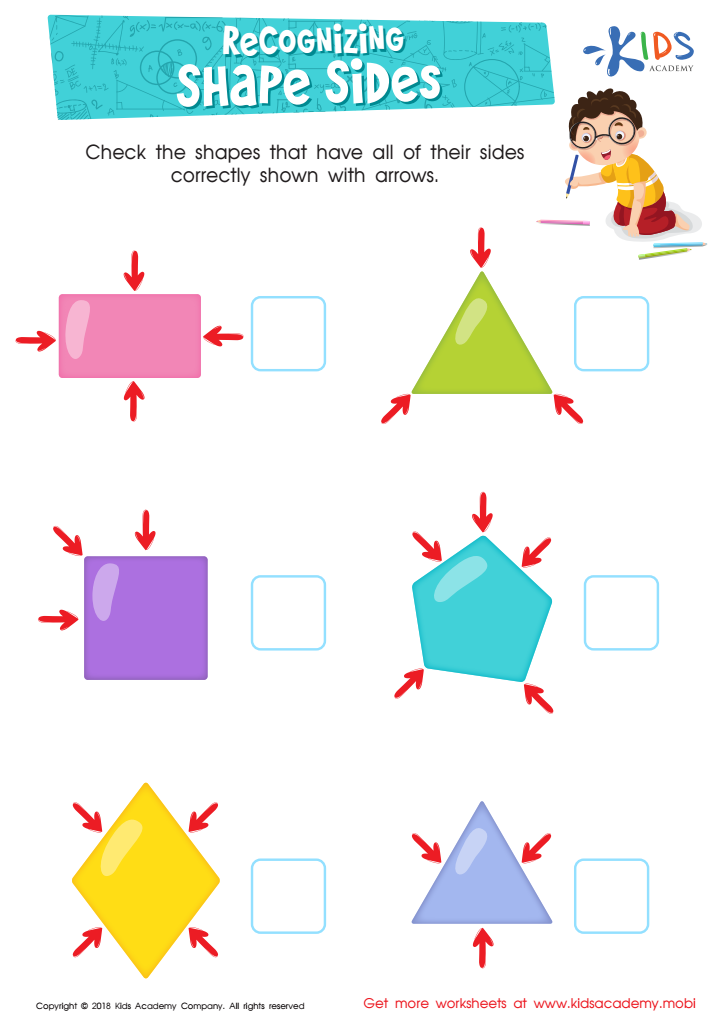
This exercise will help your child recognize shape sides. Go over the difference between sides and angles first, then have them check the shapes with arrows to show the sides. They'll quickly get the hang of it and find it much easier after completing the colorful worksheet.
Recognizing Shape Sides Worksheet
Worksheet
Trace and Draw More Shapes Worksheet

Trace and Draw More Shapes Worksheet

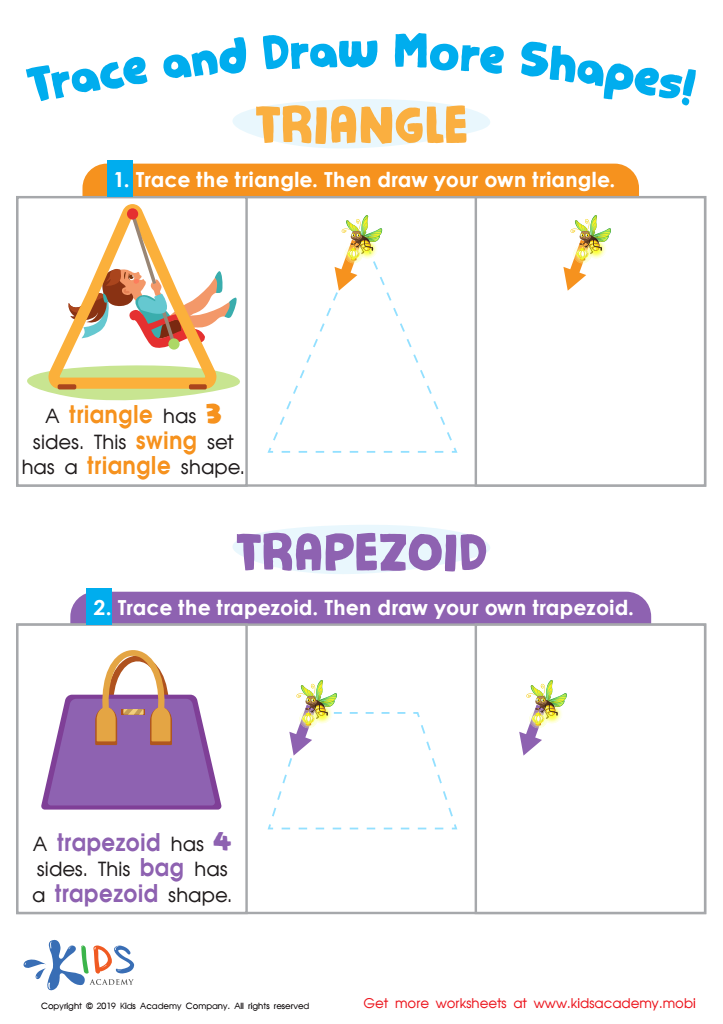
Help your kids with more learning! Look at images in the worksheet, read facts about the shapes, then help your kids trace and draw. This reinforces that learning is never done; use this simple worksheet to help your kids with school homework and more!
Trace and Draw More Shapes Worksheet
Worksheet
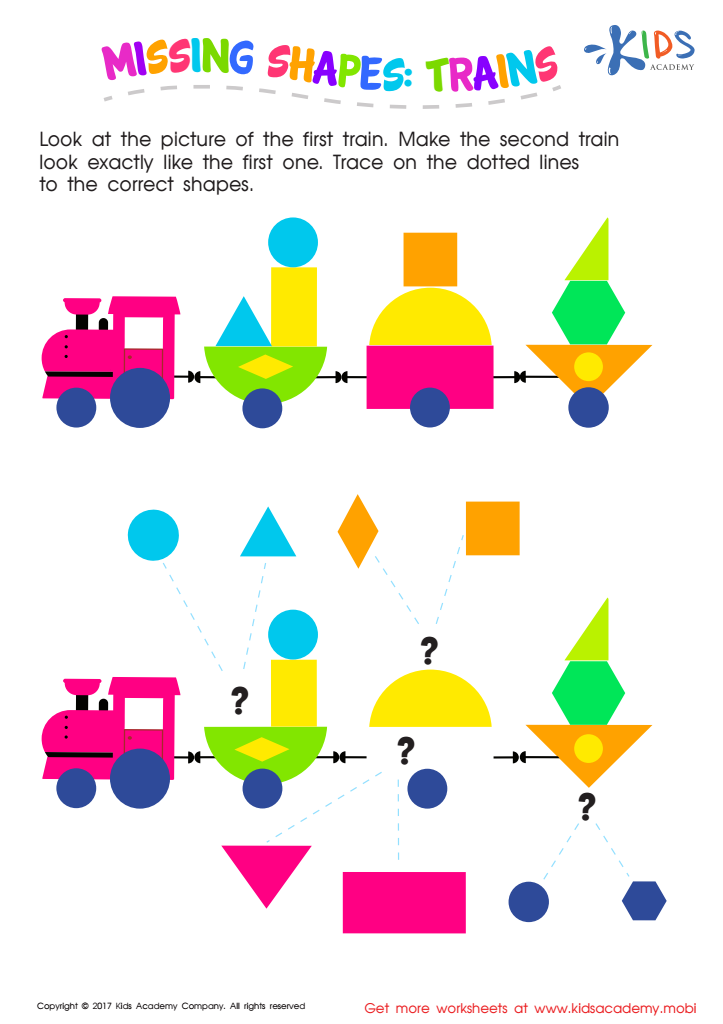
Missing Shapes: Trains Worksheet

Missing Shapes: Trains Worksheet

Before beginning, ask your child what the object in the picture is, the sound it makes and where it can be found. If they know, confidently move on. Help them make the second train look like the first by tracing dotted lines. Hold their hand for guidance.
Missing Shapes: Trains Worksheet
Worksheet
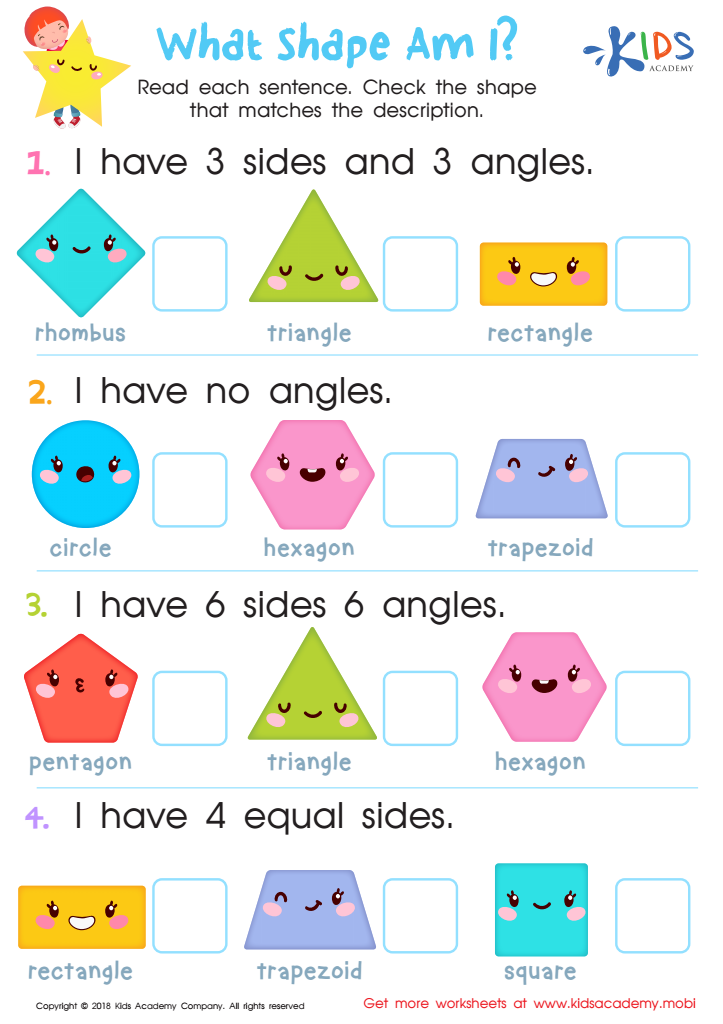
What Shape Am I? Worksheet

What Shape Am I? Worksheet

Help your child read each sentence in this colorful worksheet. Have them identify the shapes described and check the boxes. To prepare, ask simple questions like "How many sides does a triangle have?" and "Which shape has 4 equal sides?" Your child will become more skilled at shapes by the end of this activity.
What Shape Am I? Worksheet
Worksheet
Twin Shapes Dot-to-Dot Worksheet

Twin Shapes Dot-to-Dot Worksheet

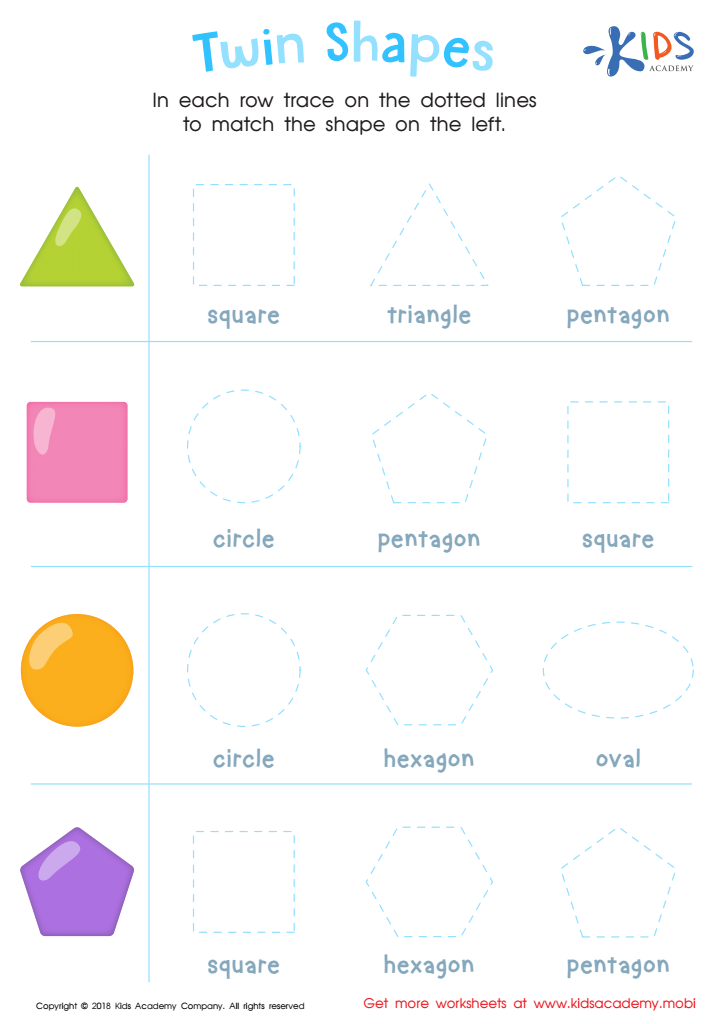
Test your child's ability to copy with this worksheet. Ask them to find and name the four shapes on the left. Then, they must match each with the dotted lines on the right. Help your child with all four shapes in this fun exercise.
Twin Shapes Dot-to-Dot Worksheet
Worksheet
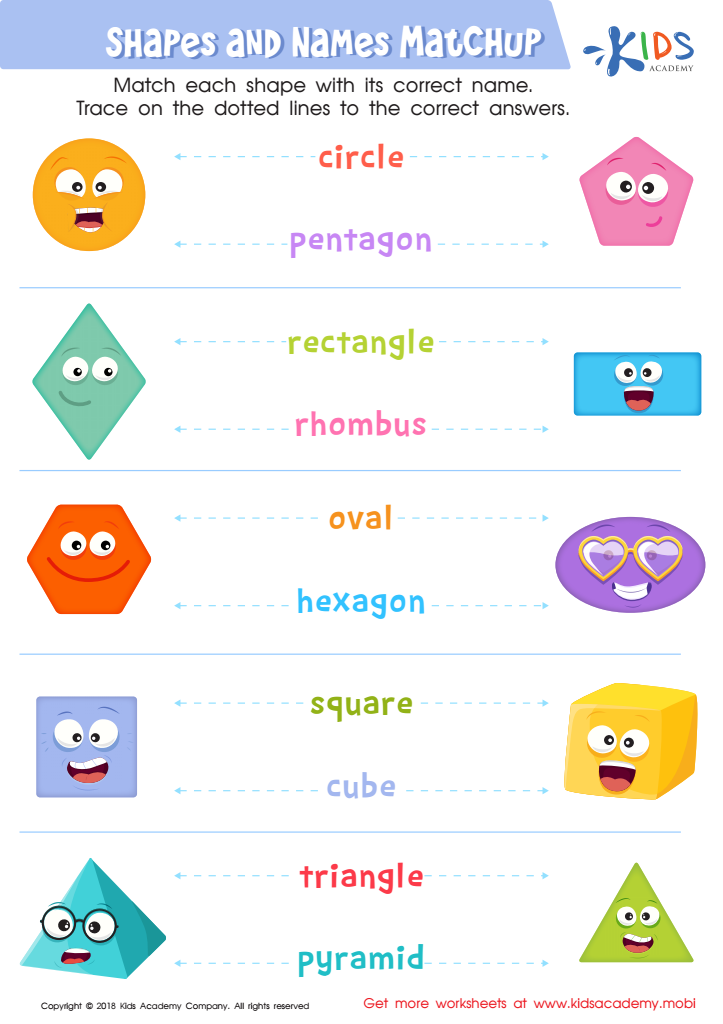
Shapes and Names Matchup Worksheet

Shapes and Names Matchup Worksheet

Introduce your students to shapes if they aren't familiar. Look at the sheet with them and ask them to identify shapes. Help them match each shape to its name, then trace the dotted lines to the answers. Even if they haven't seen shapes before, this exercise will be easy - with your help!
Shapes and Names Matchup Worksheet
Worksheet
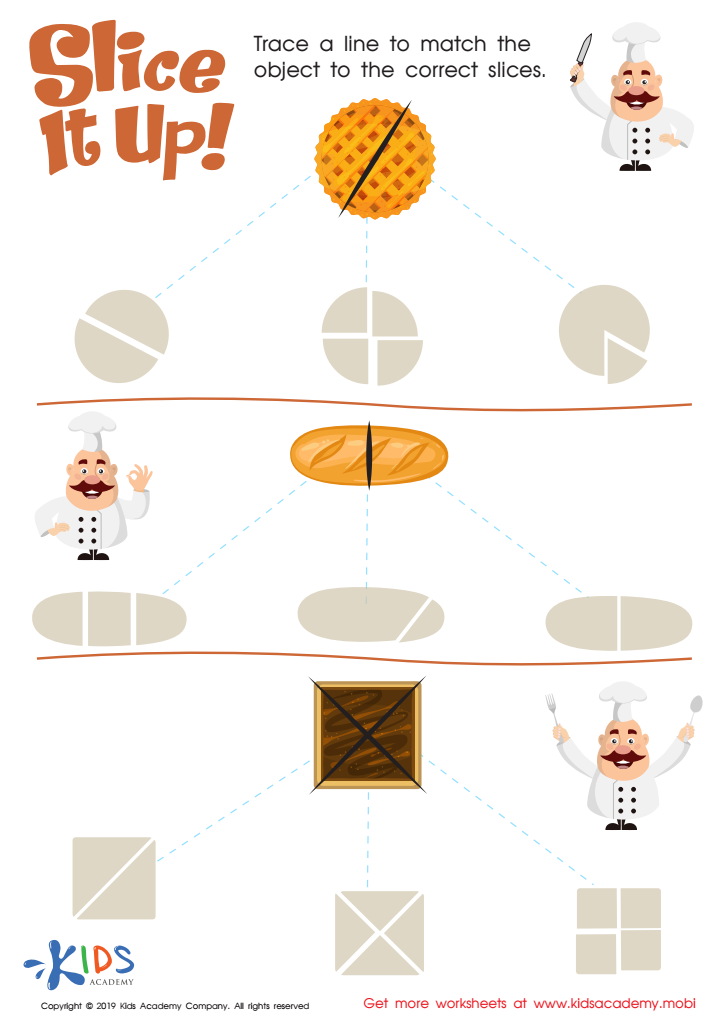
Slice It Up Worksheet

Slice It Up Worksheet

Try this fun math, reading and writing worksheet with your kids! They will love the colorful activities that perfect coordination and tracing. Engaging learning exercises help keep young minds sharp and boost skills. With these worksheets, your kids will be academically ahead of the curve!
Slice It Up Worksheet
Worksheet
Shapes Matchup Worksheet

Shapes Matchup Worksheet

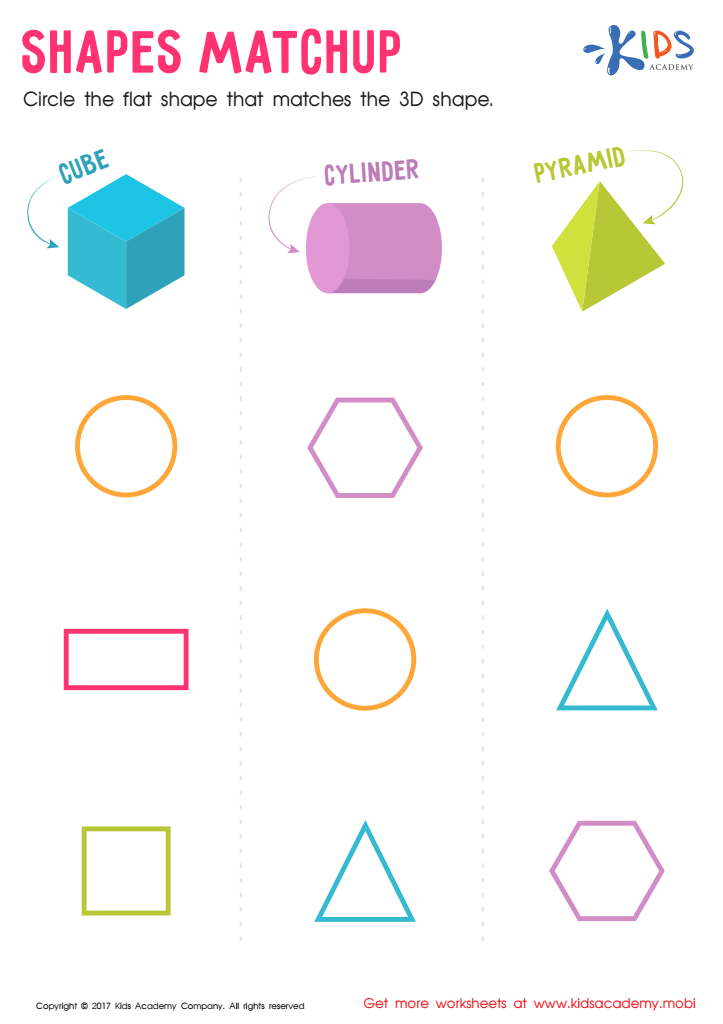
Explain to your kids that 3D shapes are the view from another angle, offering depth, height and width. This worksheet encourages them to match the 3D shapes to their 2D form. They can circle the flat shapes that match the 3D shapes in the printout.
Shapes Matchup Worksheet
Worksheet
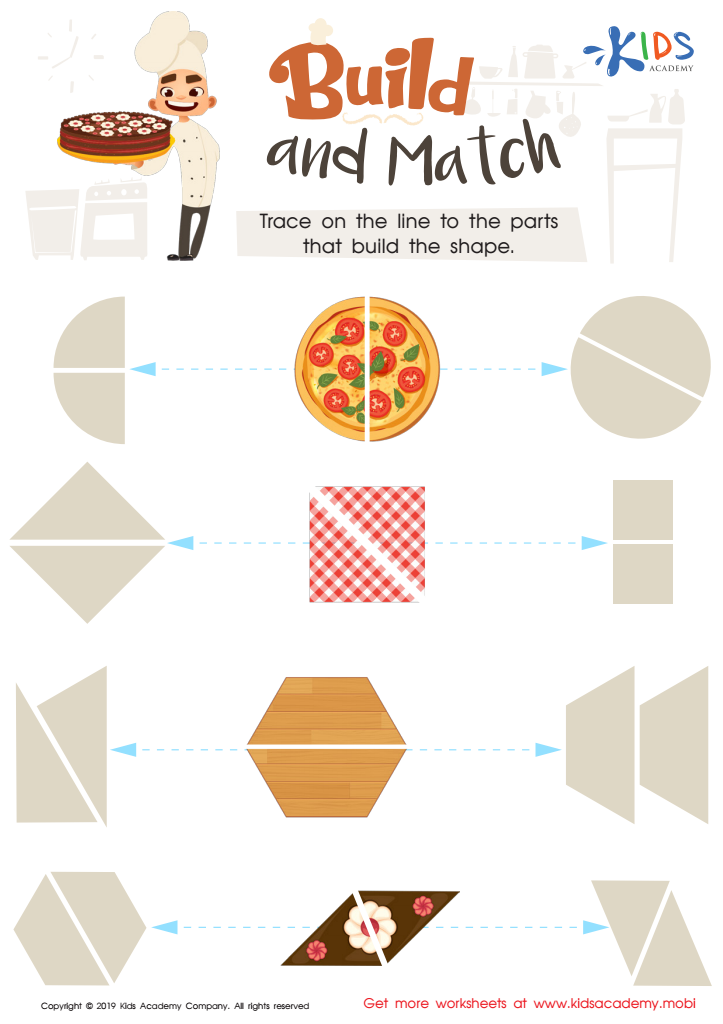
Build and Match Worksheet

Build and Match Worksheet

This bright worksheet will get your kids excited to learn more! Use the colorful images and shapes to engage them and have them trace the parts to build the shape. This fun exercise will help them retain the lessons and make it an enjoyable experience.
Build and Match Worksheet
Worksheet
What Is a Quadrilateral? Worksheet

What Is a Quadrilateral? Worksheet

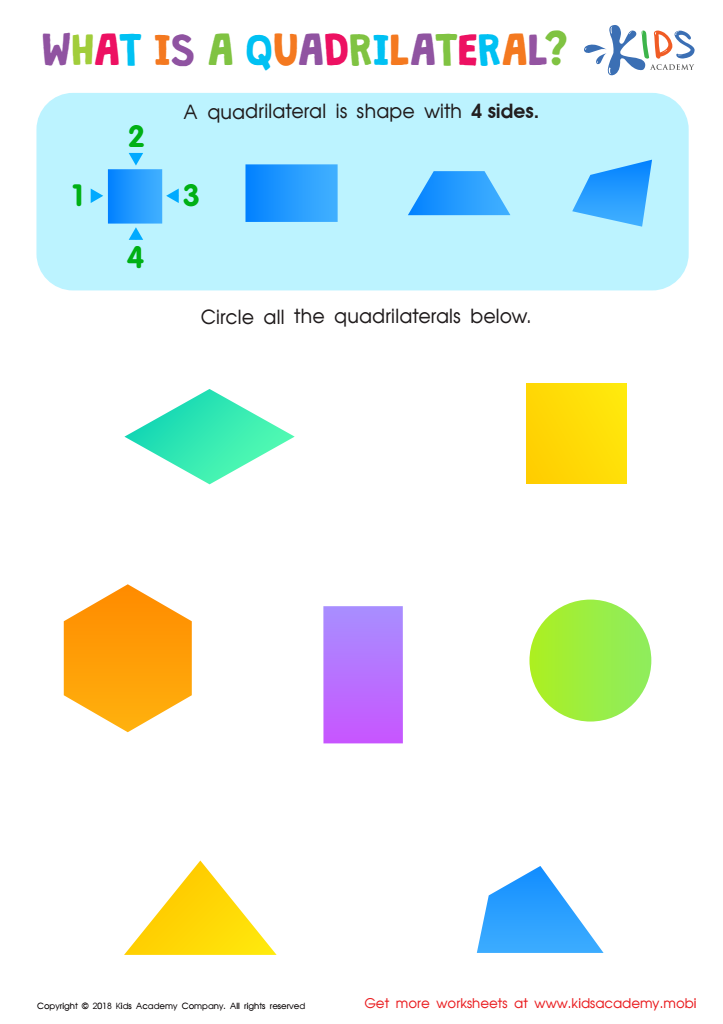
Does your kid know what a quadrilateral is? If not, this worksheet can help teach them. Explain that a quadrilateral is a shape with four sides and give examples, like a square or a rectangle. Then ask them to circle the quadrilaterals in the pictures. If they already know what a quadrilateral is, this task might be too easy.
What Is a Quadrilateral? Worksheet
Worksheet
Connecting 3D Shapes with Their 2d Faces Worksheet


Connecting 3D Shapes with Their 2d Faces Worksheet

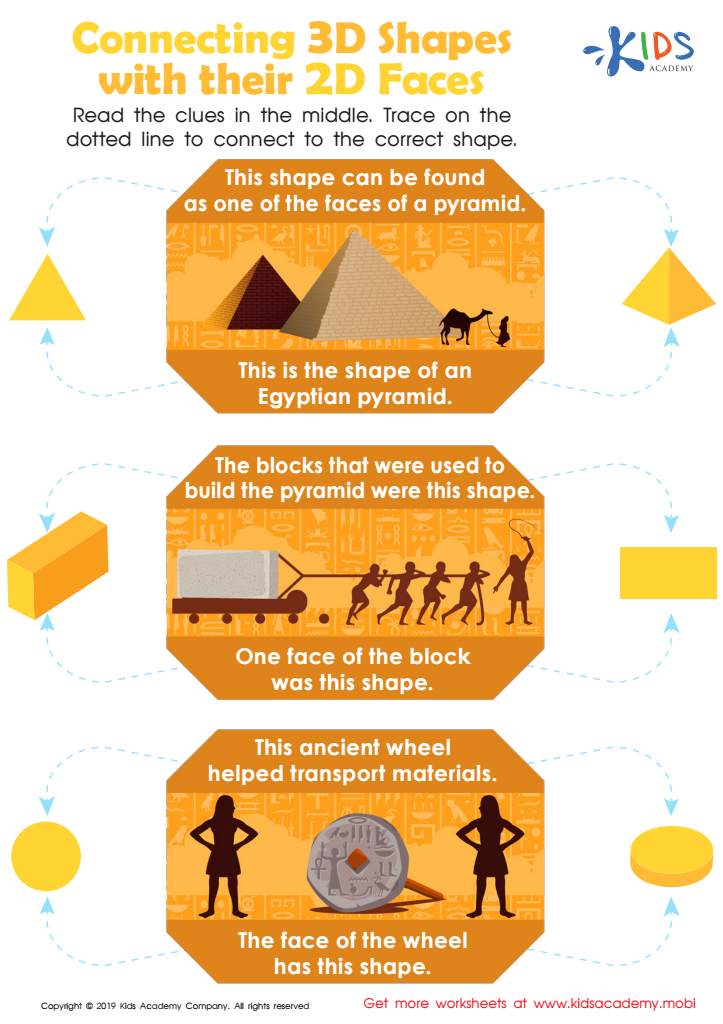
Engage your kids' minds with colorful, fun exercises like this worksheet. Learning should be continuous, so take the time to do extra activities with your children. Show them the pictures, then read the clues and help them trace the lines to match the shapes.
Connecting 3D Shapes with Their 2d Faces Worksheet

Worksheet


Understanding 2D shapes is fundamental for children aged 7-9, as it sets the groundwork for many crucial skills in both mathematics and everyday life. At this age, children begin to develop critical thinking and analytical skills, and familiarity with 2D shapes aids in spatial awareness and geometry fundamentals.

First, recognizing and categorizing shapes like squares, rectangles, triangles, and circles fosters observational skills and enhances cognitive development. It encourages children to think about properties like sides, angles, and symmetry, giving them tools to solve mathematical problems they will encounter throughout their education.

Second, learning about 2D shapes lays the foundation for geometric concepts and measurement skills, which are vital in higher mathematics. As they analyze shapes and their properties, children also enhance their problem-solving abilities, discovering how to apply this knowledge in practical scenarios, such as art, design, and everyday spatial reasoning.

Lastly, engaging with 2D shapes cultivates creativity and imagination through activities like building, drawing, and constructing. Overall, a solid understanding of 2D shapes promotes both academic success and real-world application, making it essential for parents and teachers to emphasize this area in early education.