Time Worksheets for Ages 7-9 - Page 2
25 filtered results
-
From - To
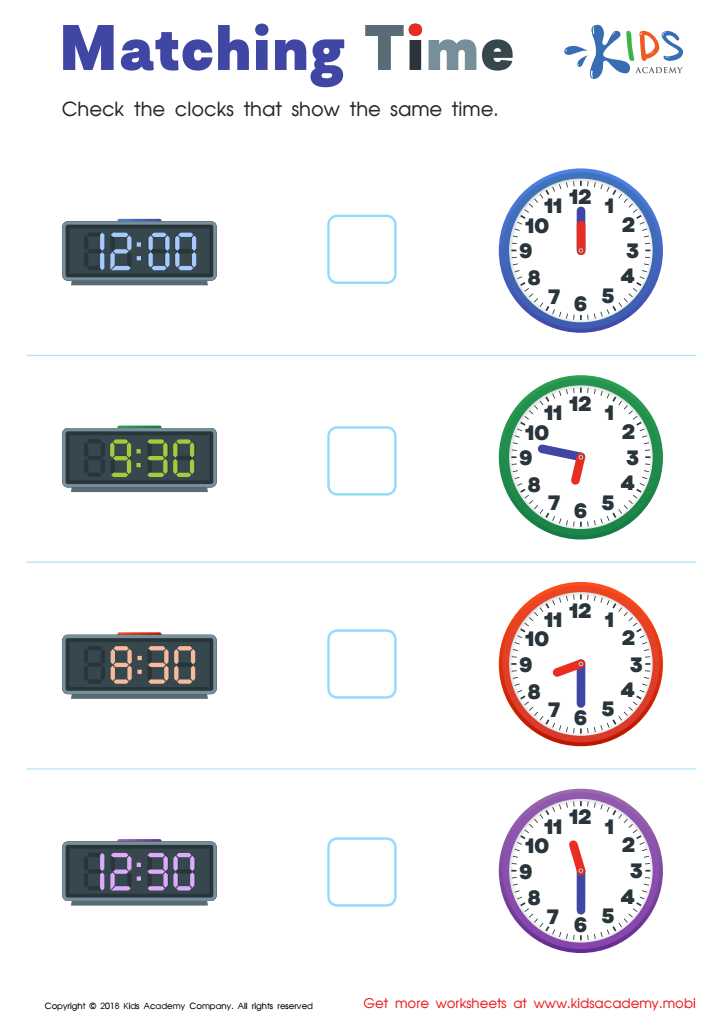
Matching Time Worksheet
 Assign to My Students








Parents and teachers should prioritize teaching the concept of time to children aged 7 to 9 for several reasons. First, understanding time is fundamental for everyday life and critical for developing a child’s organizational skills. By grasping how to read clocks, manage schedules, and understand sequences, children gain autonomy and confidence as they navigate their daily routines.
Second, learning about time enhances cognitive development. It helps children understand concepts like sequencing and duration, contributing to their overall mathematical comprehension. This age group is particularly curious, and addressing time can stimulate further learning and question-asking.
Third, instilling a sense of time management helps children appreciate punctuality and responsibilities. Mastering the concept of time prepares them for future academic expectations and social situations, where being on time matters.
Lastly, time is rooted in societal structures, so teaching it impacts their interactions with peers and family. Conversations about time also create memorable moments for bonding.
In conclusion, giving attention to time for ages 7-9 equips children with essential life skills while fostering their cognitive, social, and emotional development. It's a fundamental stepping stone toward independence and personal responsibility.








