Filters

30 filtered results

Clear all filters
Favorites
With answer key
Interactive

30 filtered results

Difficulty Level

Grade


Check out this FREE Trial Lesson on Science for age 3-7!

Parent and Offspring Behavior

Favorites
With answer key
Interactive
  • 3-7
  • With answer key
  • Science
  • Easy
Caring for the Community Worksheet

Caring for the Community Worksheet

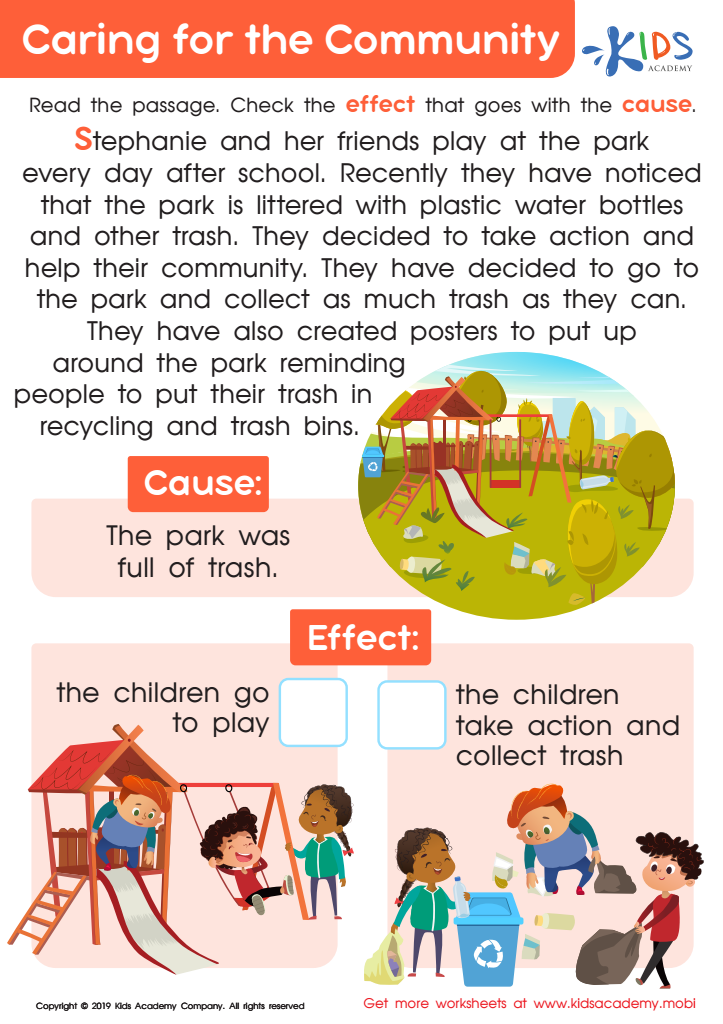
Before beginning, get your kids in the right mind-set by having them name ways to care for their community. Read the passage with them, pointing at pictures, then ask them to match the ‘cause’ with the ‘effect’ on the worksheet. This will help them learn more about how to care for their community.
Caring for the Community Worksheet
Worksheet
Animal Nests Worksheet

Animal Nests Worksheet

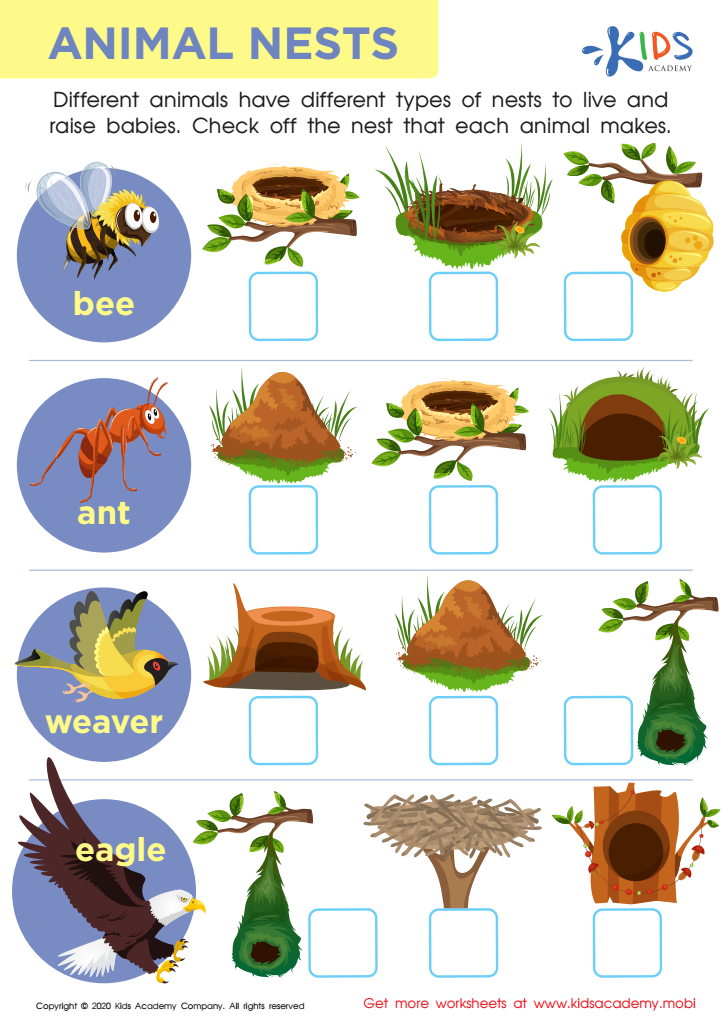
Animals need homes to sleep and stay safe. Look at the animal on the left and examine the nests and hives to the right. Check off the correct one for each animal to complete the worksheet! From birds to bees, it's a great way to show different types of homes animals make!
Animal Nests Worksheet
Worksheet
Assessment: Aquarium Sign Worksheet

Assessment: Aquarium Sign Worksheet

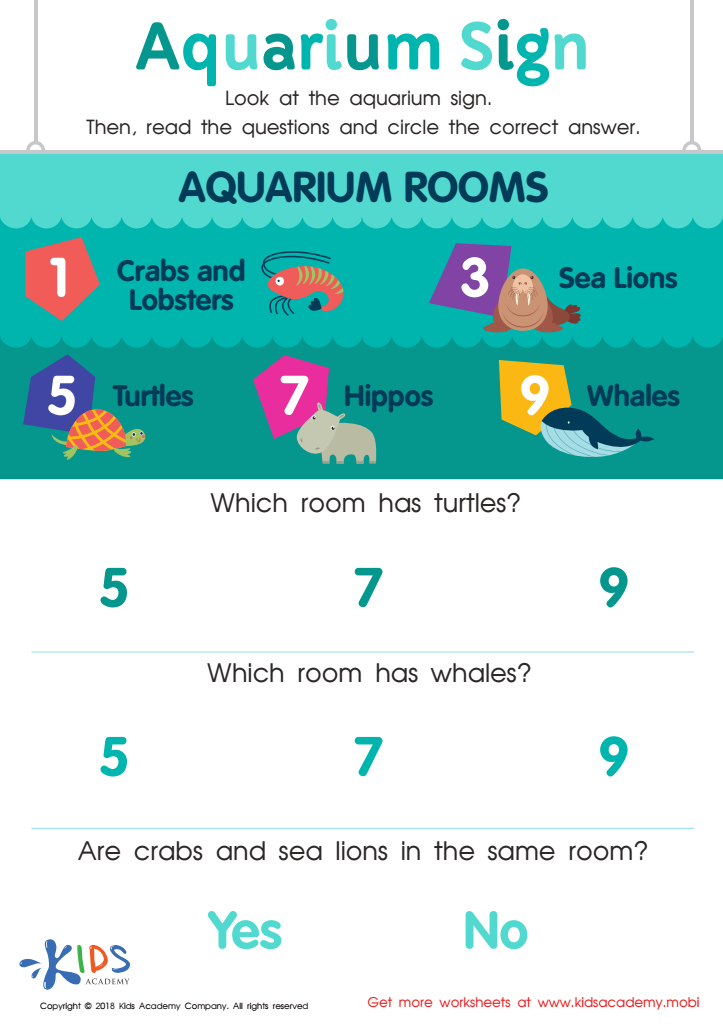
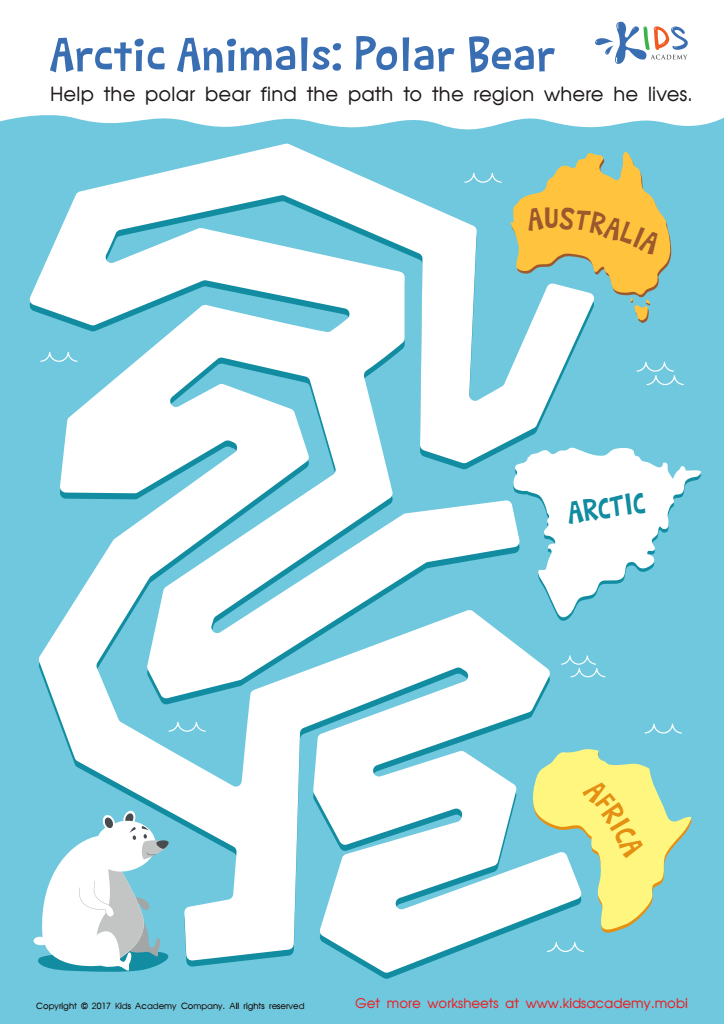
Take your kids to an aquarium and marvel at the sea creatures! Help them identify the animals they see, and ask them which one is their favorite. Look at the aquarium sign and point to each creature. Ask your kids the questions and help them circle the right answer.
Assessment: Aquarium Sign Worksheet
Worksheet
Polar Bear Worksheet

Arctic Animals: Polar Bear Worksheet
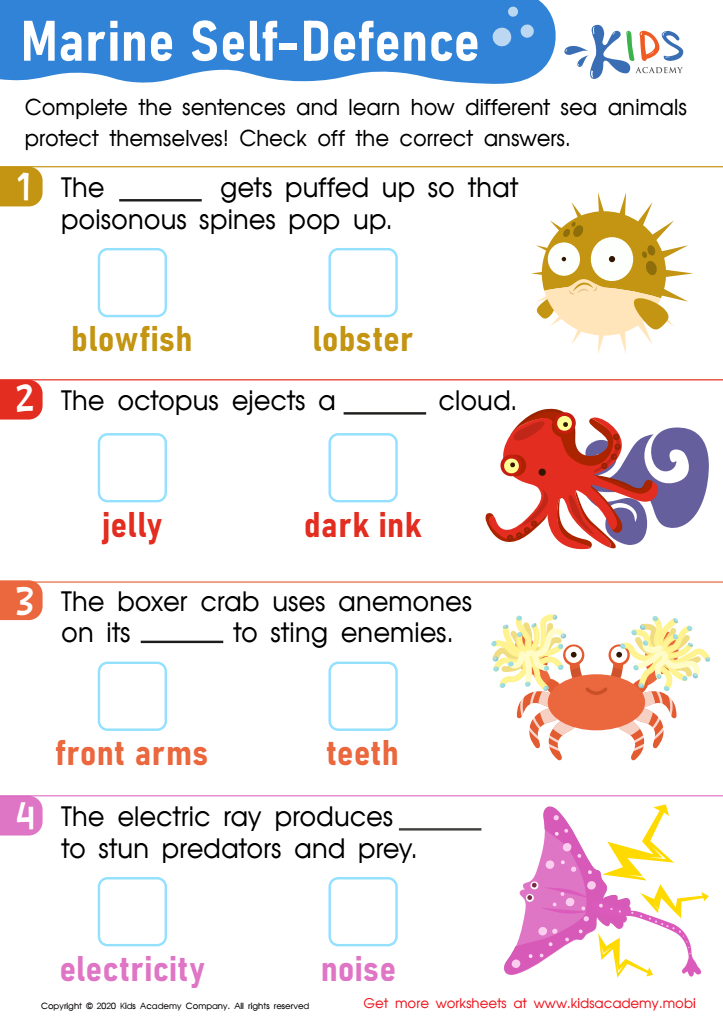
Oh no! Our polar bear friend is lost! Let's help him find his way back to the arctic with this fun worksheet. It reinforces science and social studies and kids will learn about the climate and habitats of different continents. They'll also develop logical reasoning skills! You can enrich the experience by looking up pictures of real polar bears after the worksheet is complete.
Arctic Animals: Polar Bear Worksheet
Worksheet
Marine Self-Defence Worksheet

Marine Self-Defence Worksheet

Kids will love discovering the ingenious ways sea creatures protect themselves from predators such as sharks and whales! Let them explore the strategies with this fun science worksheet, which features vibrant illustrations. Have them fill in the blanks with each creature's defense strategy, such as shells, spikes, ink, or even electricity!
Marine Self-Defence Worksheet
Worksheet
Check Memory Worksheet


Check Memory Worksheet

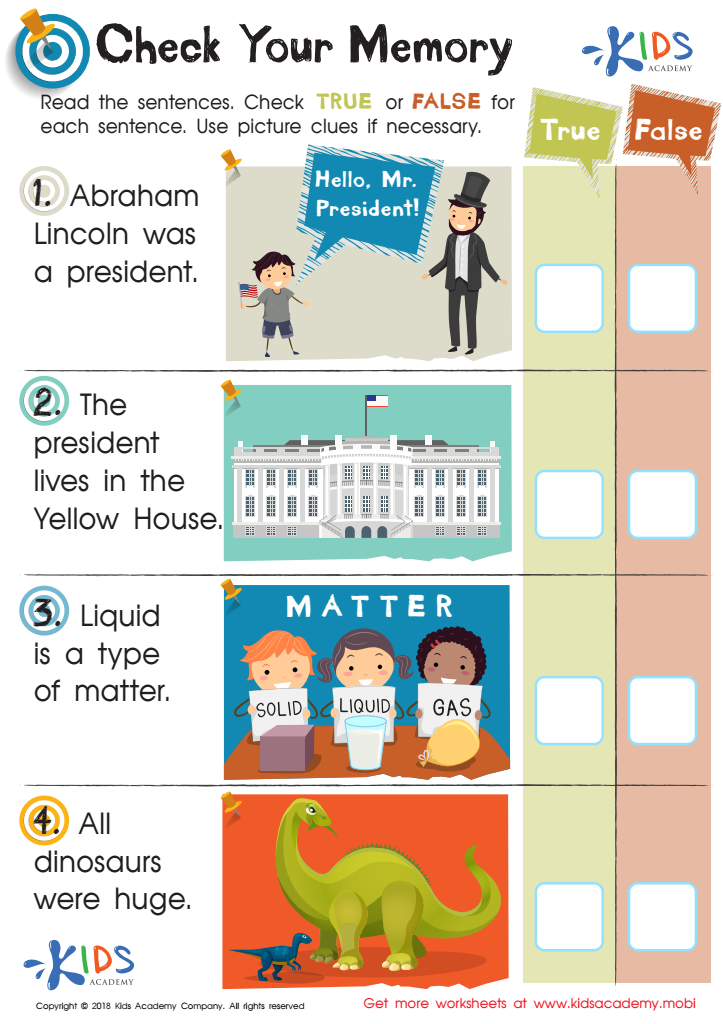
Assisting your kids with their homework and using worksheets is a great way for them to learn. The vibrant visuals in this printout can help stimulate the mind and motivate your child. Have them read the sentences and then point to the associated images. Afterwards, ask them to state True or False for each sentence. If they are still uncertain, offer them the picture clues to assist further.
Check Memory Worksheet
Worksheet


Easy Science for ages 3-7 is crucial for young children's development and should be a top priority for both parents and teachers. At this stage, children's minds are incredibly receptive, curious, and imaginative. Introducing science early nurtures their innate curiosity about the world, encouraging them to ask questions, seek answers, and develop critical thinking skills. Engaging in simple scientific activities helps them form a solid foundation for understanding more complex concepts later in life.

Early exposure to science also helps children develop important skills such as observation, classification, and problem-solving. These skills are not only fundamental to scientific inquiry but also valuable in everyday life and other subjects. Additionally, early science education fosters a love for learning by making it fun and interactive. Activities like observing plants, mixing safe kitchen ingredients, or watching how objects behave in water can captivate young minds.

For parents and teachers, supporting early science education strengthens the child's academic potential and overcomes future learning challenges. It also provides opportunities for quality bonding time, whether in the classroom or at home, and helps children develop confidence in tackling new challenges. Ultimately, Easy Science for young children sets the stage for lifelong education and the development of innovators, problem-solvers, and critically thinking individuals.