Easy Comparison Worksheets for Ages 3-8
3 filtered results
-
From - To
Discover engaging and age-appropriate comparison worksheets for children ages 3-8, designed to help young learners develop essential math skills. Our easy comparison worksheets from Kids Academy offer a fun and interactive way for kids to grasp the concepts of size, quantity, and value. These printable activities encourage critical thinking and logical reasoning, making math practice enjoyable and effective. Ideal for early learners, each worksheet provides clear instructions and visually appealing images to guide children through exercises that compare numbers, objects, and more. Nurture your child’s mathematical development with our expertly crafted learning resources today!
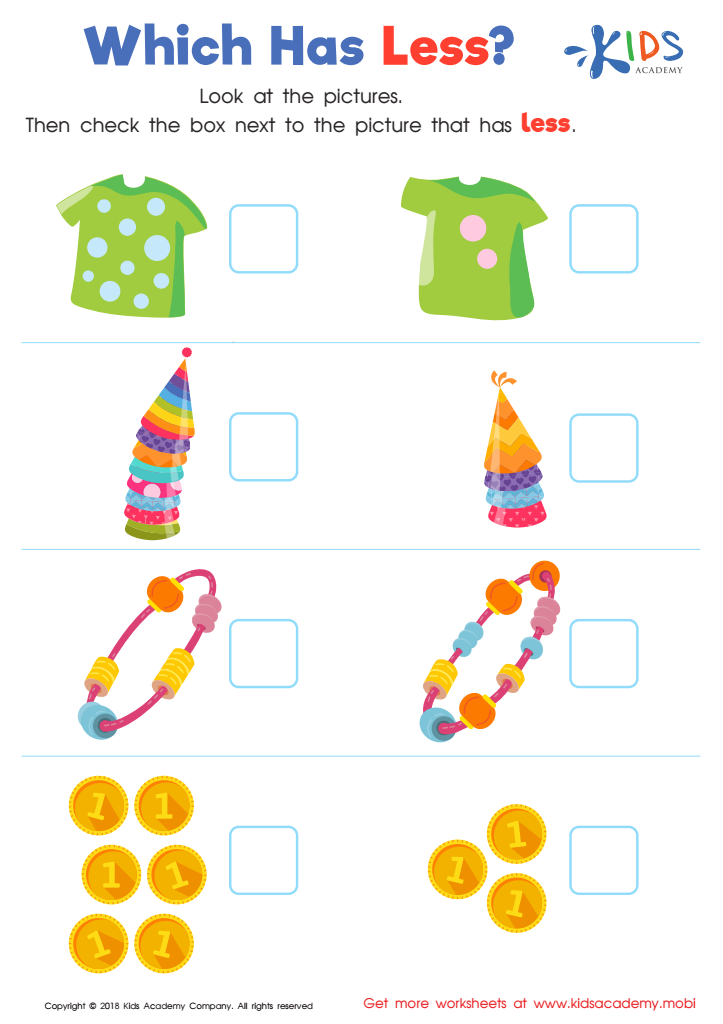
Which Has Less? Worksheet
 Assign to My Students
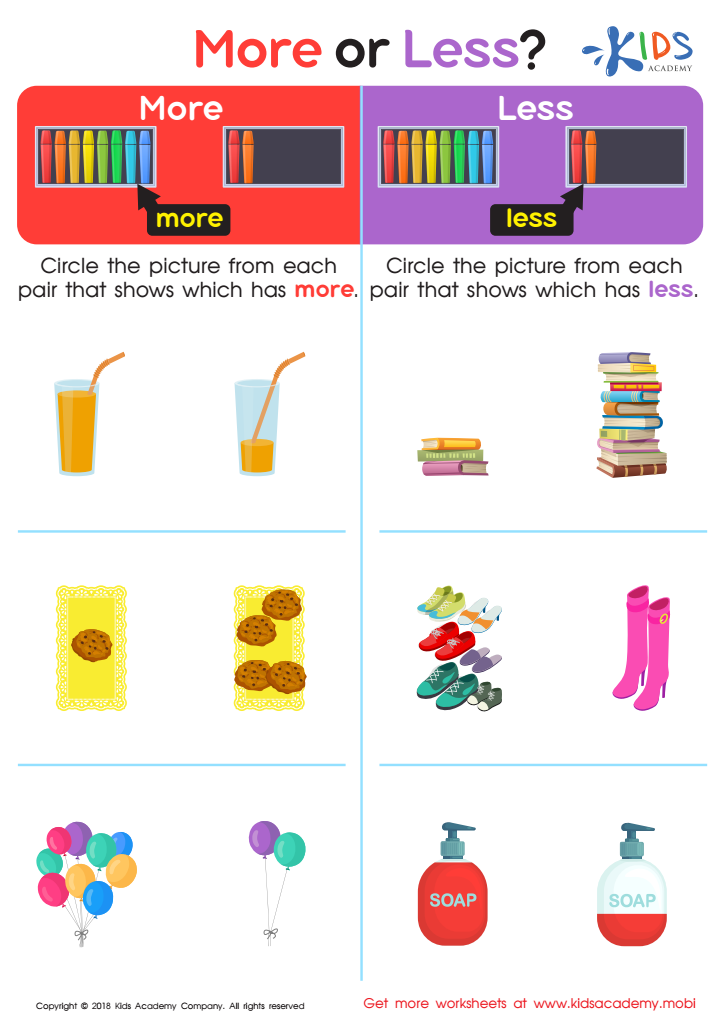
More or Less? Worksheet
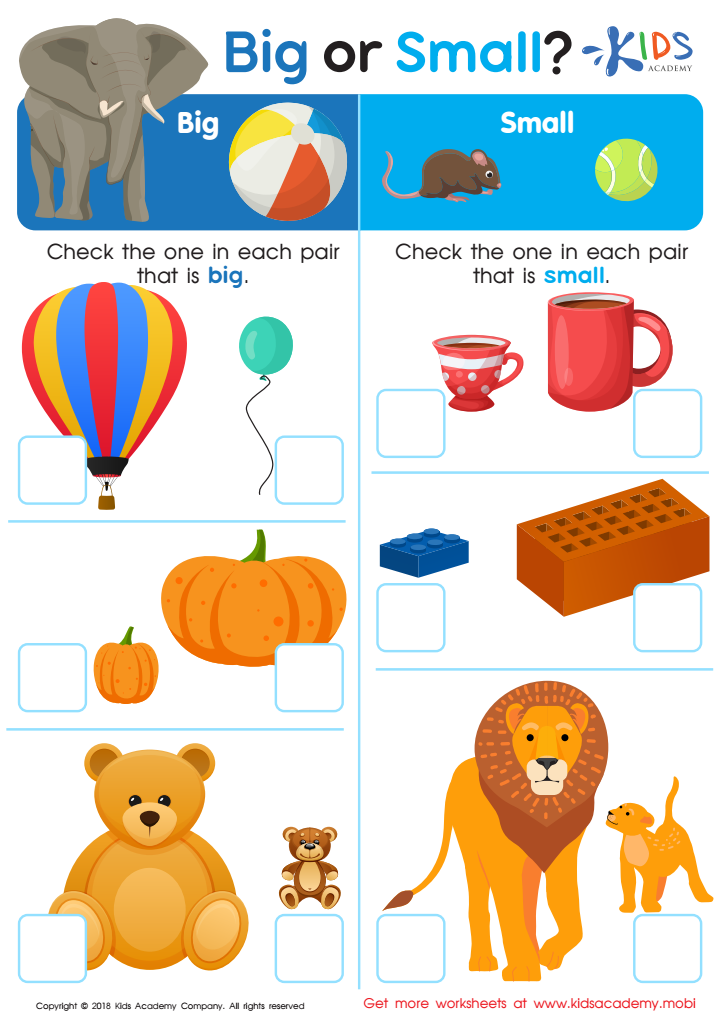
Big or Small? Worksheet




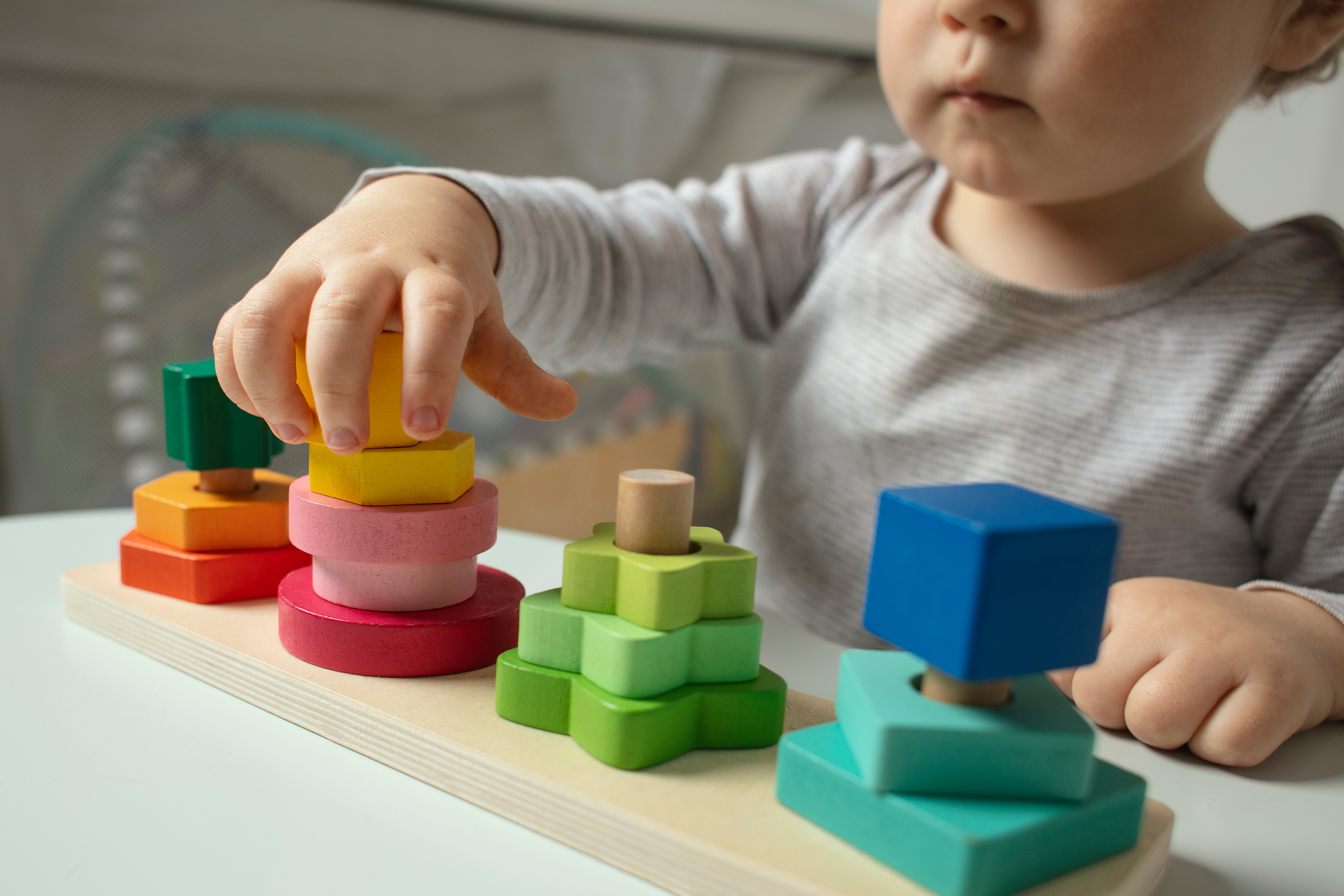

Parents and teachers should highly prioritize the use of "Easy Comparison" tools and techniques when teaching children aged 3-8 because it lays a crucial foundation for their cognitive development and critical thinking skills. At this early stage, children's brains are exceptionally receptive to learning, and understanding comparison concepts such as bigger/smaller, more/less, and higher/lower can significantly enhance their logical reasoning.
Utilizing comparison in various activities, like sorting blocks by size or comparing quantities, helps children develop essential math skills. This understanding is not just limited to mathematics; it extends across all areas of learning, including reading comprehension and science, where comparative analysis is frequently required.
Moreover, engaging children in comparison-based activities encourages curiosity and observation, prompting them to ask questions and seek answers methodically. This kind of active learning fosters intrinsic motivation and a love for learning, which are vital for long-term academic success.
Socially, understanding comparative concepts helps children communicate more effectively by giving them the language to describe their world accurately and relate to others' experiences more empathetically. This skill enhances their ability to share, negotiate, and collaborate with peers, promoting better social interactions and emotional intelligence.
Overall, integrating easy comparison techniques in early education equips children with the cognitive tools needed to make sense of their environment and paves the way for more complex problem-solving skills in their future academic endeavors.








