Easy 2D Shapes Worksheets for Ages 3-9
18 filtered results
-
From - To
Discover our "Easy 2D Shapes Worksheets for Ages 3-9" designed to make learning fun and interactive. These engaging worksheets help young learners identify, trace, and color various 2D shapes, developing their geometry skills and hand-eye coordination. Suitable for children aged 3-9, our worksheets feature a range of activities that cater to different skill levels, ensuring every child finds the right challenge. Perfect for parents and teachers, these resources support foundational math learning at home or in the classroom and lay the groundwork for future math success. Unlock your child's potential with our easy and enjoyable learning tools!
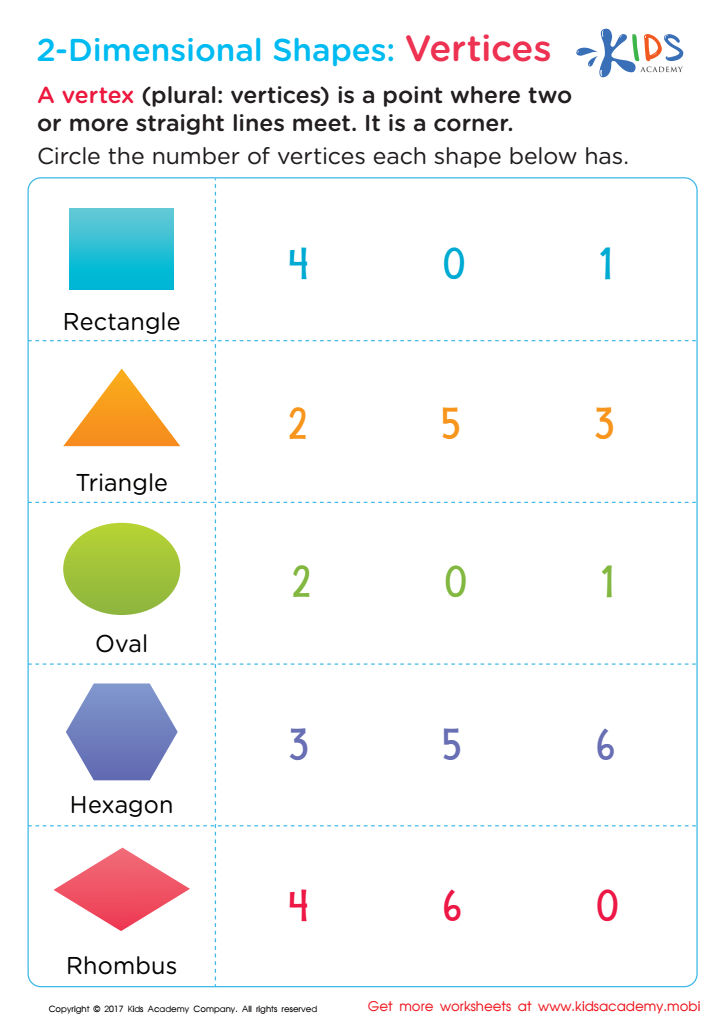
Two–Dimensional Shapes: Vertices Printable
 Assign to My Students



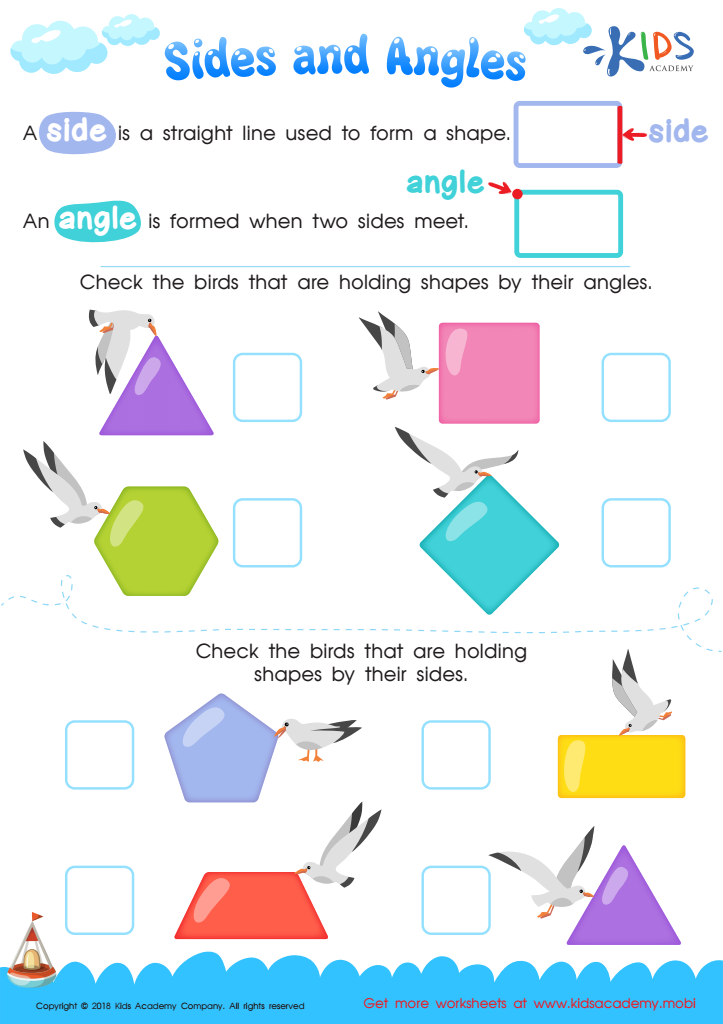
Sides and Angles Worksheet
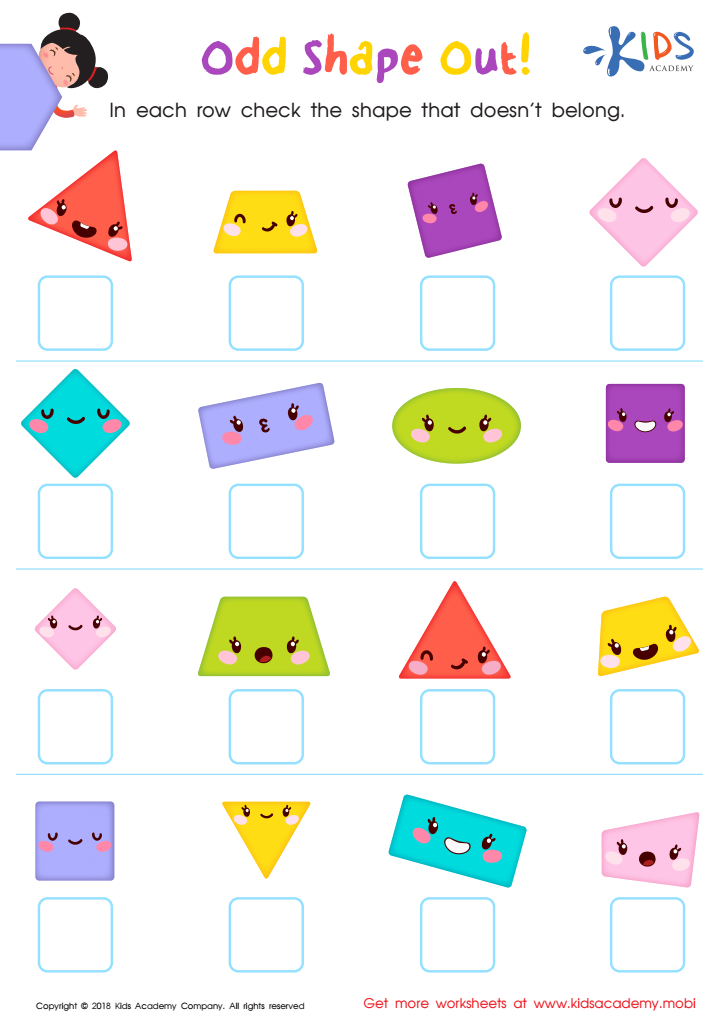
Odd Shape Out Worksheet for Grade 3
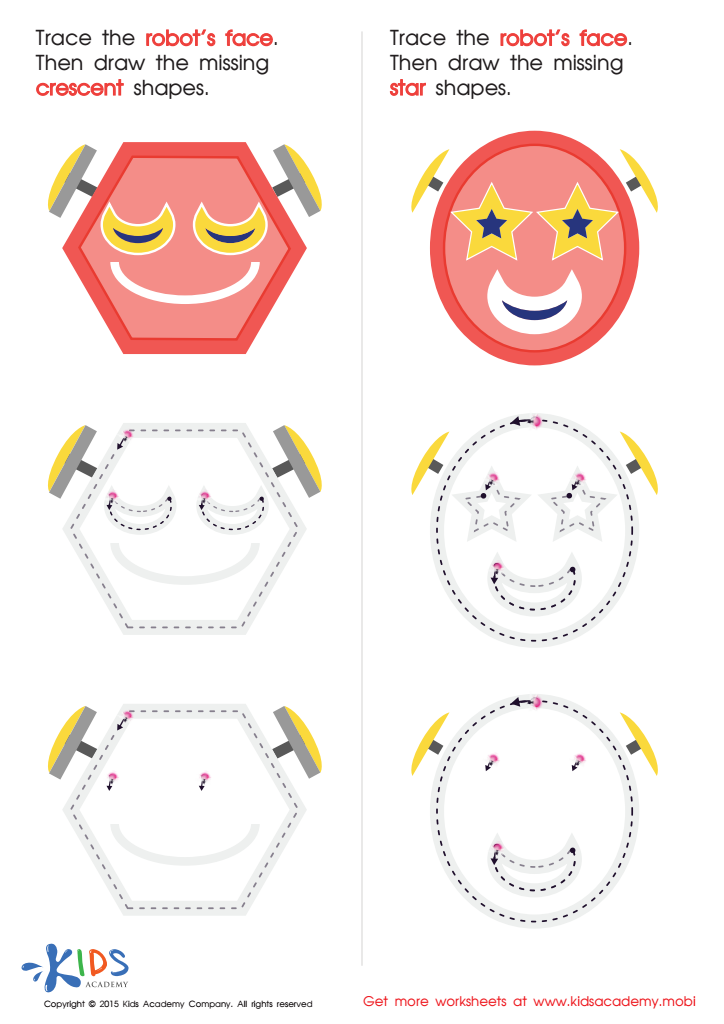
Composing a Robot's Face of Crescents And Stars Worksheet
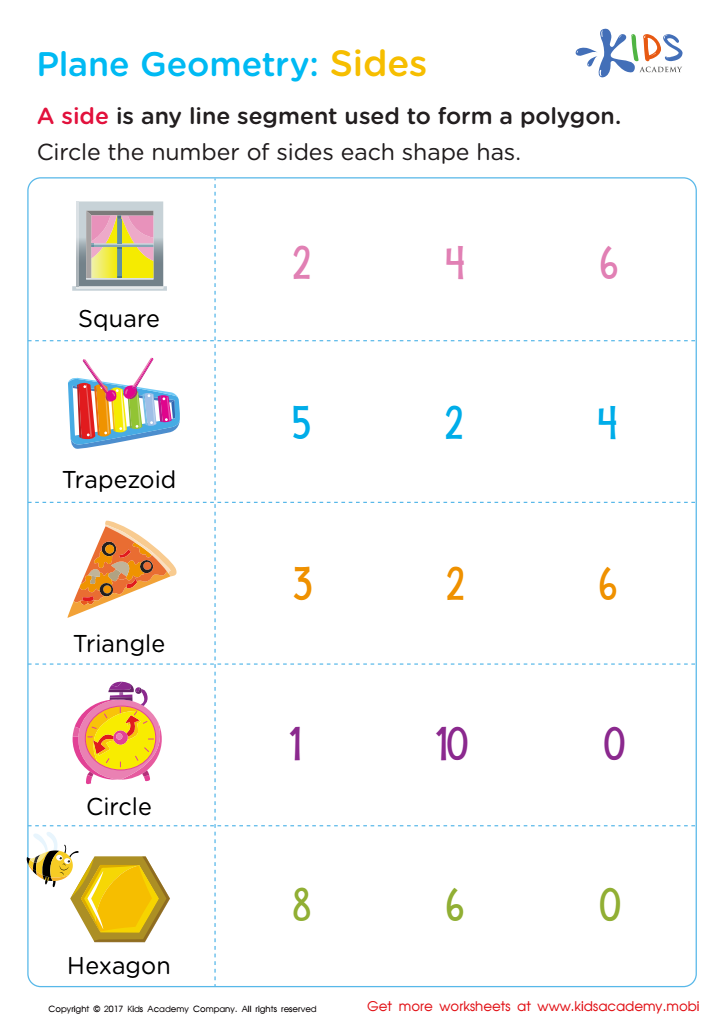
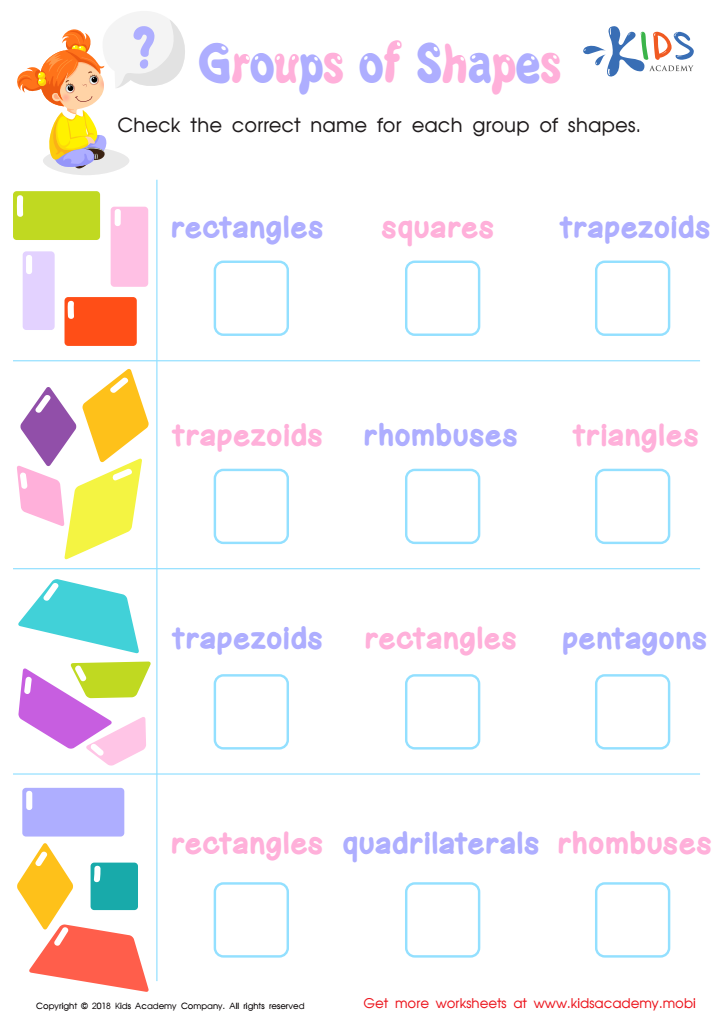
Groups of Shapes Worksheet
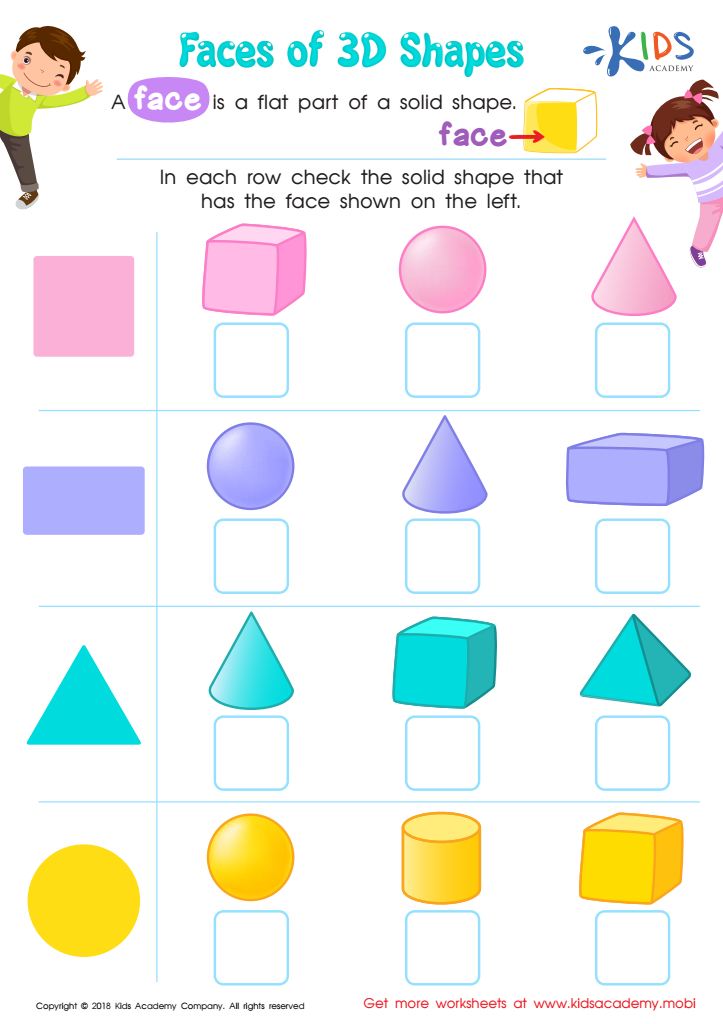
Faces of 3D Shapes Worksheet
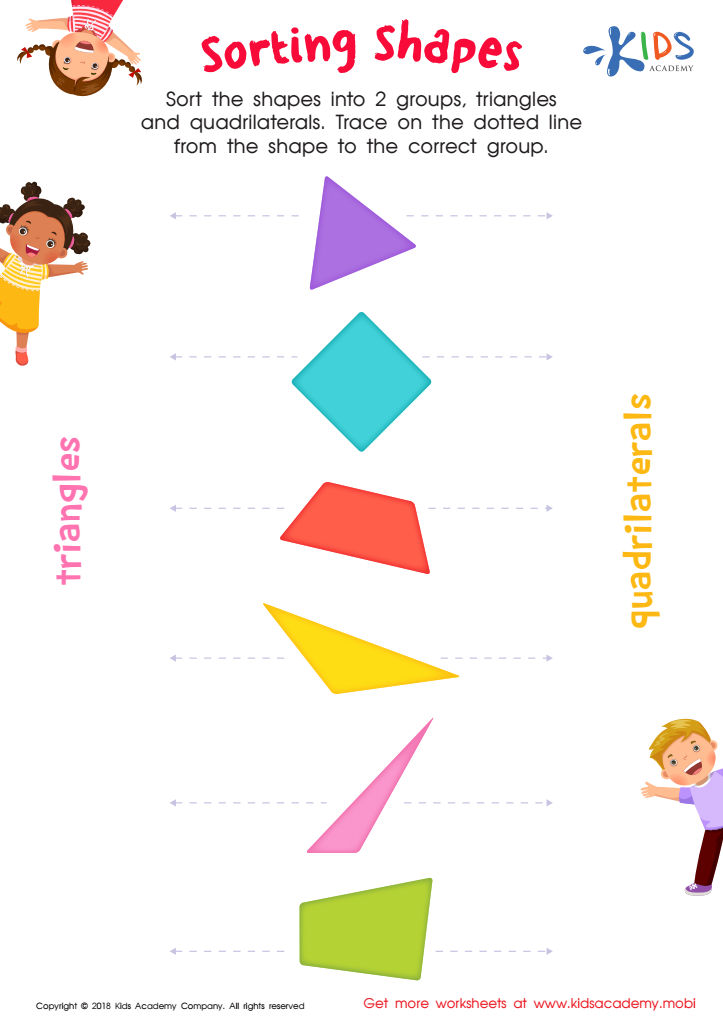
Sorting Shapes Worksheet
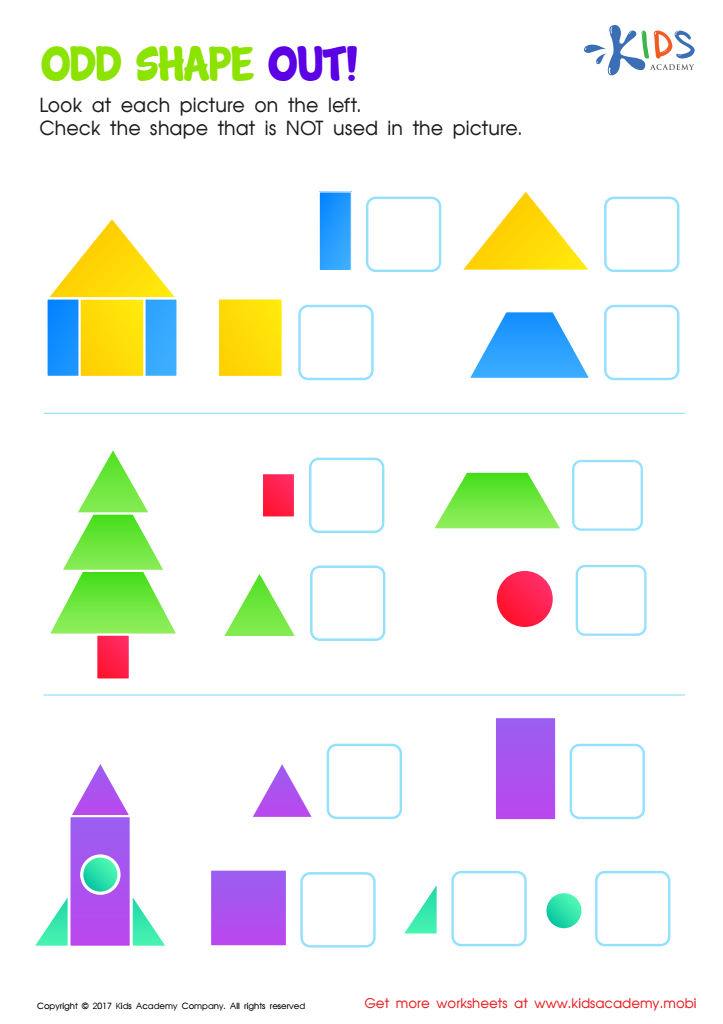
Odd Shape Out Worksheet for Grade 1
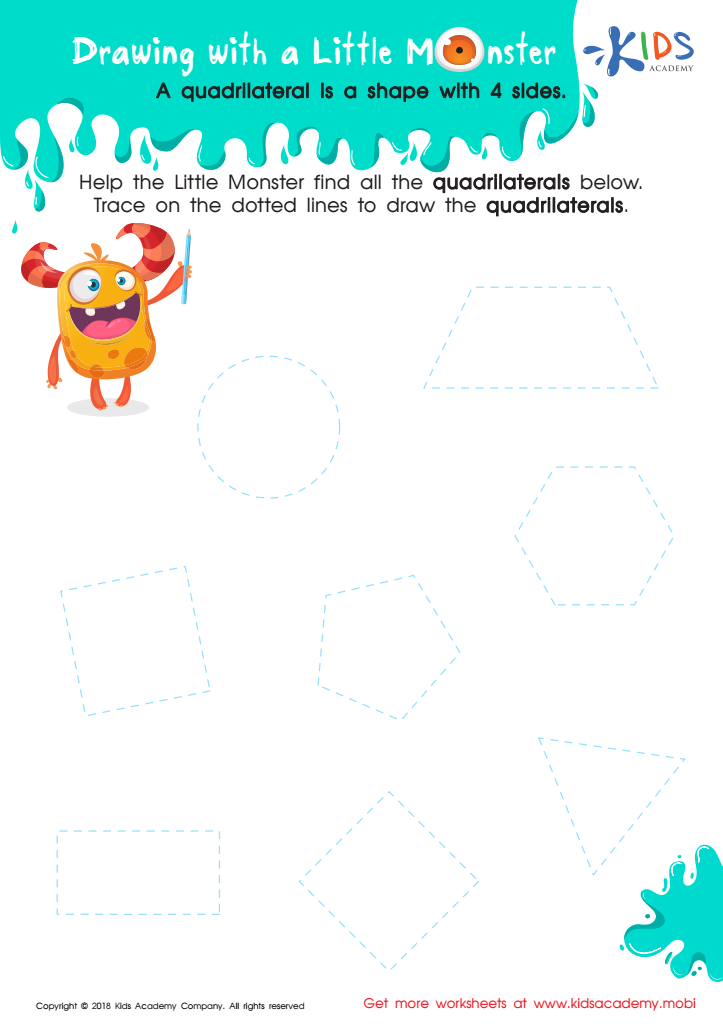
Drawing with a Little Monster Worksheet
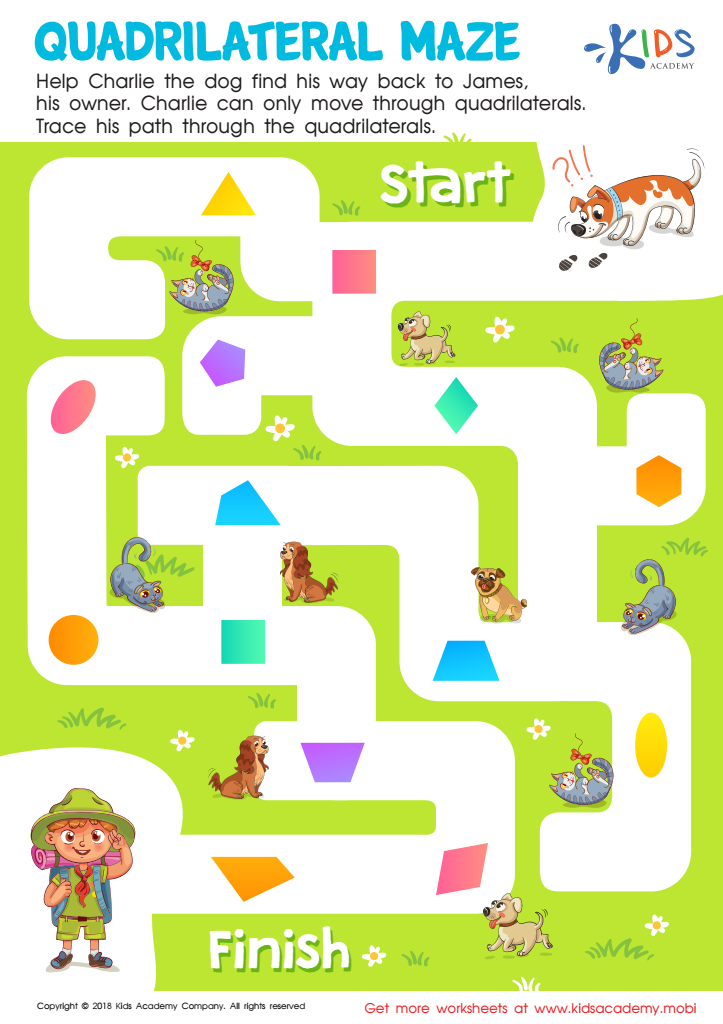
Quadrilateral Maze Worksheet
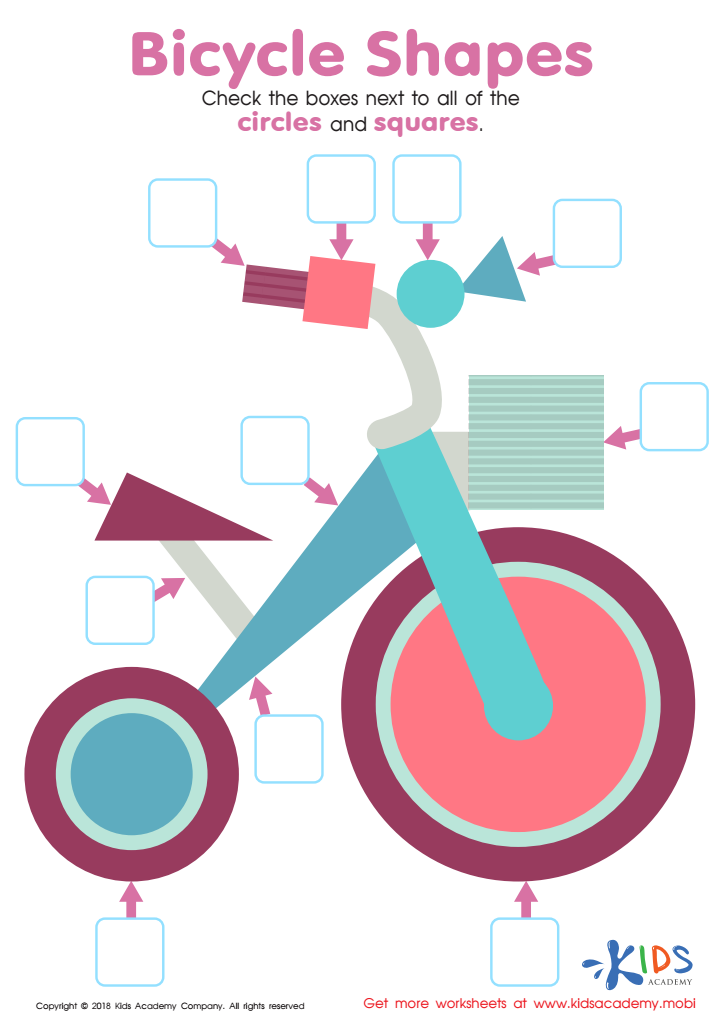
Bicycle Shapes Worksheet
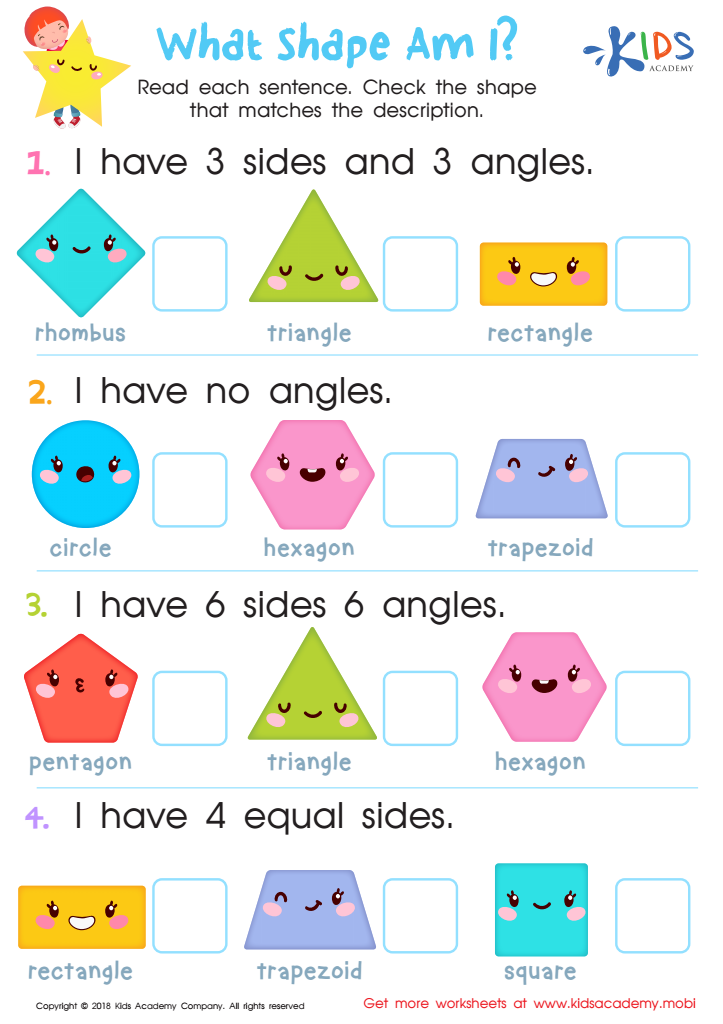
What Shape Am I? Worksheet
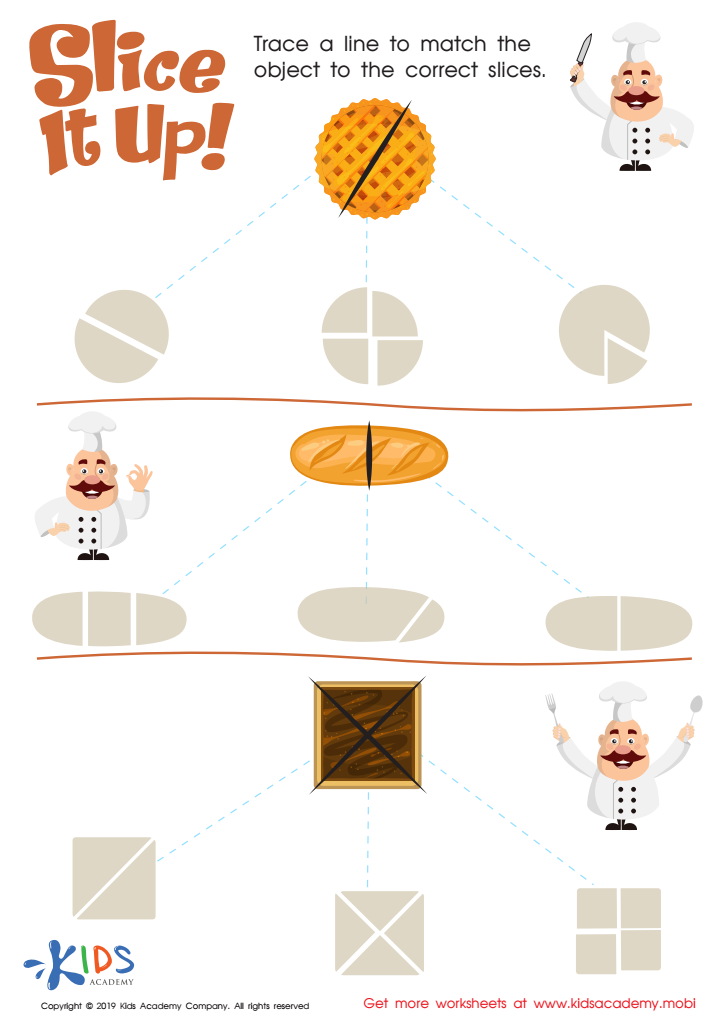
Slice It Up Worksheet
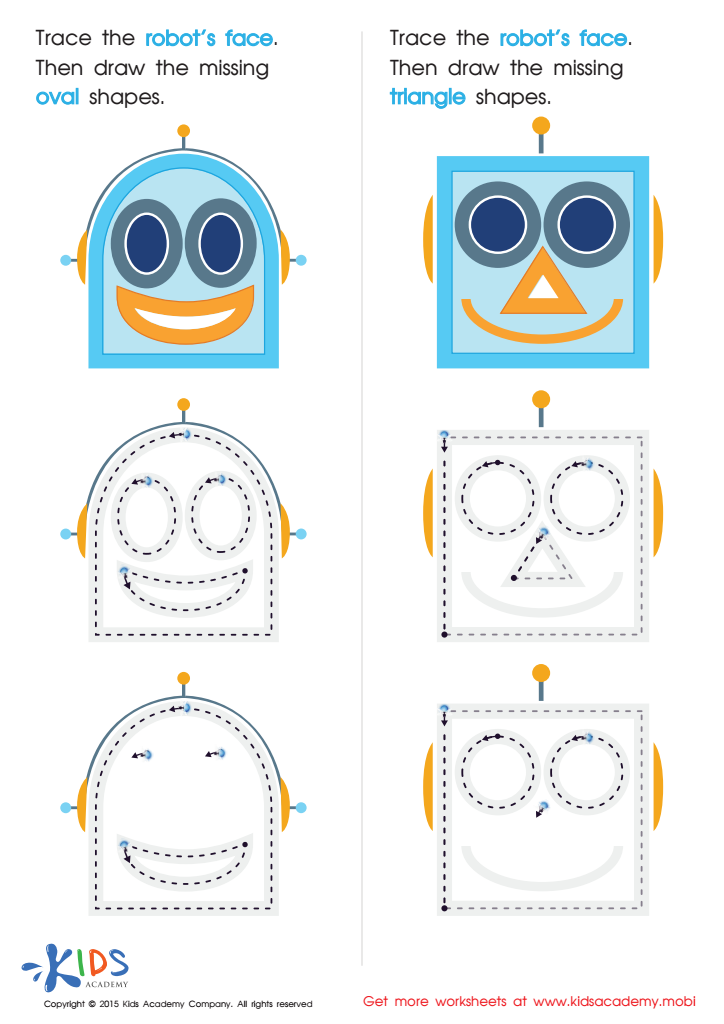
Drawing Ovals And Triangles with Fun Printable
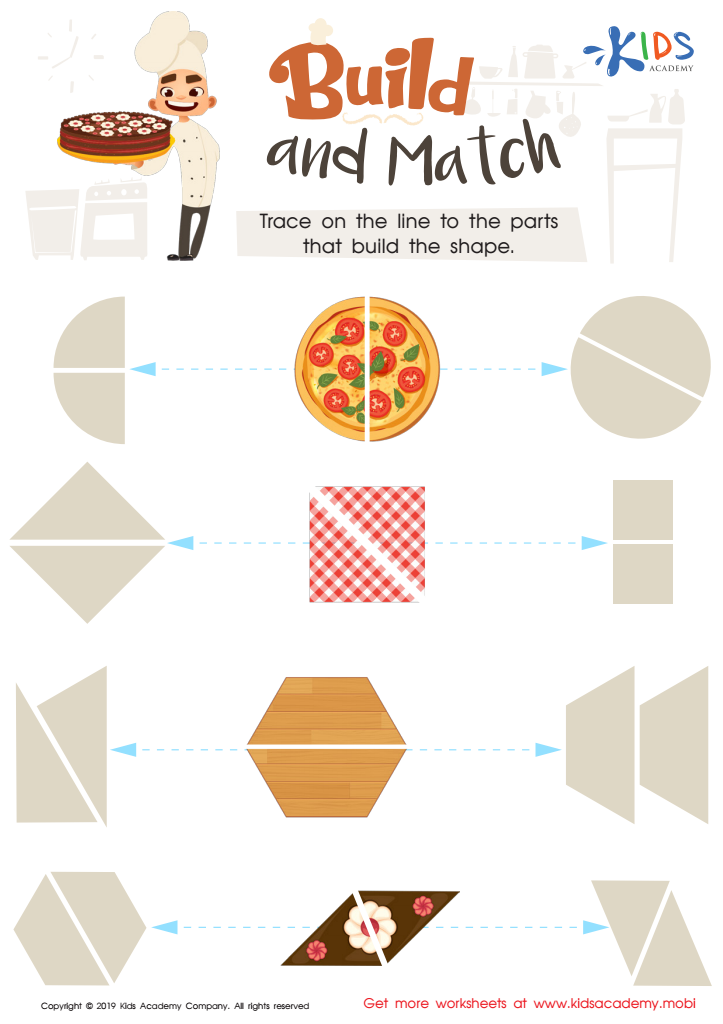
Build and Match Worksheet
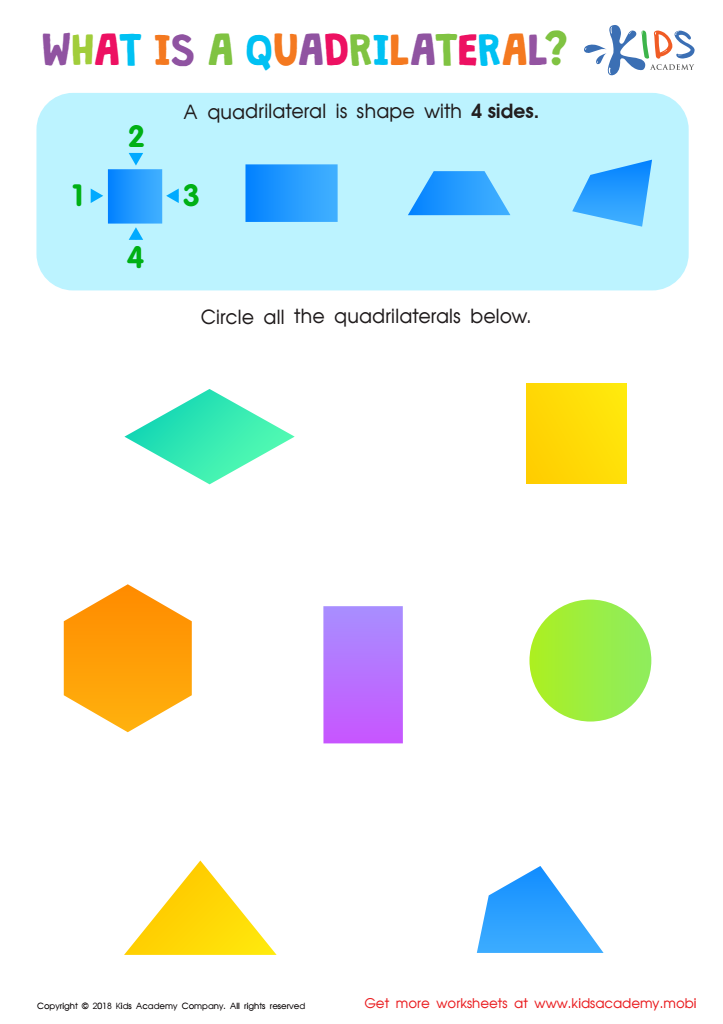
What Is a Quadrilateral? Worksheet
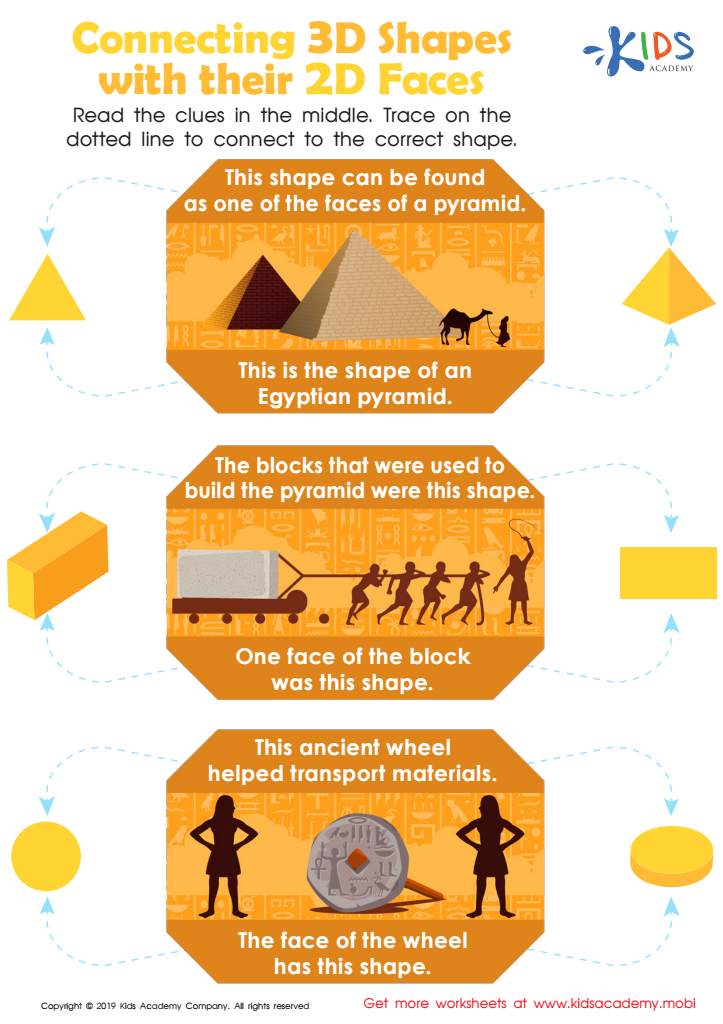
Connecting 3D Shapes with Their 2d Faces Worksheet








Easy 2D shapes are fundamental building blocks in early childhood education, critical for children aged 3-9. Parents and teachers should prioritize them because they help develop essential cognitive and perceptual skills. Learning shapes enhances spatial awareness, allowing children to recognize and organize objects in their environment effectively. This understanding is crucial for tasks like reading and writing, as letters and numbers are essentially shapes.
Moreover, 2D shapes are foundational in mathematics. Early exposure supports geometry learning and problem-solving skills. Children learn concepts of symmetry, area, and perimeter through playful interaction with shapes. This foundational knowledge will facilitate smoother transitions to complex mathematical concepts later in their academic journey.
Shapes also touch on creativity and fine motor skills. When children draw or trace shapes, they engage in activities that improve hand-eye coordination and dexterity. These are vital for writing and daily tasks. Additionally, presenting shapes in various contexts enriches vocabulary and language skills, as children learn names, attributes, and comparative language (e.g., bigger, smaller).
Incorporating 2D shapes into learning activities makes learning enjoyable, relevant, and multidisciplinary. Whether through play, art, or structured lessons, shapes provide pathways to comprehensive development, making them indispensable in early education.