Easy Comparison Worksheets for Ages 3-9
3 filtered results
-
From - To
Discover our Easy Comparison Worksheets for Ages 3-9, designed to make learning fun and engaging for young minds. These printable worksheets focus on fundamental comparison skills such as identifying bigger vs. smaller, longer vs. shorter, more vs. fewer, and more. Each activity uses relatable themes and colorful illustrations to capture children's attention. Tailored to suit different age groups and skill levels, our easy-to-follow worksheets help build a strong mathematical foundation. Perfect for both classroom use and at-home practice, these resources are essential for early childhood education. Visit Kids Academy to download your free worksheets today!
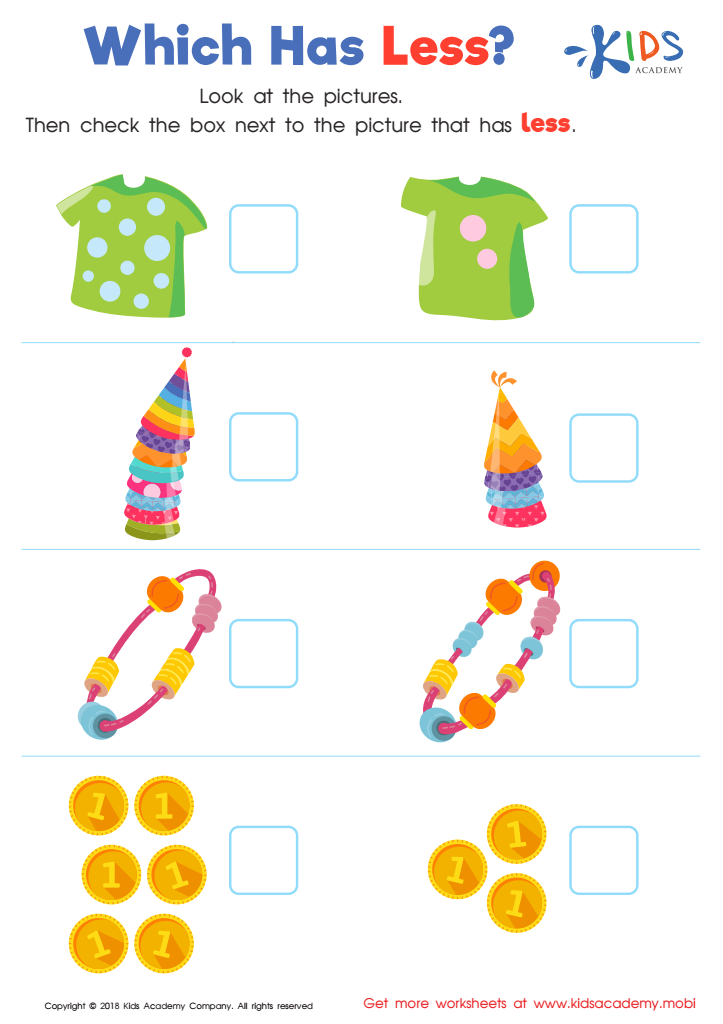
Which Has Less? Worksheet
 Assign to My Students
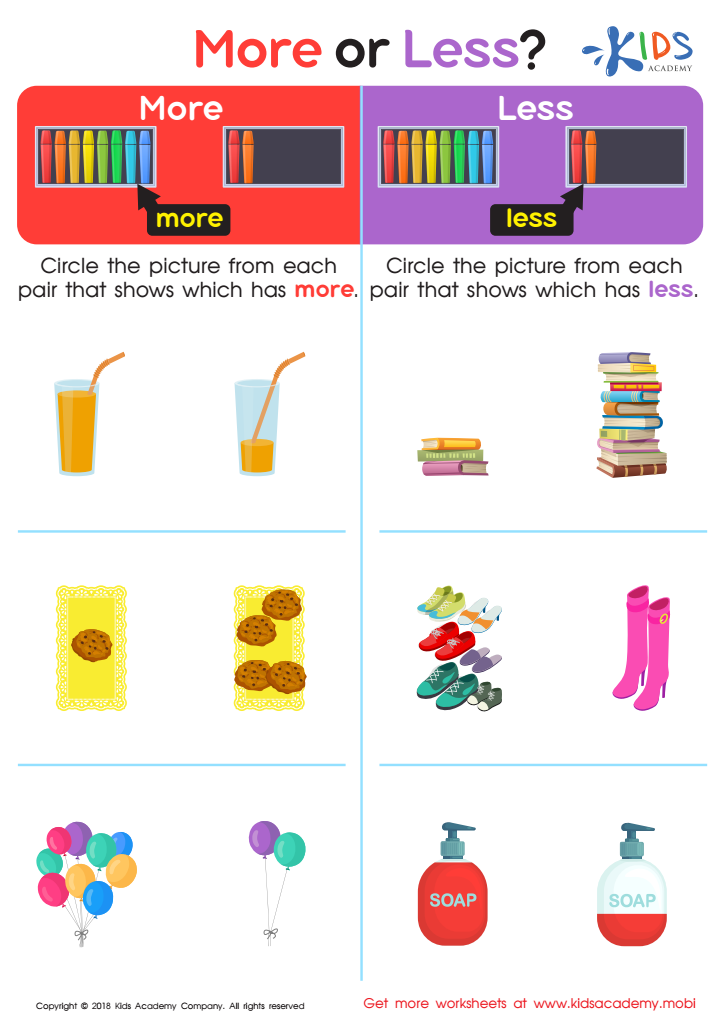
More or Less? Worksheet
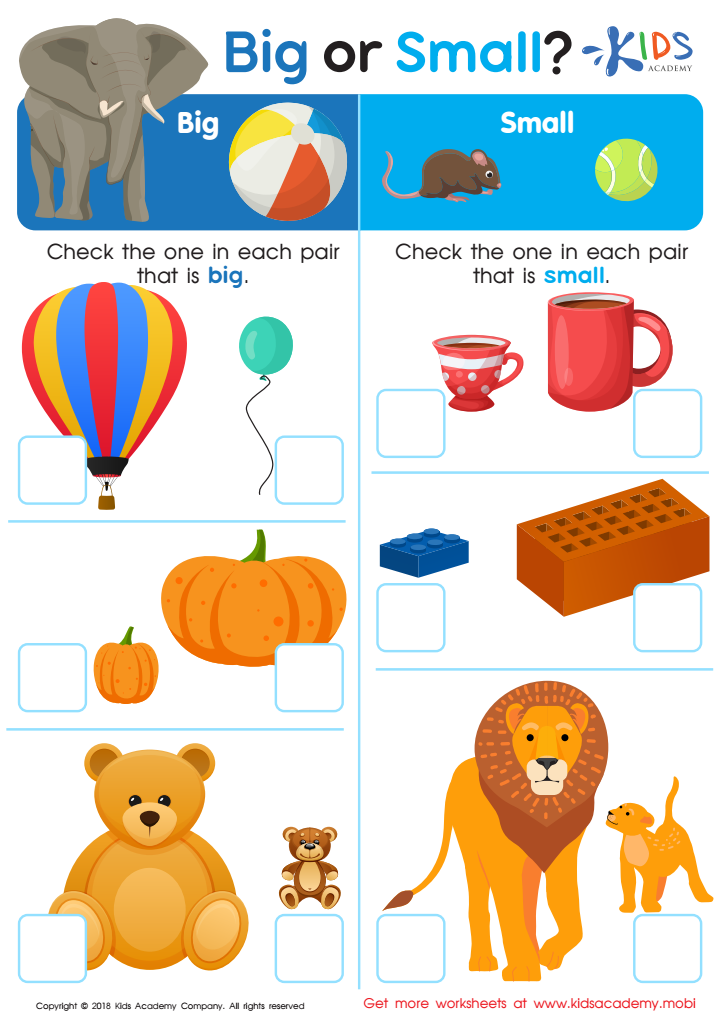
Big or Small? Worksheet







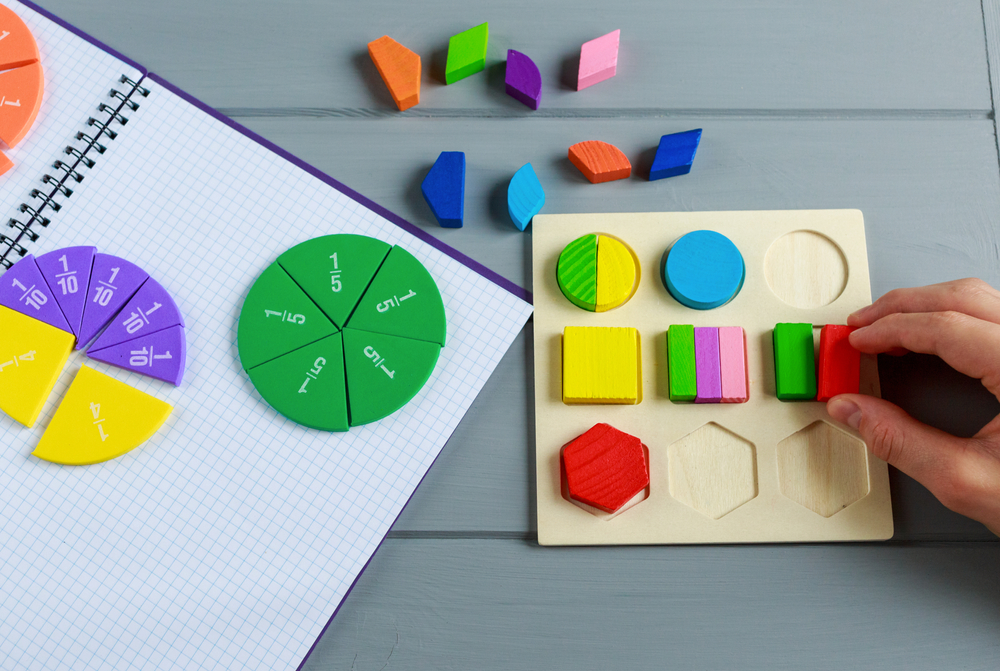
Easy comparison activities for children aged 3-9 are fundamental for their cognitive and academic development. Introducing young minds to comparisons helps to build the foundational skills for critical thinking, math, and language development. For instance, when children learn to compare sizes (big vs. small), quantities (more vs. less), or even emotional situations (happy vs. sad), they develop the ability to analyze and differentiate between various stimuli.
Parents and teachers should prioritize these activities because they foster problem-solving and reasoning abilities. When a child compares two objects or scenarios, they are not just seeing differences but also understanding relationships and patterns. This skill is crucial for early math concepts such as measurement, geometry, and number sense, which require an understanding of order and quantity. Moreover, these activities enhance vocabulary as children learn precise terms to describe their observations.
Emphasizing easy comparison exercises creates an engaging learning environment, where children can explore and communicate their thoughts clearly. Through guided comparison, children develop observational skills that can translate to better performance in school and everyday decision-making. Thus, caring about easy comparison activities is investing in a child's ability to navigate their world effectively and laying the groundwork for future academic success.








