Easy Comparison Worksheets for Ages 5-9
3 filtered results
-
From - To
Discover our engaging Easy Comparison Worksheets designed specifically for children ages 5-9! These educational resources provide a fun and interactive way for young learners to master comparison skills in a variety of contexts. Each worksheet features clear instructions and colorful illustrations that make learning accessible and enjoyable. From comparing numbers to understanding greater than, less than, and equal to, our worksheets reinforce essential math concepts while promoting critical thinking. Ideal for classroom activities or home practice, these worksheets encourage young minds to explore and enhance their understanding of comparisons. Start your child’s math journey today with our easy-to-use and effective worksheets!
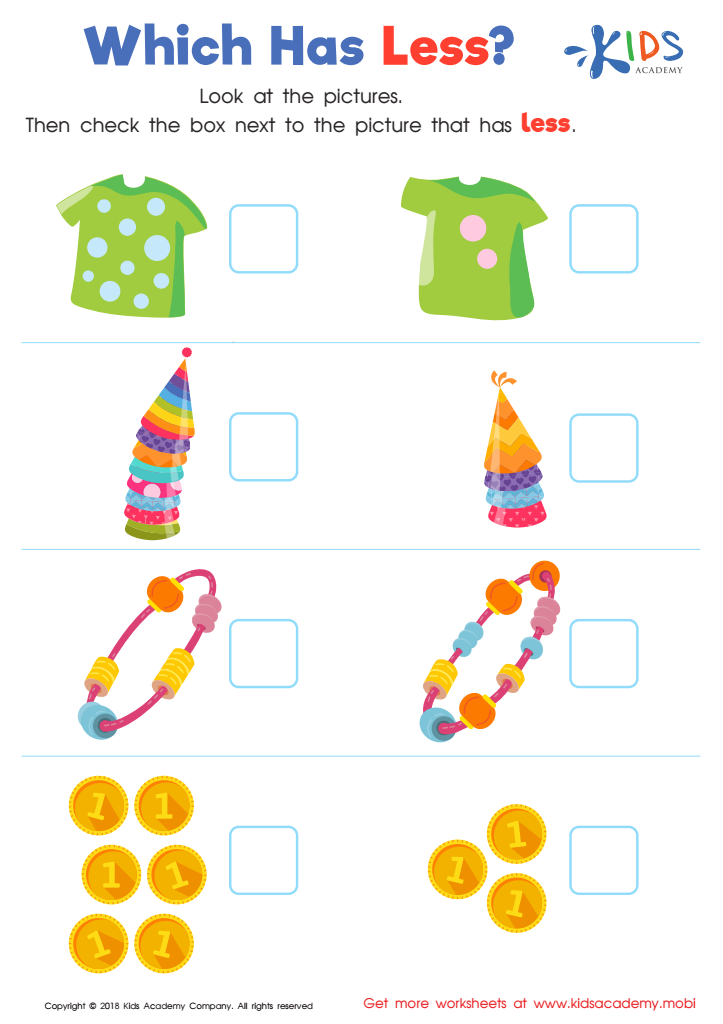
Which Has Less? Worksheet
 Assign to My Students
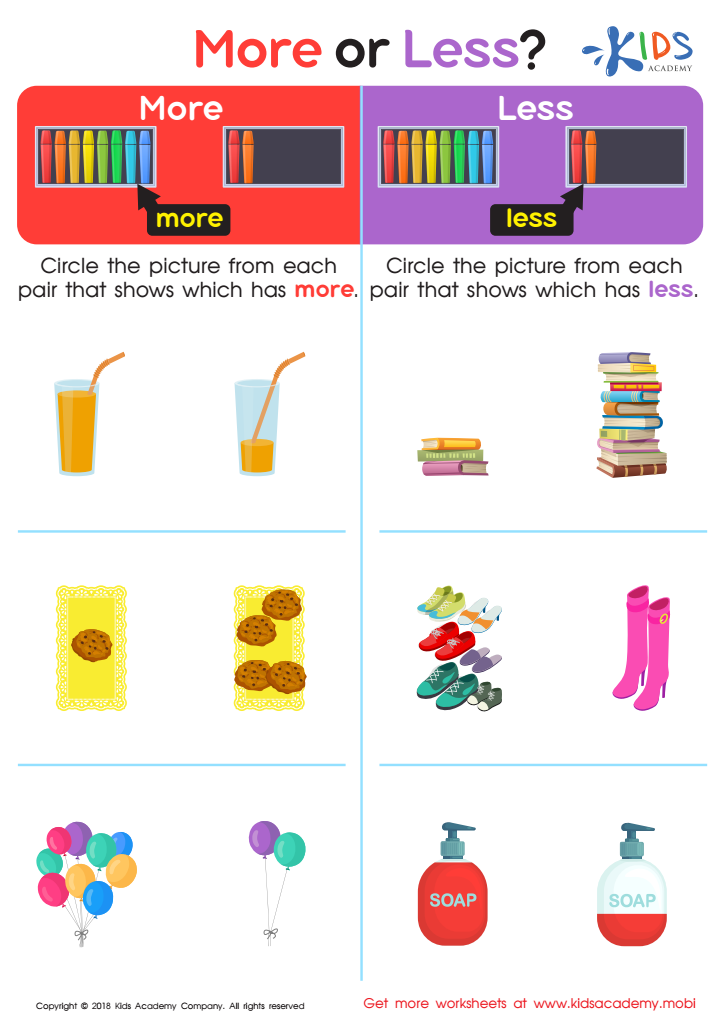
More or Less? Worksheet
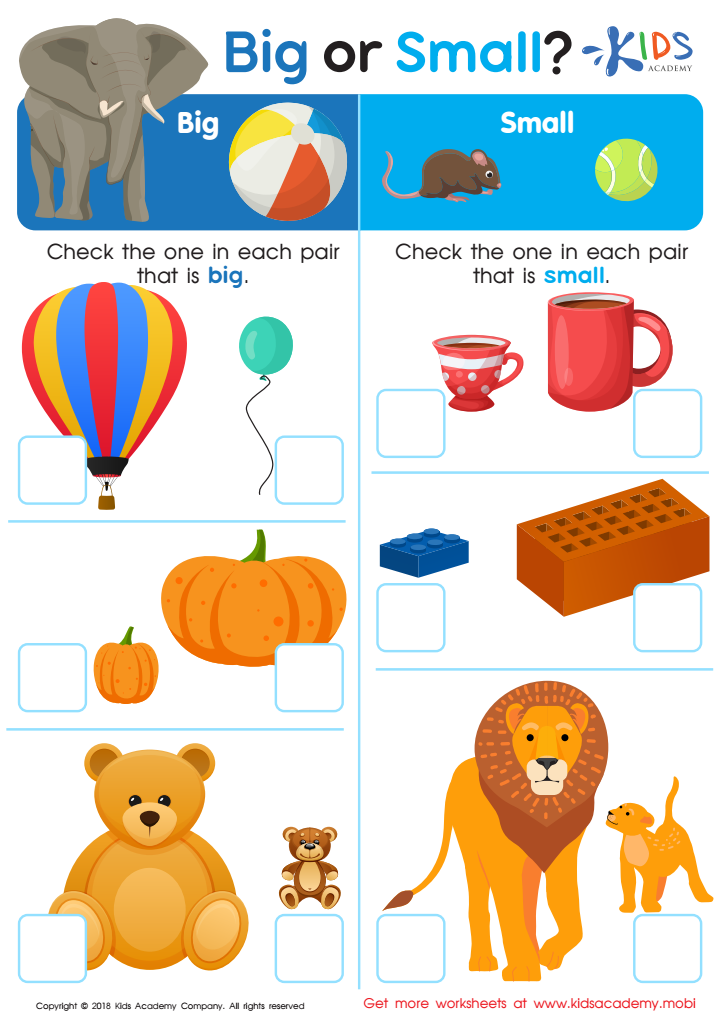
Big or Small? Worksheet





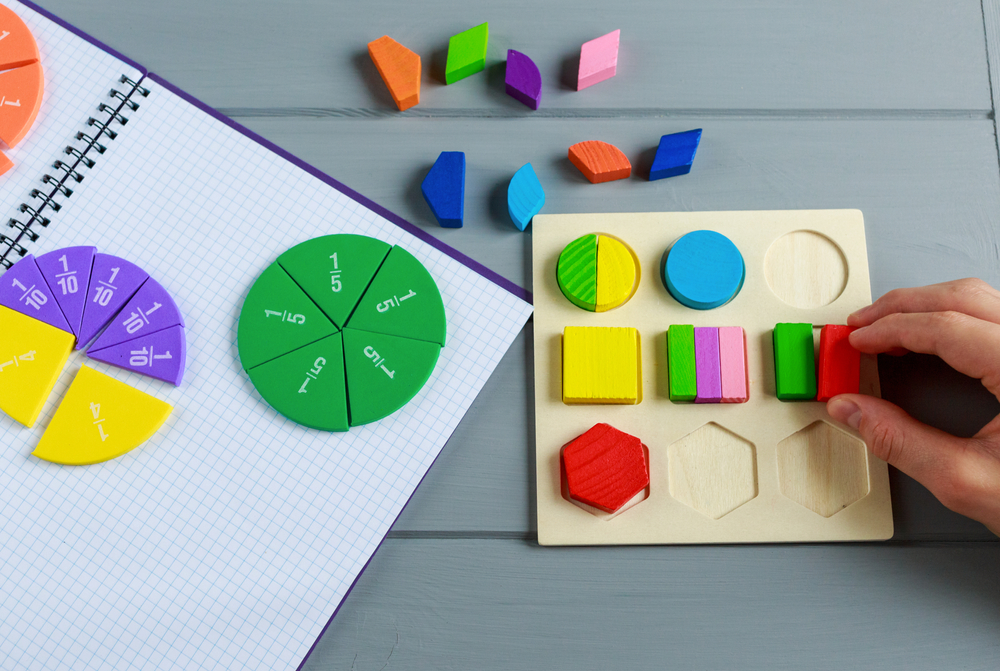

Easy Comparison for Ages 5-9 is essential because it fosters critical thinking skills and promotes early mathematical understanding in young learners. During this developmental stage, children are naturally curious and eager to learn, making it the perfect time to introduce concepts of comparison and measurement. By engaging in simple comparisons—in size, quantity, or attributes—children start to grasp foundational ideas in math, such as greater than, less than, same as, and differences between objects.
Incorporating comparison activities into learning encourages dialogue between parents and teachers, allowing children to articulate their thinking and reasoning. This communication helps build vocabulary and comprehension skills, vital components of early literacy. Additionally, comparing objects, whether in games or day-to-day activities, can make learning playful and interactive, which is key for maintaining engagement in this age group.
Moreover, understanding comparison lays the groundwork for more complex math concepts they will encounter later in their educational journey. By prioritizing Easy Comparison, parents and teachers can work together to create a rich learning environment that emphasizes curiosity, problem-solving, and collaborative learning, all of which contribute to a child's academic success and confidence in their abilities.








