Easy 2D Shapes Worksheets for Ages 6-8
18 filtered results
-
From - To
Unlock the world of geometry with our Easy 2D Shapes Worksheets designed for ages 6-8. Tailored for young learners, these printable activities help children identify, classify, and understand basic 2D shapes like circles, squares, triangles, and rectangles. Engaging and educational, our worksheets enhance spatial awareness and build foundational math skills through fun exercises, including matching games, coloring tasks, and shape recognition challenges. Perfect for both classroom and home learning, these worksheets make geometry accessible and enjoyable. Download now to give your child a head start in math with Kids Academy's expertly designed 2D shapes resources.
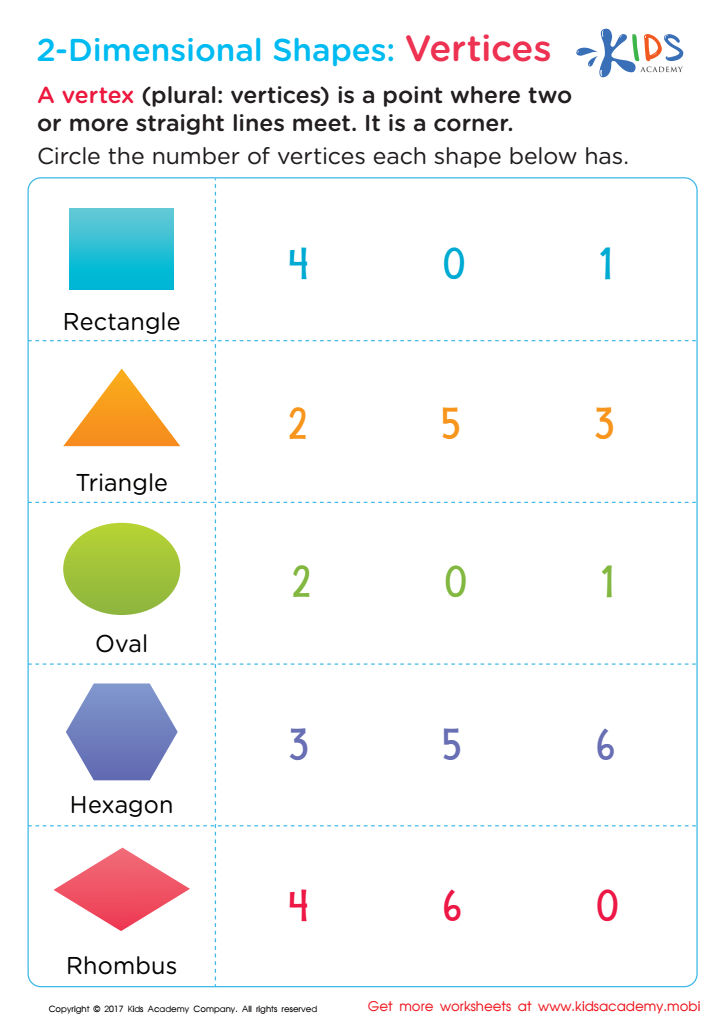
Two–Dimensional Shapes: Vertices Printable
 Assign to My Students

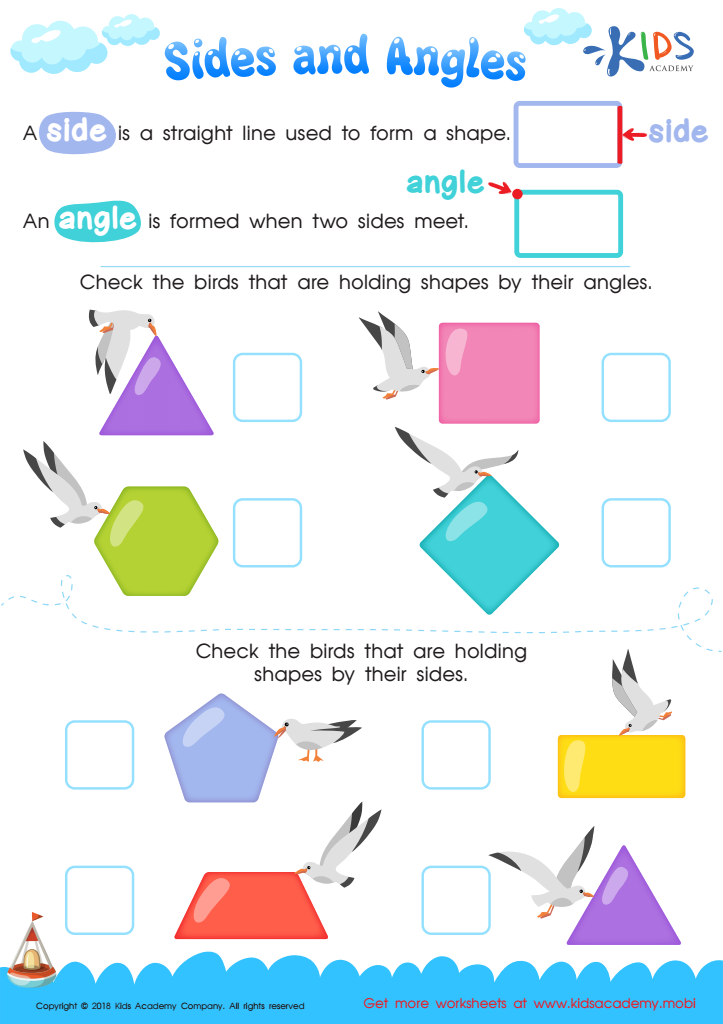
Sides and Angles Worksheet
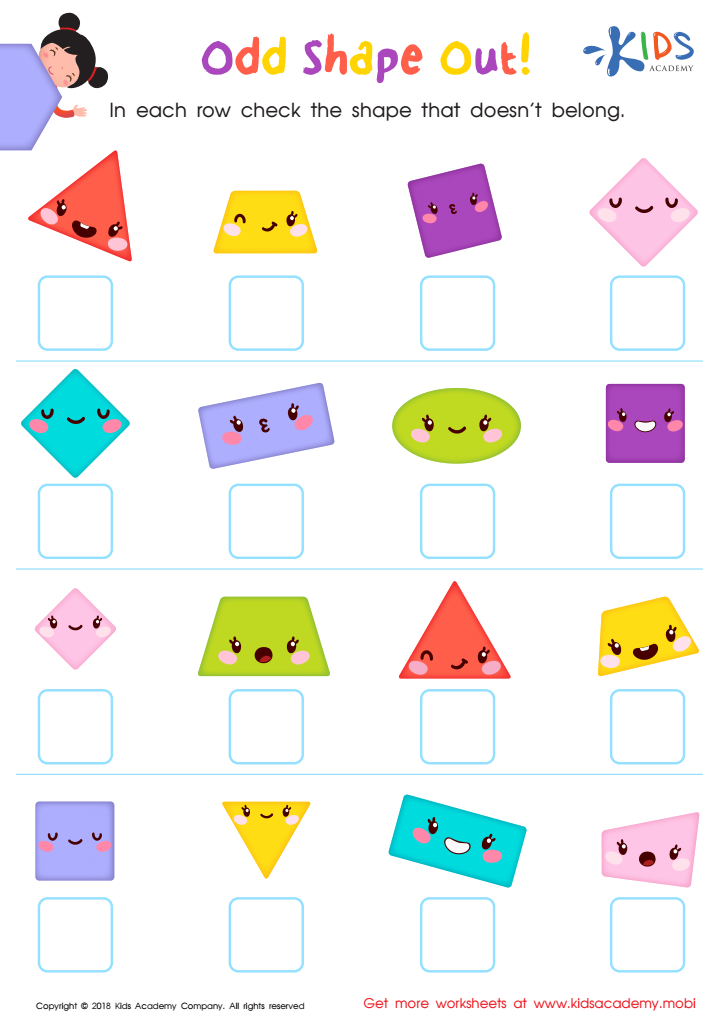
Odd Shape Out Worksheet for Grade 3
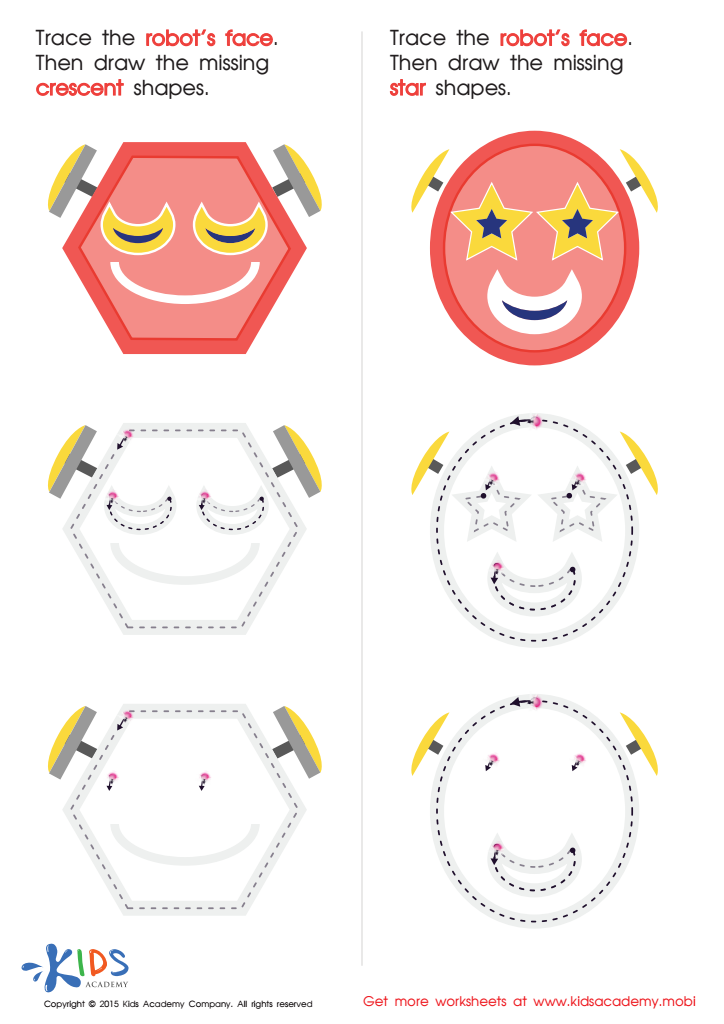
Composing a Robot's Face of Crescents And Stars Worksheet
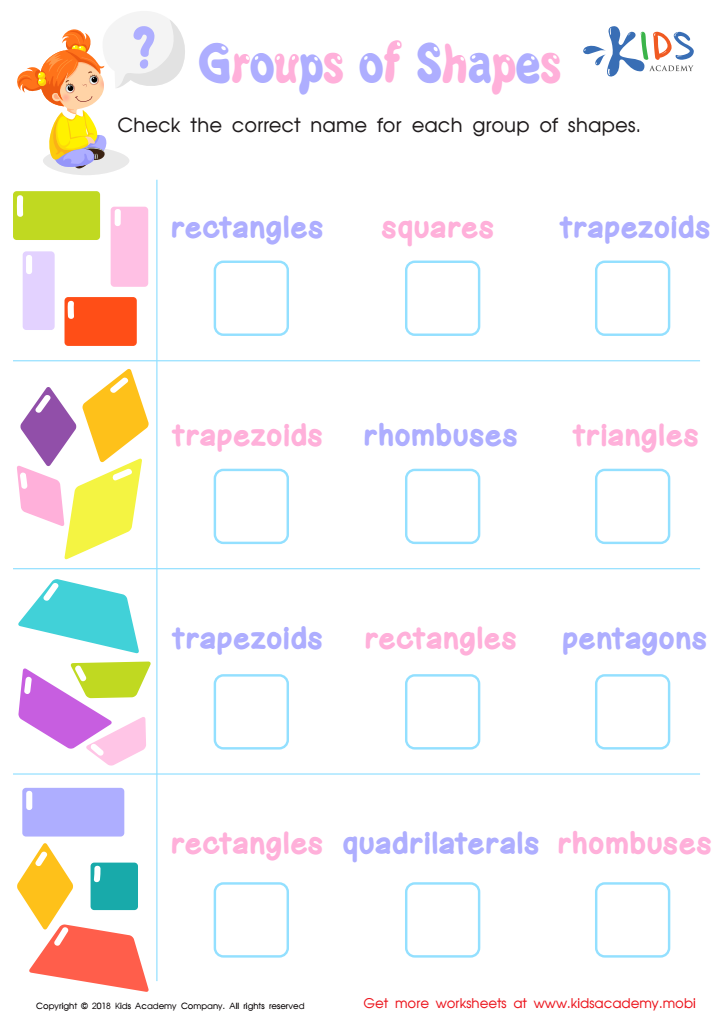
Groups of Shapes Worksheet
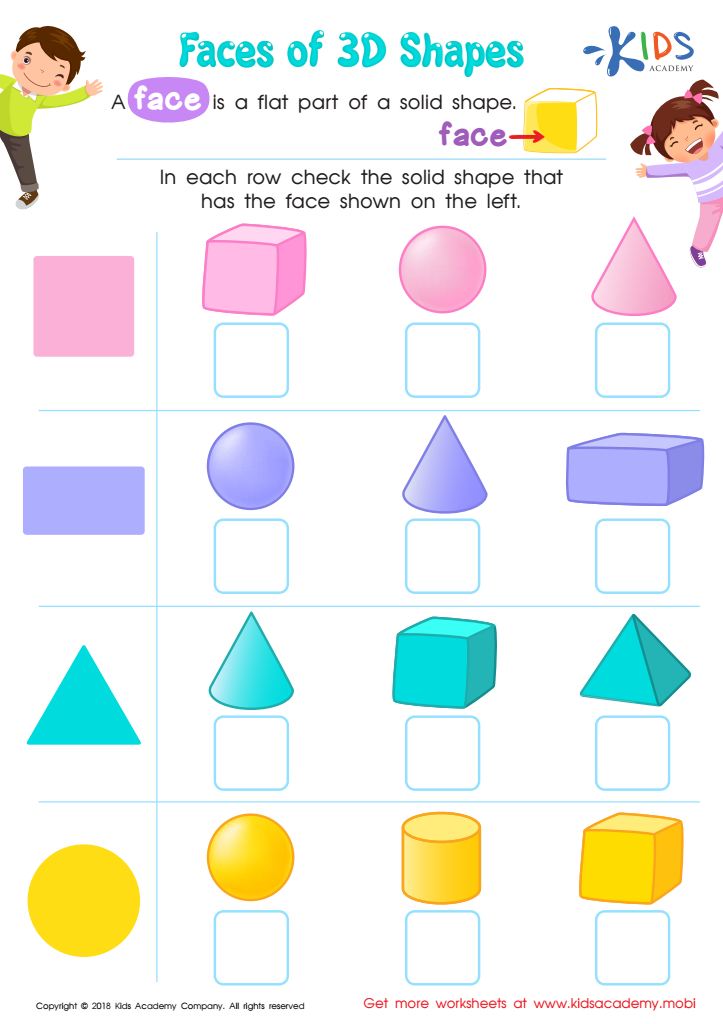
Faces of 3D Shapes Worksheet
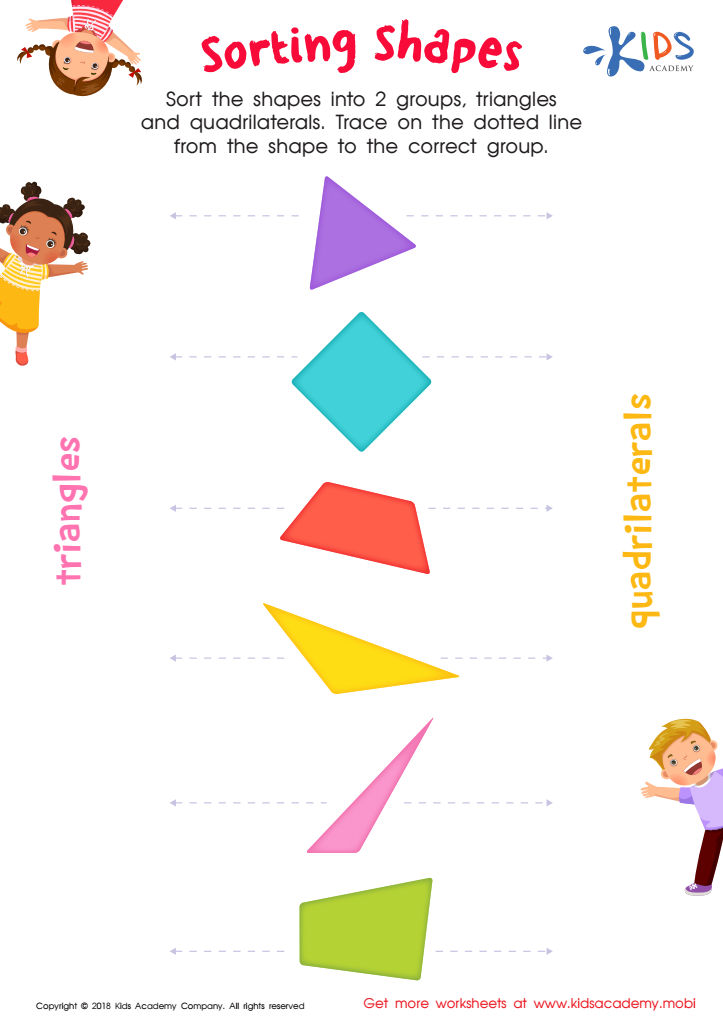
Sorting Shapes Worksheet
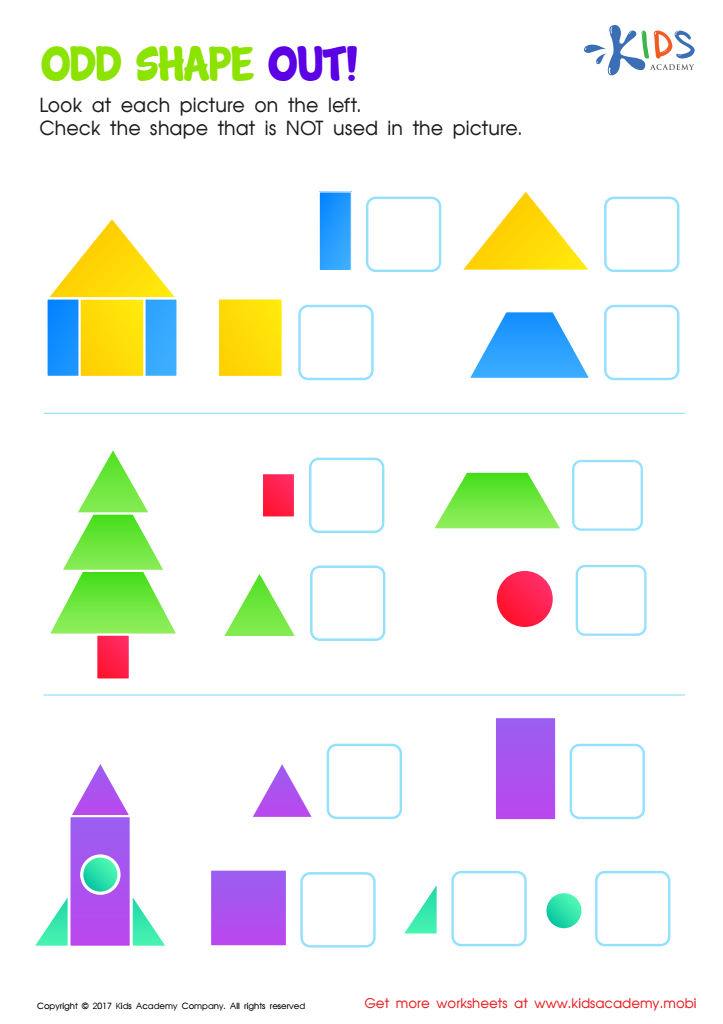
Odd Shape Out Worksheet for Grade 1
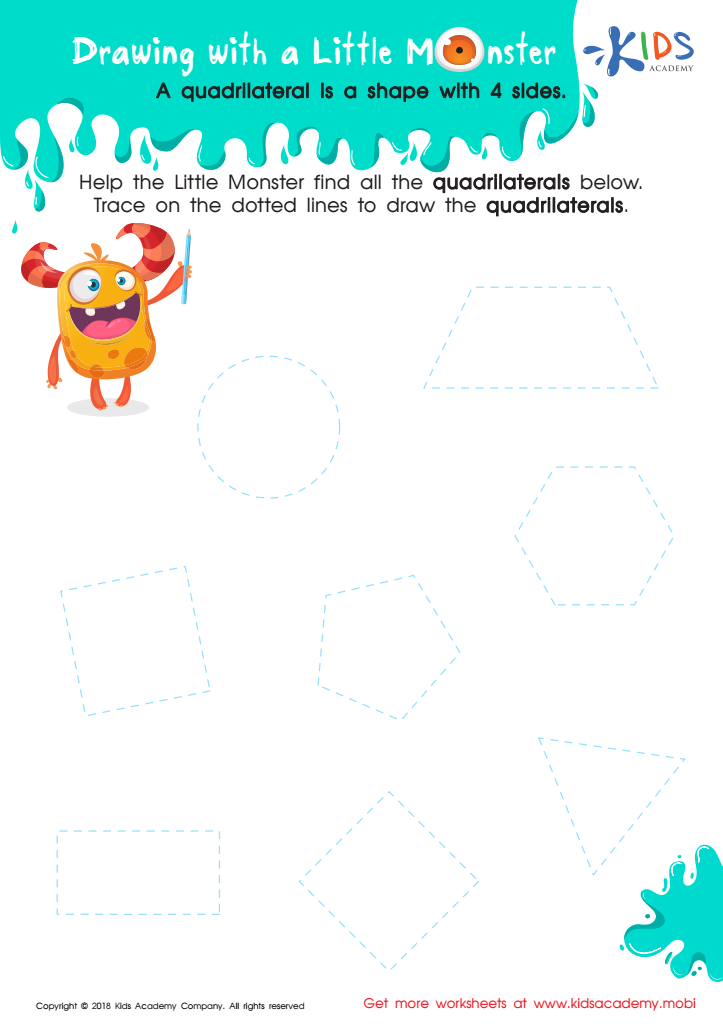
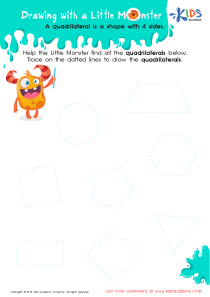
Drawing with a Little Monster Worksheet
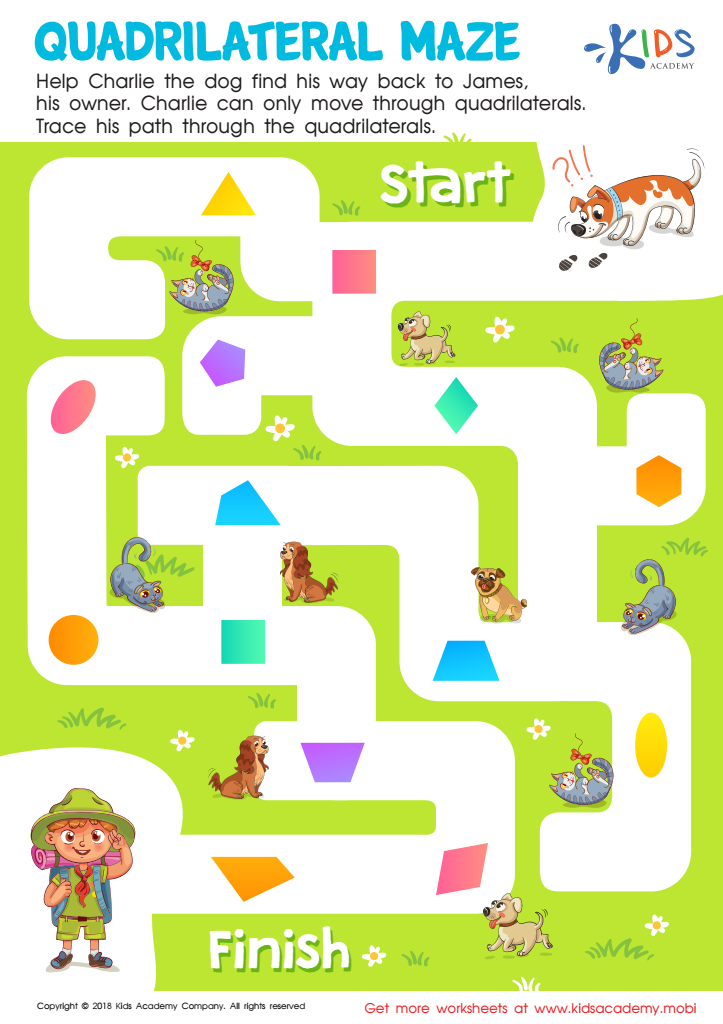
Quadrilateral Maze Worksheet
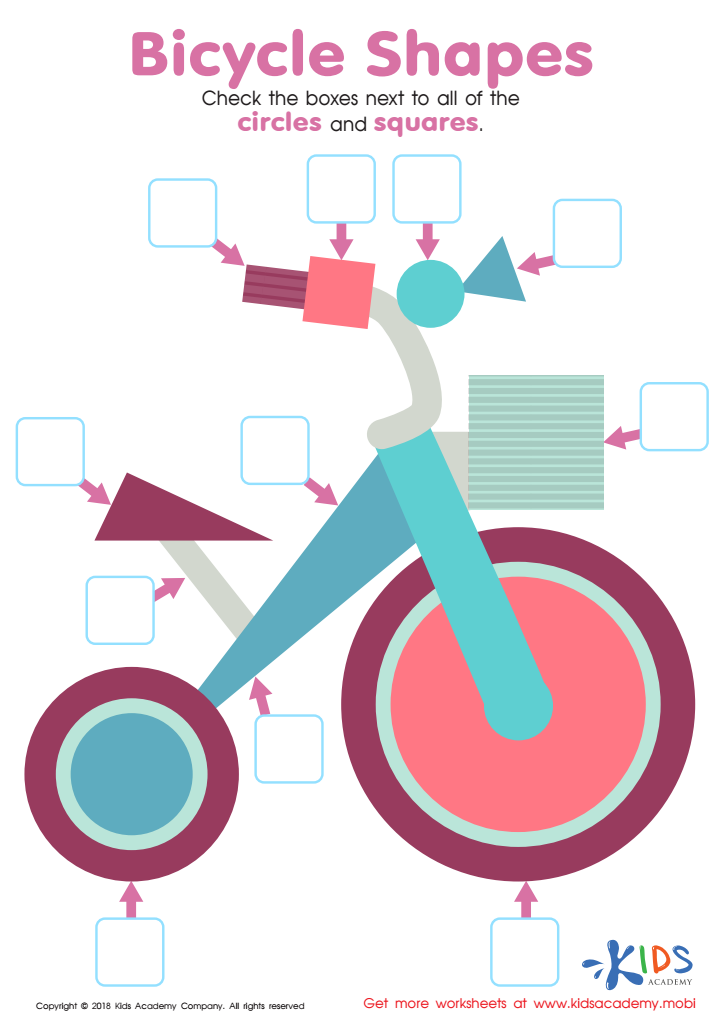
Bicycle Shapes Worksheet
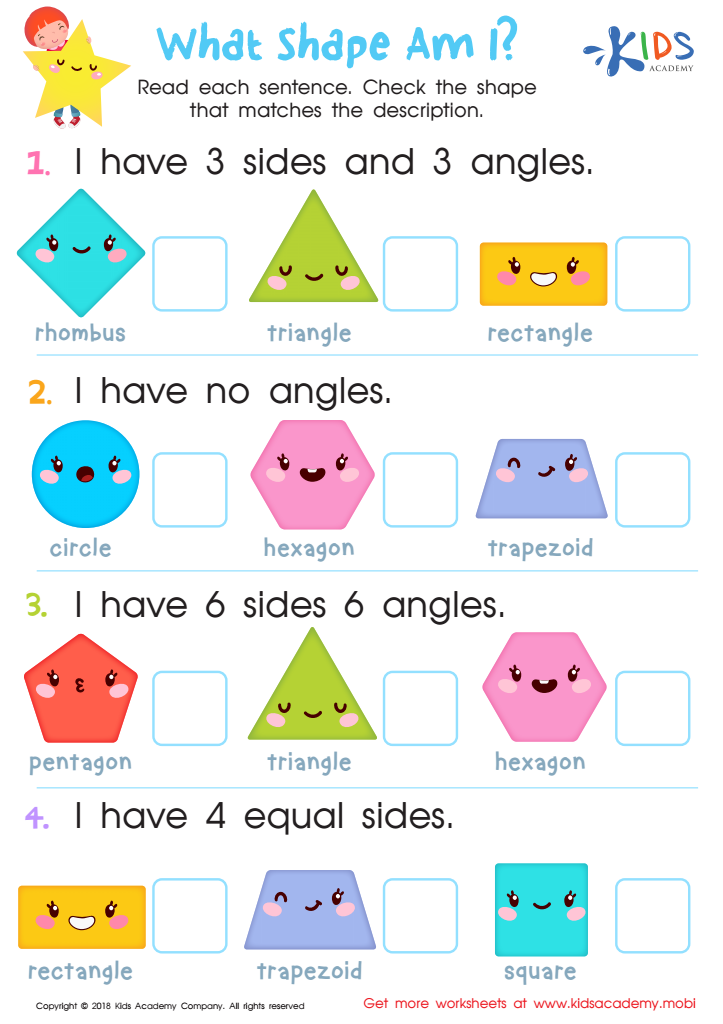
What Shape Am I? Worksheet
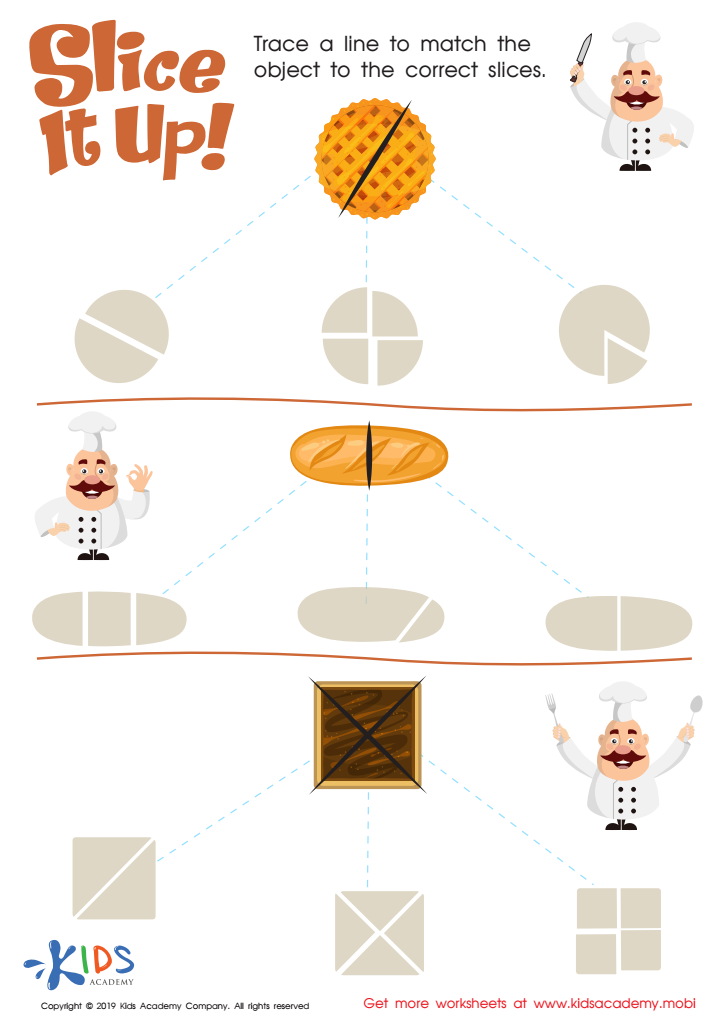
Slice It Up Worksheet
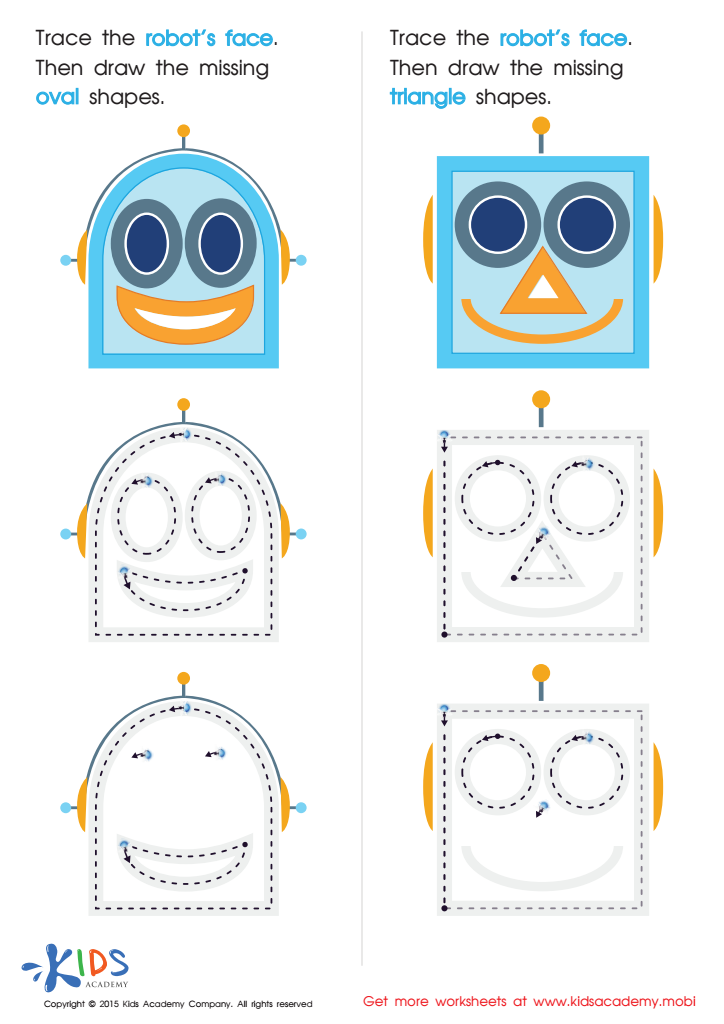
Drawing Ovals And Triangles with Fun Printable
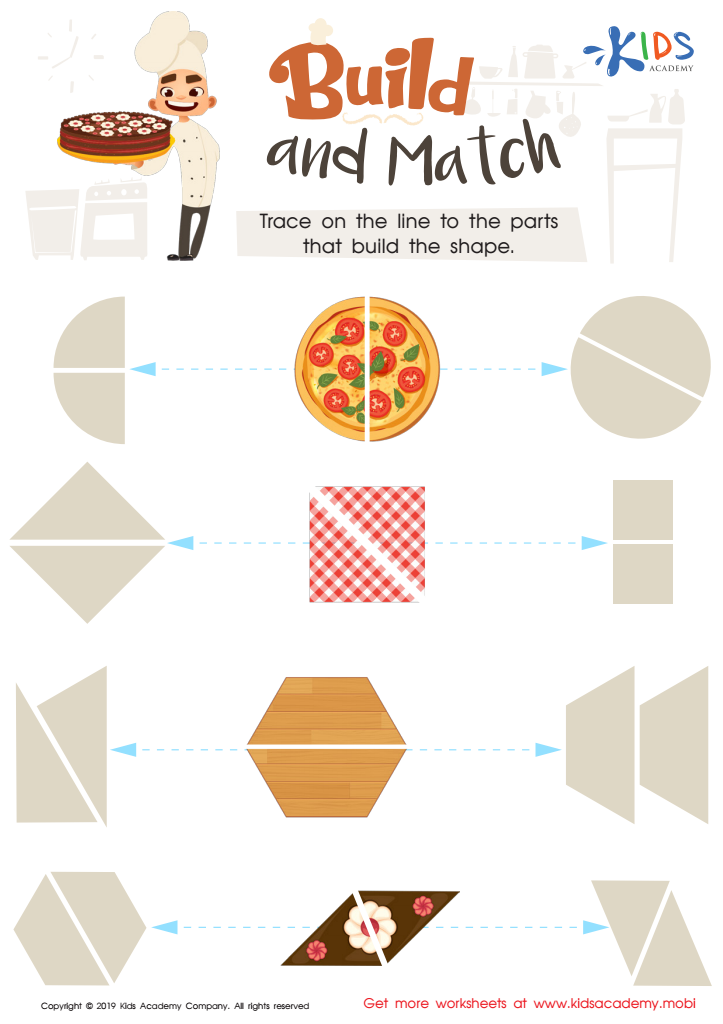
Build and Match Worksheet
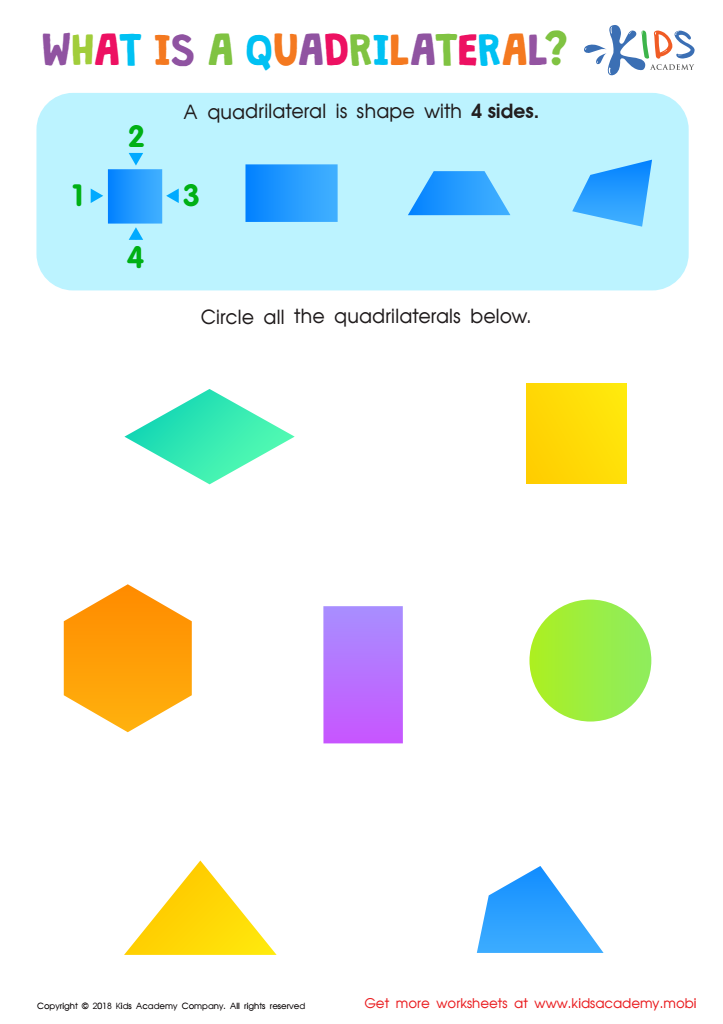
What Is a Quadrilateral? Worksheet
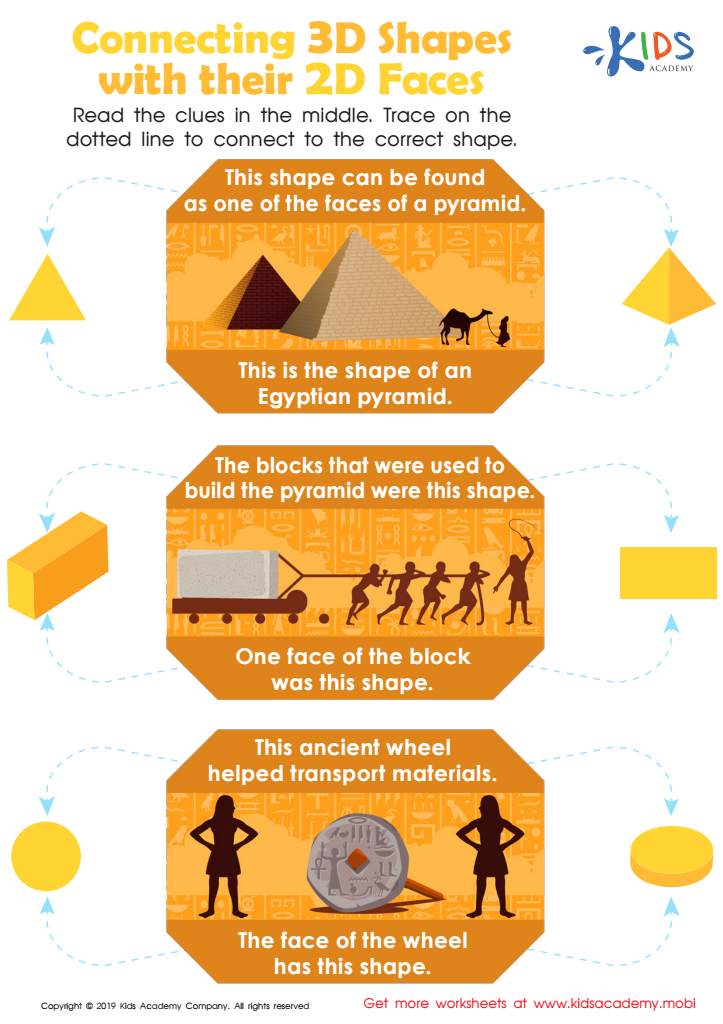
Connecting 3D Shapes with Their 2d Faces Worksheet








Understanding and engaging with Easy 2D Shapes is crucial for children aged 6-8 as it lays the foundation for essential mathematical and spatial reasoning skills. At this age, kids are developing cognitive abilities that allow them to recognize patterns, understand relationships, and solve problems. Introducing 2D shapes helps in enhancing their geometry skills, enabling them to identify, classify, and compare different shapes such as circles, squares, triangles, and rectangles.
Parents and teachers should care about this because these activities foster important brain development. When children manipulate shapes, whether through cutting, drawing, or puzzles, they improve their fine motor skills and hand-eye coordination. Additionally, recognizing shapes aids in comprehending more complex mathematical concepts, including symmetry, fractions, and basic algebra.
Learning about 2D shapes also cultivates visual literacy. It helps children interpret and comprehend the physical world around them more effectively. For instance, understanding shapes is directly connected to reading skills, as letters are essentially shapes that children need to recognize and differentiate.
Furthermore, early exposure to geometry increases a child's confidence and enthusiasm for math as they advance. Thus, by prioritizing Easy 2D Shapes, parents and teachers can equip children with the skills they need for academic success and lifelong learning. Providing playful, hands-on activities ensures that kids perceive this learning as fun and engaging, establishing a positive attitude towards education from an early age.