Easy Addition Worksheets for Ages 6-8 - Page 2
36 filtered results
-
From - To
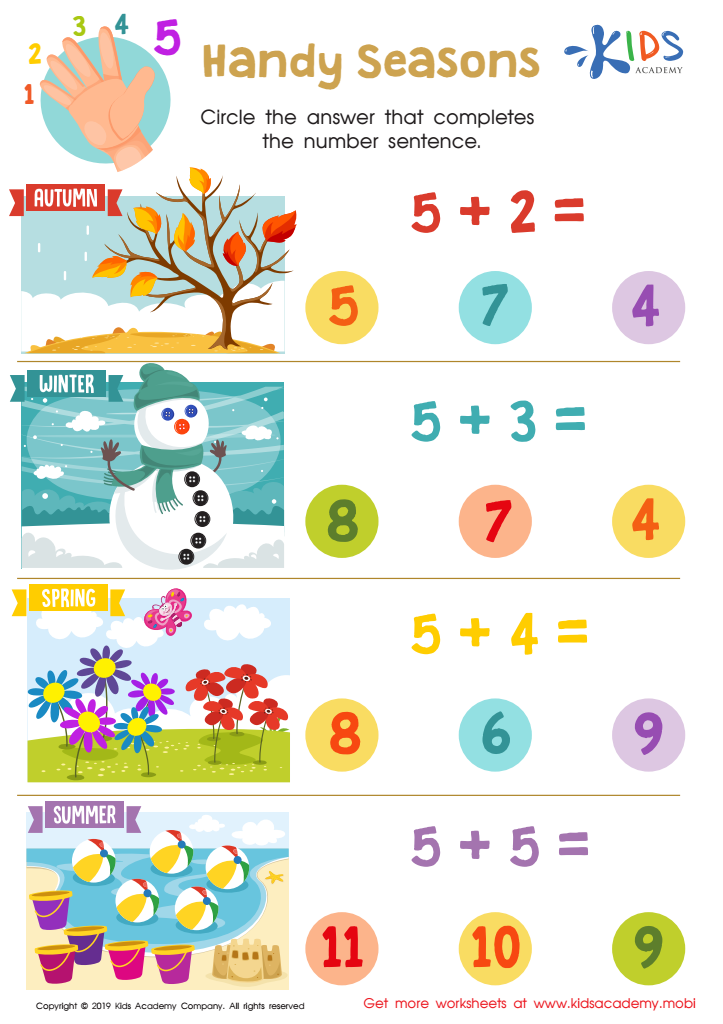
Handy Seasons Worksheet
 Assign to My Students
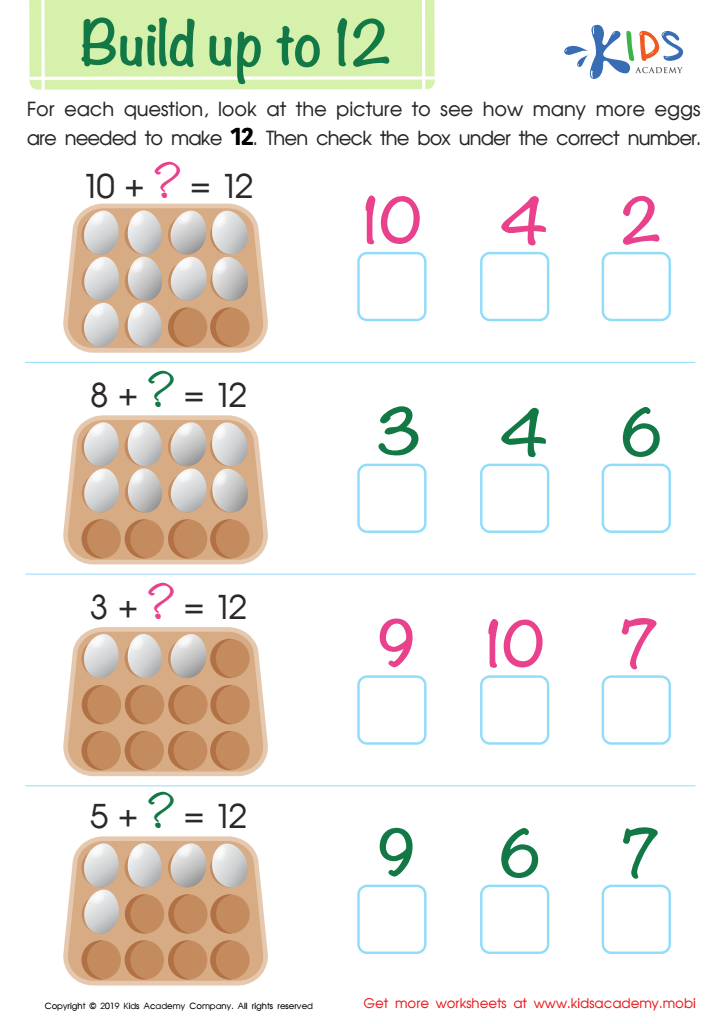
Build up to 12 Worksheet
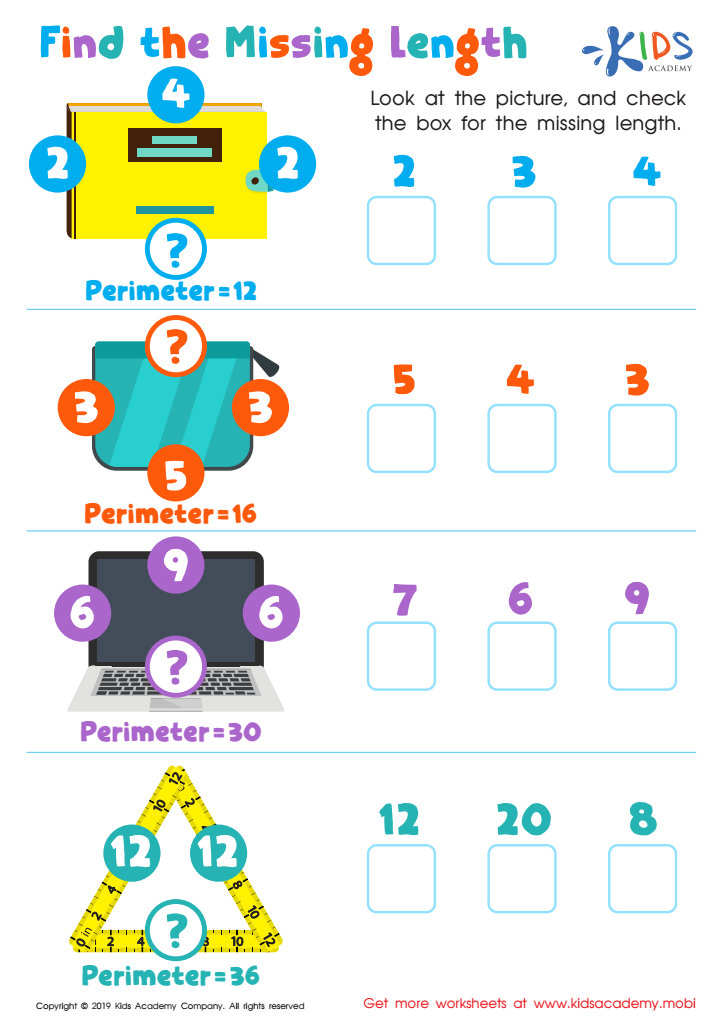
Find the Missing Length Worksheet
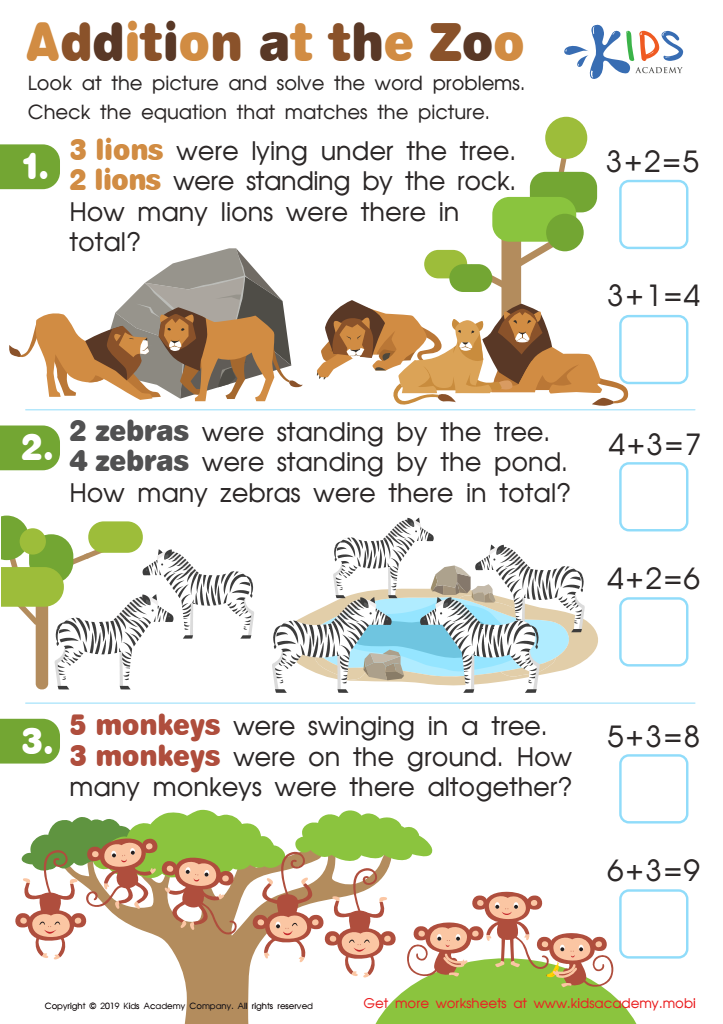
Addition at the Zoo Worksheet
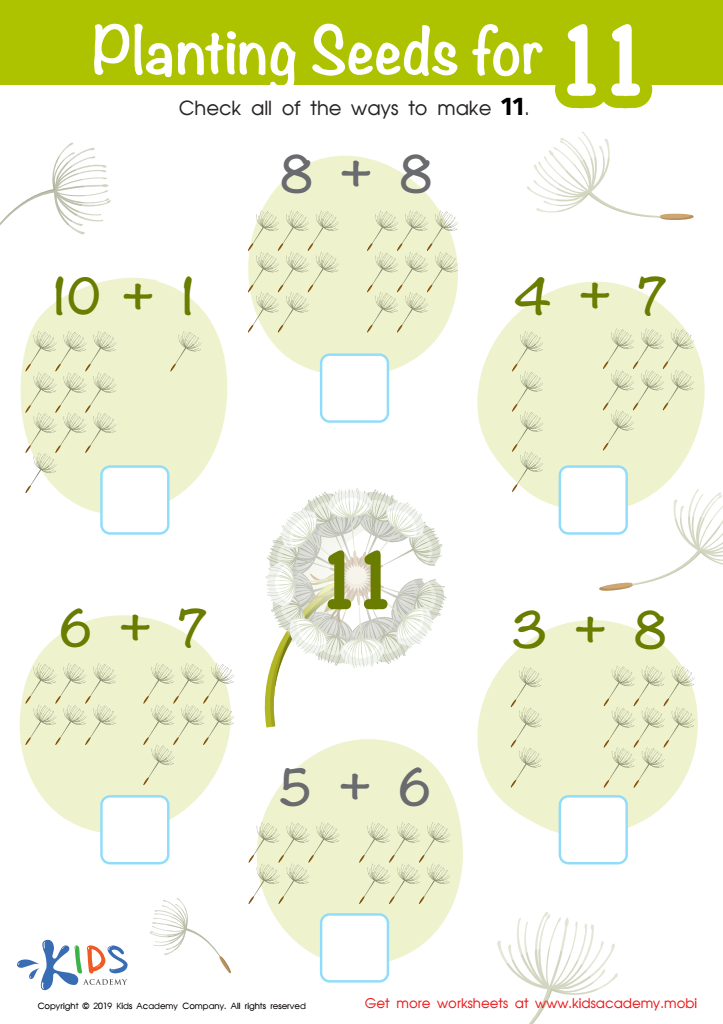
Planting Seeds for 11 Worksheet
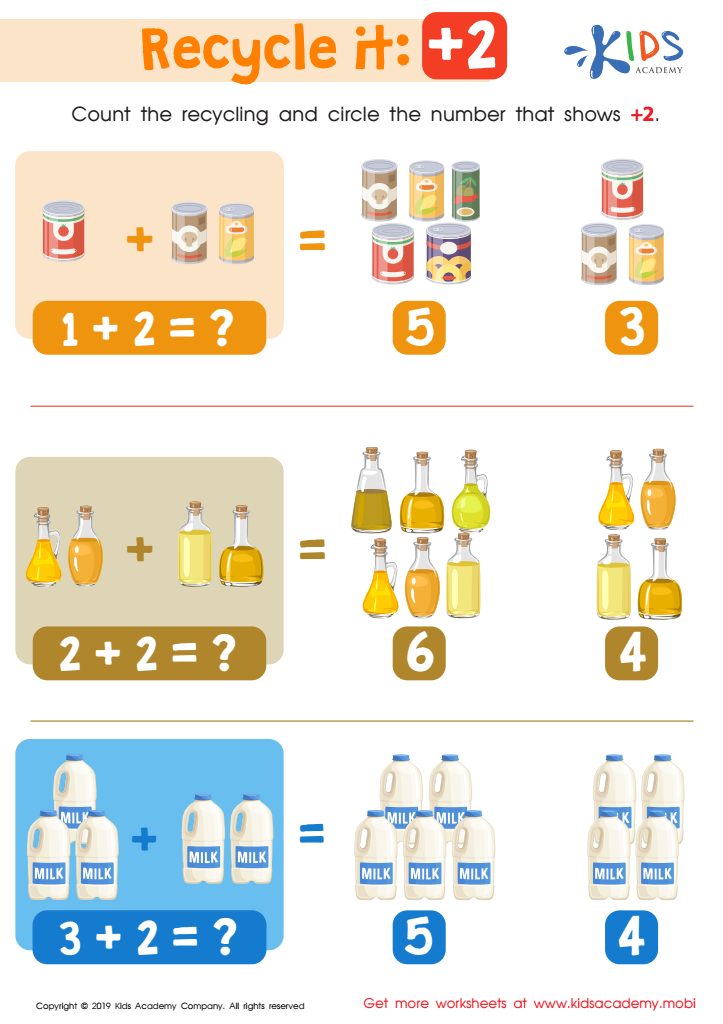
Recycle It: +2 Worksheet
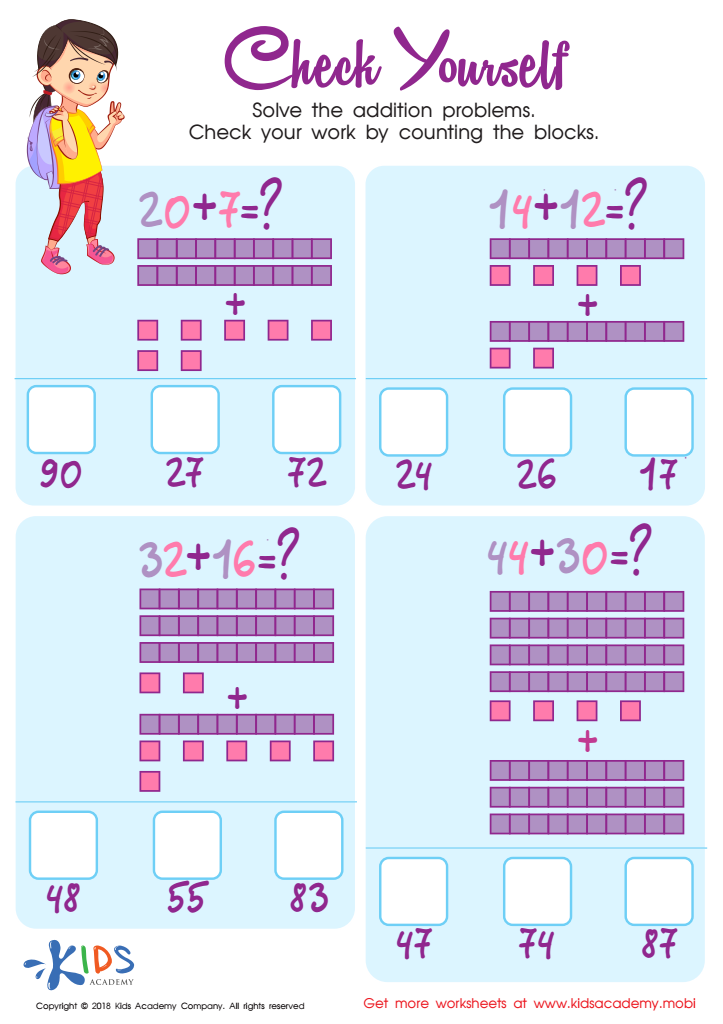
Adding with Base 1 Blocks Worksheet: Check Yourself
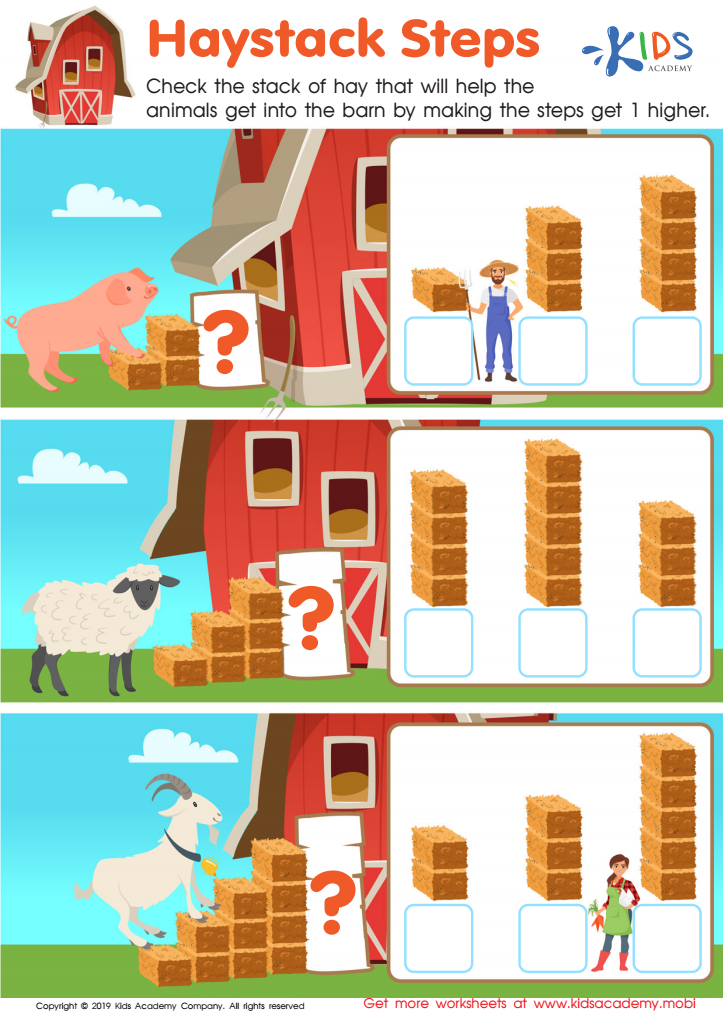
Haystack Steps Worksheet
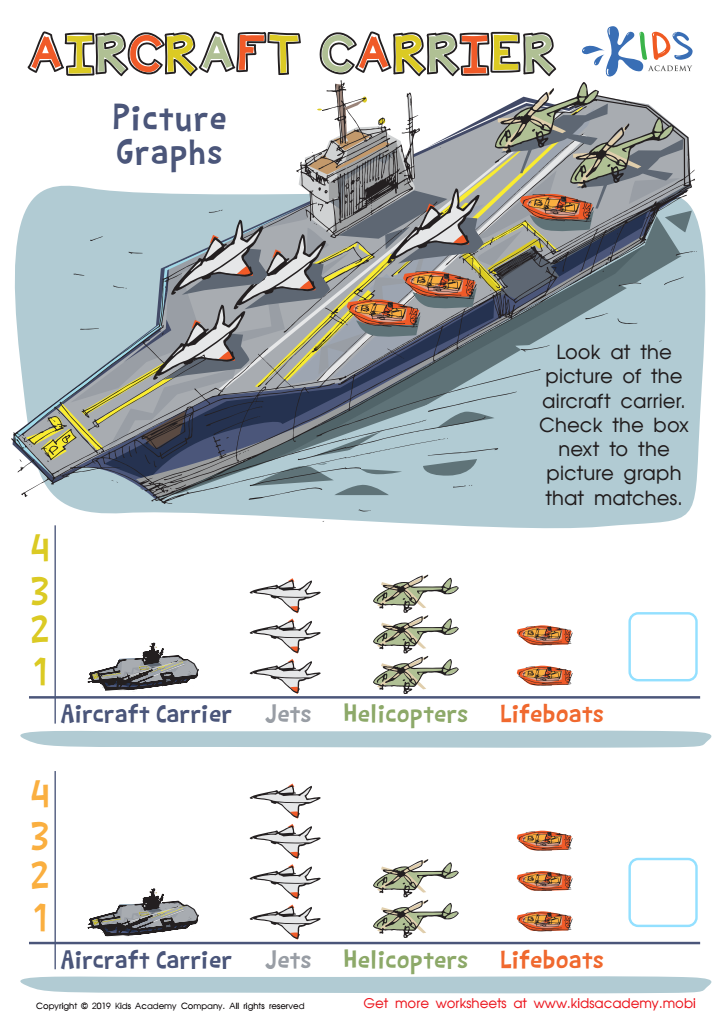
Aircraft Carrier Picture Graphs Worksheet
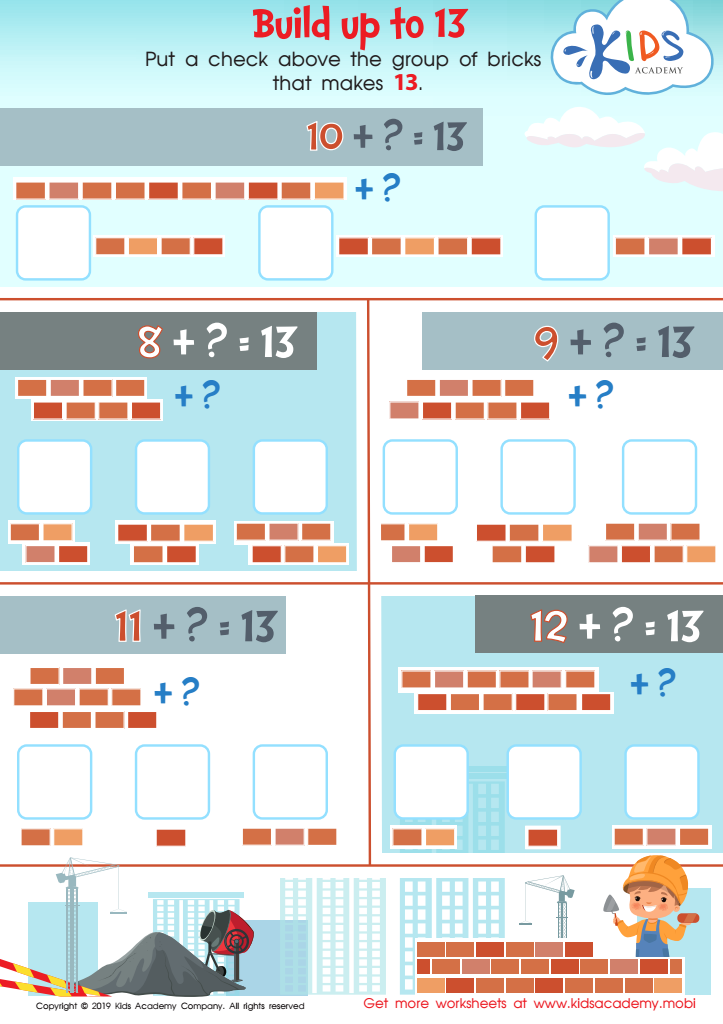
Build up to 13 Worksheet
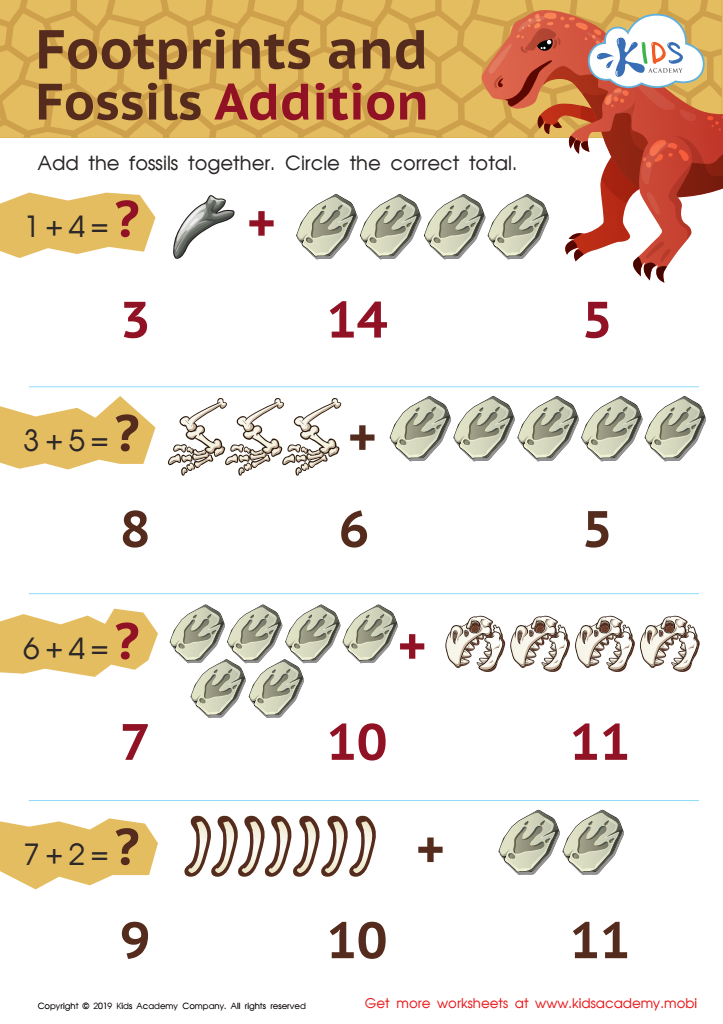
Footprints and Fossils Addition Worksheet
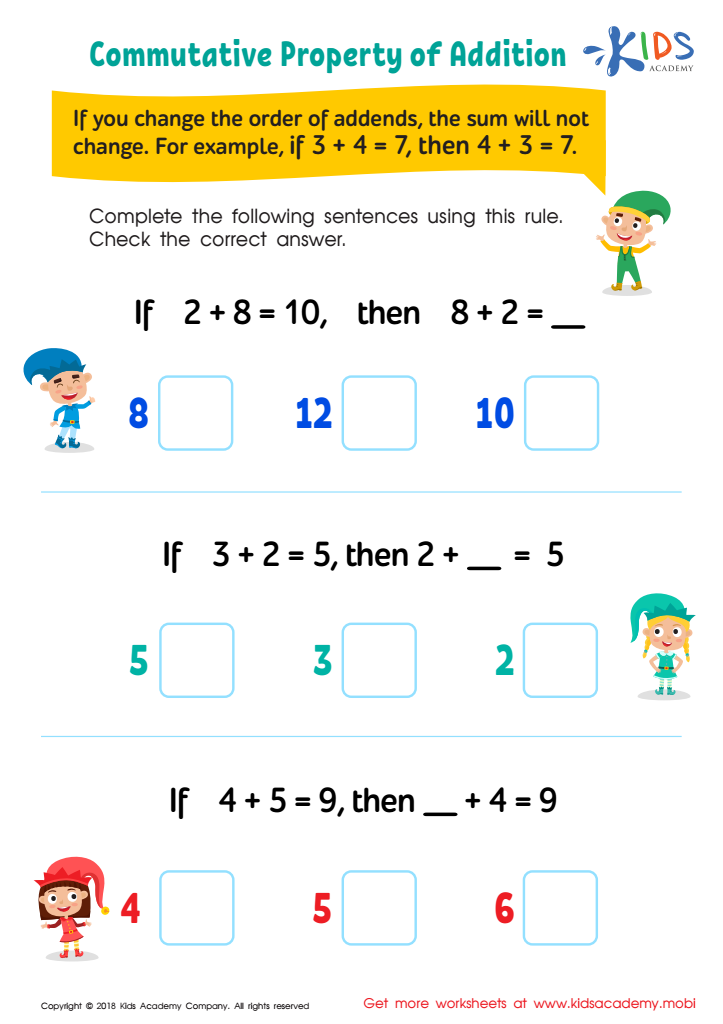
Commutative Property of Addition Worksheet








Parents and teachers should care about Easy Addition for ages 6-8 because it's fundamental to the young child's mathematical development. At this stage, children are forming their understanding of numbers, quantity, and the relationships between them. Mastering addition not only builds their confidence in math but also lays the groundwork for more complex operations like subtraction, multiplication, and division later on.
Engaging in easy addition activities helps develop critical thinking and problem-solving skills. It enhances cognitive development as children learn to recognize patterns, understand quantities, and improve their logic skills. Additionally, interactive and fun addition exercises can make learning enjoyable, increasing children's motivation and engagement.
Furthermore, fluency in addition is essential for daily life. It empowers children to handle everyday situations such as shopping, sharing, or time management—it’s pruned for practicality. Parents and teachers can promote social skills, such as cooperation and communication, through group activities centered around addition.
Monitoring progress in addition can help identify learning difficulties early, enabling timely interventions. Overall, prioritizing Easy Addition in early education fosters a strong mathematical foundation, promoting a lifelong appreciation for learning and problem-solving.








