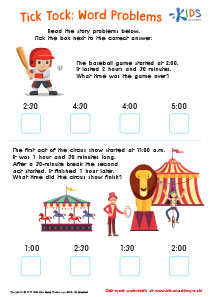
Extra Challenge Addition and Subtraction Word Problems Worksheets for Ages 3-4
14 filtered results
-
From - To
Introducing our Extra Challenge Addition and Subtraction Word Problems worksheets, tailor-made for young learners aged 3-4 years. These school interactive worksheets are designed to captivate young minds and enhance their early mathematical skills. Each worksheet combines fun, engaging scenarios with the fundamentals of addition and subtraction, encouraging children to solve problems and think critically. Perfect for both classroom and home use, these worksheets are an excellent resource for parents and teachers aiming to nurture a love for math in their preschoolers. Get ready to watch your little ones enjoy and conquer the challenges of math with confidence and curiosity!
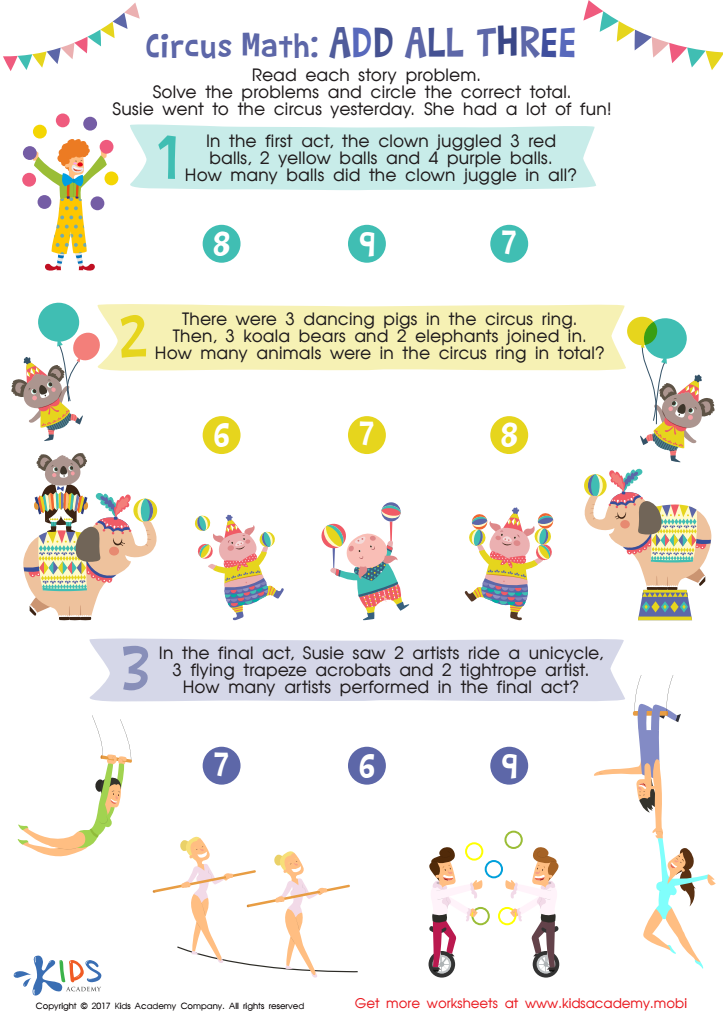
Circus Math Printable
 Assign to My Students
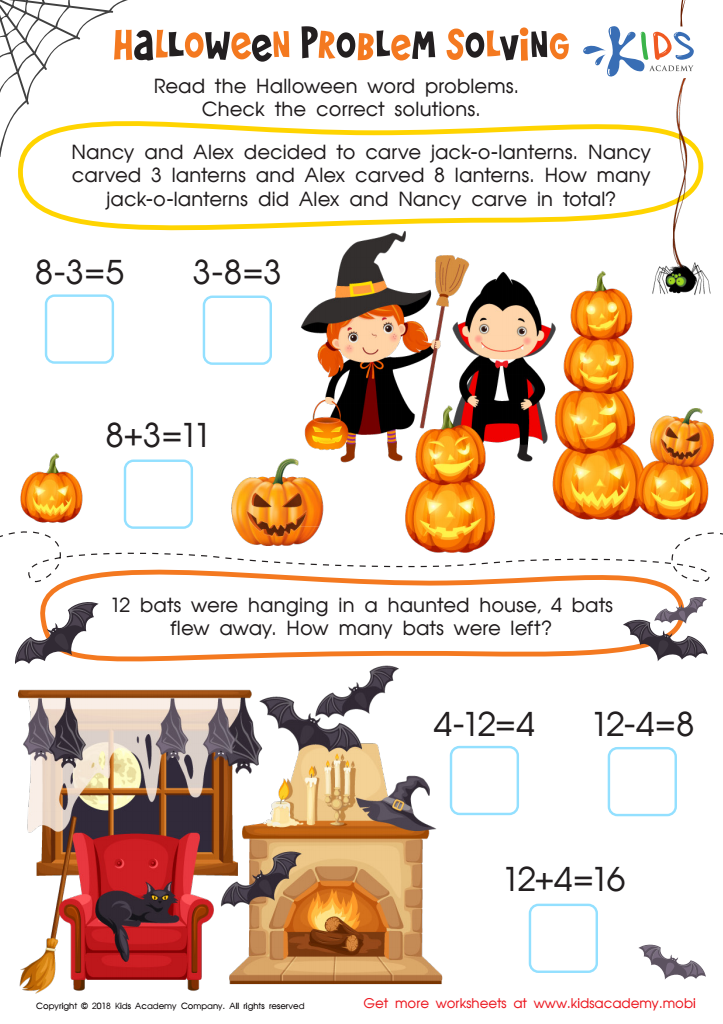
Halloween Problem Solving Worksheet
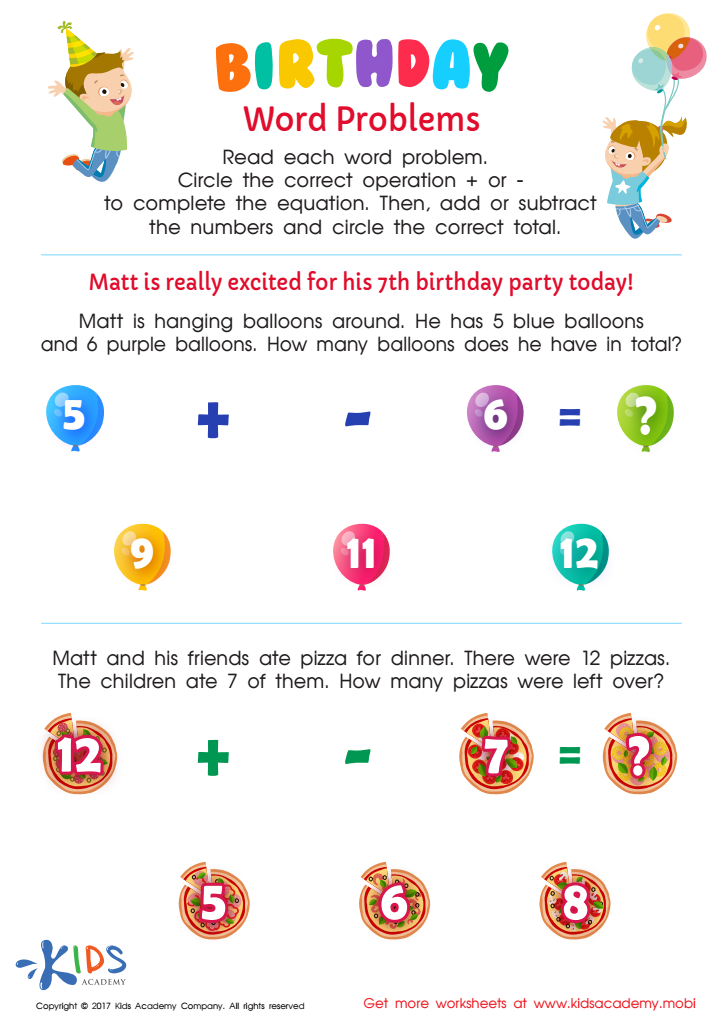
Birthday Word Problems Substraction Worksheet
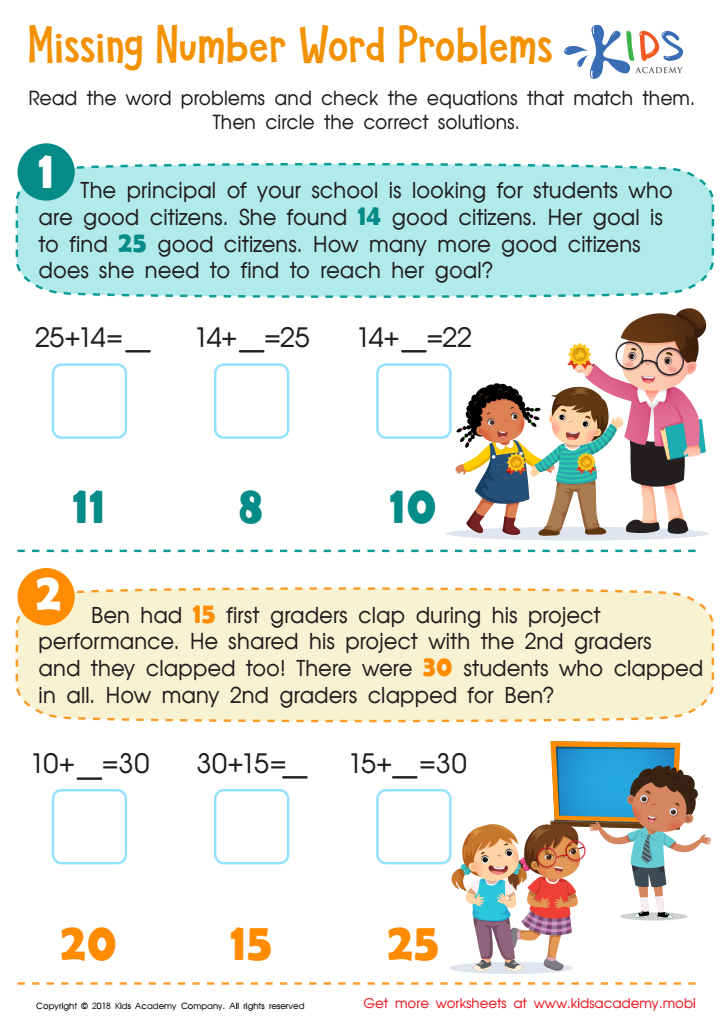
Missing Number Word Problems Worksheet
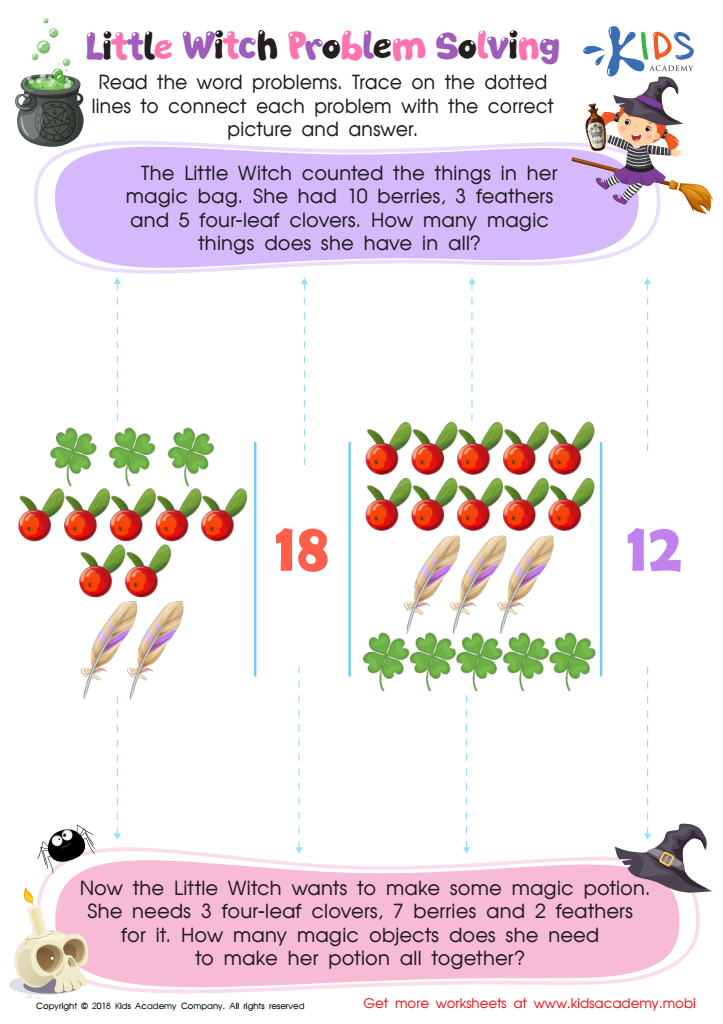
Little Witch Problem Solving Worksheet
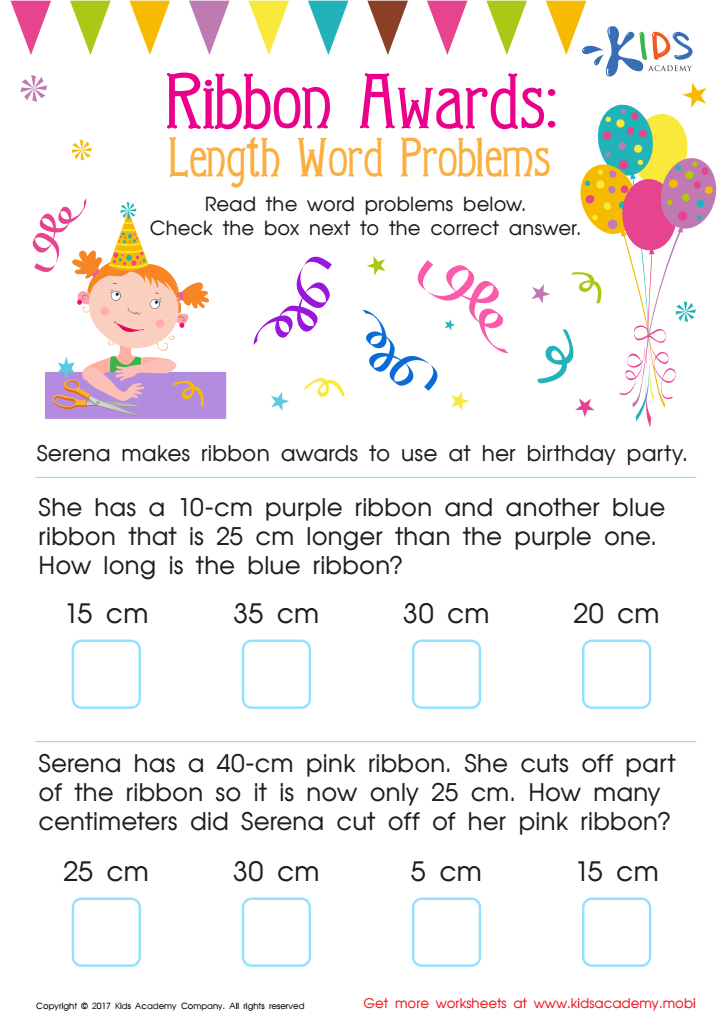
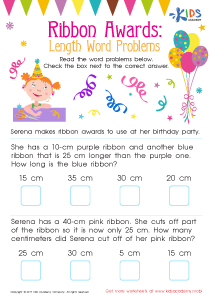
Length Word Problems Worksheet
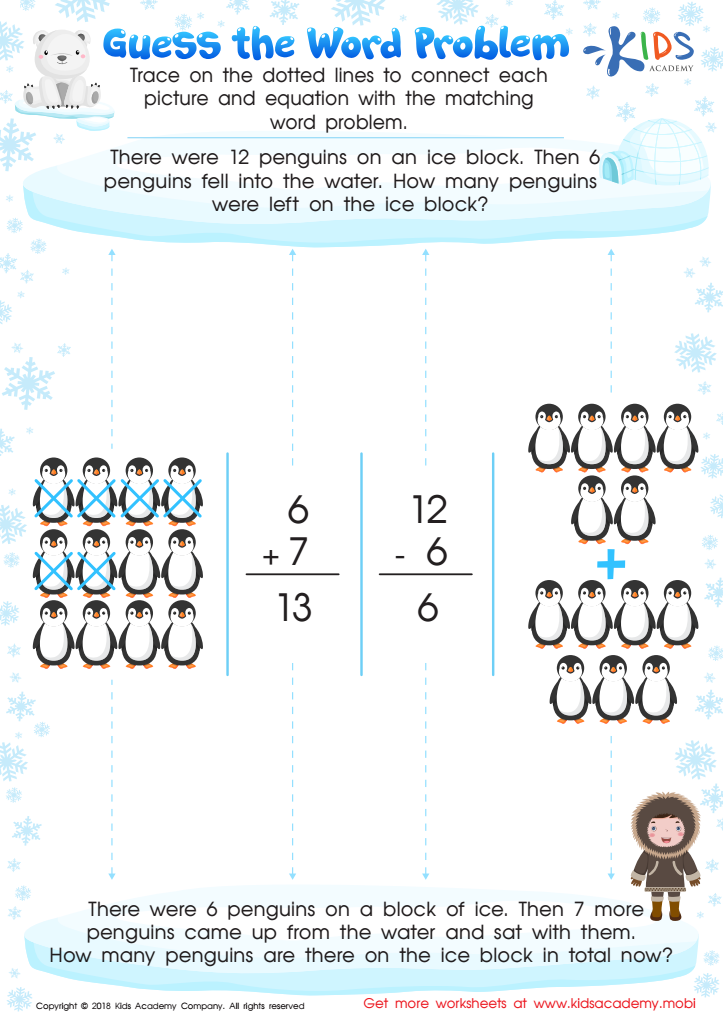
Guess the Word Problem Worksheet
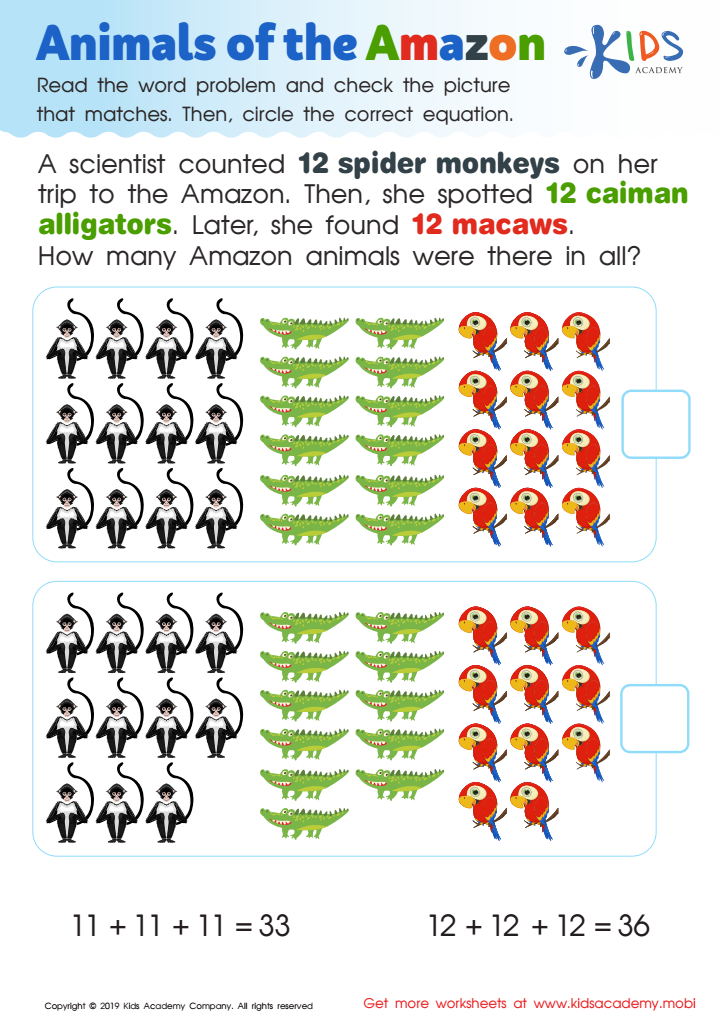
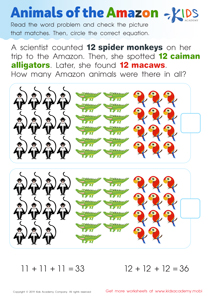
Animals of Amazon Worksheet
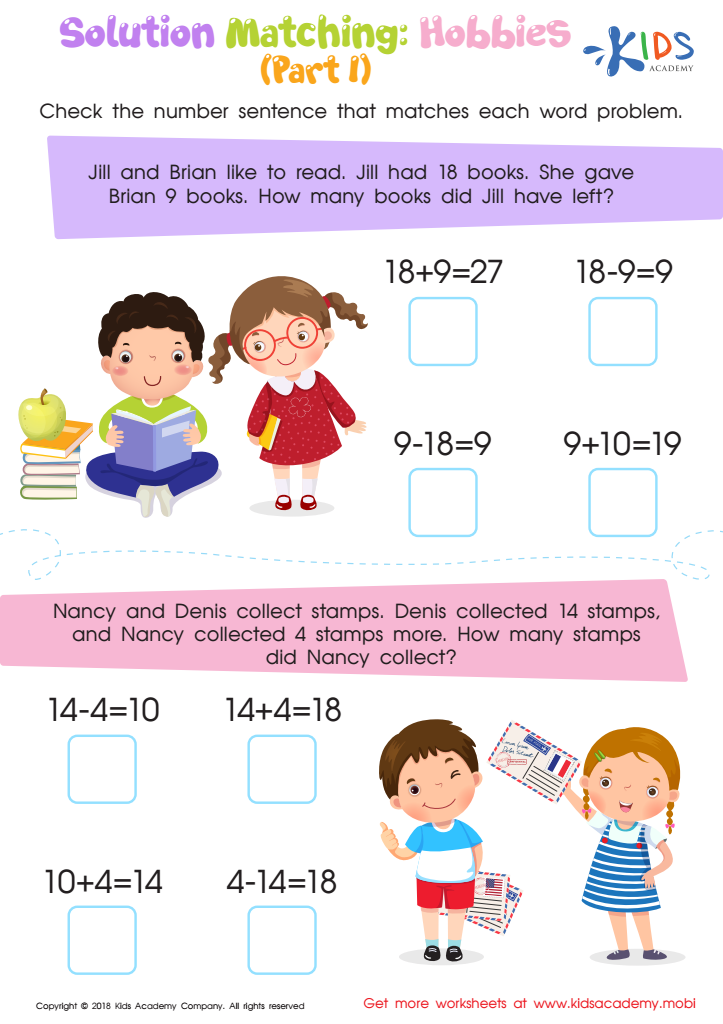
Solution Matching: Hobbies. Part 1 Worksheet
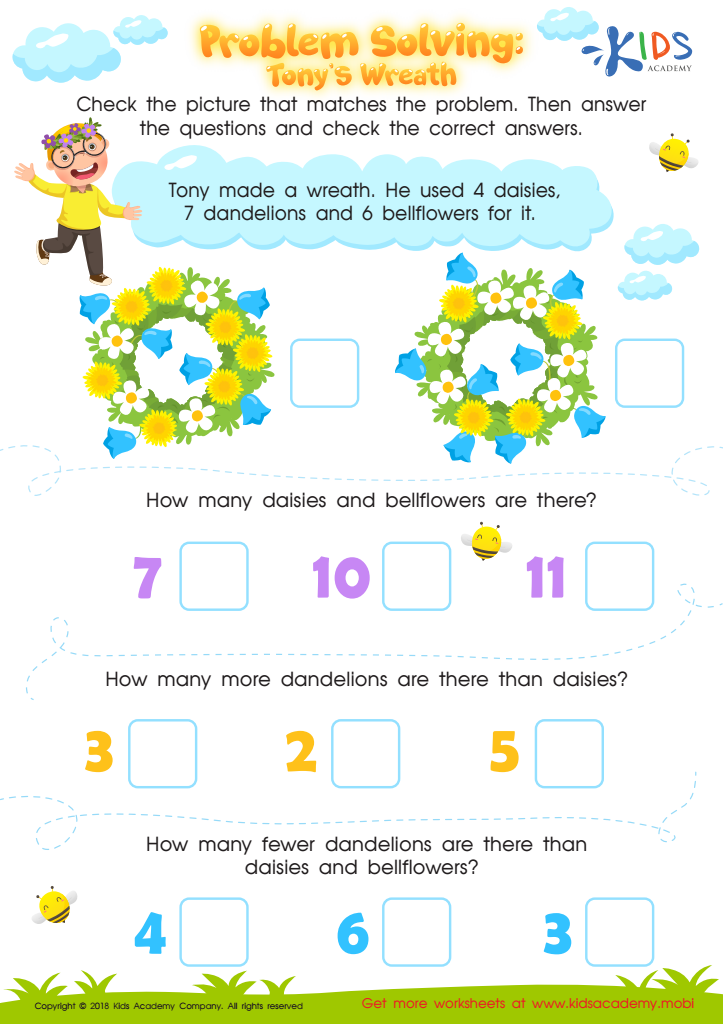
Problem Solving: Tony's Wreath Worksheet
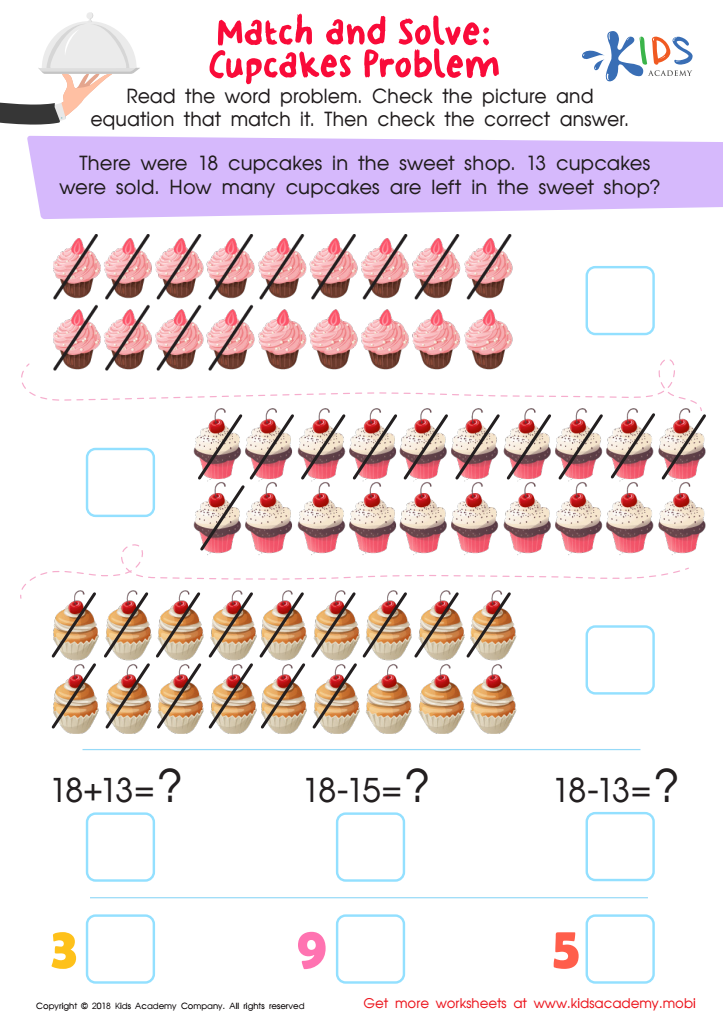
Match and Solve: Cupcakes Problem Worksheet
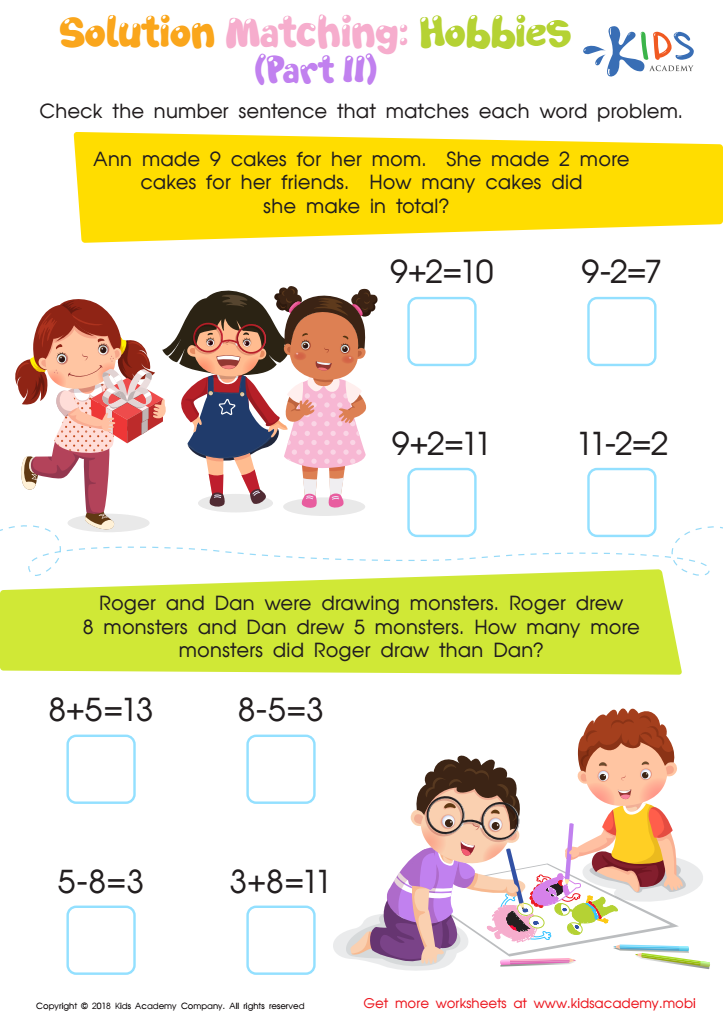
Solution Matching: Hobbies. Part 2 Worksheet
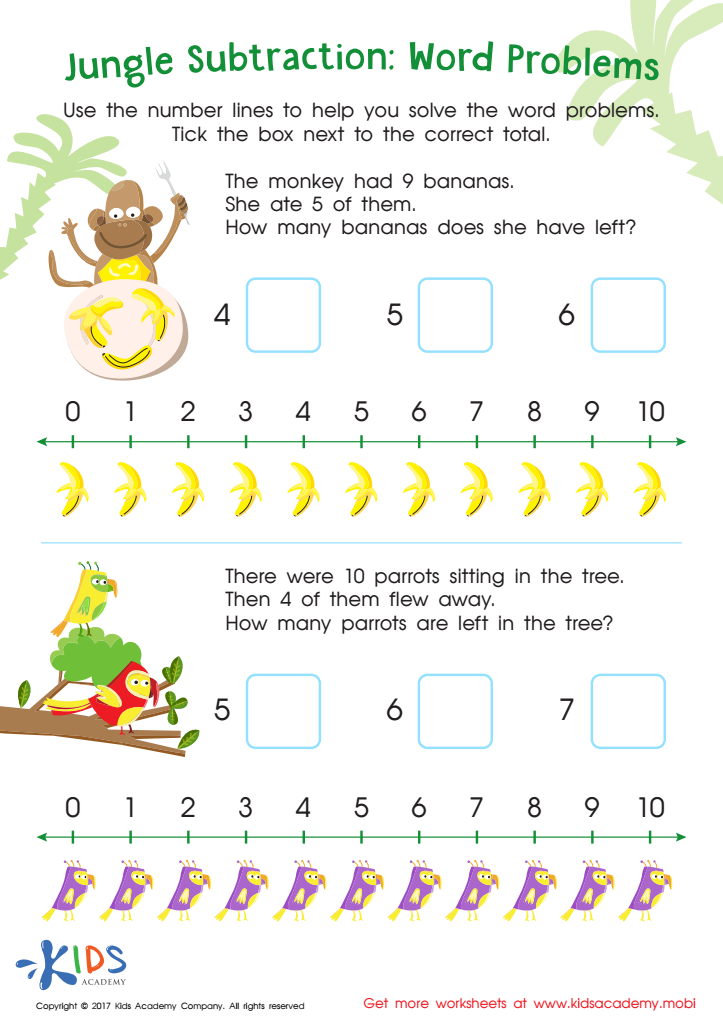
Jungle Subtraction Word Problems Substraction Worksheet
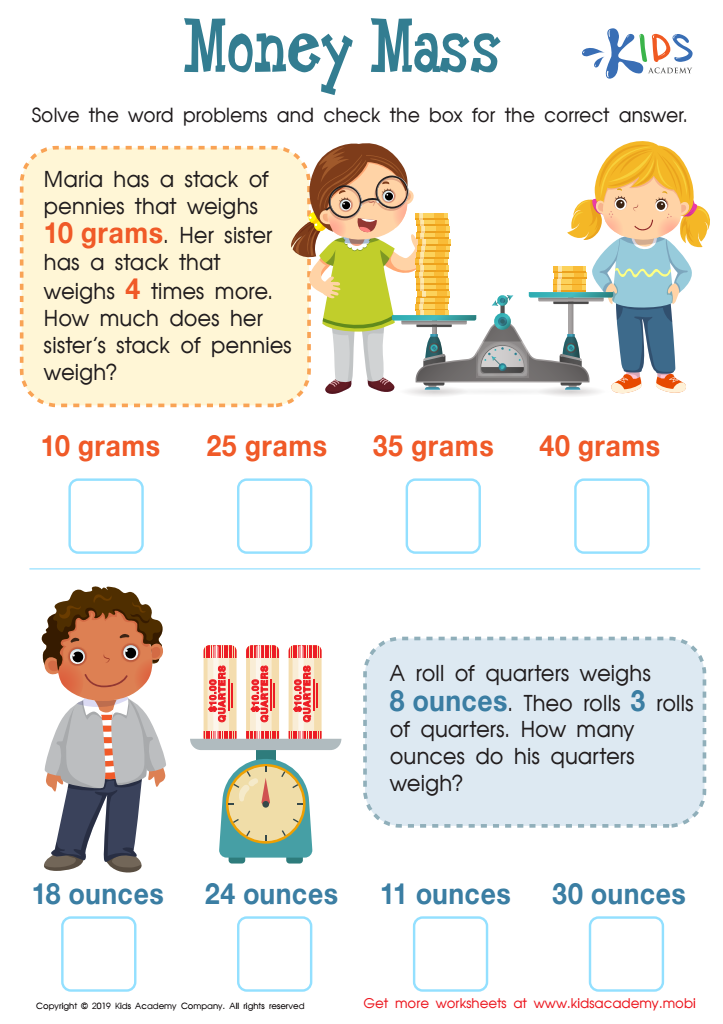
Money Mass Worksheet








The Value of Extra Challenge Worksheets on Addition and Subtraction Word Problems for Early Learners
In the foundational years of education, particularly for children ages 3 to 4, developing a strong numerical and problem-solving ability is crucial. Incorporating school interactive printables, specifically extra challenge worksheets on addition and subtraction word problems, into a young learner's educational routine can play a pivotal role in their cognitive development.
Enhancing Numerical Literacy
At ages 3 to 4, children are just beginning to understand the concepts of counting, addition, and subtraction. Extra challenge worksheets are tailored to transform abstract numbers into concrete problems that young minds can grasp. For instance, a worksheet might present a scenario about sharing toys or dividing snacks, situations familiar to a preschooler, which require them to use addition or subtraction to find a solution. These real-world applications ensure that children are not just performing rote calculations but are truly comprehending the operations involved.
Building Problem-Solving Skills
Problem-solving is a critical skill that goes beyond mathematics. By engaging with word problems, children learn to apply logic and reasoning to navigate various situations. Worksheets crafted for this age group use simple, relatable scenarios that encourage children to think critically and make decisions based on the information provided. The process of reading a scenario, understanding what is being asked, and figuring out the solution using mathematical tools lays a solid foundation for complex problem-solving skills later in life.
Encouraging Cognitive and Language Development
Addition and subtraction word problems do more than just teach numbers; they also enhance language skills. As children read through the problems (or listen as an adult reads them), they develop comprehension skills. They learn new words and concepts, which are crucial at this stage of rapid vocabulary expansion. Moreover, discussing the problems and verbalizing their thought processes help in articulating their reasoning, thereby improving their communication skills.
Supporting Individual Learning Paces
Every child learns at their own pace, and extra challenge worksheets are excellent for catering to individual learning needs. For children who grasp numerical concepts quickly, these worksheets can provide a further challenge to keep them engaged. Conversely, for those who might need a bit more practice, the repetitive nature of problem-solving allows them to gain confidence as they gradually understand and master the concepts involved. School interactive printables can be adjusted in complexity and are often designed to be visually appealing, which helps in holding the attention of young learners.
Making Learning Interactive and Enjoyable
Finally, the incorporation of school interactive printables into early childhood education is a strategy that balances the seriousness of learning with the innate playfulness of children. These worksheets often feature colorful illustrations, engaging characters, and thematic stories that make the learning process enjoyable. By turning abstract math problems into fun, narrative-driven activities, children are more likely to feel motivated and less intimidated by the challenges of addition and subtraction.
Reinforcement Through Repetition and Variety
Consistent practice is key in mastering any new skill, particularly in the early stages of learning mathematics. Extra challenge worksheets on addition and subtraction word problems provide a structured yet diverse approach to practice. Each worksheet can offer a different scenario, preventing the monotony that often comes with repetition. For instance, one day, a child might solve problems about animals in a zoo, and the next day, the theme might switch to a picnic setting. This variety ensures that children remain engaged and are exposed to different contexts where mathematical skills are applicable.
Preparing for School Readiness
Preparing young children for the formal educational environment of a school is another significant aspect of using these worksheets. They help inculcate a routine of sitting down and focusing on a task, which is a part of daily school life. Furthermore, early exposure to structured activities like these worksheets helps ease the transition into more formal schooling. Children become familiar with the format of questions, the expectation of providing answers, and the process of interacting with educational materials, all of which are essential skills in any schooling environment.
Parental Involvement and Bonding
Involving parents in the educational activities of their children is beneficial in multiple ways. It allows parents to directly observe the learning progress of their child and provides opportunities for bonding over shared tasks. Additionally, when parents engage with their children’s learning through school interactive printables, they can tailor the difficulty level of worksheets, offer immediate help and encouragement, and celebrate their child's successes. This positive reinforcement helps children develop a love for learning from an early age.
Conclusion
Incorporating extra challenge worksheets on addition and subtraction word problems into the education of children ages 3-4 is more than just a teaching tool; it is a comprehensive approach that supports overall developmental milestones. These worksheets enhance cognitive abilities, nurture problem-solving skills, expand vocabulary, and prepare children for future academic challenges. By making learning both interactive and enjoyable, school interactive printables ensure that the foundational years of education are engaging, effective, and exceedingly rewarding. The dual focus on both the enjoyment and educational aspects helps maintain a balanced approach where children not only learn but also develop a keen interest in exploring new concepts.
Through thoughtful engagement with these worksheets, young learners are not only mastering basic arithmetic but are also building confidence and independence in their abilities to tackle challenges. This early confidence can set the tone for their ongoing educational journey, making them more resilient and adaptive learners.
As we continue to understand more about early childhood development, it becomes clear that tools like extra challenge worksheets are invaluable. They provide a structured yet flexible method for introducing young minds to complex ideas in a manner that respects their developmental stage. The fun, interactive nature of these printables ensures that learning doesn't feel like a chore but rather an exciting part of everyday play.
Ultimately, the goal is to foster a lifelong love of learning and curiosity, which are critical in today’s ever-evolving world. By starting this journey early with the right resources like school interactive printables, we are paving the way for our youngest learners to become thoughtful, skilled, and motivated individuals.