Filters

37 filtered results

Clear all filters
Favorites
With answer key
Interactive

37 filtered results

Difficulty Level

Grade


Check out this FREE Trial Lesson on Chess for age 5-6!

Special Moves: Castling

Favorites
With answer key
Interactive
  • 5-6
  • With answer key
  • Chess
  • Extra Challenge
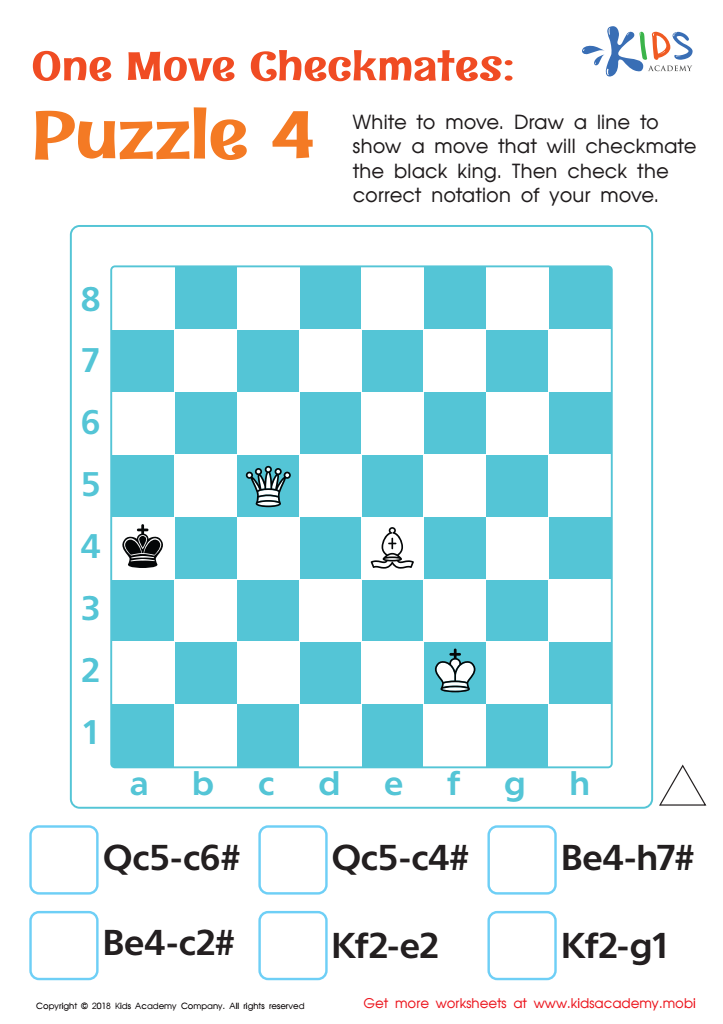
One Move Checkmates: Puzzle 4 Worksheet

One Move Checkmates: Puzzle 4 Worksheet

Want to challenge your logistician? This engaging PDF worksheet tests their critical thinking, strategy and visual-spatial skills. They must plot to overtake and checkmate the king and use the answer choices to check if they've strategized correctly. It's a fun way to build problem-solving skills needed for higher-level math.
One Move Checkmates: Puzzle 4 Worksheet
Worksheet
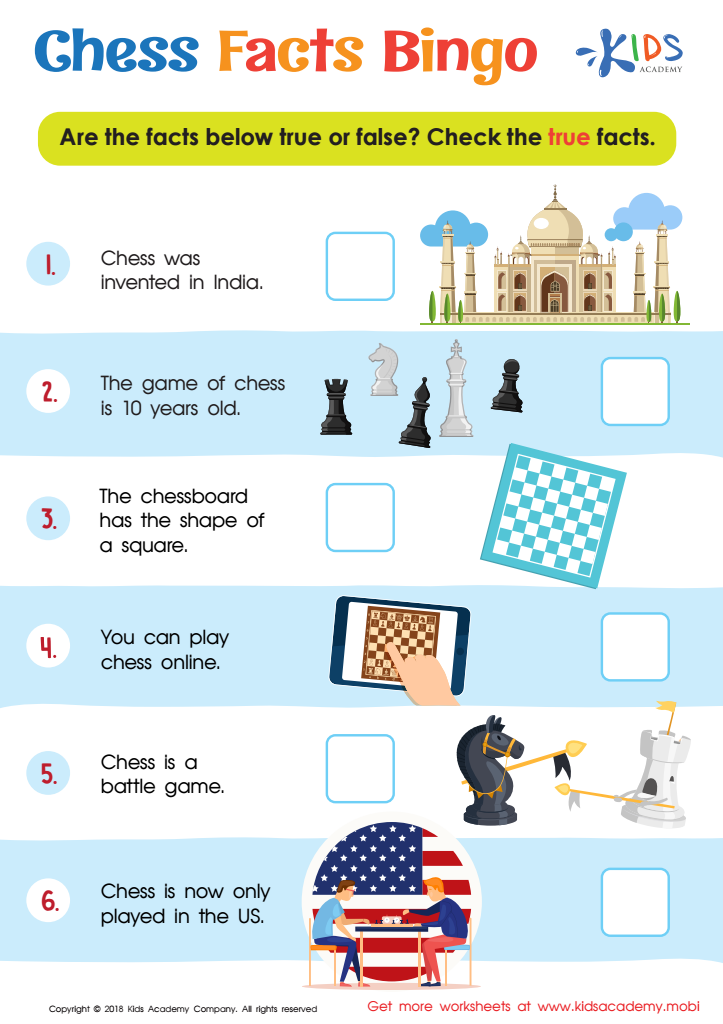
Chess Facts Bingo Worksheet

Chess Facts Bingo Worksheet

Help your child assess their knowledge of chess with our simple worksheet. It contains six questions; read them to your child and ask them if the statements are true or false. Once they check the boxes for the true statements, you'll have a better understanding of their understanding of the game.
Chess Facts Bingo Worksheet
Worksheet
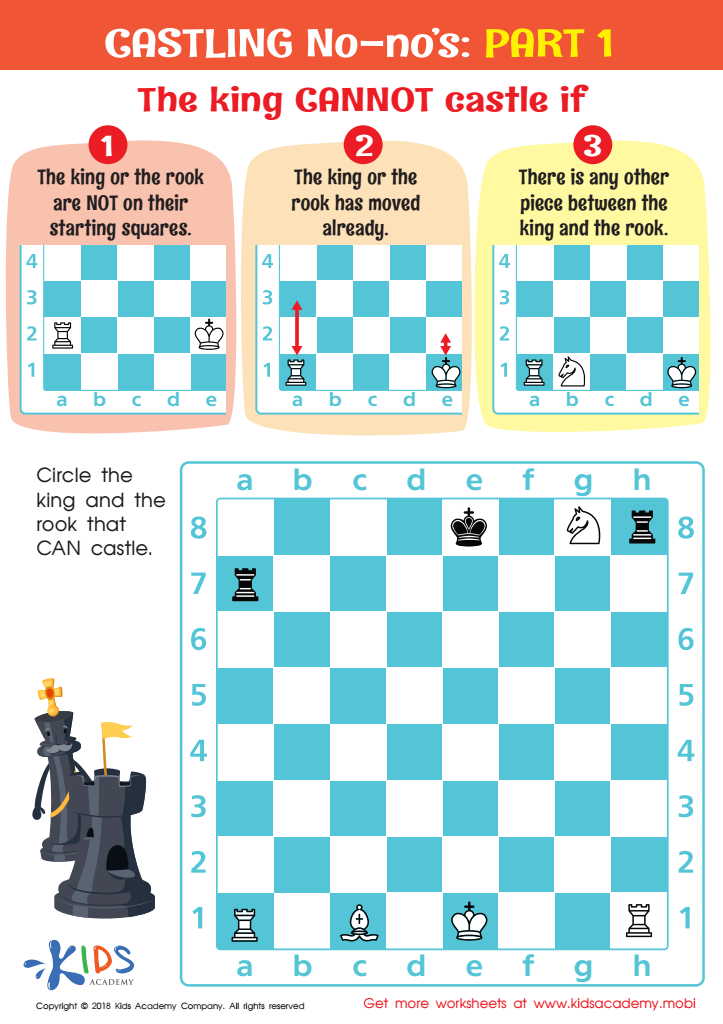
Castling No–no's: Part 1 Worksheet

Castling No–no's: Part 1 Worksheet

Help your child learn how to play chess by using this worksheet. Ask them to circle the king and rook that can castle in the picture. Explain that a king cannot castle if the king or rook has moved, or if there is any other piece between them. Knowing these rules will make playing a lot easier!
Castling No–no's: Part 1 Worksheet
Worksheet
Run, Protect or Capture Worksheet

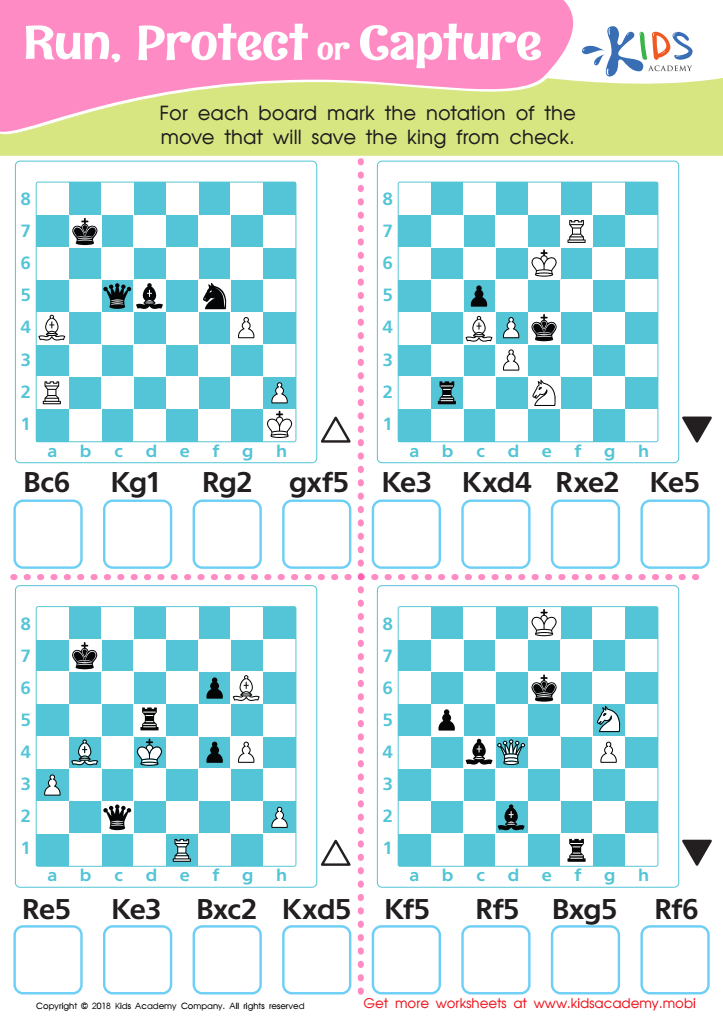
Run, Protect or Capture Worksheet

When kids play chess, they're not only striving to win - they're sharpening their critical thinking and problem-solving prowess. With this free PDF worksheet, they learn how to protect their king from check, whether it's running away, shielding it or capturing the checking piece. Sample boards offer them the chance to practice.
Run, Protect or Capture Worksheet
Worksheet
Two Rook Mate Practice Worksheet

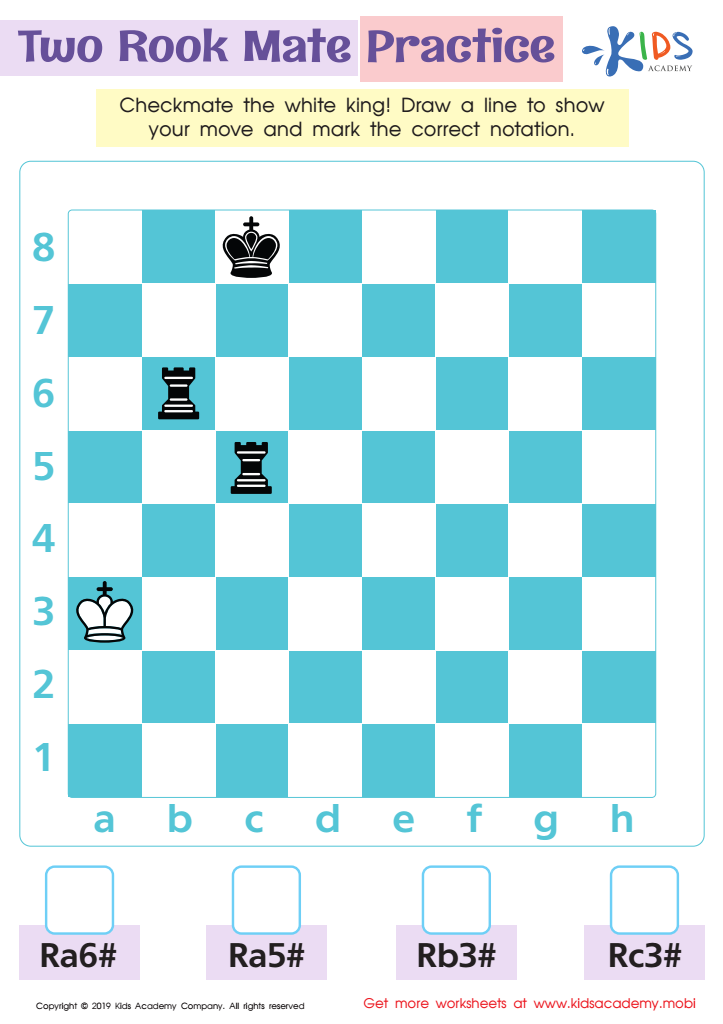
Two Rook Mate Practice Worksheet

Chess is all about checkmating your opponent. This free Two Rook Mate practice worksheet is a fun way for your mini strategist to do just that. They can draw a line showing their move then pick the correct notation for the mate! A great way for them to practice fine motor skills, too.
Two Rook Mate Practice Worksheet
Worksheet
Castling No - no's: Part 2 Worksheet

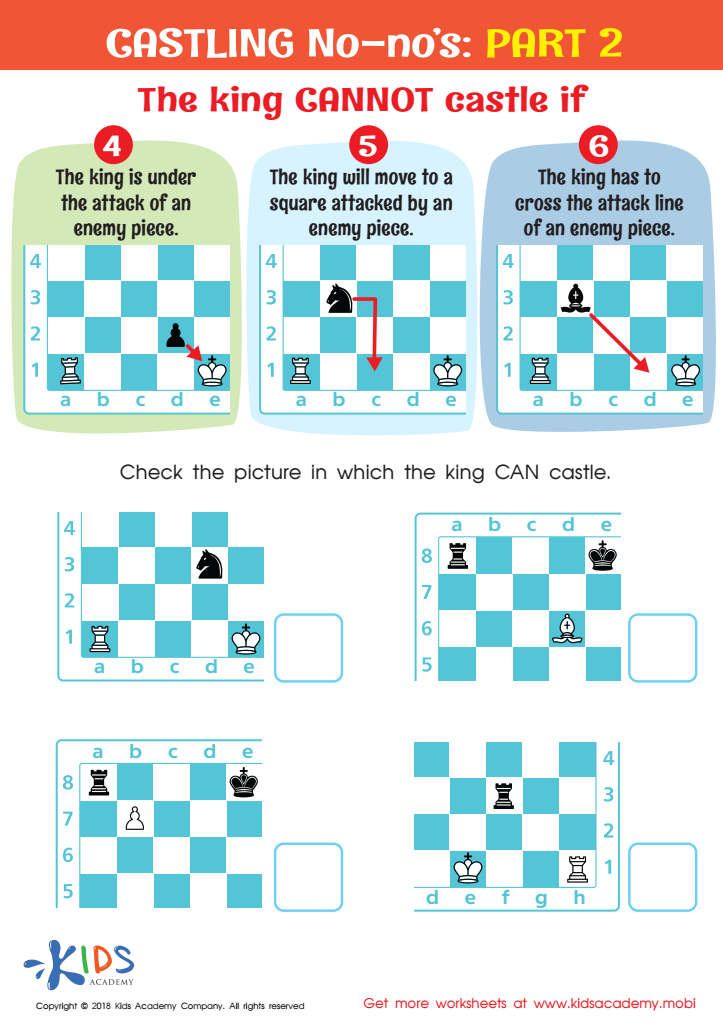
Castling No - no's: Part 2 Worksheet

Teach your child the rules of castling: no castling if the king is under attack or will move onto an attacked square, or cross an attack line. To prepare for a game of chess, help your child complete the exercise of identifying when the king can castle – check the pictures.
Castling No - no's: Part 2 Worksheet
Worksheet
Castling: Protecting the King Worksheet

Castling: Protecting the King Worksheet

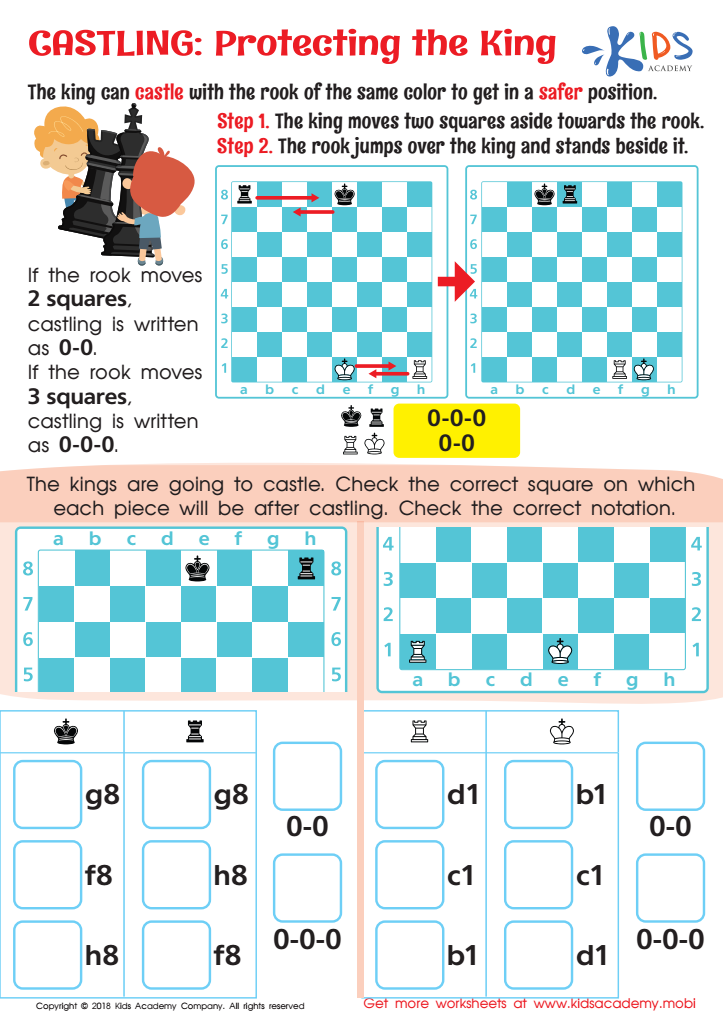
Castle your king with the rook to get into a safer position! Write 0-0 for a two-square move, or 0-0-0 for a three-square move. Look at the worksheet with your child; on the first chessboard, the king has moved two squares and the rook is beside it. On the second, the rook has jumped over the king. Let your child use their castling knowledge to answer the questions in the easy pdf.
Castling: Protecting the King Worksheet
Worksheet
Getting out of Check: Capture

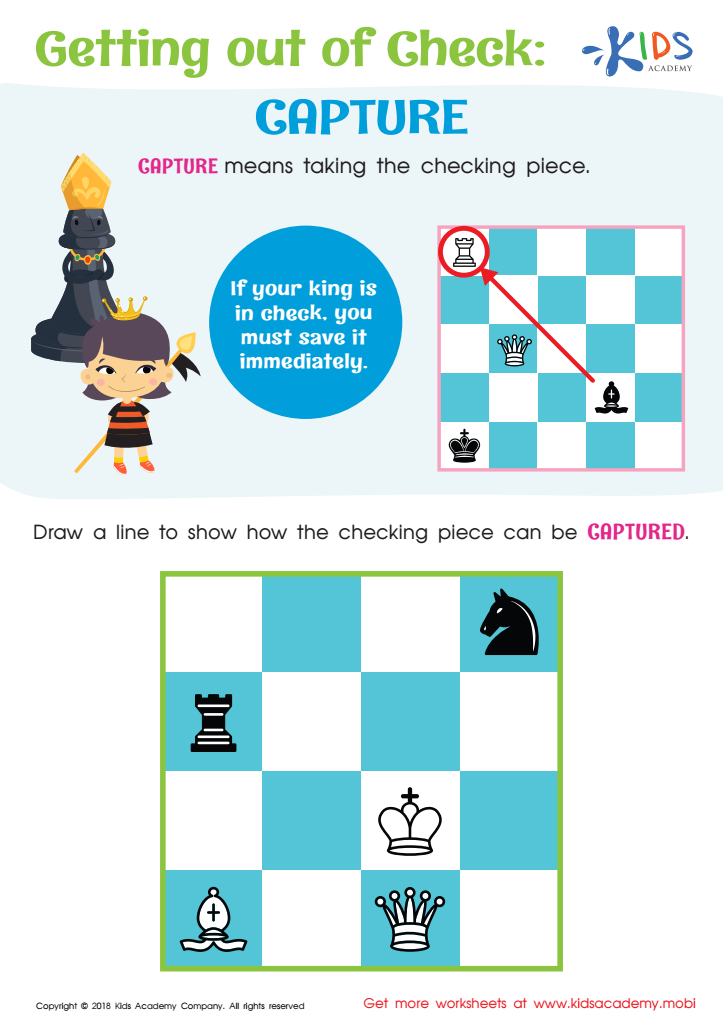
Getting out of Check: Capture

Kids love chess because it combines strategy and the thrill of outwitting their opponents! This free chess strategy worksheet teaches kids how to protect and capture the threatening piece when their king is in danger. The downloadable includes sample boards to practice with. Get it today and have your chess whiz mastering the game in no time!
Getting out of Check: Capture
Worksheet
Notation of Check Worksheet

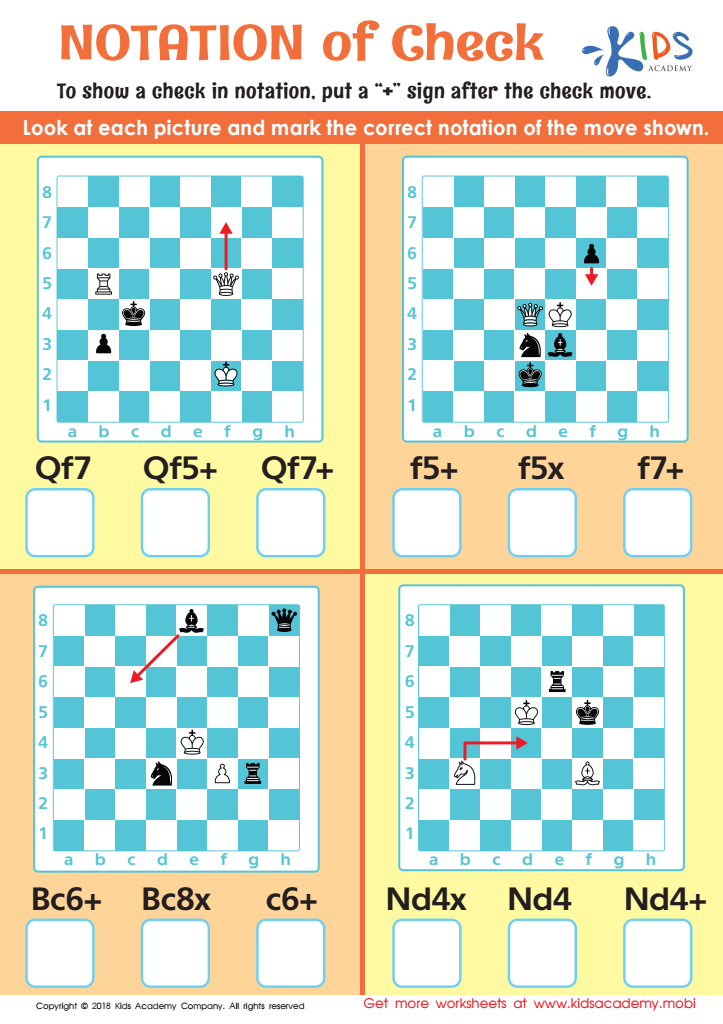
Notation of Check Worksheet

Chess is an addictive game! Once you know the basics of check and checkmate, you'll be hooked! Teach your little one to make check notation with this free PDF worksheet. They can use downloadable practice to look at each picture and mark the correct notation, strengthening their problem-solving skills while they learn to play - and win - this fun game!
Notation of Check Worksheet
Worksheet
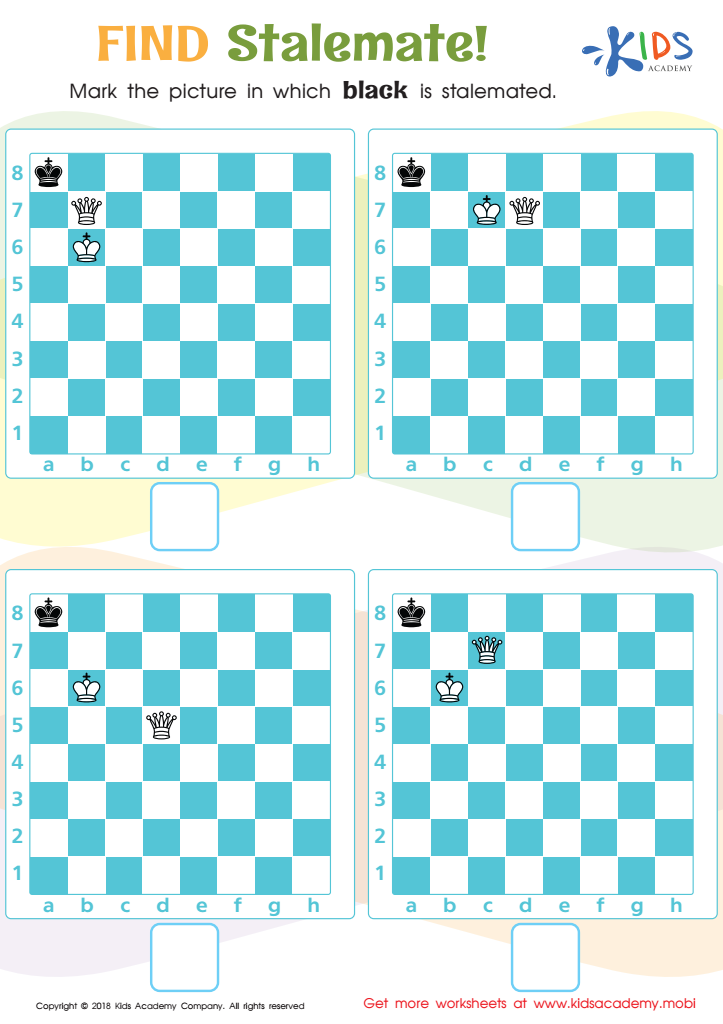
Find Stalemate! Worksheet

Find Stalemate! Worksheet

Teach your kids Chess and give them more than a hobby - equip them with critical thinking, rationale and problem-solving skills! This free worksheet helps them understand stalemates by examining various sample boards. By providing visual discernment and the joy of the game, your child's logical skills will soar!
Find Stalemate! Worksheet
Worksheet
What is Check? Worksheet

What is Check? Worksheet

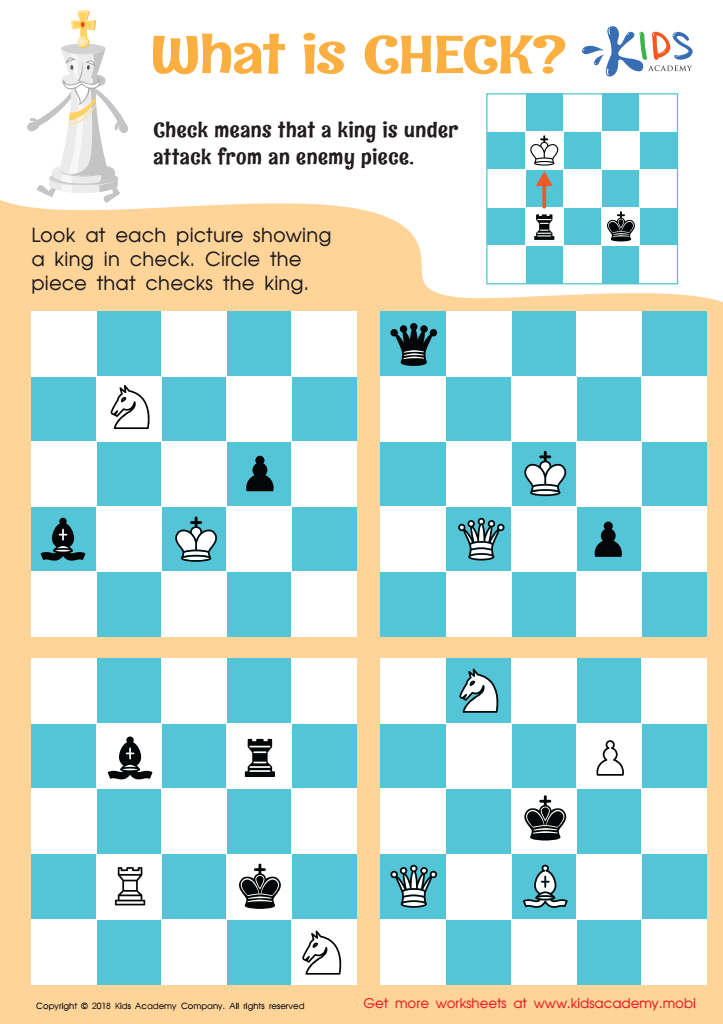
Check is an important move in chess where the opposing king is under attack. With this free PDF worksheet, kids can learn to make and identify check, and exercise their critical thinking and problem-solving skills. They'll look at each picture and identify which piece can check the king. Playing with check helps kids learn to play to win.
What is Check? Worksheet
Worksheet
Getting out of Check: Protection

Getting out of Check: Protection

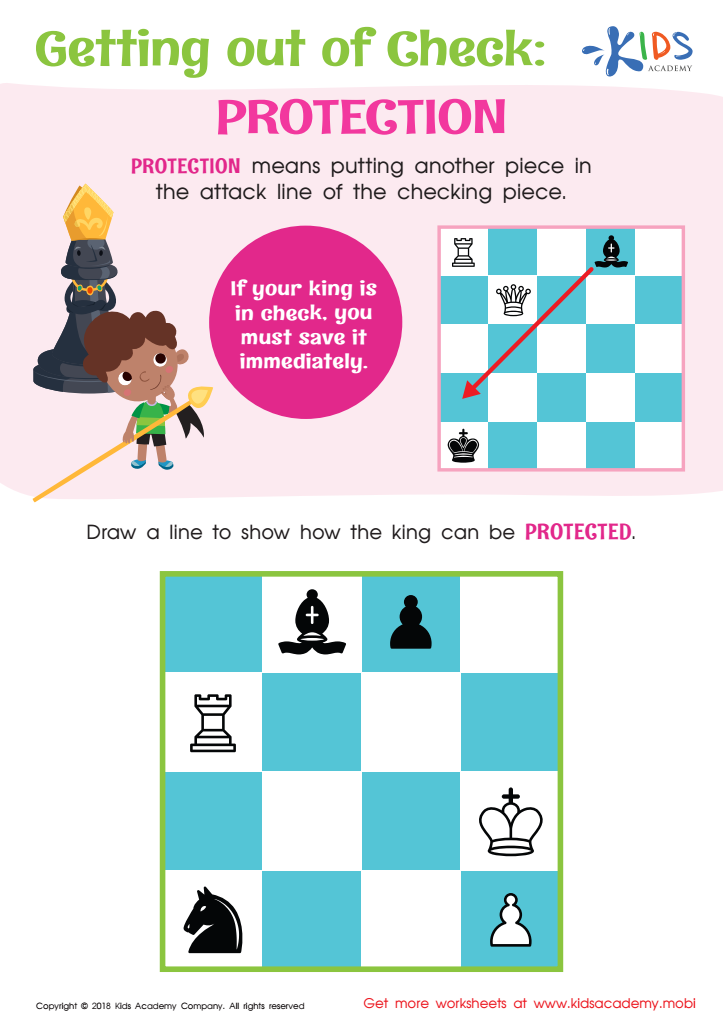
Chess is a game of strategy and outwitting opponents. Kids love it for the challenge of one-upping their friends! This free chess strategy worksheet will help your child learn to protect their king and capture the checking piece. With this downloadable, they'll be able to practice protecting and capturing with the sample boards.
Getting out of Check: Protection
Worksheet
Notation of Checkmate Worksheet


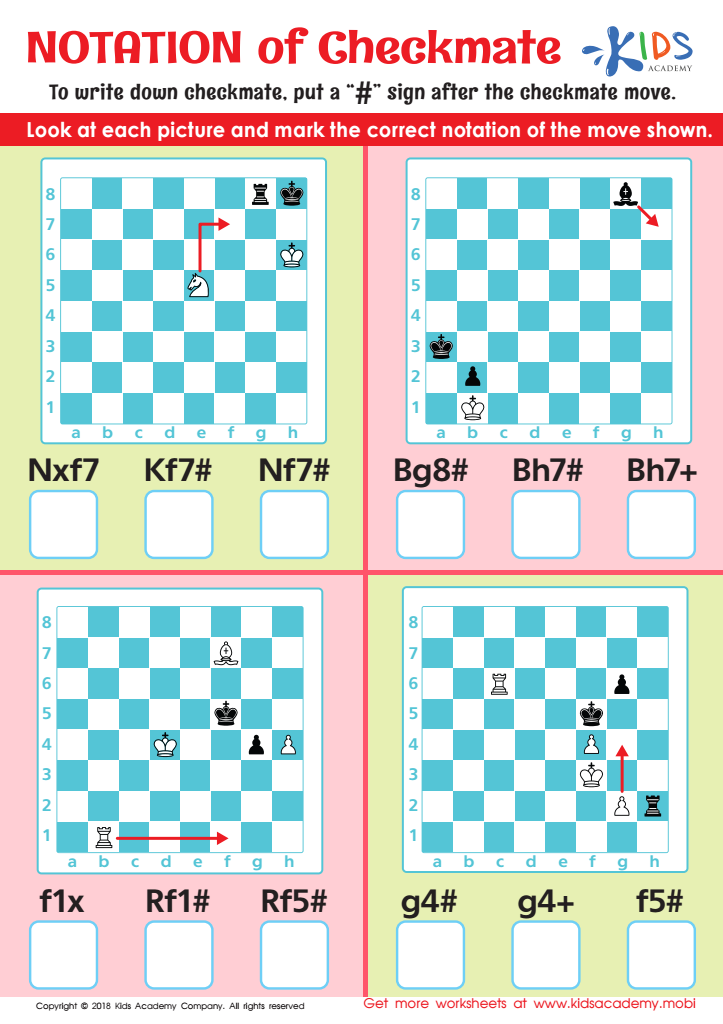
Notation of Checkmate Worksheet

Checkmate is the thrilling, ultimate move in chess! Teach your child to make it and notate it properly with this free worksheet. They'll love being able to capture the king and it's great for brain-building too! Have them look at the sample boards and place a # sign after the checkmate move for notation.
Notation of Checkmate Worksheet
Worksheet


Parents and teachers should care about Extra Challenge Chess for ages 5-6 because it promotes critical cognitive skills that are essential for early development. Engaging young children in chess introduces them to problem-solving and strategic thinking. Through the game, they learn to analyze different scenarios and consider the consequences of their moves, enhancing their decision-making abilities.

Moreover, chess fosters patience, concentration, and discipline. As young players navigate the rules and tactics of the game, they practice staying focused and maintaining control, skills that are transferable to academic settings. By incorporating chess into their routine, children develop perseverance, as they experience both victories and defeats—important life lessons that teach resilience.

Socially, chess can help cultivate respect, sportsmanship, and healthy competition, offering children the chance to interact with peers in a positive environment. Additionally, chess has been linked to improvements in mathematical skills and literacy as players work with patterns, recognize sequences, and develop an expanded vocabulary around the game.

Ultimately, introducing Extra Challenge Chess can enrich a child's educational experience by promoting holistic development and providing valuable lessons that extend beyond the chessboard. Investing in these skills can lay a strong foundation for future academic success and social interaction.