Filters

8 filtered results

Clear all filters
Favorites
With answer key
Interactive

8 filtered results

Difficulty Level

Grade


Discover fun and engaging Normal Addition Facts Worksheets designed specifically for children aged 3-5! These worksheets provide a playful yet educational approach to introducing young learners to basic addition concepts. Through colorful illustrations and interactive activities, children will develop essential math skills, boost their confidence, and foster a love for learning. Our worksheets gradually introduce numbers and simple addition problems, making it easy for parents and educators to support skill acquisition. Perfect for home practice or classroom settings, these resources are aimed at nurturing a solid math foundation while keeping early learners excited about numbers. Start the journey to math mastery today!

Check out this FREE Trial Lesson on Addition Facts for age 3-5!

More Word Problems

Favorites
With answer key
Interactive
  • 3-5
  • With answer key
  • Addition Facts
  • Normal
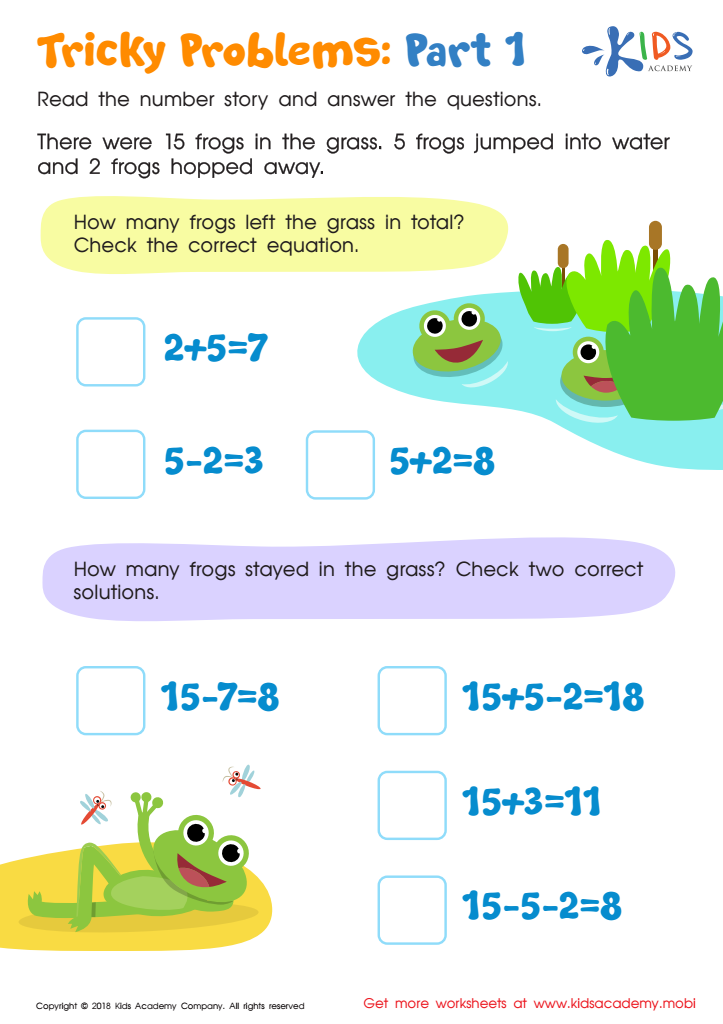
Tricky Problems Worksheet: Part 1

Tricky Problems Worksheet: Part 1

Visualizing word problems can help students solve them. This fun PDF worksheet encourages students to create mental images using math facts, then check boxes to match the equations for basic addition problems. It's a great way to build confidence in solving math.
Tricky Problems Worksheet: Part 1
Worksheet
7 Continents and 7 Seas Worksheet

7 Continents and 7 Seas Worksheet

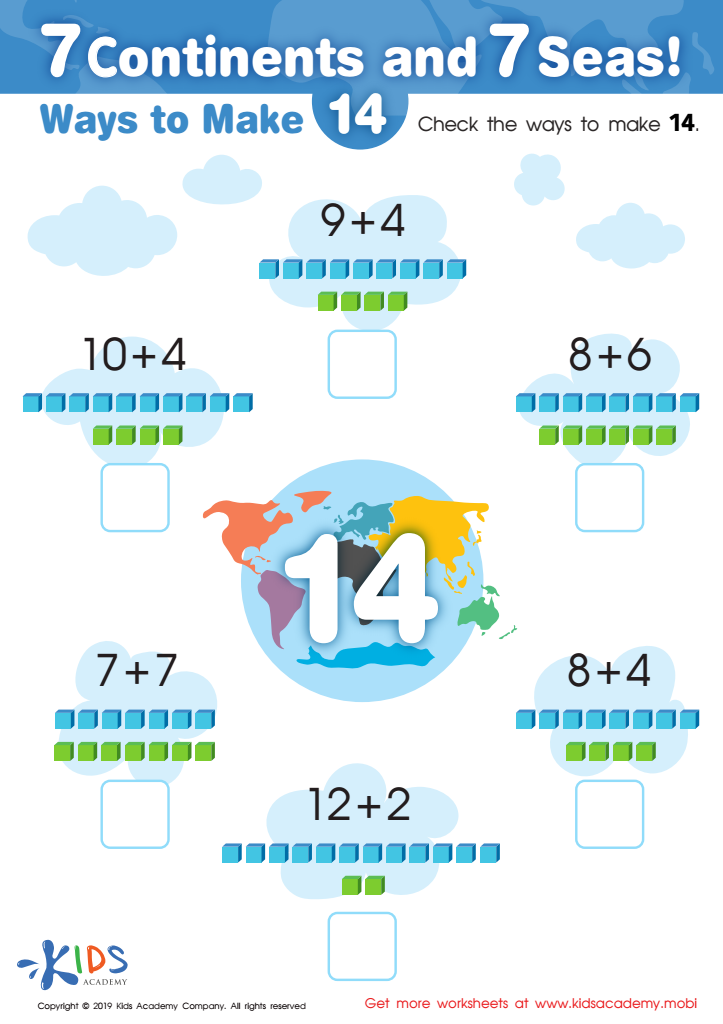
Remind kids of the continents and show them how different numbers can add up to the same figure. Give examples, like 2+2 =4, and 3+1 =4. Ask if they can provide other examples, then work through the simple additions in this worksheet with them. Ask them to circle all equations that make 14.
7 Continents and 7 Seas Worksheet
Worksheet
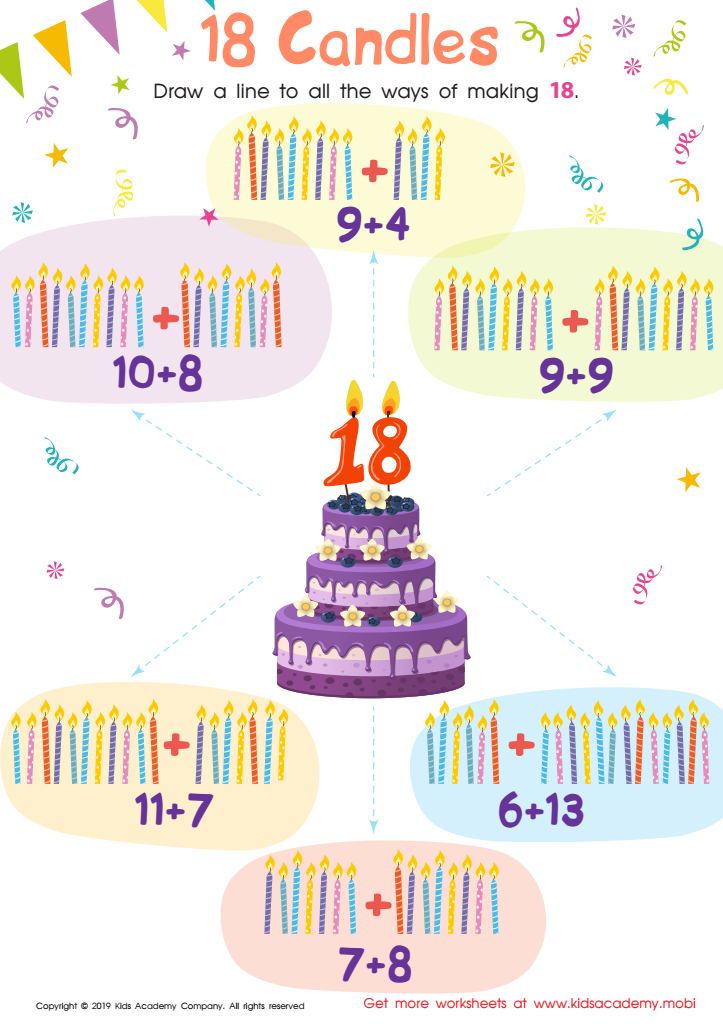
18 Candles Worksheet

18 Candles Worksheet

This worksheet is great for introducing your students to addition and subtraction. Help your kids solve the simple equations on it and draw a line from the birthday cake with 18 on it to all the solutions. Practice like this will prepare them to tackle more complex math problems.
18 Candles Worksheet
Worksheet
Tricky Problems Worksheet: Part 2

Tricky Problems Worksheet: Part 2

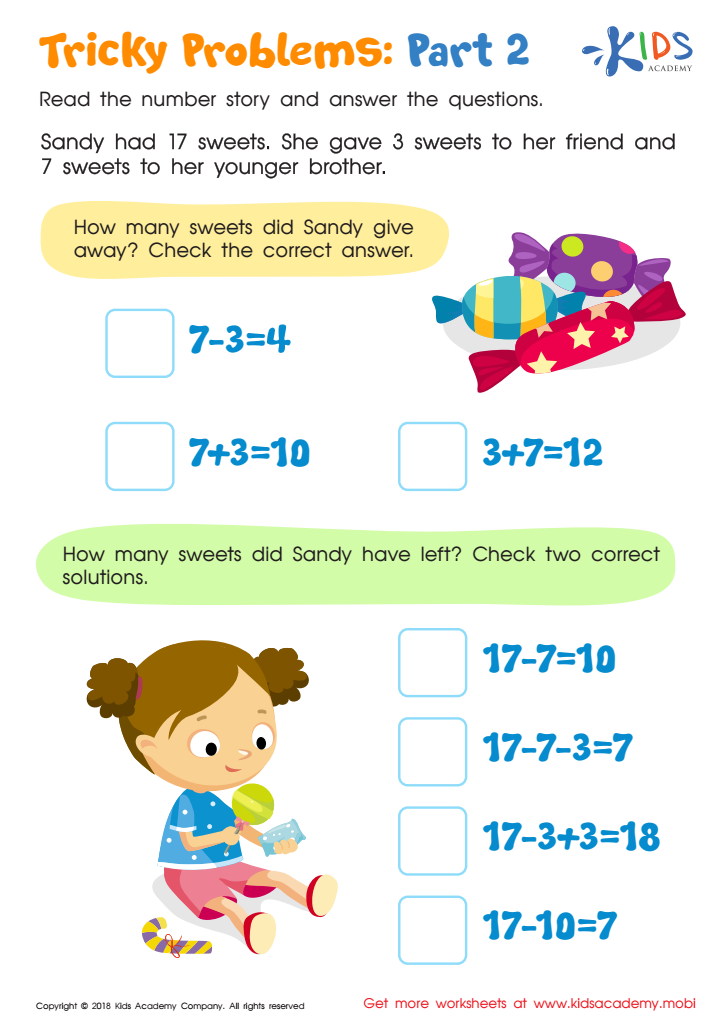
Help your little math learner visualize number stories with this engaging worksheet. They'll connect pictures to the story and use math facts to find the sums. After that, they'll be able to identify the correct number sentences to match. Let them practice and get better at problem solving!
Tricky Problems Worksheet: Part 2
Worksheet
Colonies Making 13 Worksheet

Colonies Making 13 Worksheet

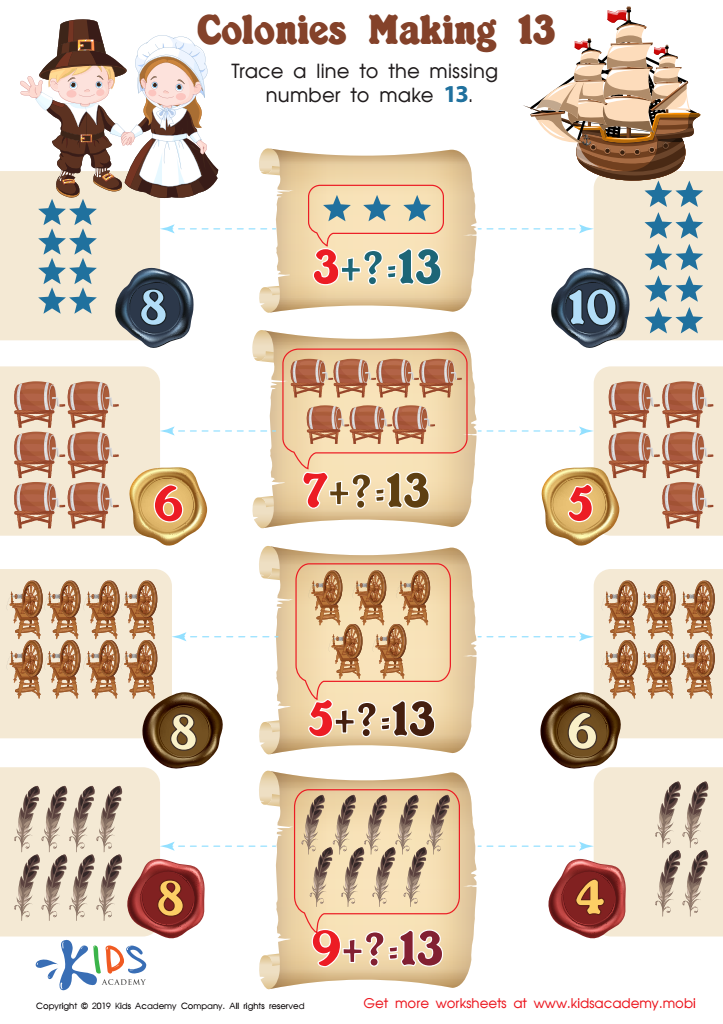
Help your students trace the lines to complete the puzzle! They must identify the objects in the pictures and find the missing numbers that add up to 13. Colonizers arrived in America on a ship, forming an agreement with the Native Americans. Can your students fill in the gaps?
Colonies Making 13 Worksheet
Worksheet
Collect Sticks Worksheet

Collect Sticks Worksheet

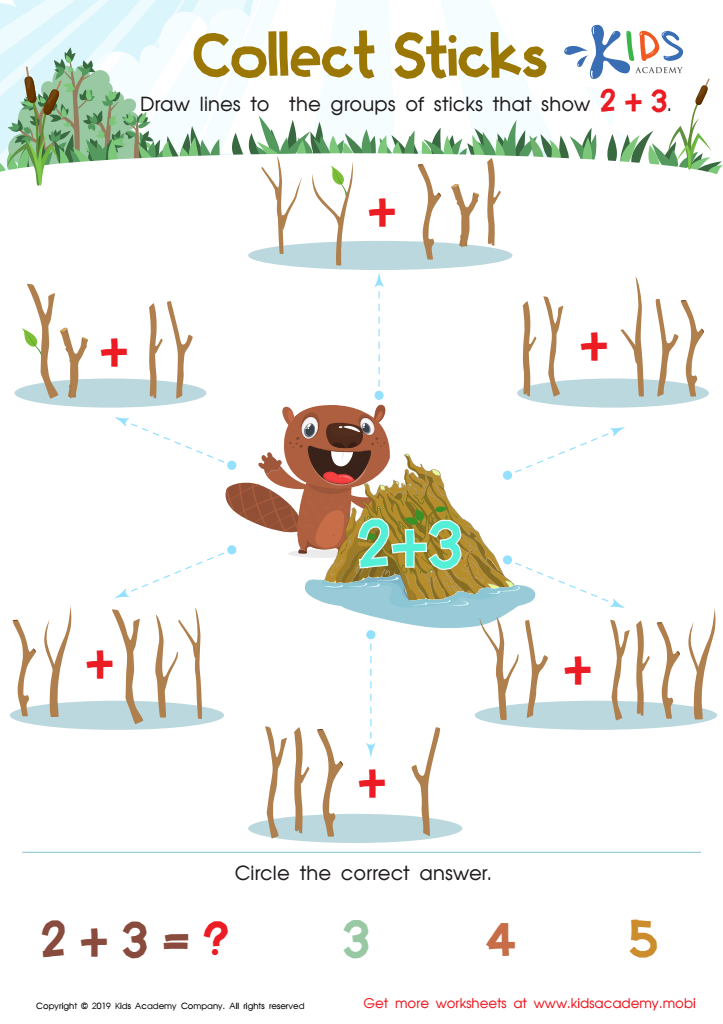
Let math be fun for your kids with a simple and colorful worksheet exercise. Addition and subtraction can be daunting, but you can make it enjoyable with exercises like this one. Get them to draw lines to the groups of sticks that show 2+3 and watch them light up.
Collect Sticks Worksheet
Worksheet
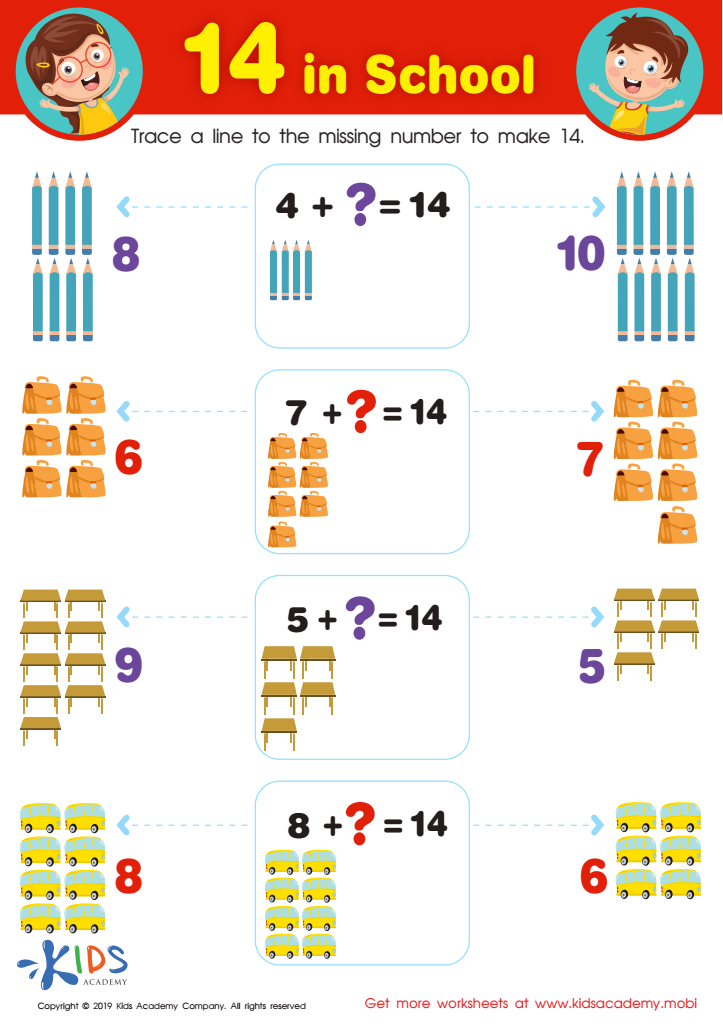
14 in School Worksheet

14 in School Worksheet

Remind your kids that adding different sets of numbers can give the same total (e.g. 2+3=5, 4+1=5). Ask them for more examples. Afterwards, work through the exercise. Help them count the objects and trace a line to the missing number that makes the total 14.
14 in School Worksheet
Worksheet
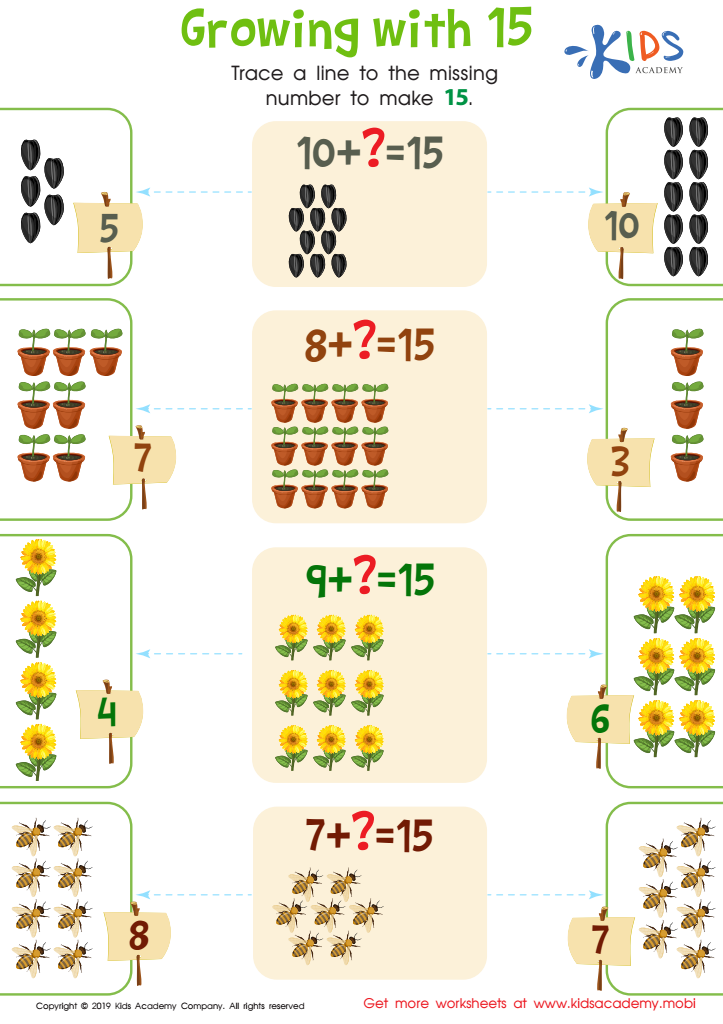
Growing with 15 Worksheet


Growing with 15 Worksheet

Remind your kids that adding different sets of numbers can give the same total (e.g. 2+3=5, 4+1=5). Test their understanding by asking them for more examples. Move onto the worksheet: count objects, then trace the line to the number making a total of 15.
Growing with 15 Worksheet
Worksheet


Parents and teachers should prioritize normal addition facts for children aged 3-5 as they serve as a foundational block for future mathematical understanding. At this age, children are naturally curious and eager to learn, making it the ideal time to introduce basic addition concepts. Understanding simple addition helps develop critical thinking and problem-solving skills, essential lifelong competencies.

By learning addition facts, young learners enhance their number sense, which aids in recognizing patterns and relationships between numbers. These early mathematical experiences build confidence in their abilities, fostering a positive attitude towards math as they grow. Furthermore, mastering basic addition can make more complex mathematical concepts, such as subtraction and even multiplication, more manageable when introduced later.

Incorporating engaging activities and games focused on addition makes learning enjoyable and interactive. This playful approach not only strengthens cognitive skills but also promotes social interaction and teamwork among peers.

Ultimately, focusing on normal addition facts prepares children for academic success while instilling a love for learning. It equips them with essential skills to navigate everyday situations, from simple counting to making initial mathematical connections, greatly influencing their overall development and future education.