Normal Short Vowels Worksheets for Ages 3-6
8 filtered results
-
From - To
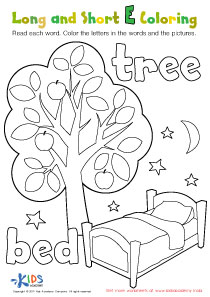
Looking for engaging and educational resources to help children ages 3-6 master short vowels? Our Normal Short Vowels Worksheets are designed specifically for young learners to build early literacy skills through fun and interactive activities. These printable worksheets guide kids in recognizing, pronouncing, and writing short vowel sounds, such as 'a' in cat and 'e' in bed. Perfect for classroom or home use, each sheet includes colorful illustrations and simple exercises to keep little ones excited about learning. Give your child the foundational skills they need for reading success with our expertly crafted short vowel worksheets today!
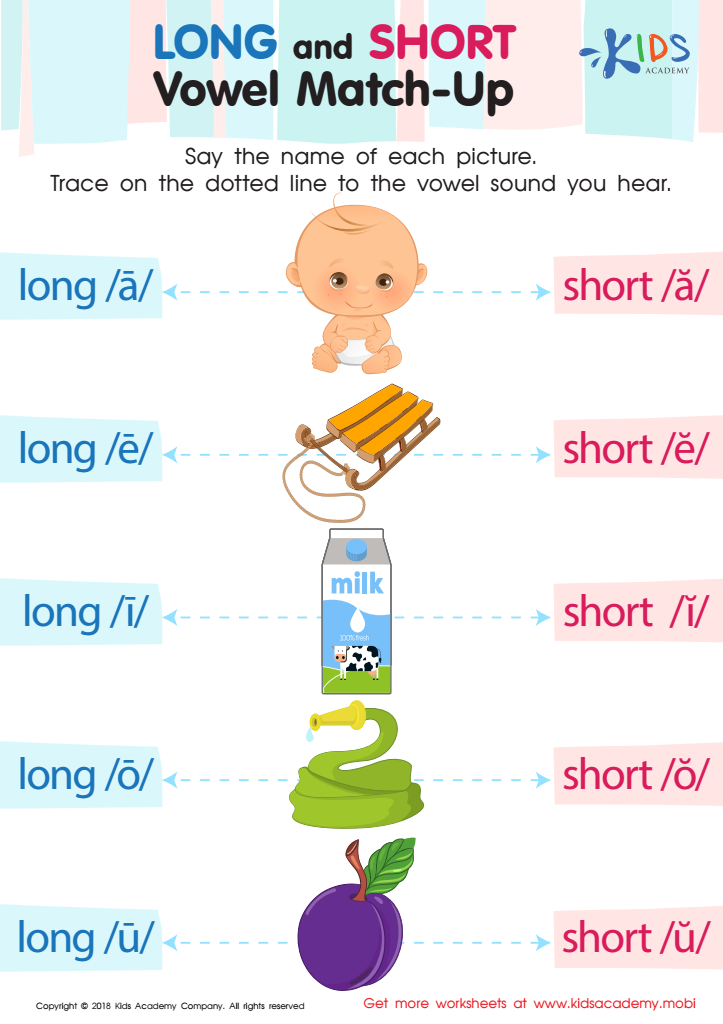
Long and Short Vowel Match up Reading Worksheet
 Assign to My Students
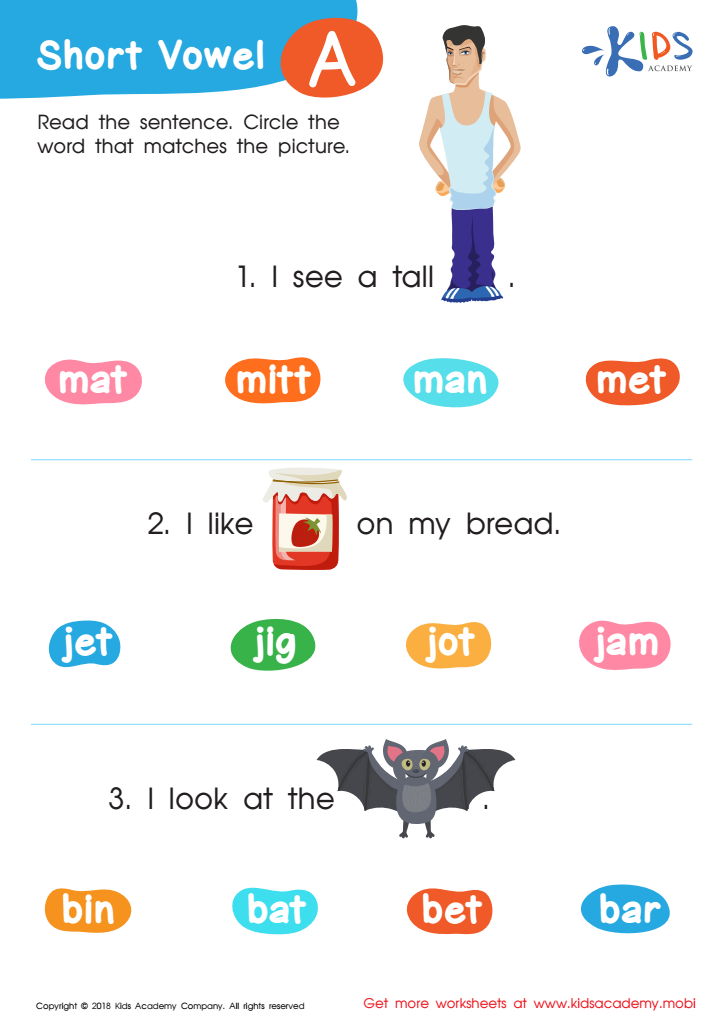
Short Vowel /a/ Worksheet
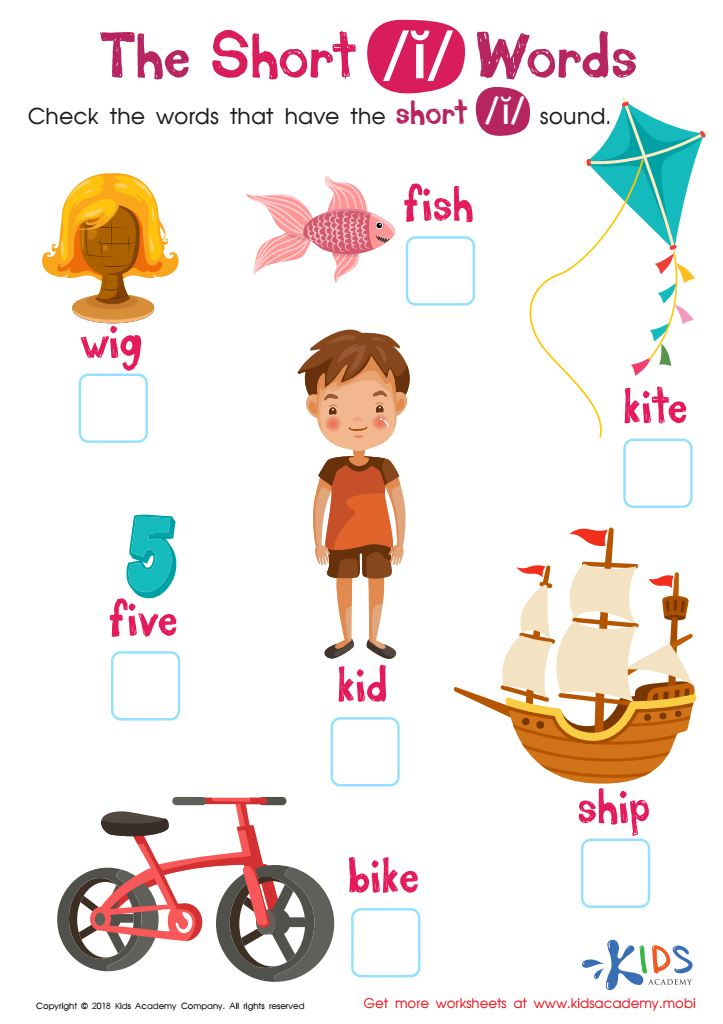
The Short I Words Reading Worksheet
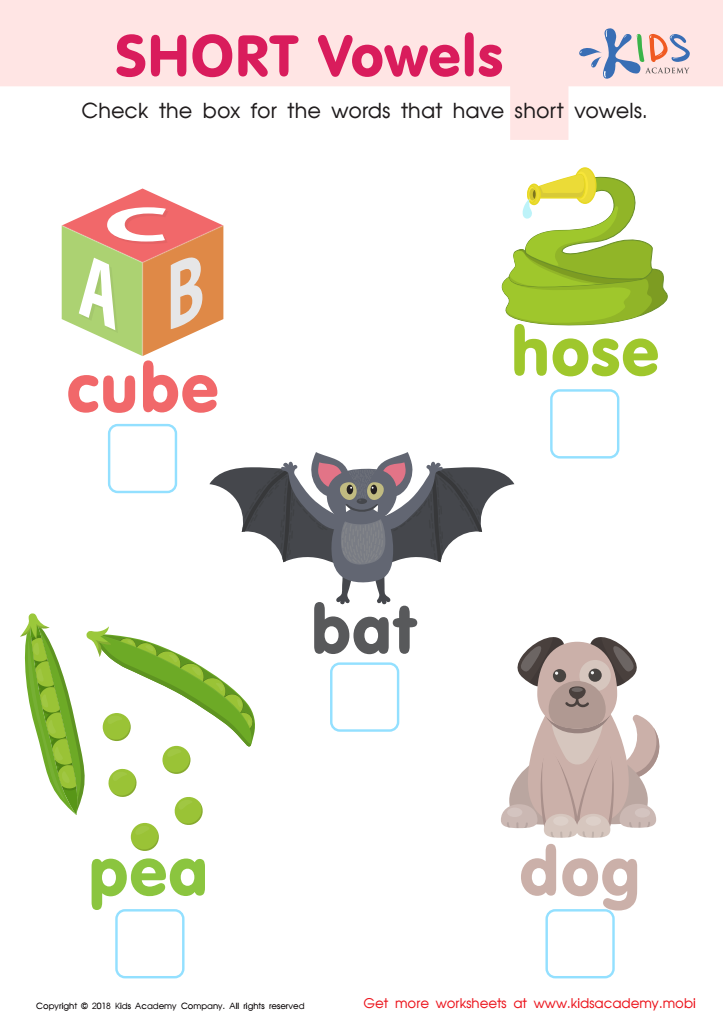
short vowels Worksheet
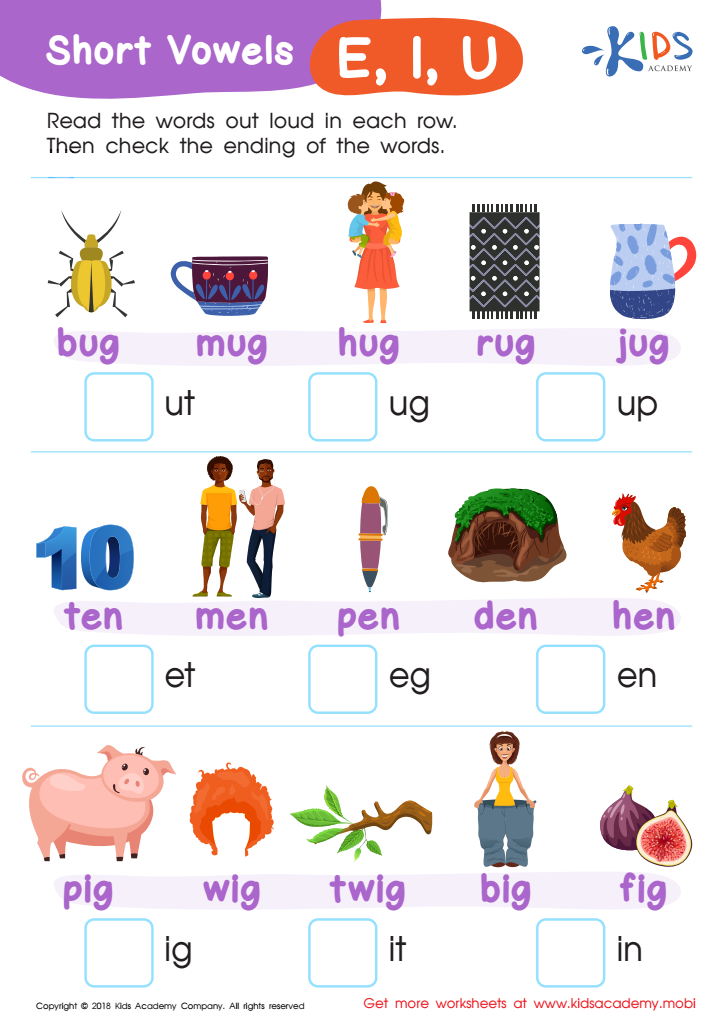
Short Vowels /e/, /i/, and /u/ Worksheet
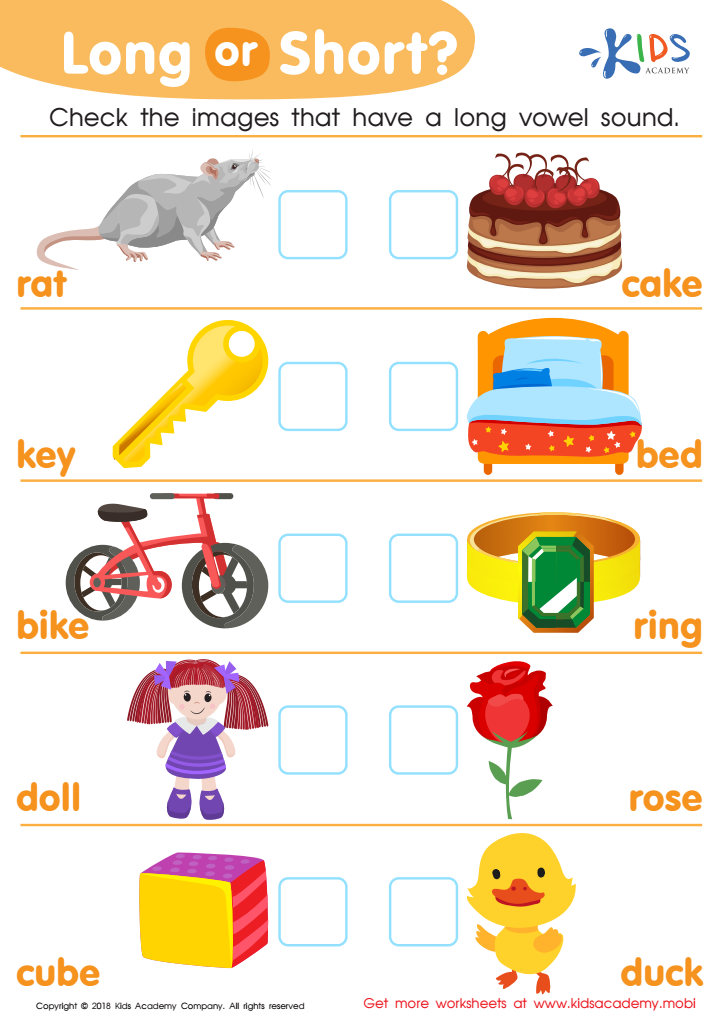
Long or Short Reading Worksheet
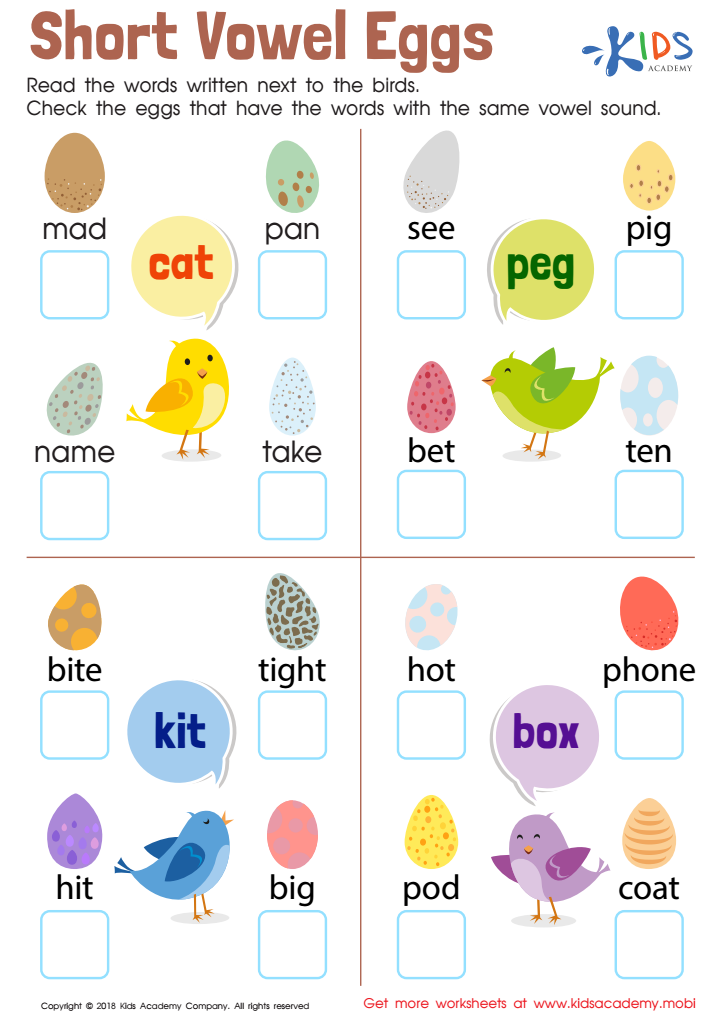
Short Vowel Eggs Worksheet
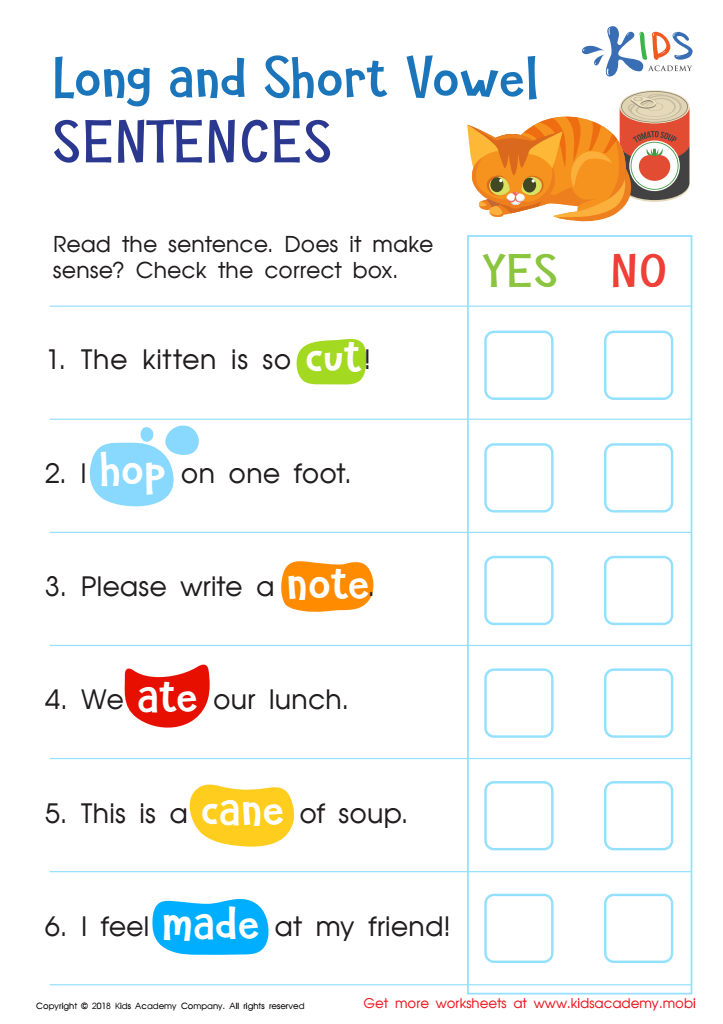
Long and Short Vowel Sentences: Assessment Worksheet



Understanding normal short vowels is fundamental for children aged 3-6, as it lays the cornerstone for their future reading and writing skills. Short vowels (a, e, i, o, u) produce concise sounds like /a/ in "cat" or /e/ in "bed." Mastery of these sounds early on enables children to decode words efficiently, enhancing their phonemic awareness—an essential literacy skill.
Parents and teachers should care about short vowel proficiency because it directly influences a child's ability to blend sounds to form words, a process crucial for reading fluently. Early exposure and practice help children recognize vowel sounds in various words, fostering better language comprehension and vocabulary development.
Moreover, becoming familiar with short vowels assists in spelling. Knowing that the letter "a" in "bat" makes the /a/ sound helps children predict and memorize other simple word structures. This preparation establishes a solid foundation for learning complex vowel combinations and diphthongs later.
Effective short vowel instruction, through engaging activities like songs, games, and repetition, makes learning enjoyable and memorable for young minds. Therefore, investing time and attention in teaching short vowels equips children with critical linguistic tools that facilitate their overall academic achievements and confidence in using language.