Normal 2D Shapes Worksheets for Ages 3-6 - Page 2
32 filtered results
-
From - To
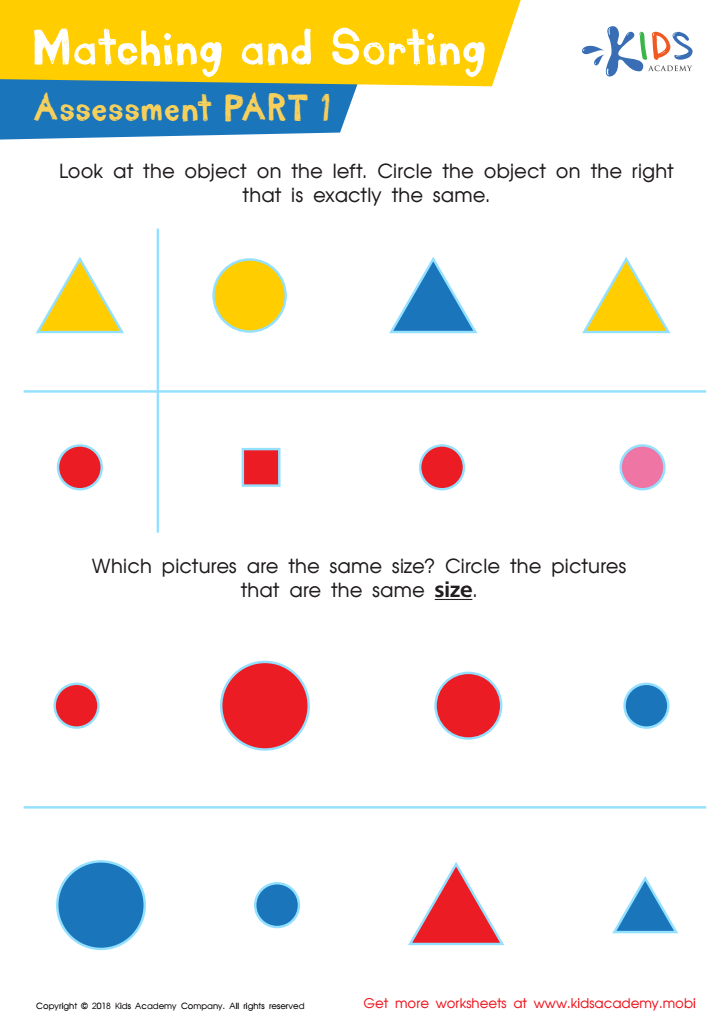
Matching and Sorting for Kindergarten: Assessment 1 Worksheet
 Assign to My Students


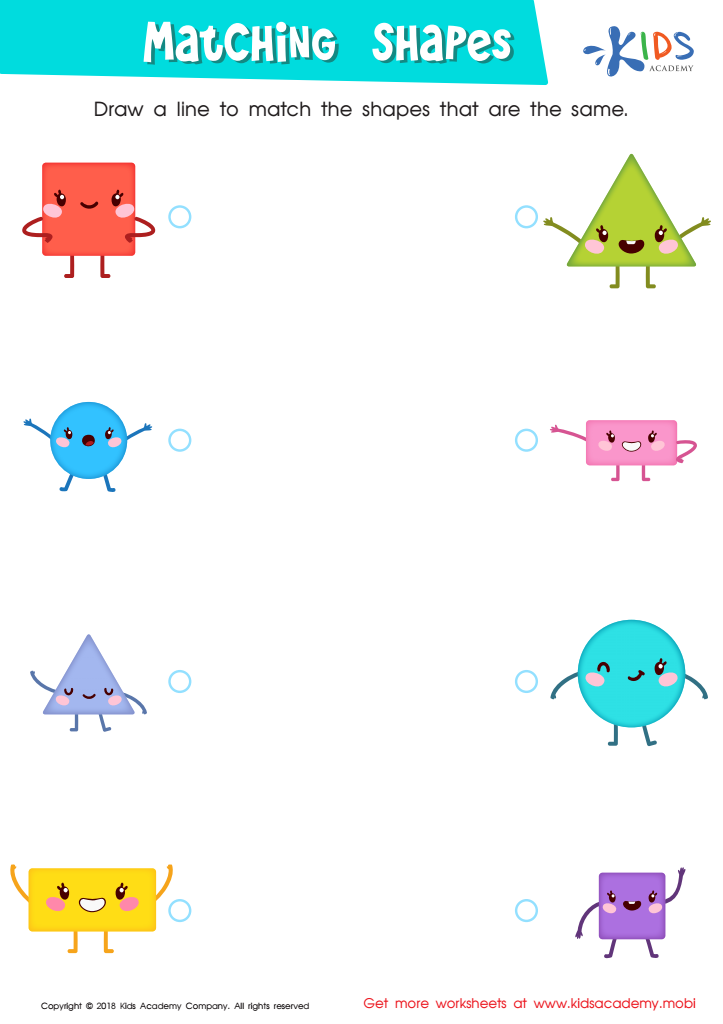
Matching Shapes Worksheet
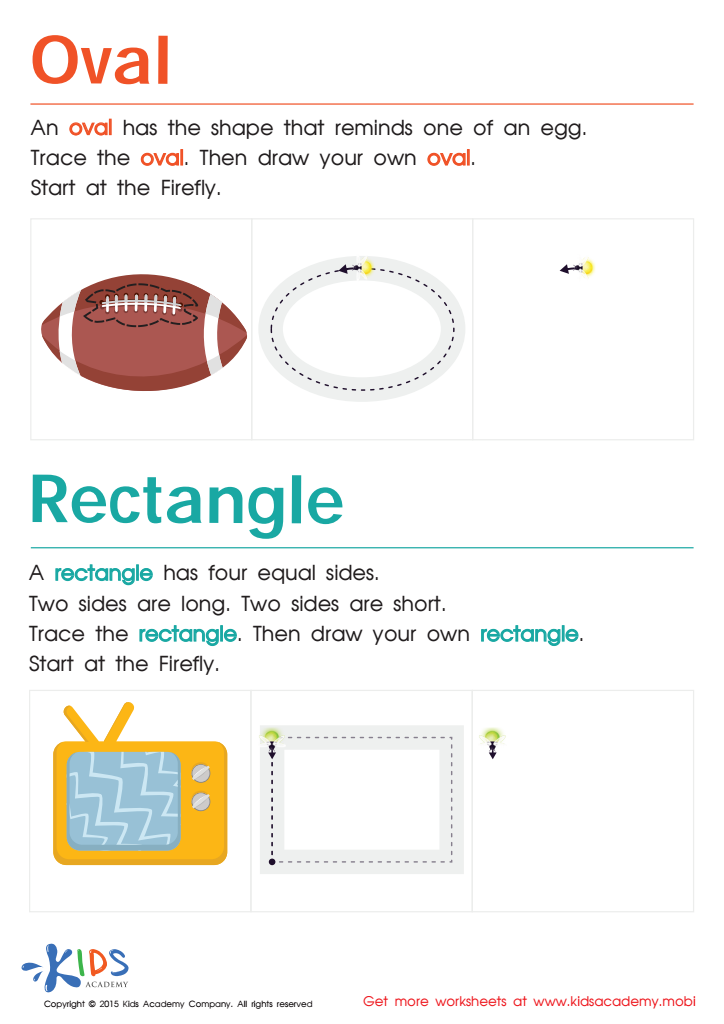
Easy Drawing of Ovals And Rectangles Worksheet
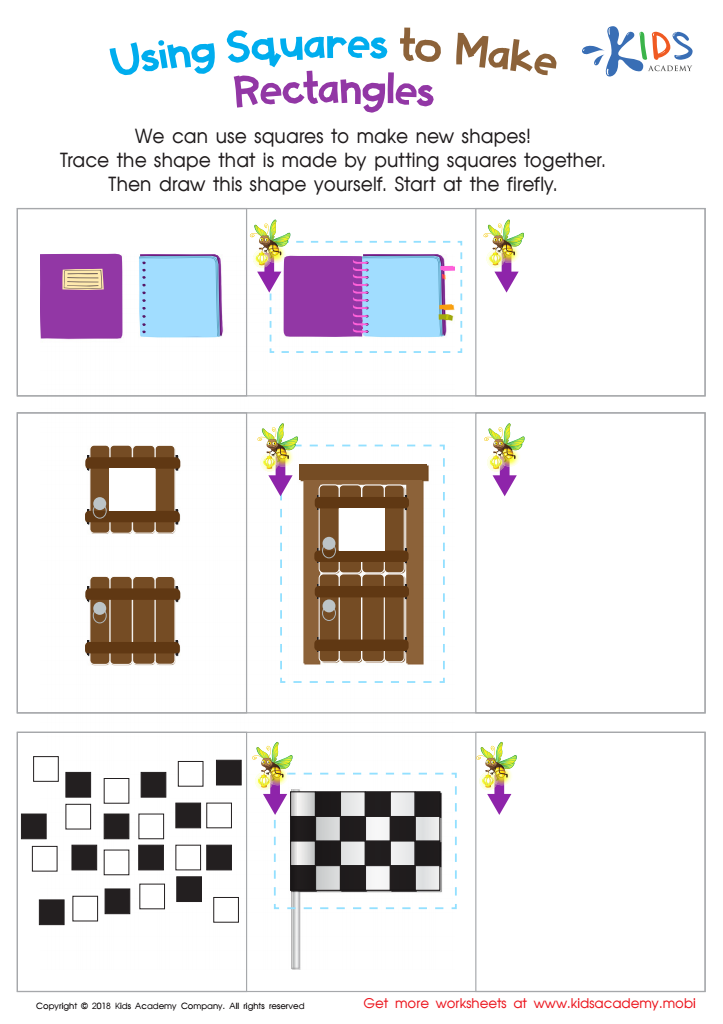
Using Squares to Make Rectangles Worksheet
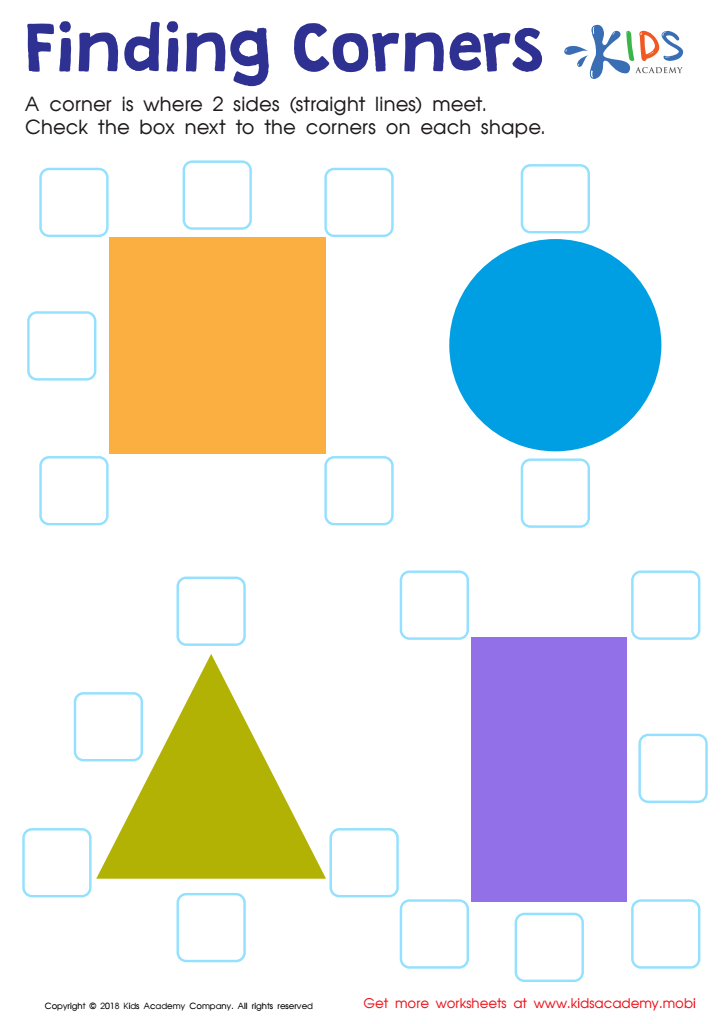
Finding Corners Worksheet
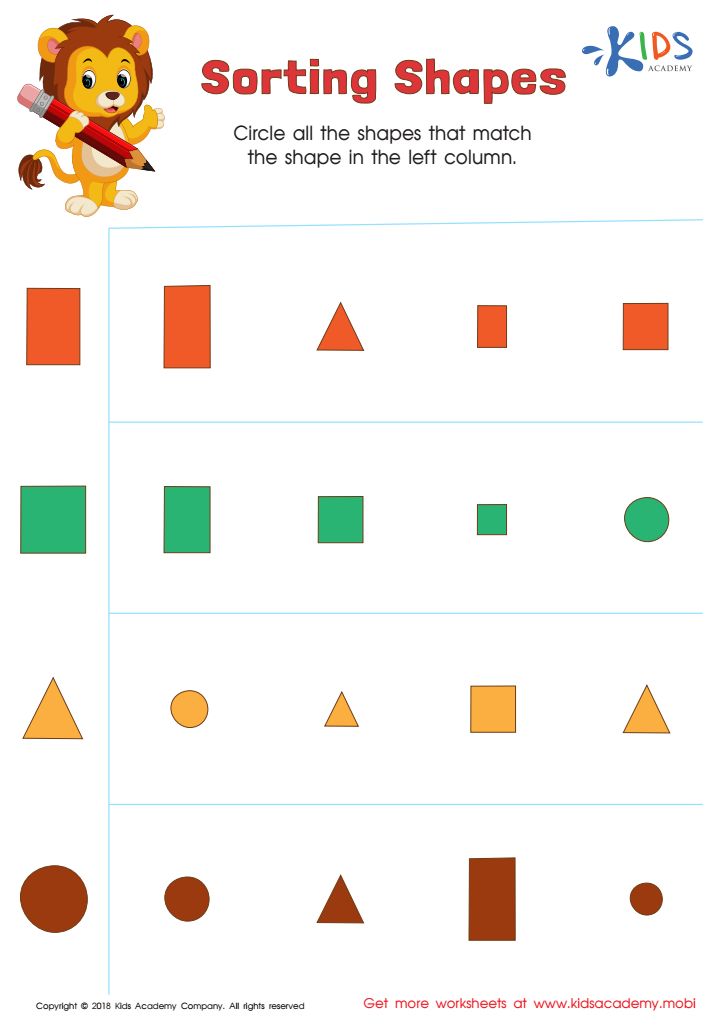
Sorting Shapes - Part 2 Worksheet
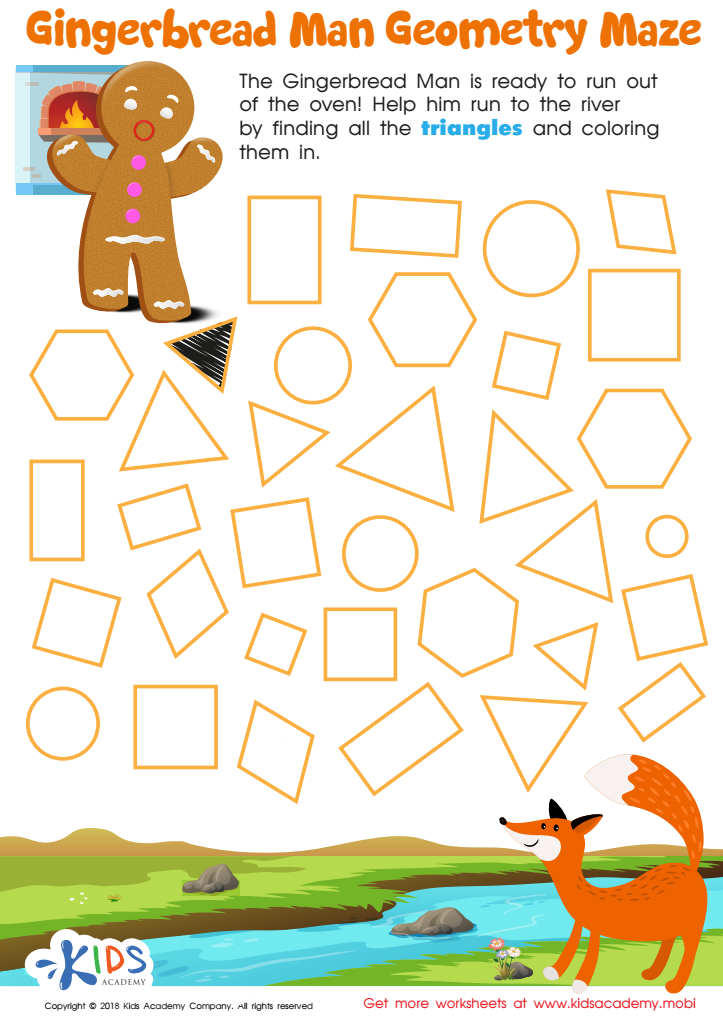
Gingerbread Man Geometry Maze Worksheet
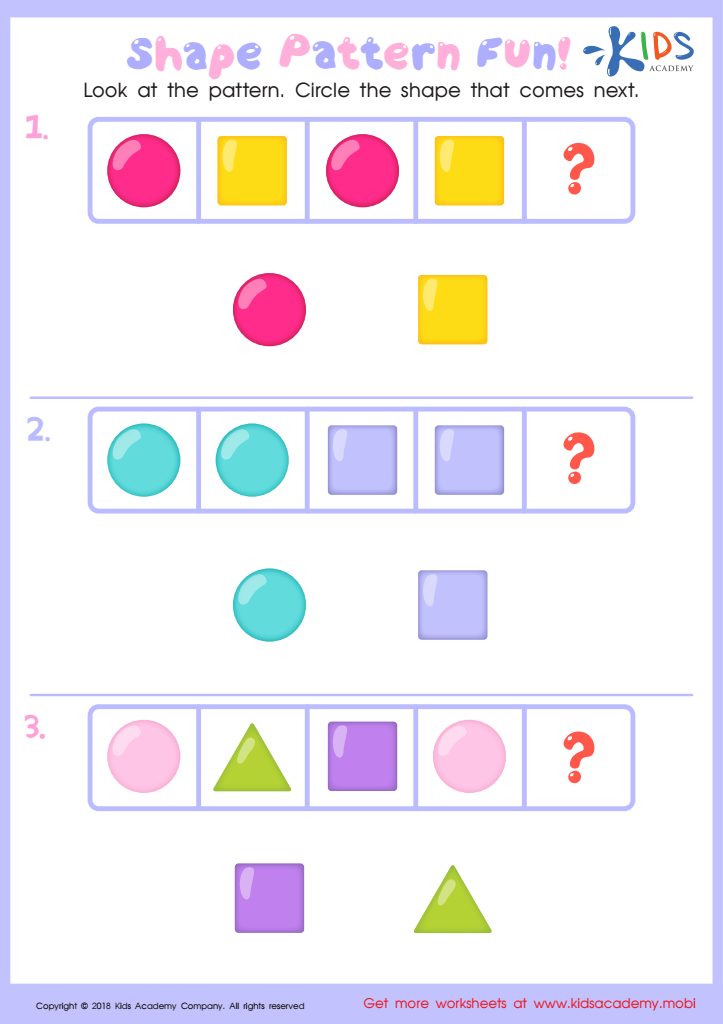
Shape Pattern Fun Worksheet








Ensuring that young children, particularly those between the ages of 3 to 6, understand and recognize normal 2D shapes—like circles, squares, triangles, and rectangles—is foundational for cognitive and academic development. At this critical age, children's brains are rapidly developing, and learning about shapes helps enhance their spatial awareness and problem-solving skills. Recognizing and naming shapes draws on pattern recognition, a critical cognitive skill that lays the groundwork for more complex math concepts they will encounter later, such as geometry and fractions.
Shapes also contribute to literacy skills. Many letters and numbers are composed of basic geometric shapes, and recognizing these components can aid in learning to read and write. Socially and emotionally, activities involving shapes can encourage teamwork and communication, as children often work together on puzzles or art projects.
Understanding shapes is also crucial for everyday functioning. Shapes appear everywhere, from traffic signs to everyday items. Familiarity with shapes helps children make sense of their environment and gives them essential tools for navigating the world around them. Therefore, parents and teachers should prioritize teaching shapes to give children a robust foundation for both academic learning and everyday life skills.