Normal Fractions of Shapes Worksheets for Ages 3-8
5 filtered results
Difficulty Level
Grade
Age
-
From - To
Subject
Activity
Standards
Introduce young learners to the world of fractions with our engaging "Normal Fractions of Shapes Worksheets" designed for children ages 3-8. These fun and colorful worksheets help kids understand basic fraction concepts by dividing and coloring different shapes. This visual approach enhances comprehension, making it easier for children to grasp the idea of parts and wholes. Suitable for early learners, our worksheets offer a balance of learning and play, ensuring kids develop essential math skills while enjoying the process. Perfect for parents, teachers, and homeschoolers looking to provide quality, educational content that keeps young minds curious and active.
Favorites
With answer key
Interactive
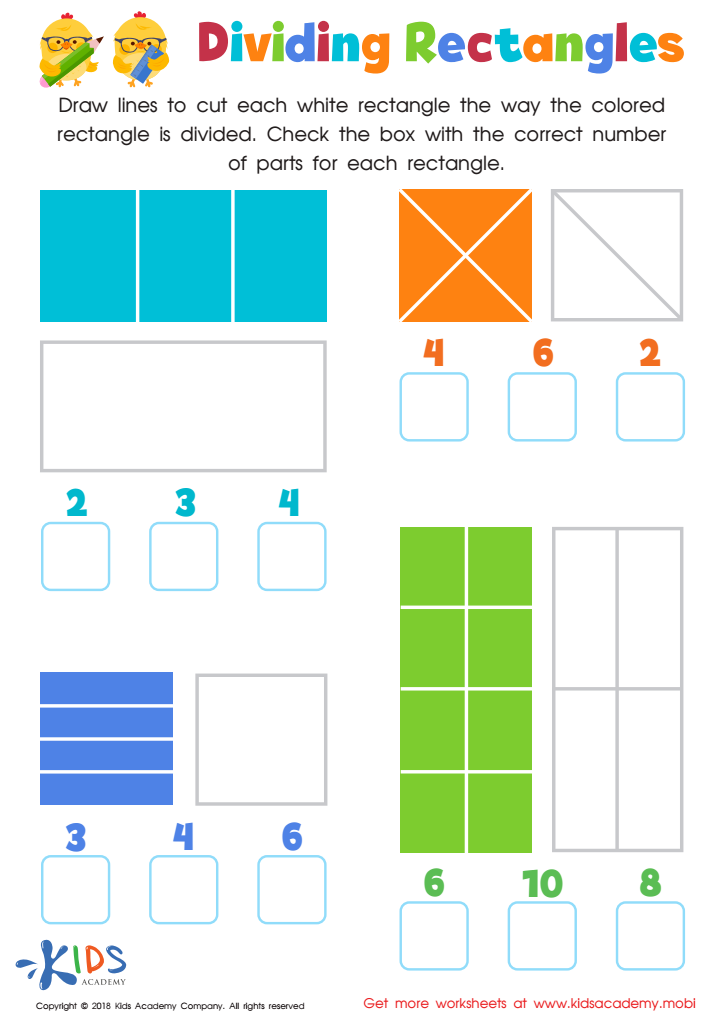
Dividing Rectangles Worksheet
Ask your child to draw lines to divide the white rectangles like the colored ones. Then, have them count the parts in each and choose the correct number. This worksheet will help them practice counting and dividing.
 Assign to My Students
Dividing Rectangles Worksheet
Worksheet
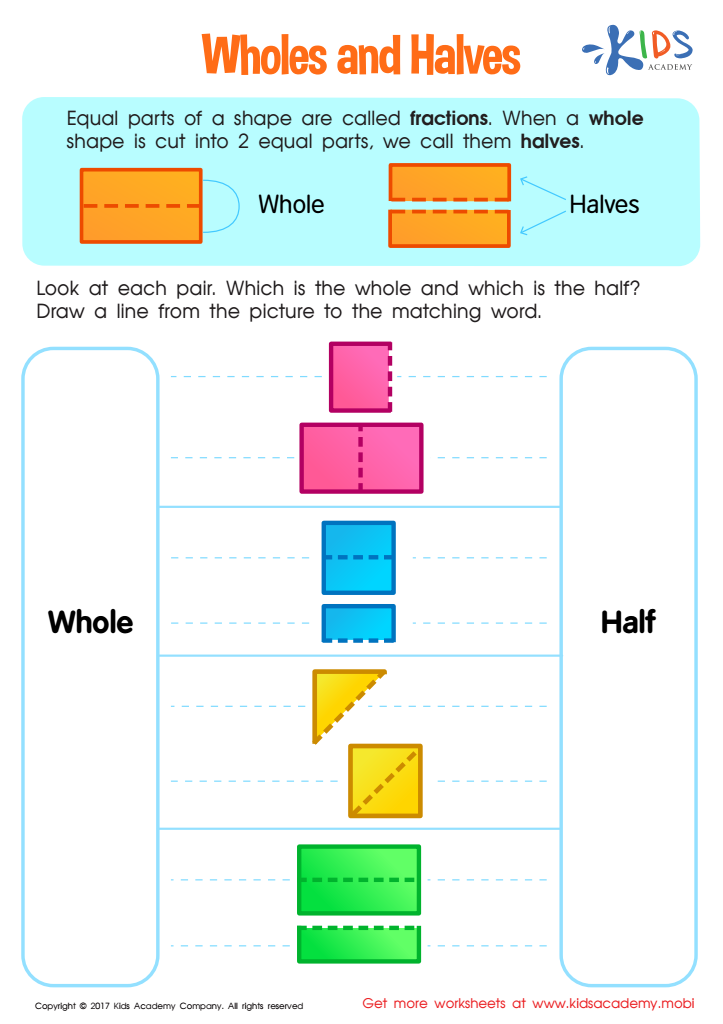
Wholes and Halves Worksheet
Students can feel overwhelmed with fractions. Help take the stress off by using a colorful worksheet to explain whole shapes and how to find halves. Ask them to identify the whole and point to the matching word for the half. A free printout can help guide them.
Wholes and Halves Worksheet
Worksheet
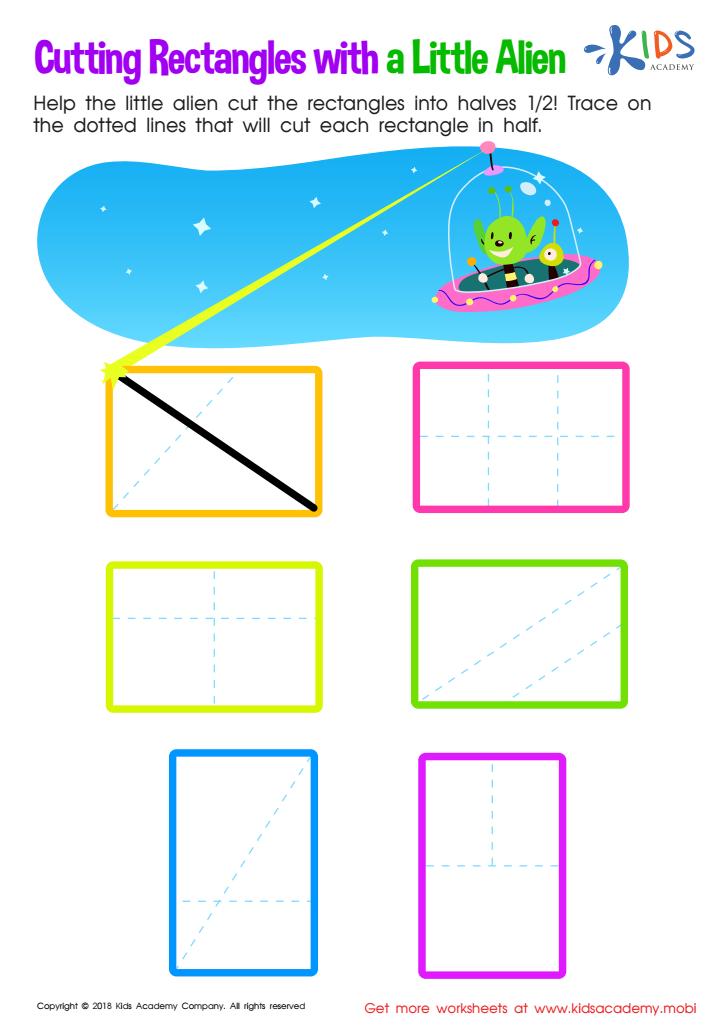
Cutting Rectangles with Alien Worksheet
If your students are interested in aliens and otherworldly events, they'll love this exercise! It requires them to help a small alien cut rectangles into halves (½). They must trace the dotted lines to accurately cut each rectangle.
Cutting Rectangles with Alien Worksheet
Worksheet
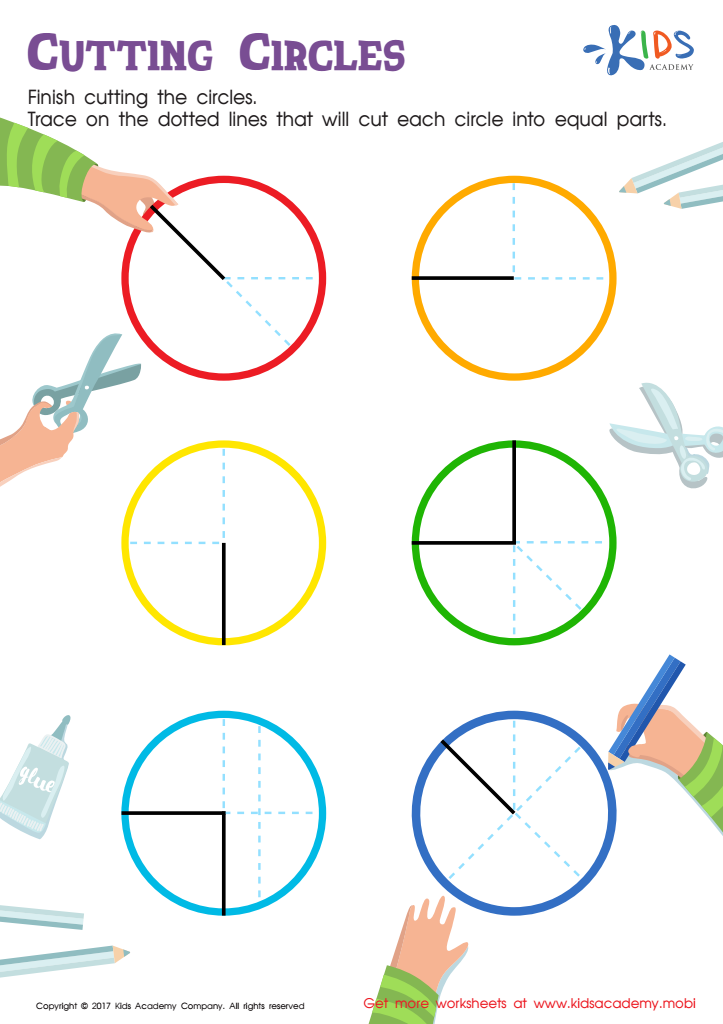
Cutting Circles Worksheet
Allow your child to refresh their memory by asking them what two equal halves, four equal parts and three equal parts are called. Then, look at the picture pdf with them. Challenge them to cut up the circles into equal parts, by tracing the dotted lines. This exercise will help them with their math skills!
Cutting Circles Worksheet
Worksheet
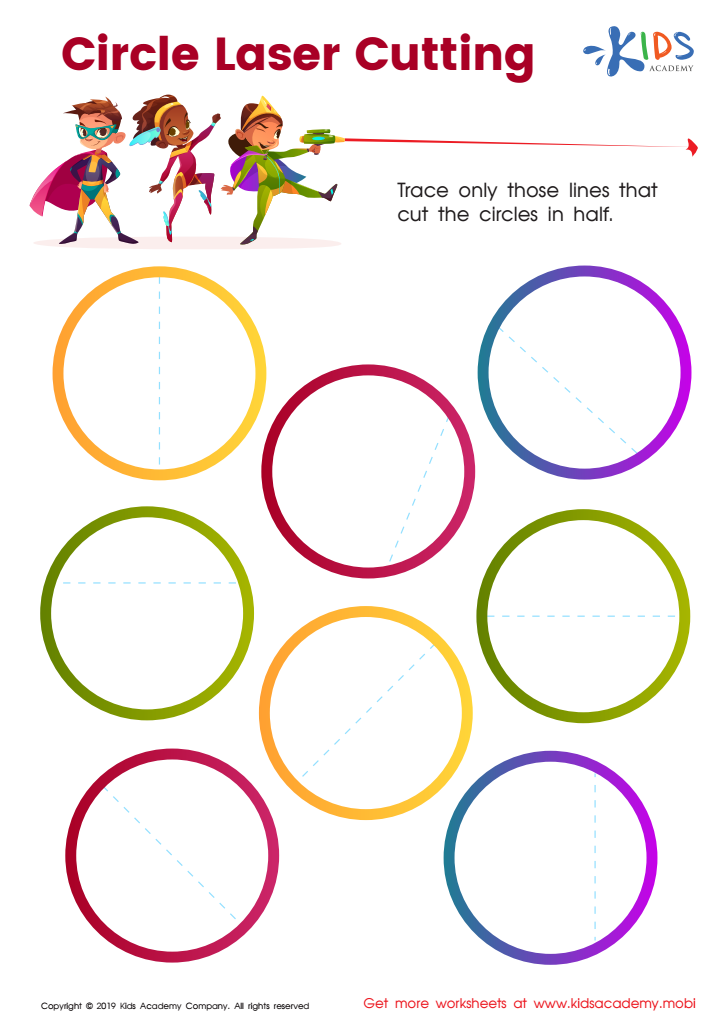
Circle Laser Cutting Worksheet
Encourage your kids to learn geometry! Remind them that when shapes are cut into two equal parts, they are called halves. Have them look at the circles in the worksheet, and trace the lines that cut the circles in half. Geometry is an essential part of education, and although it may not be exciting, it's a valuable skill to have.
Circle Laser Cutting Worksheet
Worksheet
Join Kids Academy for Free
Who is primarily going to use this learning content?








Understanding normal fractions of shapes is crucial for children aged 3-8 because it lays the groundwork for fundamental math skills and cognitive development. At this age, children are highly visual learners, and using shapes to represent fractions helps them grasp abstract mathematical concepts more concretely.
Firstly, learning fractions of shapes builds a child's ability to partition objects, which is essential for understanding more advanced arithmetic operations. For instance, recognizing that a circle divided into two equal parts represents halves directly translates to comprehending division and multiplication later on.
Secondly, normal fractions of shapes nurture problem-solving and critical thinking skills. When children identify how various shapes can be divided and reassembled, they boost their spatial reasoning, which is vital in subjects like geometry.
Moreover, this early introduction to fractions improves numerical literacy. Children begin to see the relationships between numbers and shapes, helping them develop a holistic understanding of math.
Lastly, teaching normal fractions in engaging, hands-on ways fosters a positive attitude towards learning math. Activities involving playful interaction with fractions—like folding paper, cutting fruits, or piecing together puzzles—make learning fun and intuitive.
In summary, focusing on normal fractions of shapes for young children not only equips them with essential arithmetic skills but also enhances their overall cognitive, spatial, and numerical development.