Normal Initial and Final Consonant Blends Worksheets for Ages 3-9
5 filtered results
-
From - To
Discover our engaging "Normal Initial and Final Consonant Blends Worksheets" designed for children ages 3-9. These interactive printables offer an excellent way to enhance phonemic awareness and cultivate essential reading skills. Tailored for early learners, the worksheets focus on blending sounds at the beginning and end of words, encouraging both practice and recognition through fun activities. Ideal for enhancing classroom learning or supplementing at-home education, our resources cater to varied learning styles, ensuring that children develop confidence in their reading abilities. Download these worksheets today and make learning phonics a delightful adventure for your little ones!
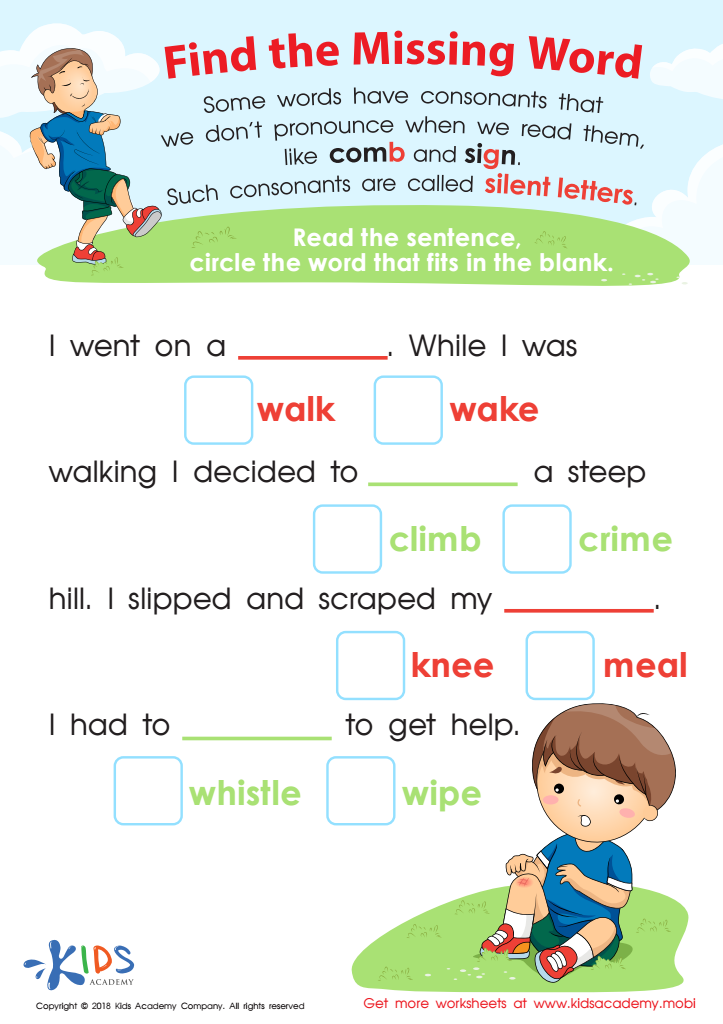
Find The Missing Word Worksheet
 Assign to My Students
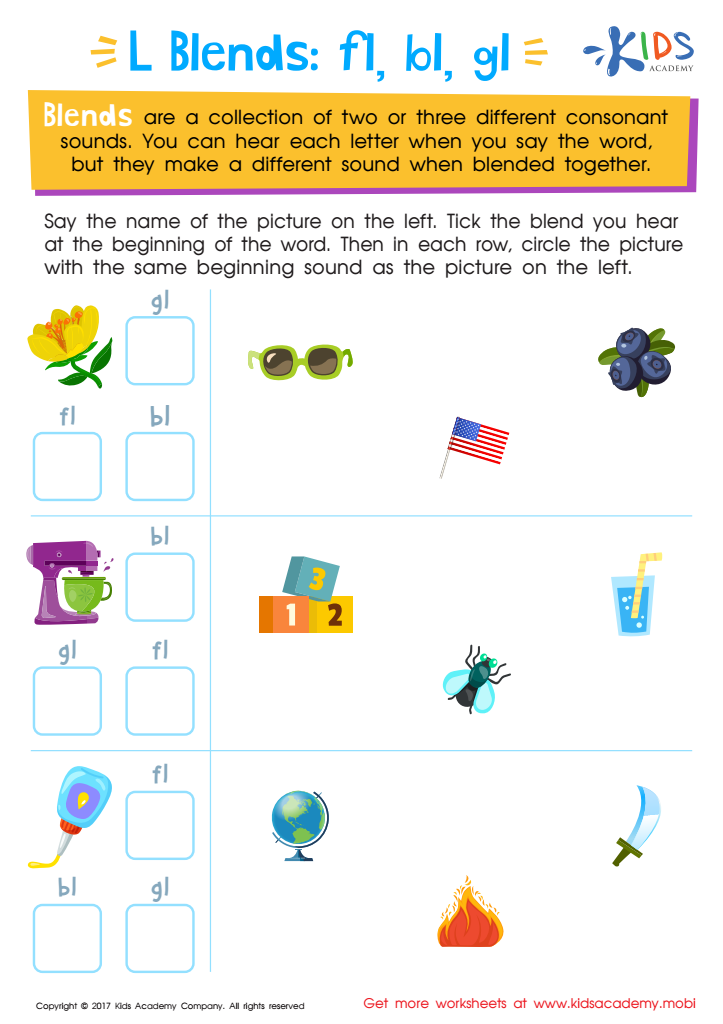
Blending Consonants: "Fl", "Bl" and "Gl" Printable
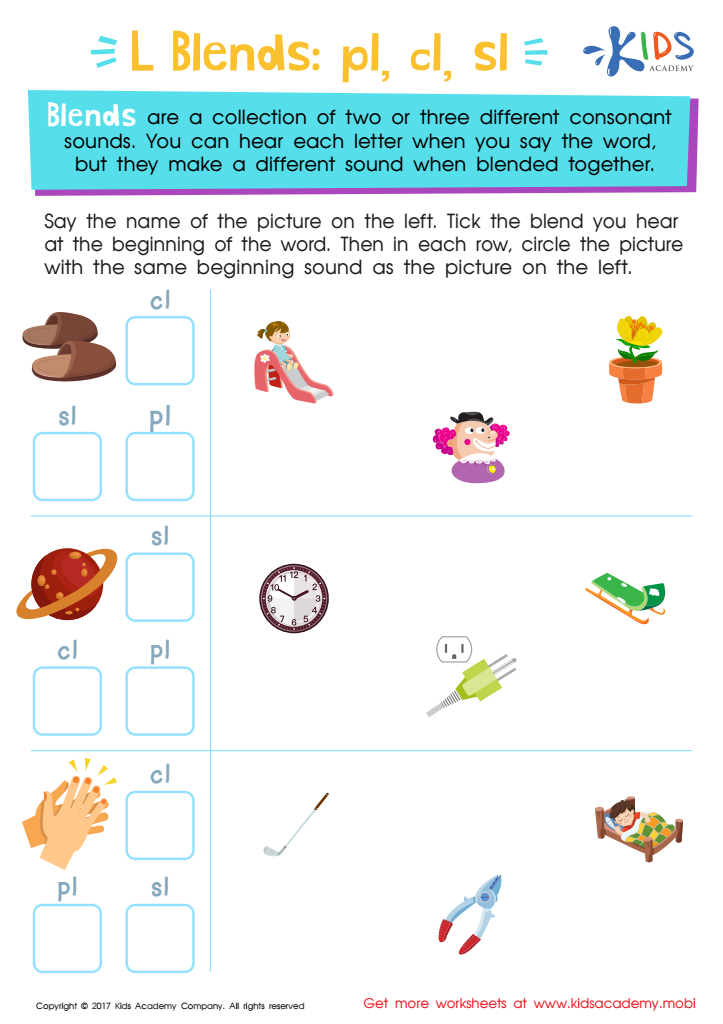
L Blends: "Pl", "Cl" and "Sl" Printable
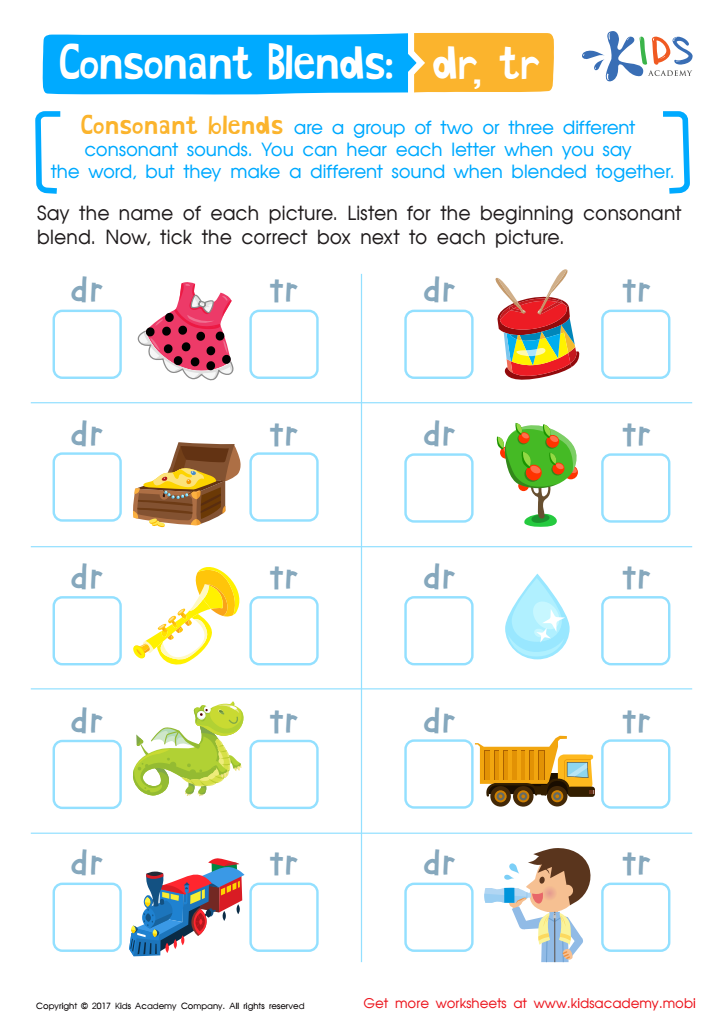
Consonant Blends: "Dr" and "Tr" Printable
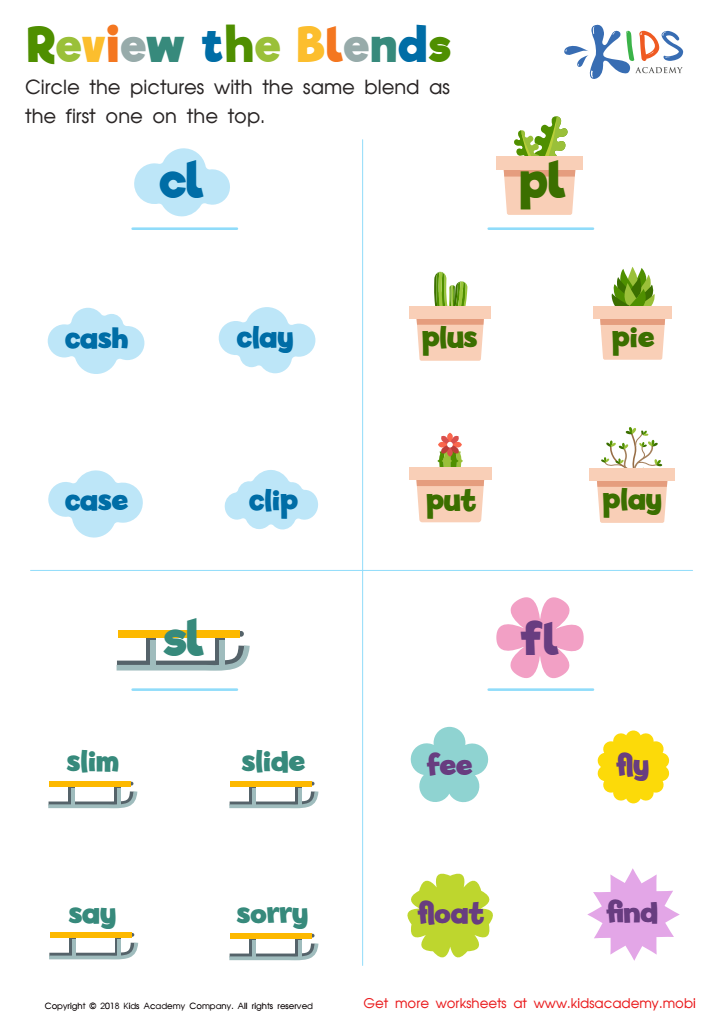
Review the Blends Worksheet


Parents and teachers should prioritize teaching normal initial and final consonant blends for children aged 3-9 because these foundational skills are crucial for developing reading and writing fluency. Blends, which consist of two or more consonants combined to create new sounds (e.g., "bl" in "black" and "st" in "fast"), help children improve their phonemic awareness, essential for decoding words. Strong phonemic skills support vocabulary growth and comprehension, enabling children to better understand spoken and written language.
Additionally, mastering blends enhances spelling abilities. Children who recognize and can manipulate blends are better equipped to tackle more complex words, ultimately increasing their confidence and motivation to read and write. Fostering these skills at an early age nurtures a love for language, making literacy a more engaging and rewarding experience.
Furthermore, a solid grasp of initial and final consonant blends lays the groundwork for more advanced phonological skills as children progress in their education. Given the impact of early literacy on academic success, a focus on these blends aligns with creating a strong linguistic foundation that supports overall cognitive development. Therefore, prioritizing these skills can significantly influence a child's long-term educational trajectory.








