Normal Initial and Final Consonant Blends Worksheets for Ages 4-6
4 filtered results
-
From - To
Explore our "Normal Initial and Final Consonant Blends Worksheets" designed for ages 4-6, perfect for enhancing your child's phonics skills! These engaging worksheets focus on helping young learners identify and pronounce consonant blends at the beginning and end of words. Our activities, rich with colorful illustrations and interactive exercises, make learning fun and effective. Ideal for home or classroom use, these printables encourage phonemic awareness and set a solid foundation for reading fluency. Tailored to your child's developmental stage, our worksheets simplify the learning process, ensuring an enjoyable and productive educational experience. Help your child thrive in early literacy today!
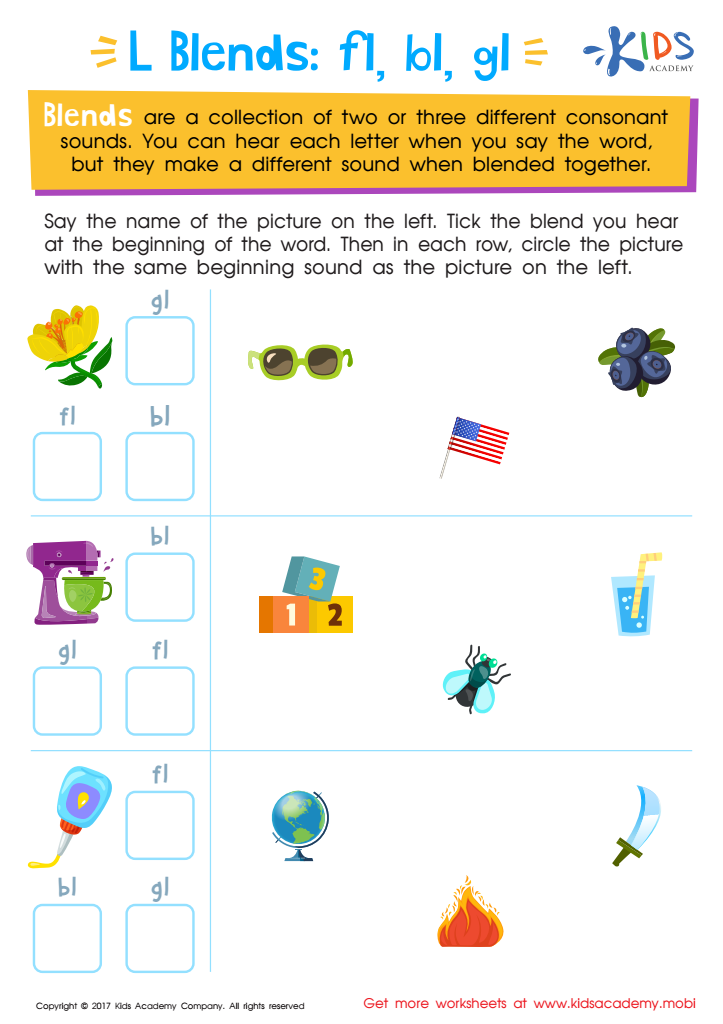
Blending Consonants: "Fl", "Bl" and "Gl" Printable
 Assign to My Students
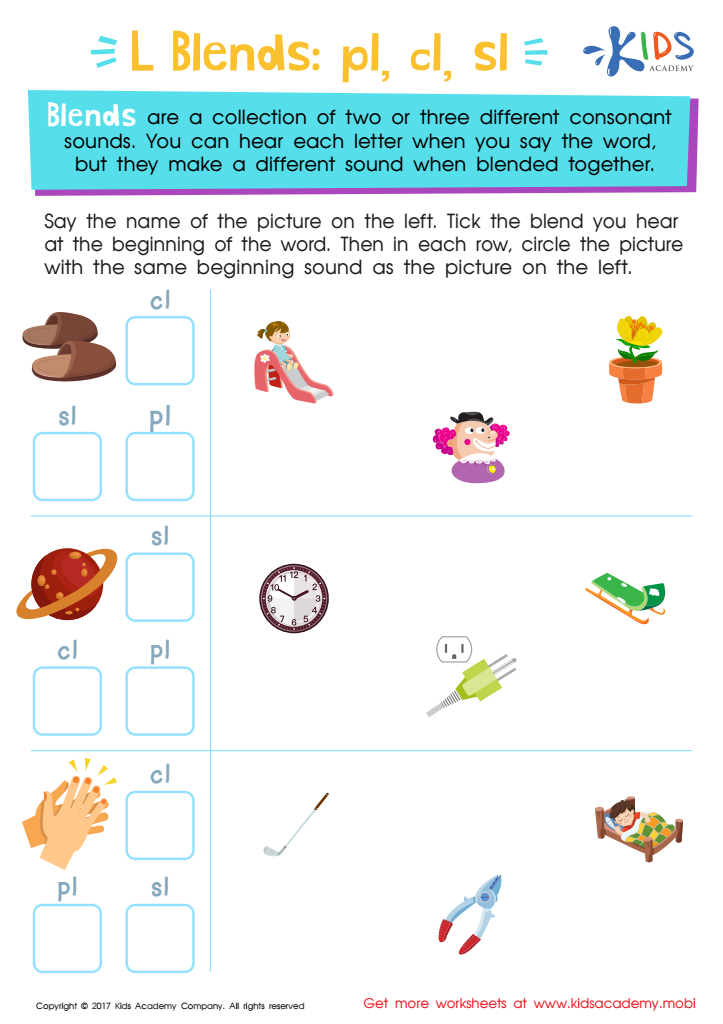
L Blends: "Pl", "Cl" and "Sl" Printable
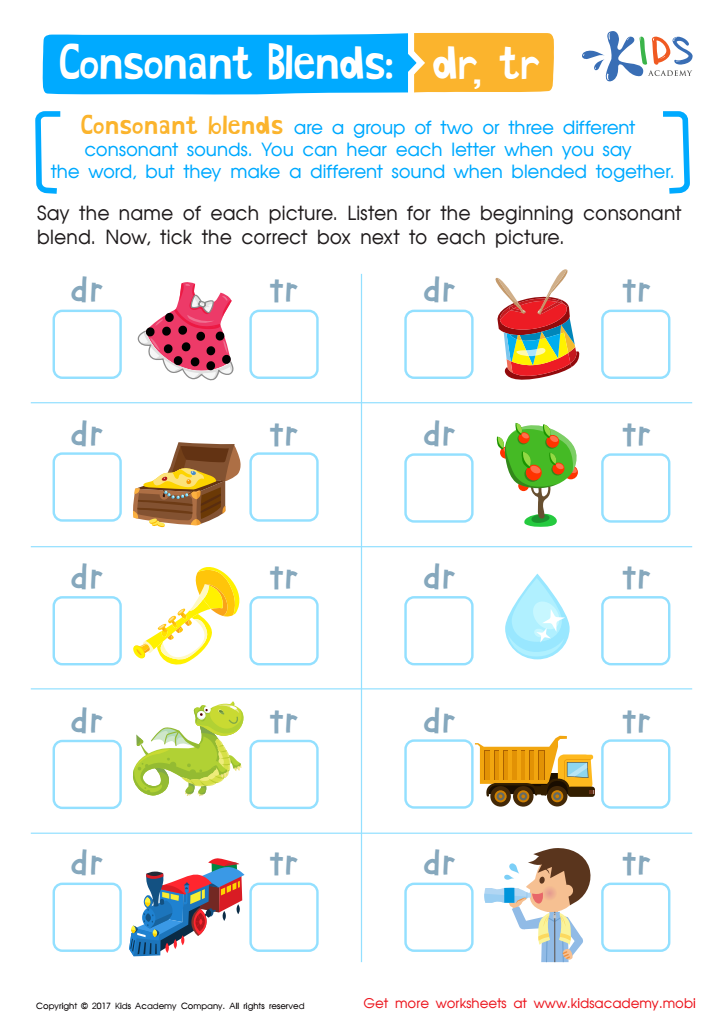
Consonant Blends: "Dr" and "Tr" Printable
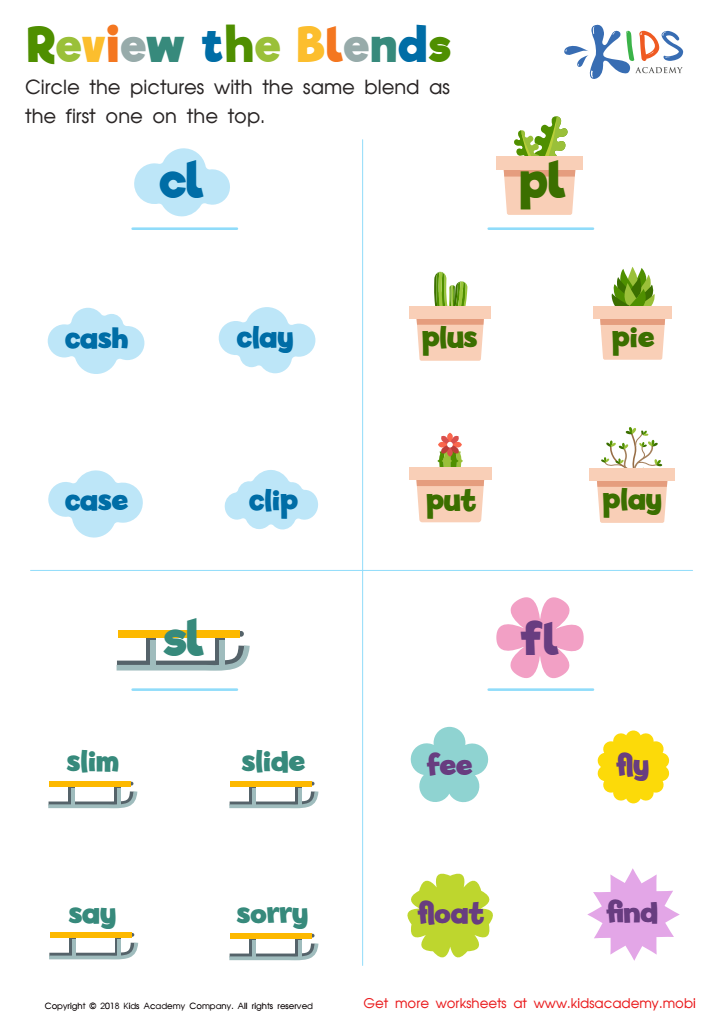
Review the Blends Worksheet


Parents and teachers should pay close attention to normal initial and final consonant blends for ages 4-6 because these are foundational elements in early literacy development. Consonant blends are combinations of two or more consonants where each sound is distinctly heard. Mastery of these blends aids children in reading, spelling, and writing.
Recognizing and producing blends can accelerate a child's ability to decode words fluently, improving their reading speed and comprehension. For example, common blends like "bl," "cl," or "st" at the beginning of words, and "nd," "mp," or "st" at the end help young readers accurately and confidently sound out words. This critical skill eliminates guesswork, reduces frustration, and fosters a love for reading.
In addition, understanding consonant blends assists with spelling. Knowing that "s" and "t" blend to form the "st" sound in "stop" supports correct spelling and word formation. Correct spelling increases general language competence, boosting both written and oral communication skills.
Early competence in these areas builds a strong linguistic foundation, propelling children towards academic success. Therefore, focusing on consonant blends helps ensure students are on the right track during a pivotal time in their literacy education. This early investment opens doors to lifelong learning and effective communication.








