Normal Reading Comprehension Worksheets for Ages 4-9 - Page 5
201 filtered results
-
From - To
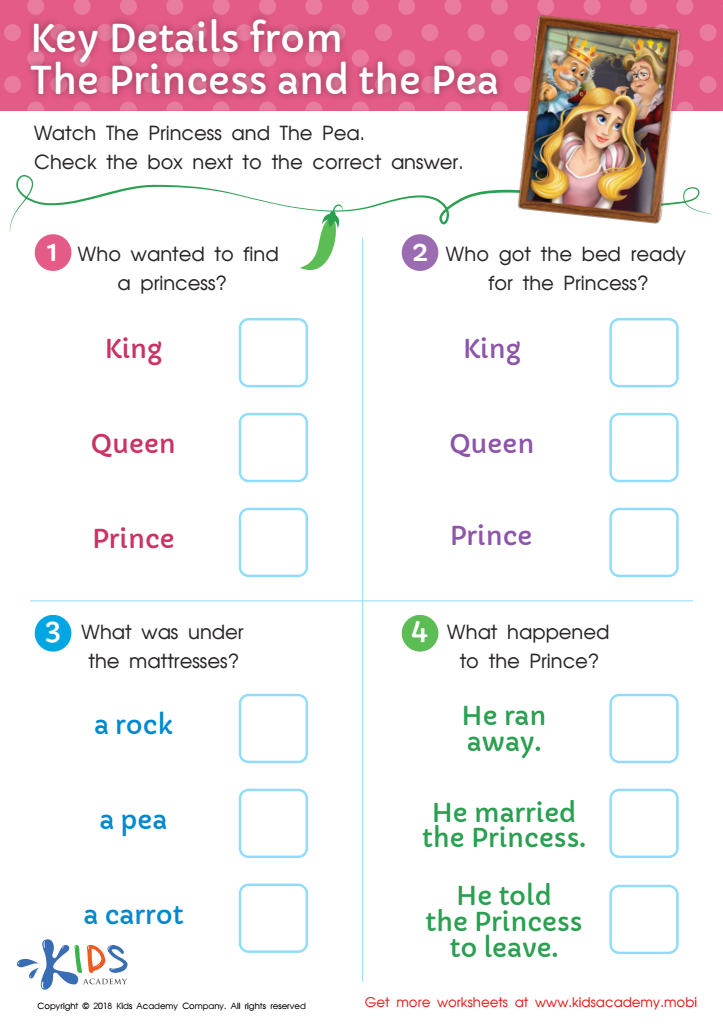
Key Details from the Princess and the Pea Worksheet
 Assign to My Students
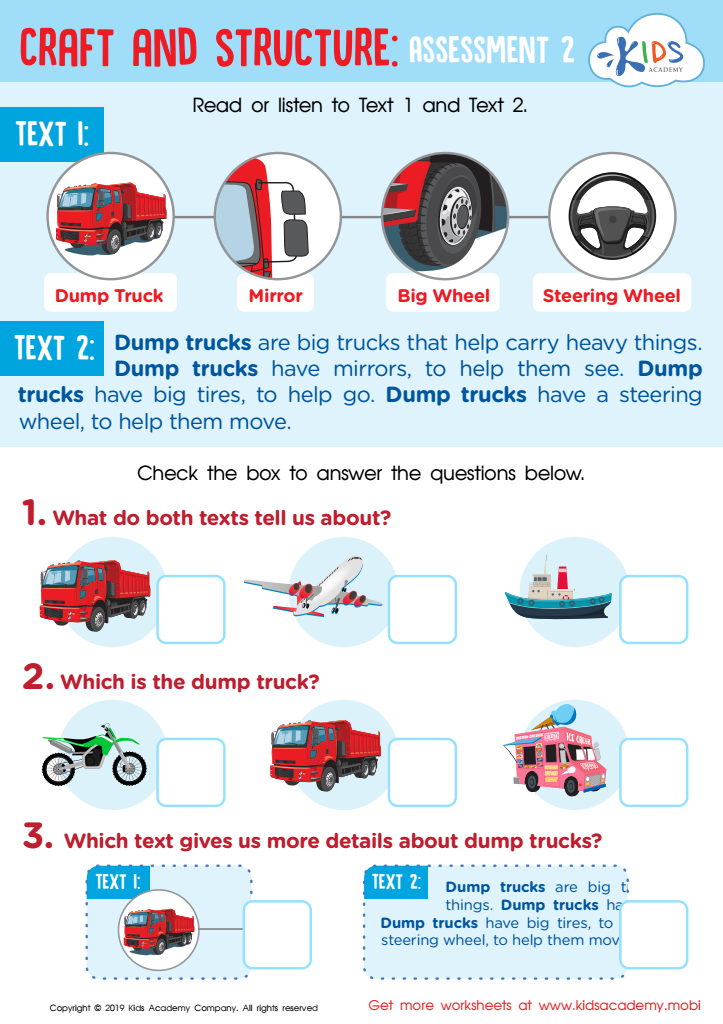
Craft and Structure: Assessment 2 Worksheet
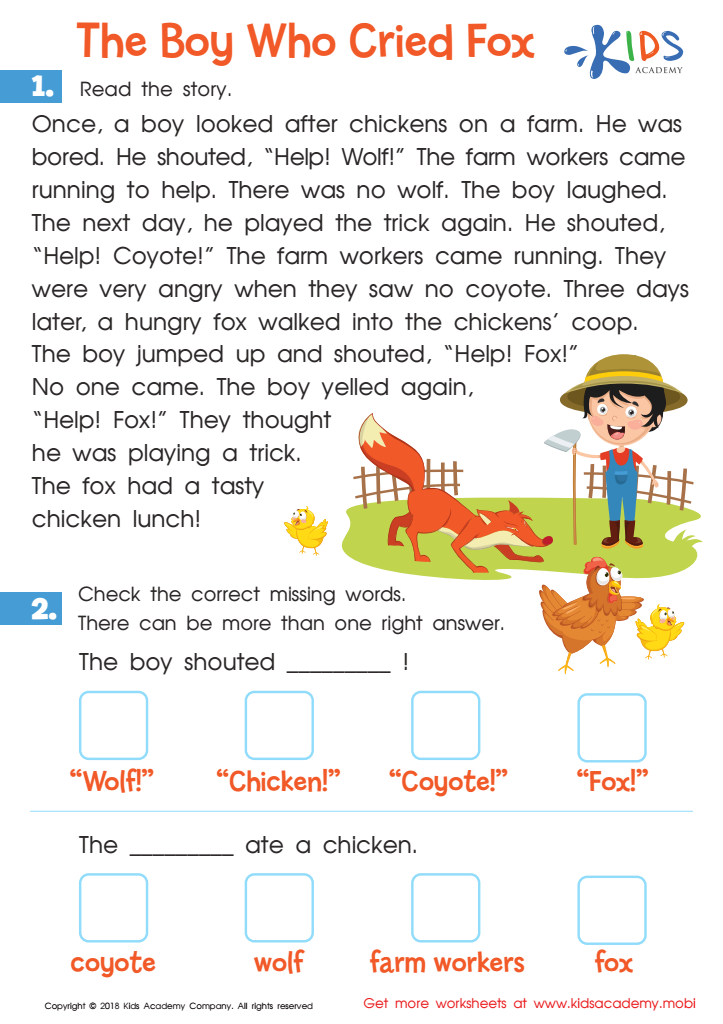
The Boy Who Cried Fox Worksheet
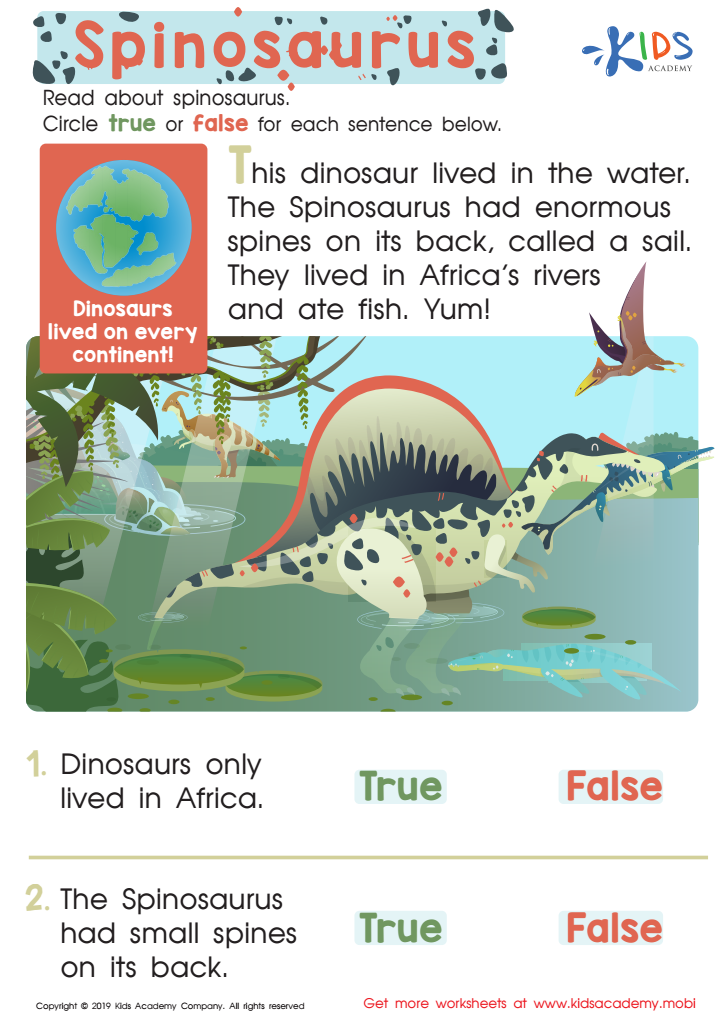
Spinosaurus Assessment Worksheet
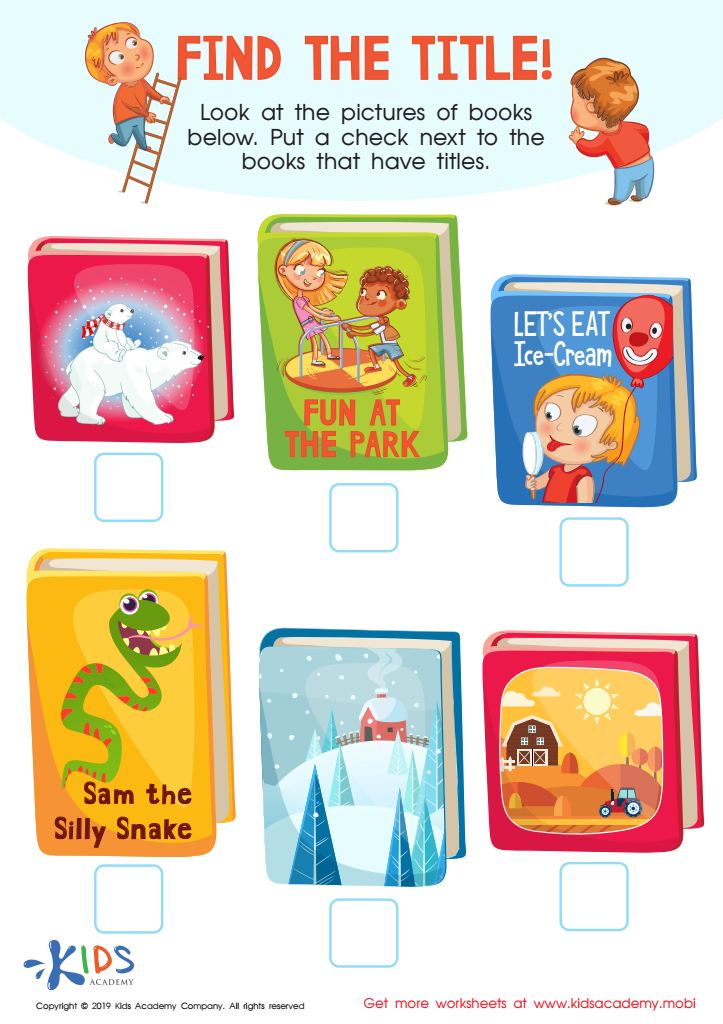
Find the Title Worksheet
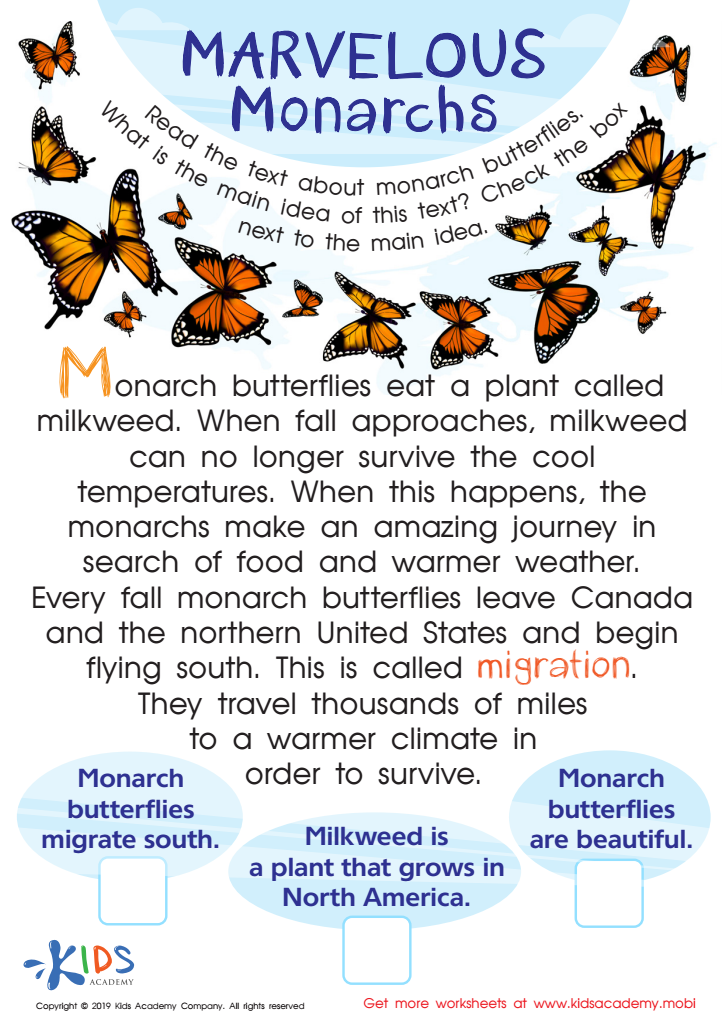
Marvelous Monarchs Worksheet
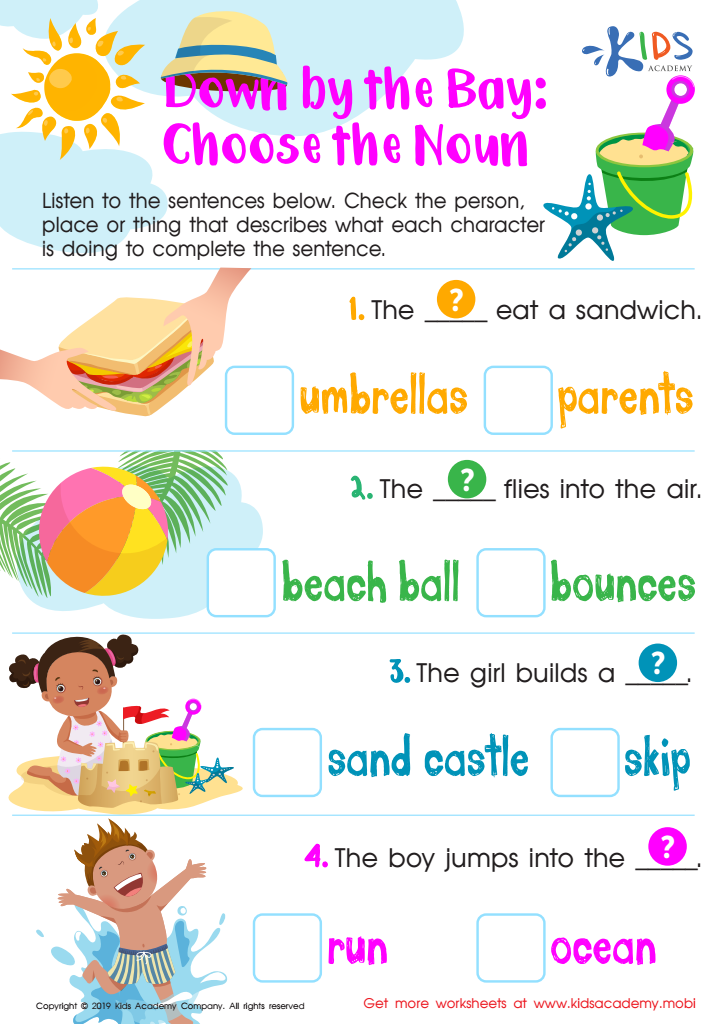
Down by the Bay: Choose the Noun Worksheet
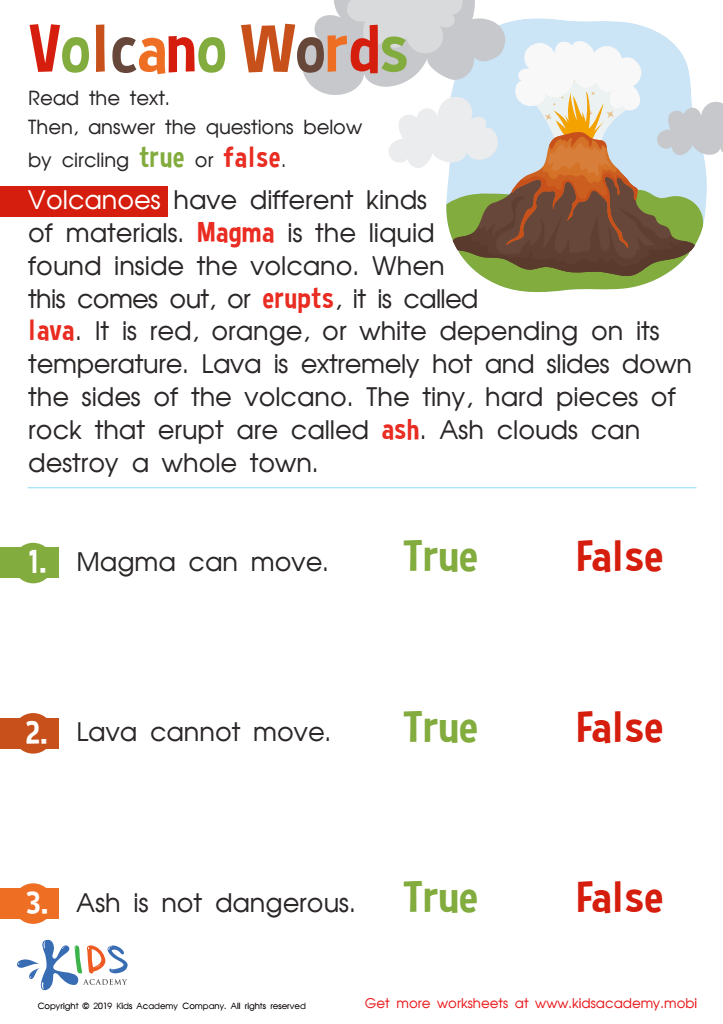
Volcano Words Worksheet
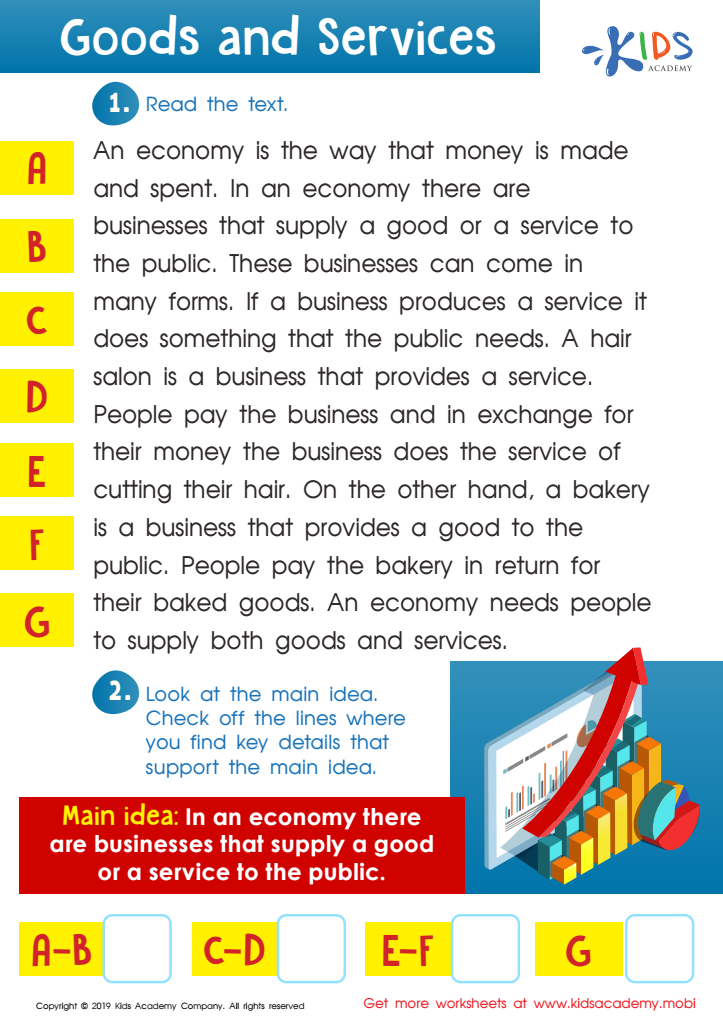
Goods and Services Worksheet
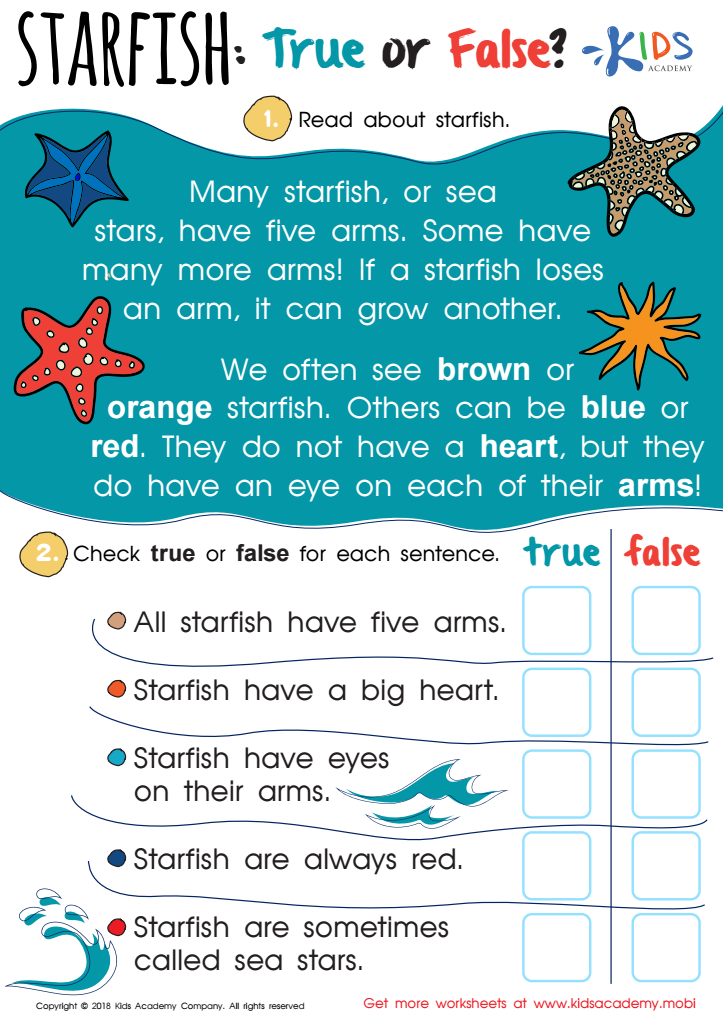
Starfish: True or False Worksheet
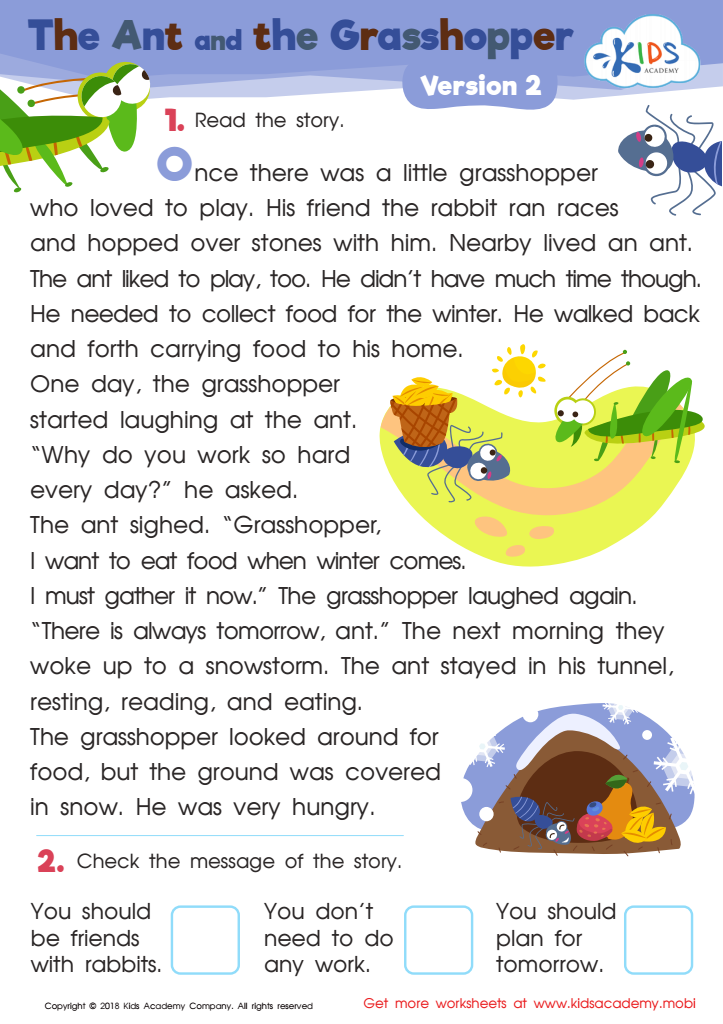
The Ant and The Grasshopper Version 2 Worksheet
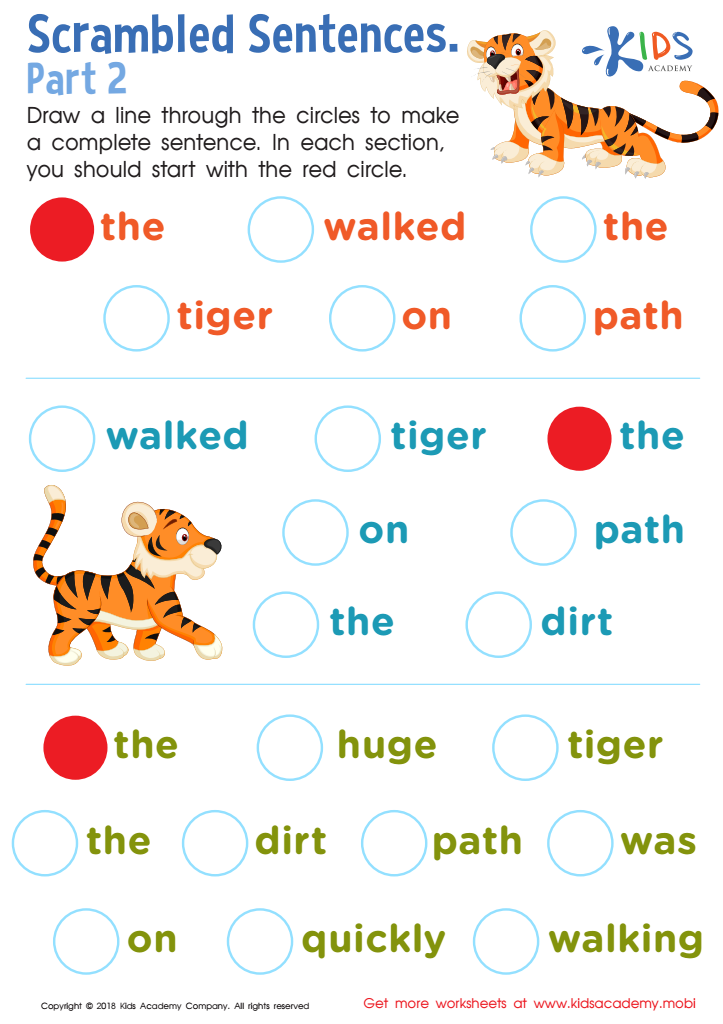
Scrambled Sentences Part 2 Worksheet
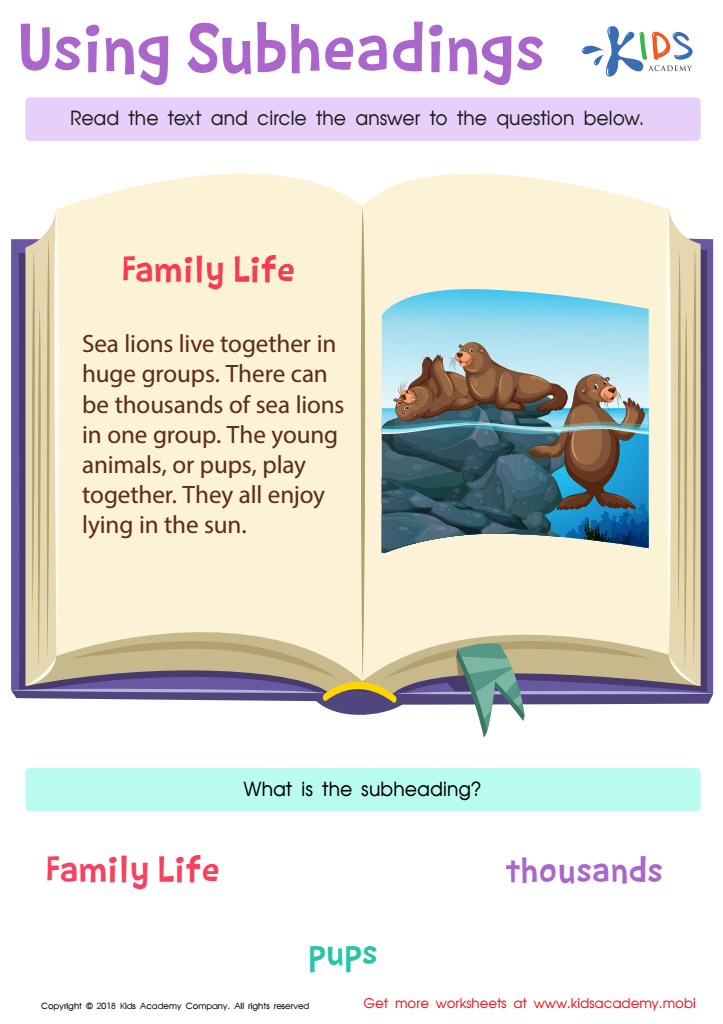
Using Subheadings Worksheet
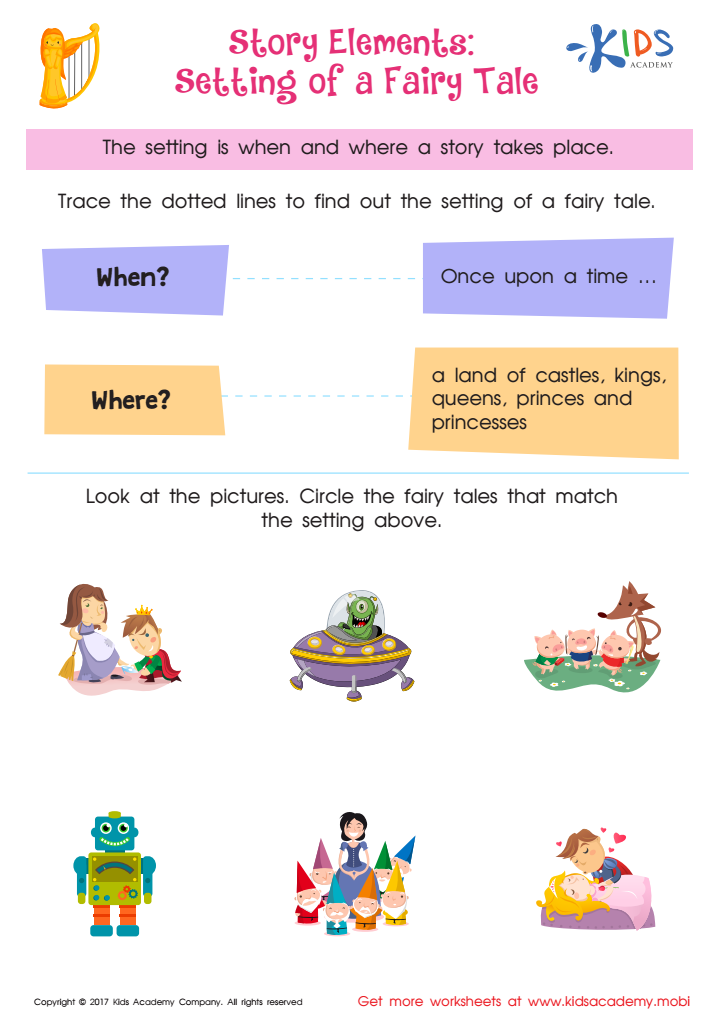
Story Elements: Setting of a Fairy Tale Printable
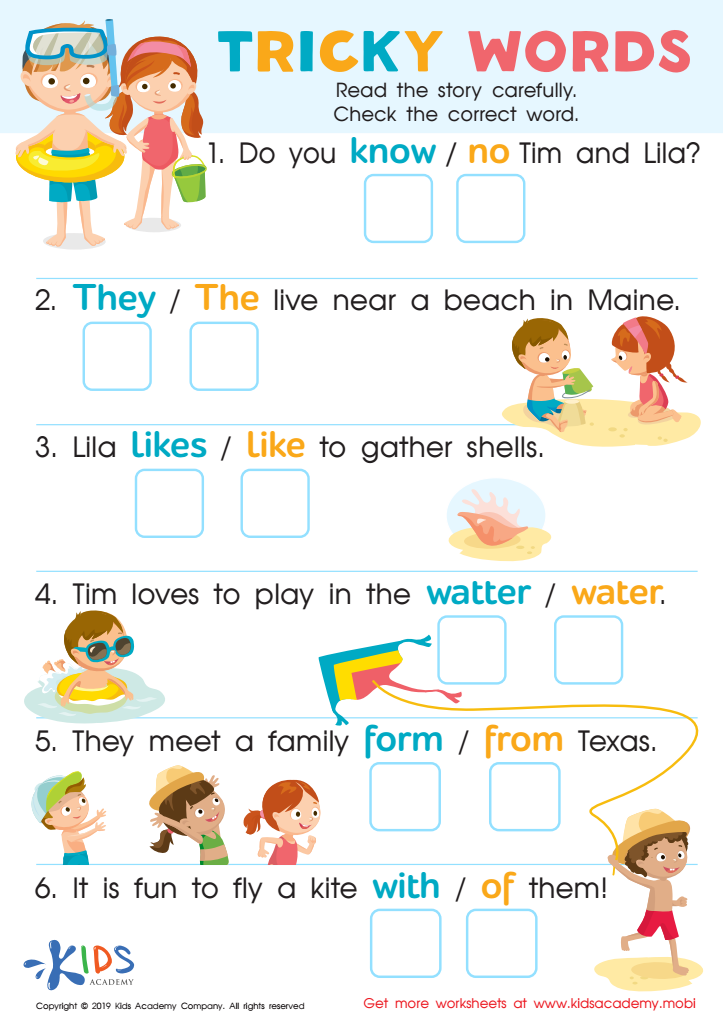
Tricky Words Worksheet
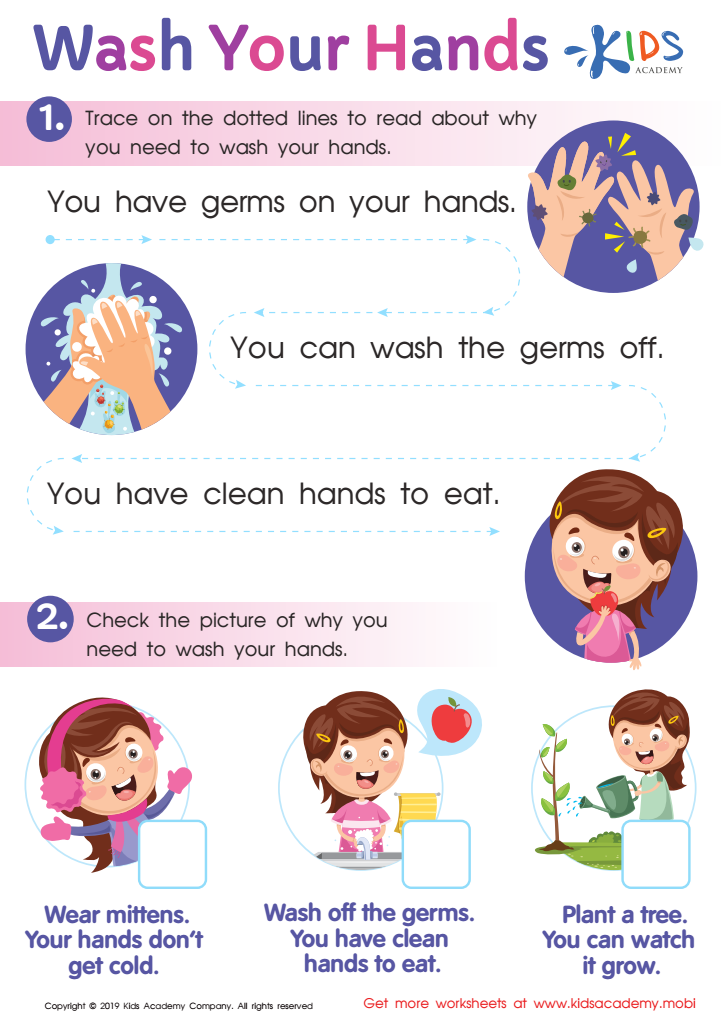
Wash Your Hands Worksheet
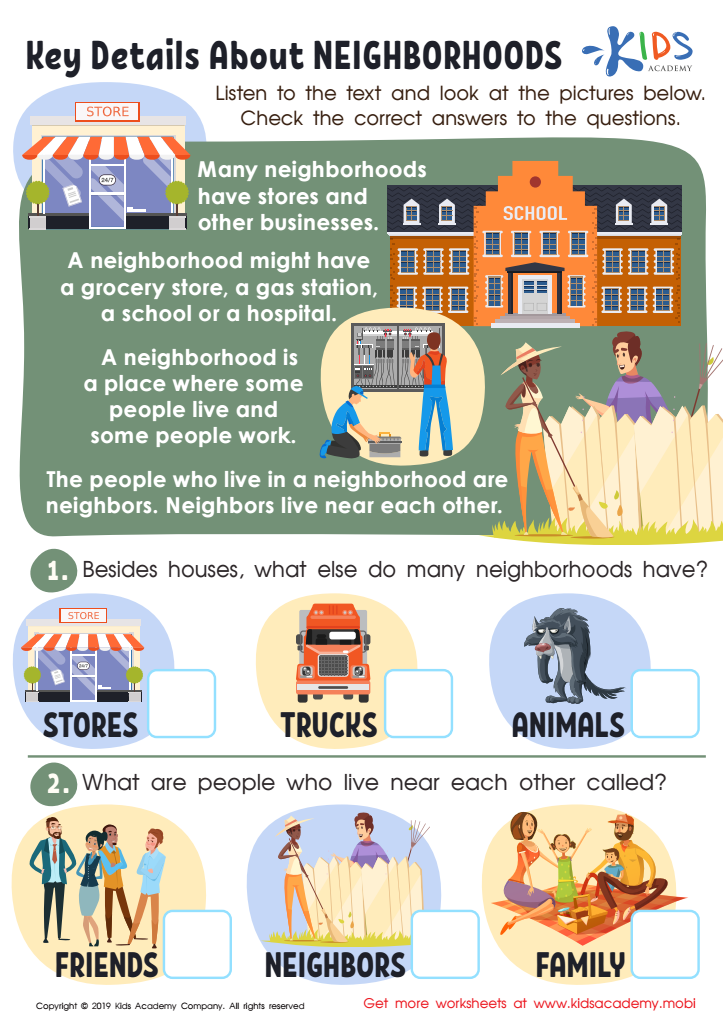
Key Details Neighborhoods Worksheet
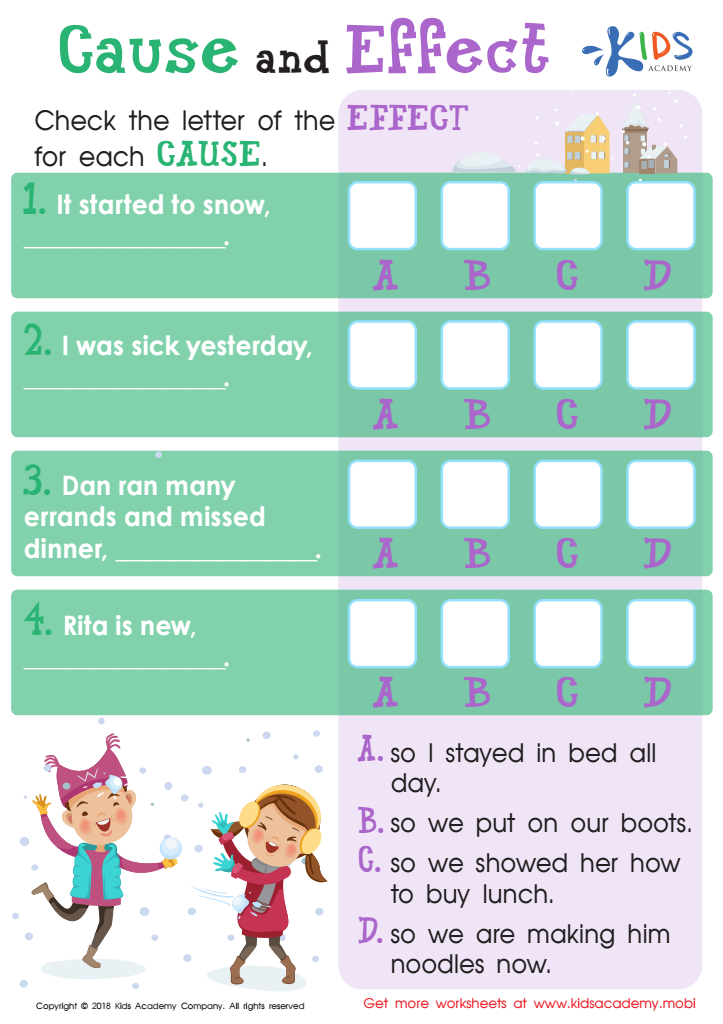
Cause and Effect Worksheet
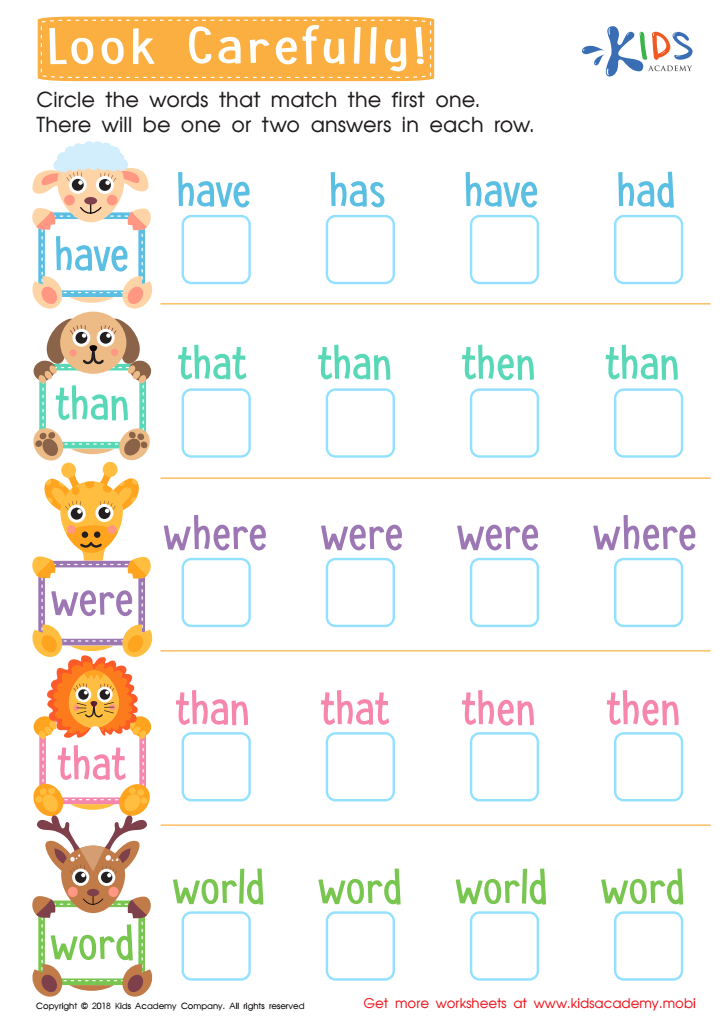
Look Carefully Worksheet
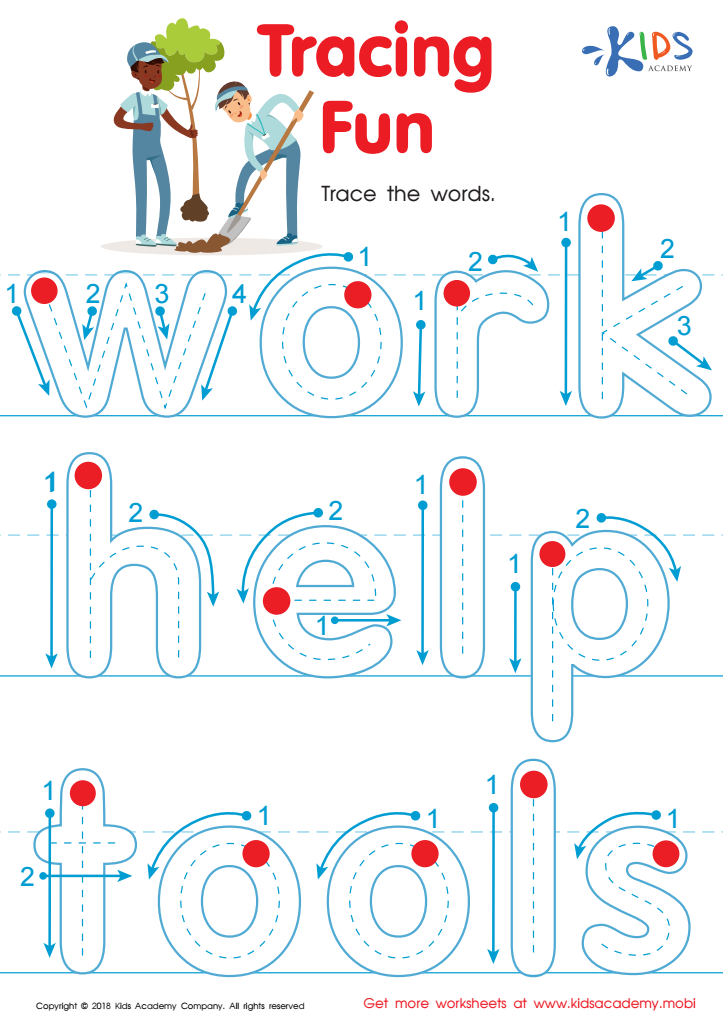
Tracing Fun Worksheet
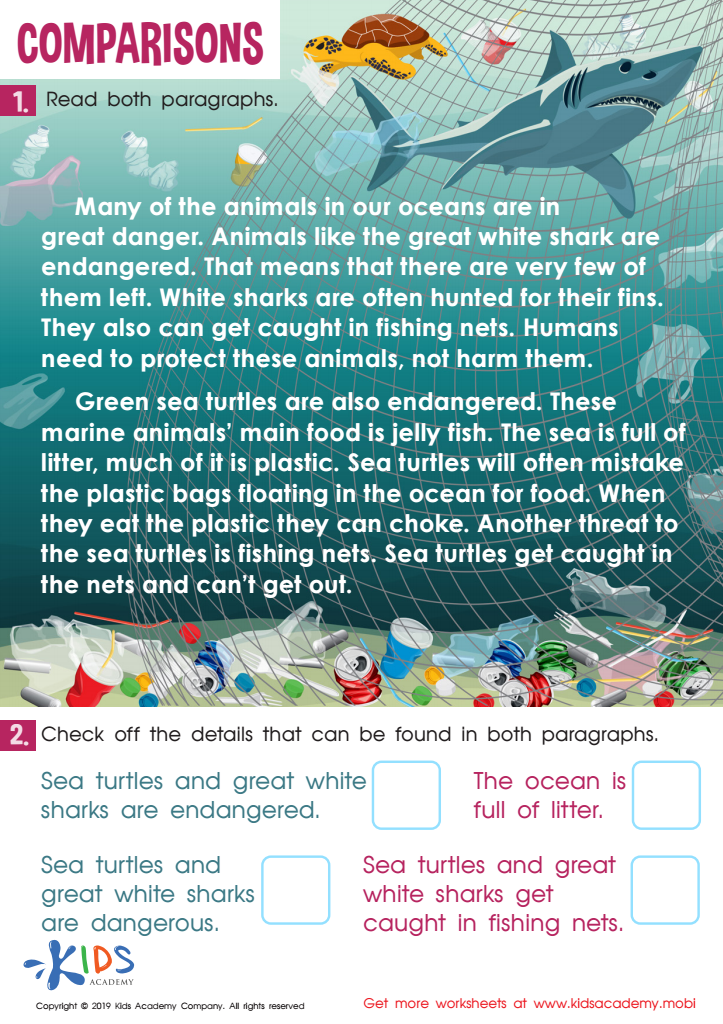
Comparisons Worksheet
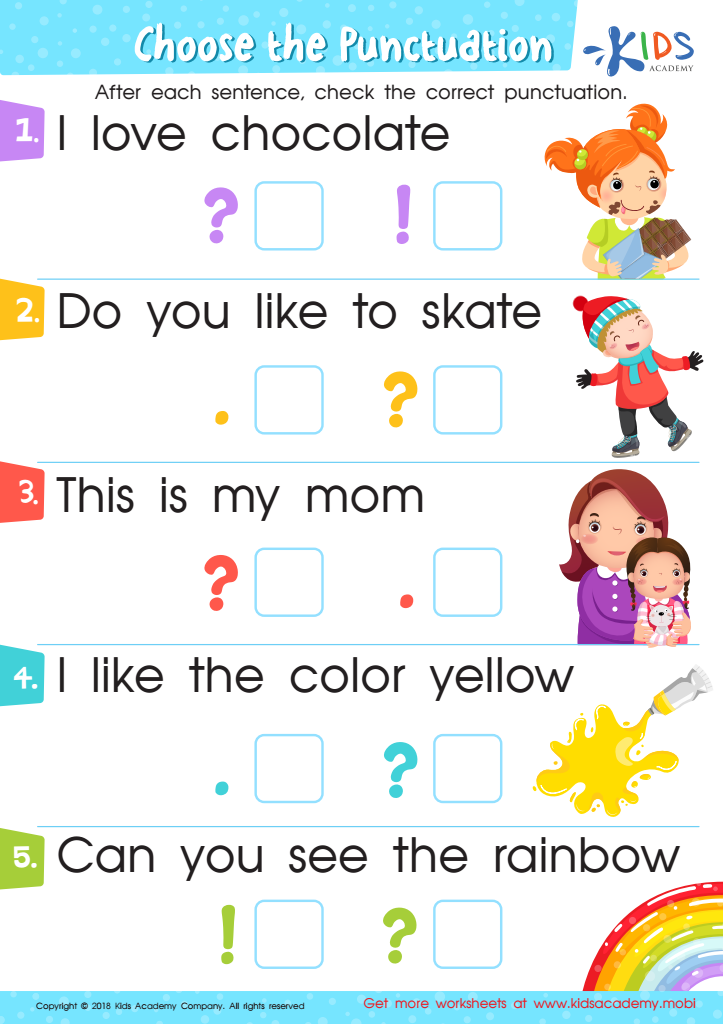
Choose the Punctuation: Assessment Worksheet
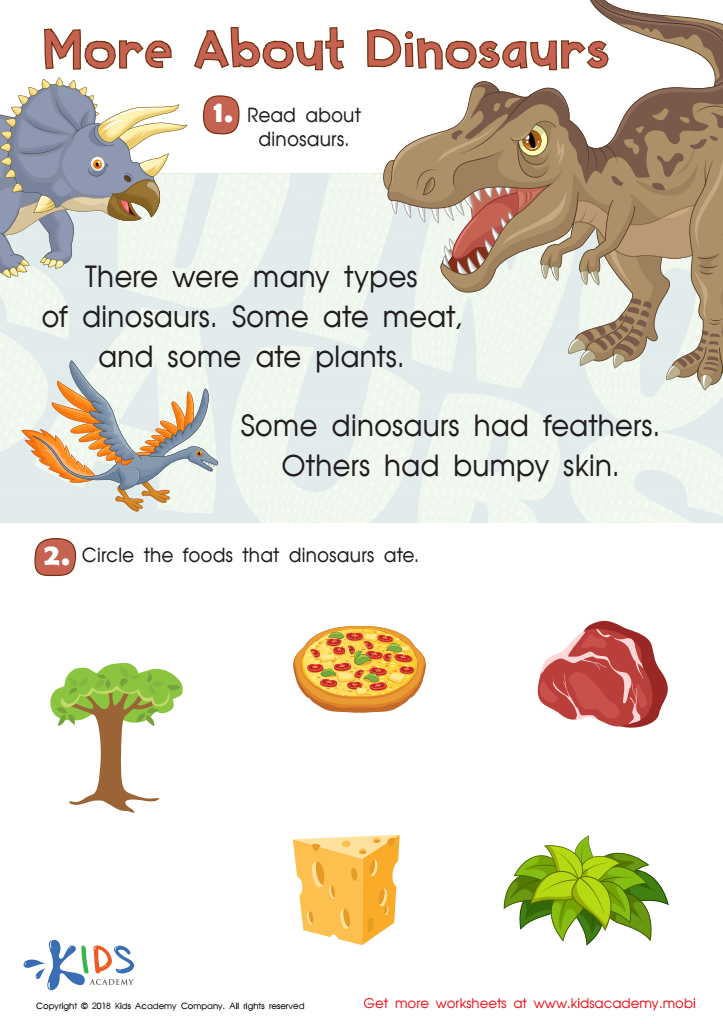
More About Dinosaurs Worksheet
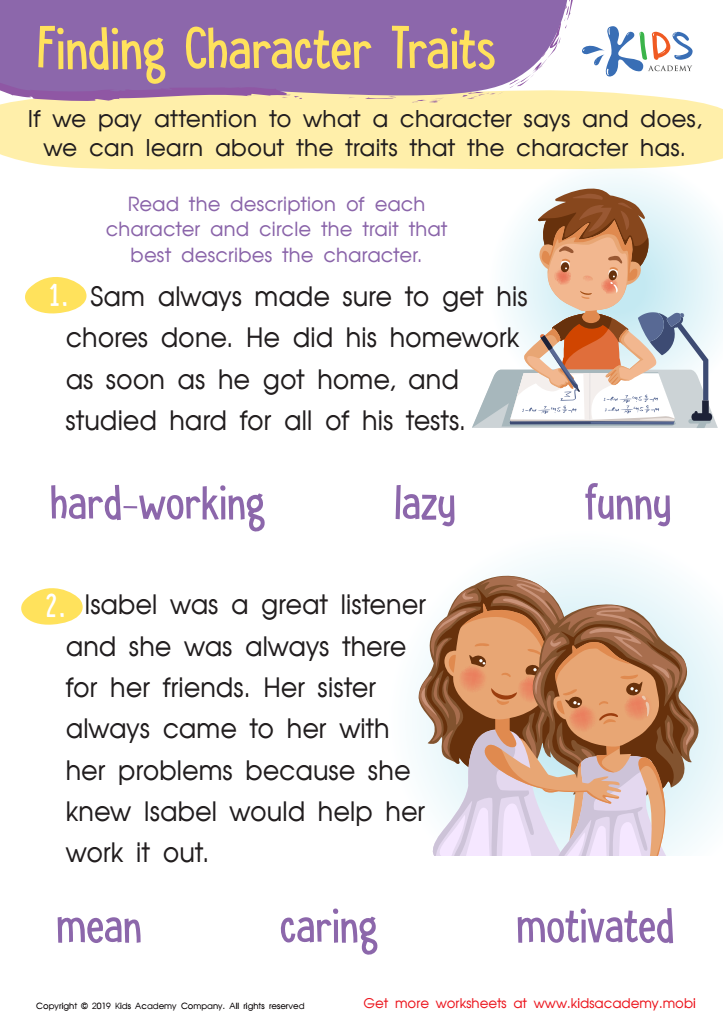
Finding Character Traits Worksheet







.jpg)
Parents and teachers should prioritize normal reading comprehension for children aged 4-9 because it forms the foundation upon which future academic success is built. During these early years, children are not just learning to read but also reading to learn. Proficient reading comprehension allows children to understand instructions, follow stories, solve problems, and acquire knowledge in subjects such as science, social studies, and mathematics.
When reading comprehension skills are nurtured, children develop critical thinking abilities and enhance their vocabulary, which are essential for intellectual development. Strong reading abilities foster a love for learning and curiosity, enabling children to explore new topics independently and gain the confidence needed to tackle more complex tasks.
Poor reading comprehension, on the other hand, can lead to frustration, reduced interest in learning, and a lag in academic achievement compared to peers. This can have long-term effects on a child's educational trajectory and success.
Moreover, early intervention can address and rectify potential reading difficulties, such as dyslexia, thereby preventing future challenges. Establishing a strong reading foundation through supportive and engaging educational experiences ensures children have the essential skills to thrive academically and in life. Thus, parents and teachers must invest time and resources to cultivate effective reading comprehension during this crucial developmental period.








