Normal Animals Worksheets for Ages 4-9 - Page 3
49 filtered results
-
From - To
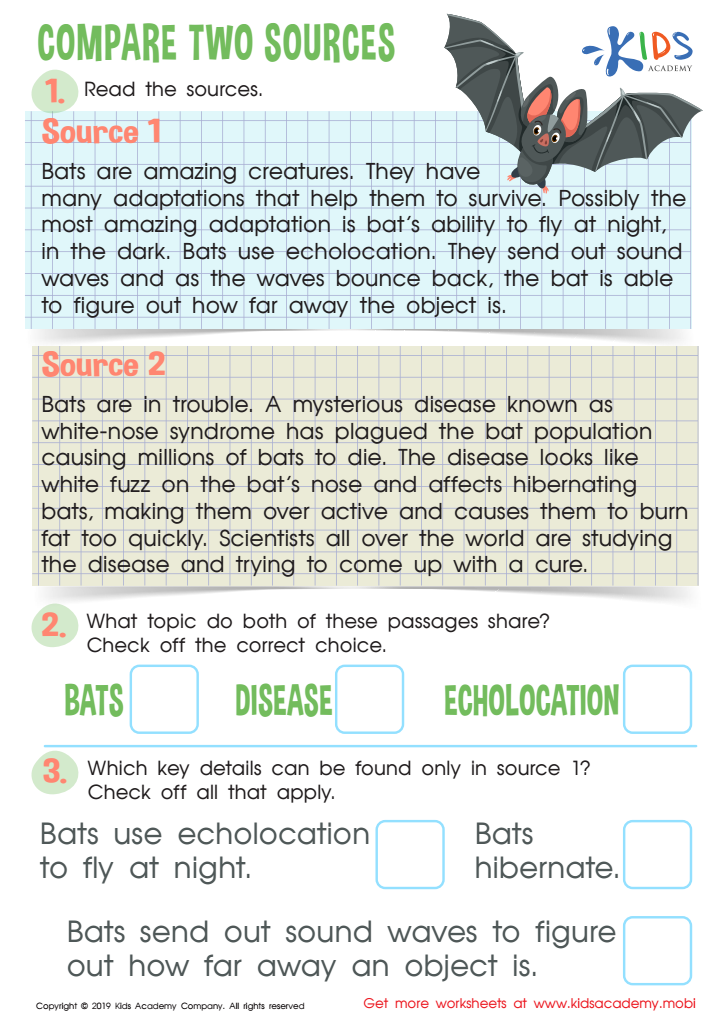
Compare Two Sources Worksheet
 Assign to My Students








Parents and teachers play a pivotal role in fostering a child's understanding and appreciation of the natural world, and "Normal Animals" encompass everything from household pets to backyard wildlife, all of which are vital to a child's development. For children ages 4-9, these everyday creatures offer a treasure trove of learning opportunities. Observing animals helps young learners develop crucial skills such as empathy, responsibility, and attentive observation. Kids can relate to familiar animals more easily than exotic species, making these encounters more meaningful and memorable.
Engaging with "normal" animals supports cognitive development by sparking curiosity and encouraging questions about life cycles, habitats, and behaviors. Teachers and parents can utilize these encounters to introduce basic scientific principles, instilling a passion for biology and nature early on. Pets or classroom animals can teach responsibility; children learn to care and provide for another living being, promoting an awareness of interdependence in ecosystems.
Moreover, interaction with animals has demonstrated benefits for mental health, such as reducing anxiety and improving social skills. When adults encourage children to interact with and learn about the animals they encounter regularly, they cultivate respect for the environment and create a foundation for lifelong learning and curiosity about the world around them.








