Filters

6 filtered results

Clear all filters
Favorites
With answer key
Interactive

6 filtered results

Difficulty Level

Grade


Discover our engaging "Normal Good Citizenship Worksheets" designed for children ages 5-8! These worksheets provide young learners with valuable lessons on what it means to be a good citizen, emphasizing respect, responsibility, and community involvement. Featuring colorful illustrations and age-appropriate activities, our resources encourage kids to explore key concepts of good citizenship through interactive learning. From understanding how to help others to practicing kindness in their daily lives, these worksheets lay the foundation for responsible and caring individuals. Perfect for classroom use or at-home learning, inspire your child's civic awareness and social skills today! Explore our selection and promote active citizenship!

Check out this FREE Trial Lesson on Good Citizenship for age 5-8!

Citizenship

Favorites
With answer key
Interactive
  • 5-8
  • With answer key
  • Good Citizenship
  • Normal
How to Be a Good Citizen Worksheet

Being a Good Citizen Printable

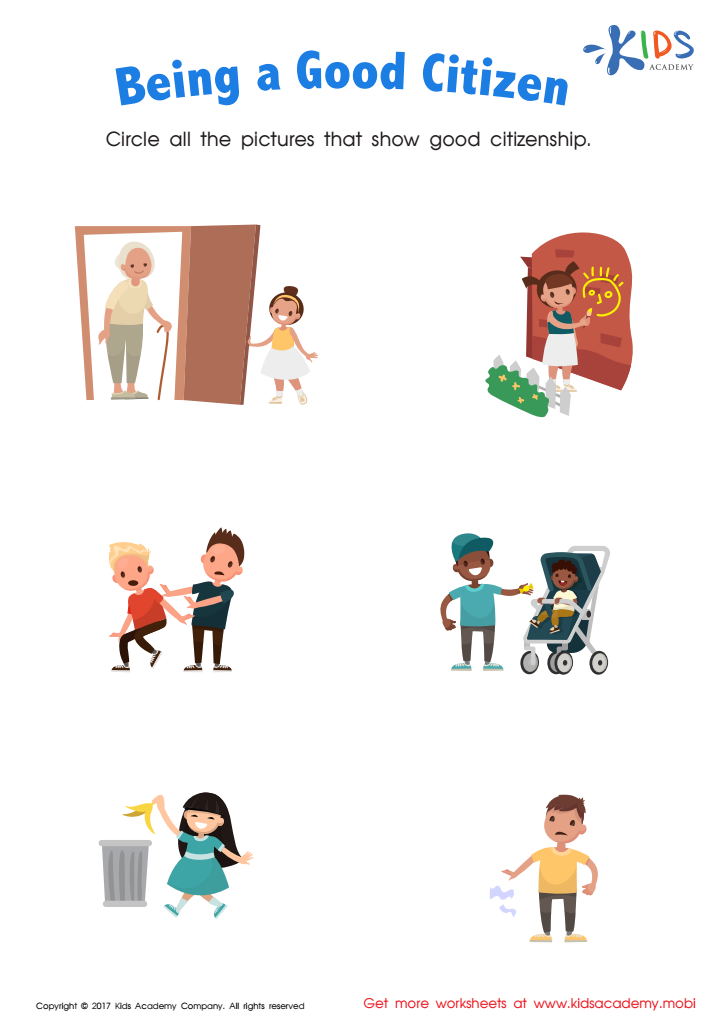
Help your child learn the importance of being a good citizen with this fun worksheet! It reinforces positive behaviors in the community and teaches essential skills like character. Try it today!
Being a Good Citizen Printable
Worksheet
Manners at School Worksheet

Manners at School Worksheet

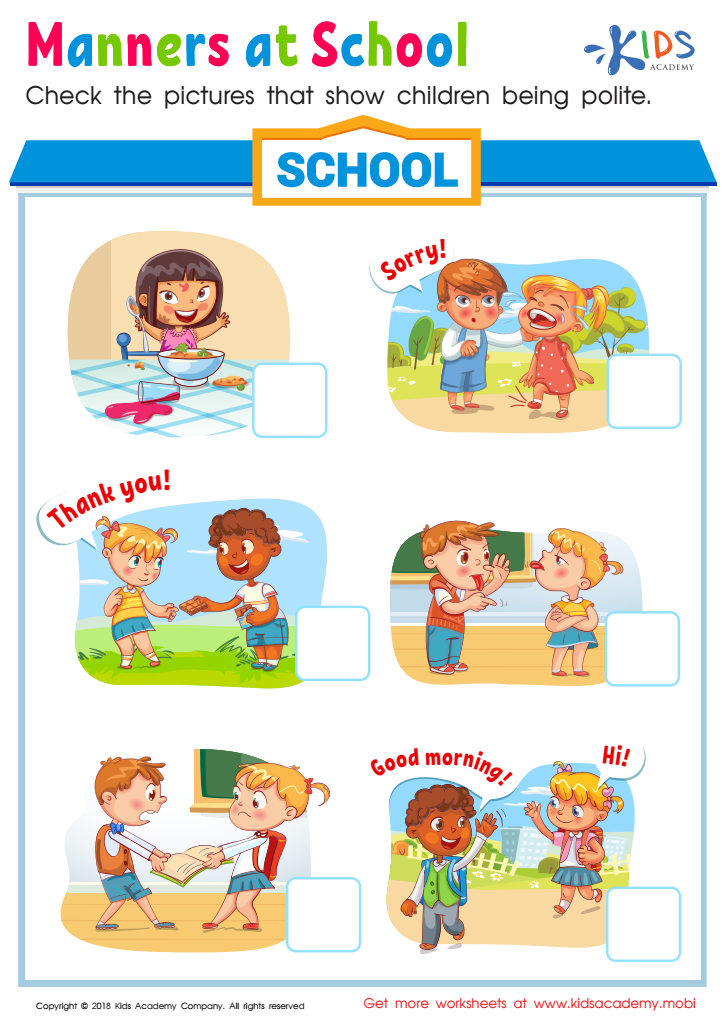
Go through the worksheet with your child and ask which children are being rude or polite. Check the boxes for the polite children. Explain how to be well-behaved in school by following the examples of polite children. Help your child better their behaviour in school and the community.
Manners at School Worksheet
Worksheet
Rights and Responsibilities Worksheet

Rights and Responsibilities Worksheet

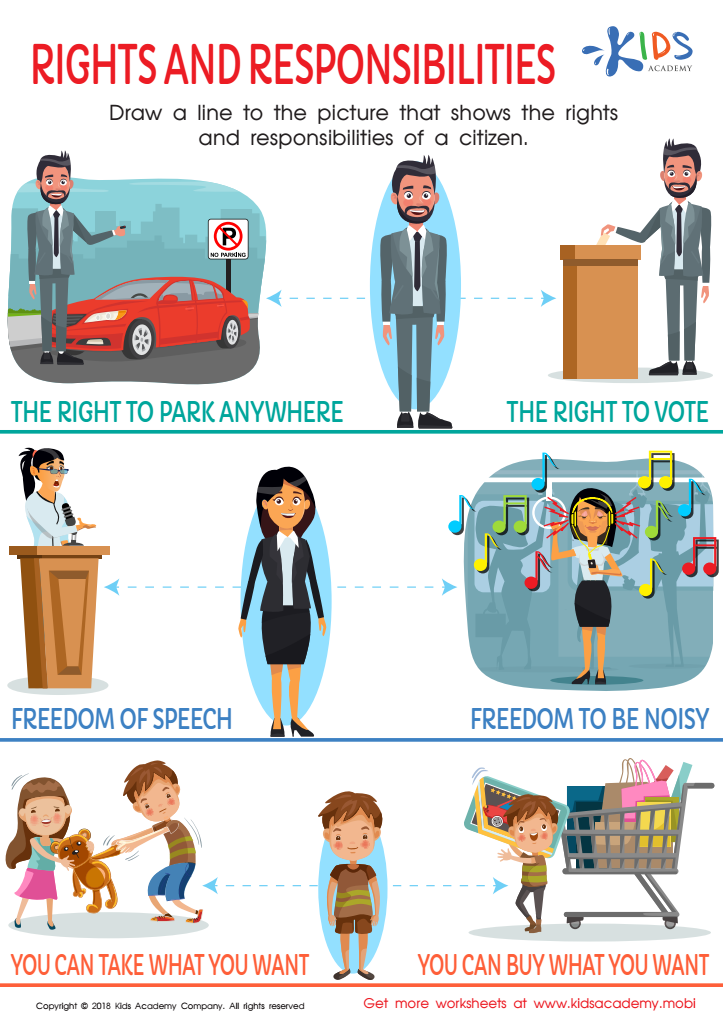
Encourage your kids to discuss their rights as citizens. Help them recognize fundamental human rights they're entitled to. Review the worksheet: ask them to read aloud and draw a line to the right picture. Invite them back to the discussion to explain their choices. Each step will help them understand and exercise their rights.
Rights and Responsibilities Worksheet
Worksheet
Manners of a Good Citizen Worksheet

Manners of a Good Citizen Worksheet

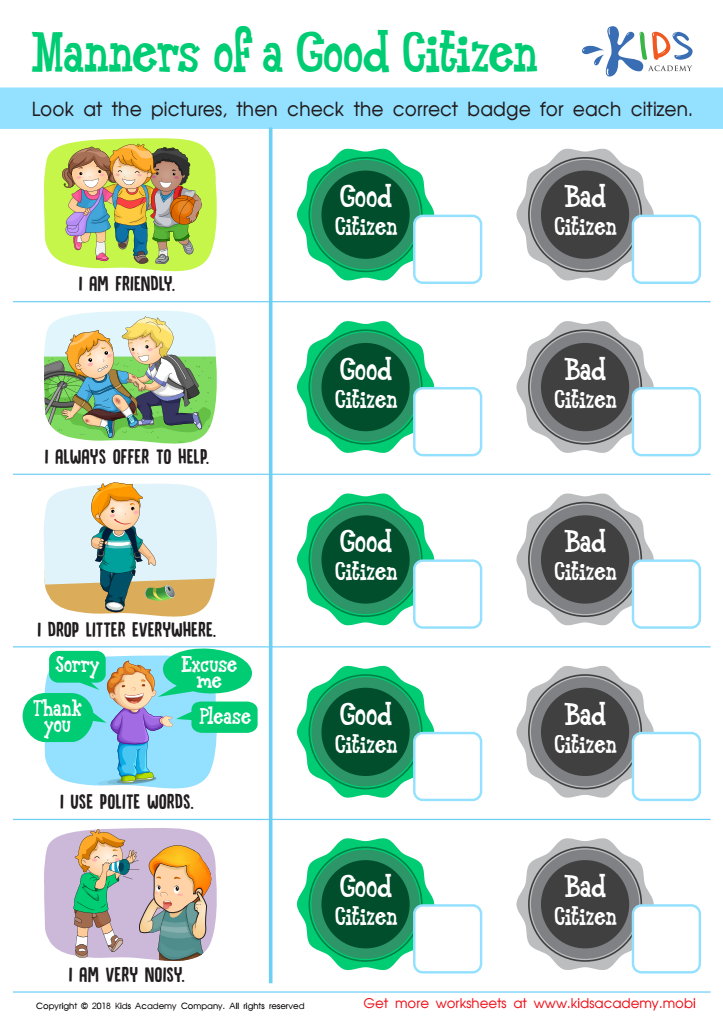
Help your child understand the difference between a good and bad citizen. Look at the worksheet pictures and ask your child what the children are doing. Are they being good or bad citizens? Check the correct badge for each one. After this, your child should have a better idea of how to act as a good citizen.
Manners of a Good Citizen Worksheet
Worksheet
Take Care of your Community Worksheet

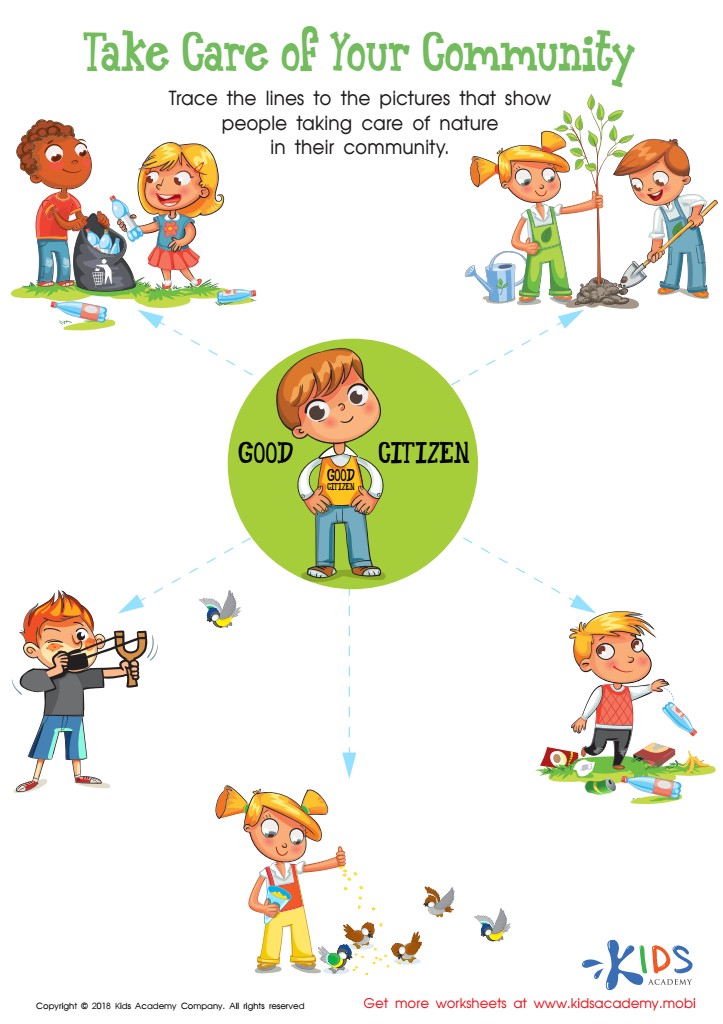
Take Care of your Community Worksheet

Talk to your child about taking better care of the community. Look at the worksheet together - it has pictures of people taking care of their community and the environment. Show them how to trace the lines to the pictures of good citizens.
Take Care of your Community Worksheet
Worksheet
What Makes a Good Citizen? Worksheet


What Makes a Good Citizen? Worksheet
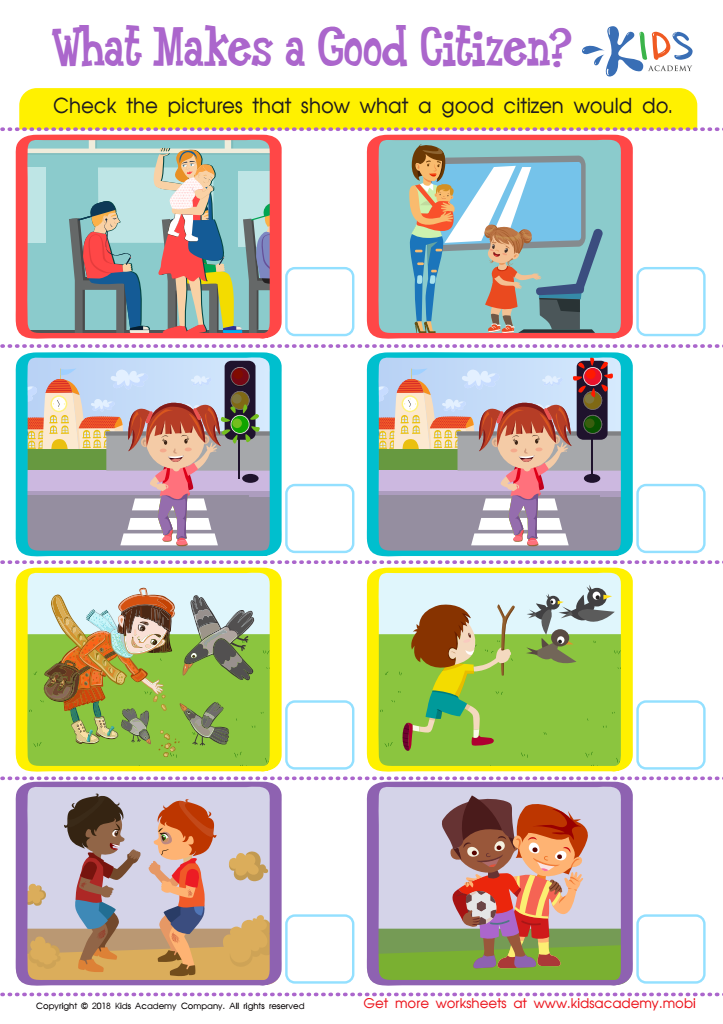
Ask your children to list some habits of a good citizen. Go through the worksheet and ask them if any of the pictures show good habits. Check the boxes of the actions that a good citizen would do to help your students understand what makes a good and bad citizen.
What Makes a Good Citizen? Worksheet
Worksheet


Normal Good Citizenship for children aged 5-8 is essential because it lays the foundation for their social and moral development. At this age, children are beginning to understand their roles within their families, schools, and communities. When parents and teachers actively promote good citizenship, they teach children values such as kindness, empathy, respect, and responsibility. These values help children form healthy relationships with their peers and adults.

Incorporating good citizenship practices, like sharing, taking turns, and showing appreciation, enables children to feel valued and understand the importance of contributing to their community. Engaging in activities like community service or classroom responsibilities fosters a sense of belonging and encourages teamwork.

Furthermore, early exposure to good citizenship prepares children for a more participatory role in society as they grow older. By encouraging positive behaviors and attitudes toward community involvement, parents and teachers help kids grow into conscious, caring adults who understand their impact on the world around them.

In sum, nurturing the principles of Normal Good Citizenship at a young age equips children with vital skills for future interactions, enhances their emotional development, and builds the foundation for a compassionate, connected community.