Normal Governance and Civics Worksheets for Ages 5-8 - Page 2
41 filtered results
-
From - To
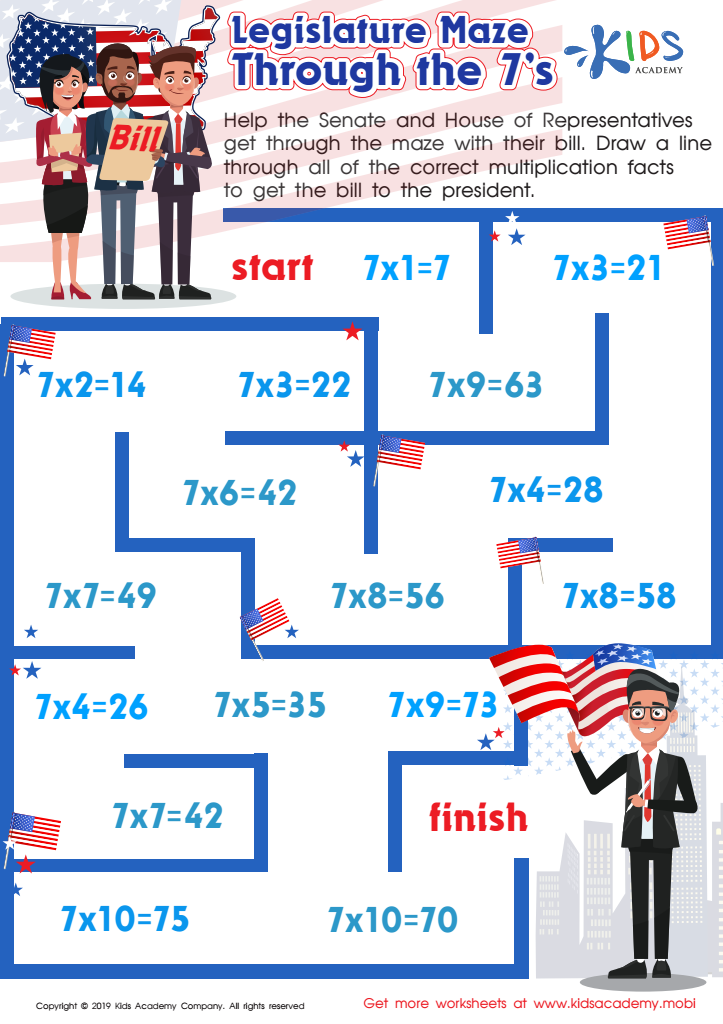
Legislature Maze Through the 7’s Worksheet
 Assign to My Students
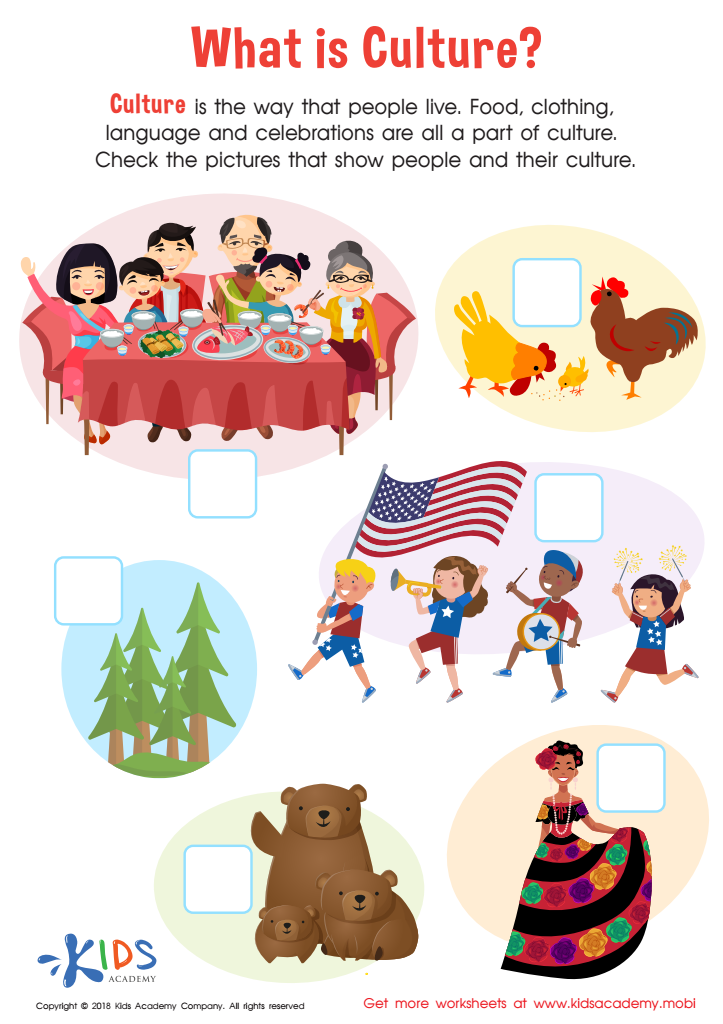
What Is Culture? Worksheet
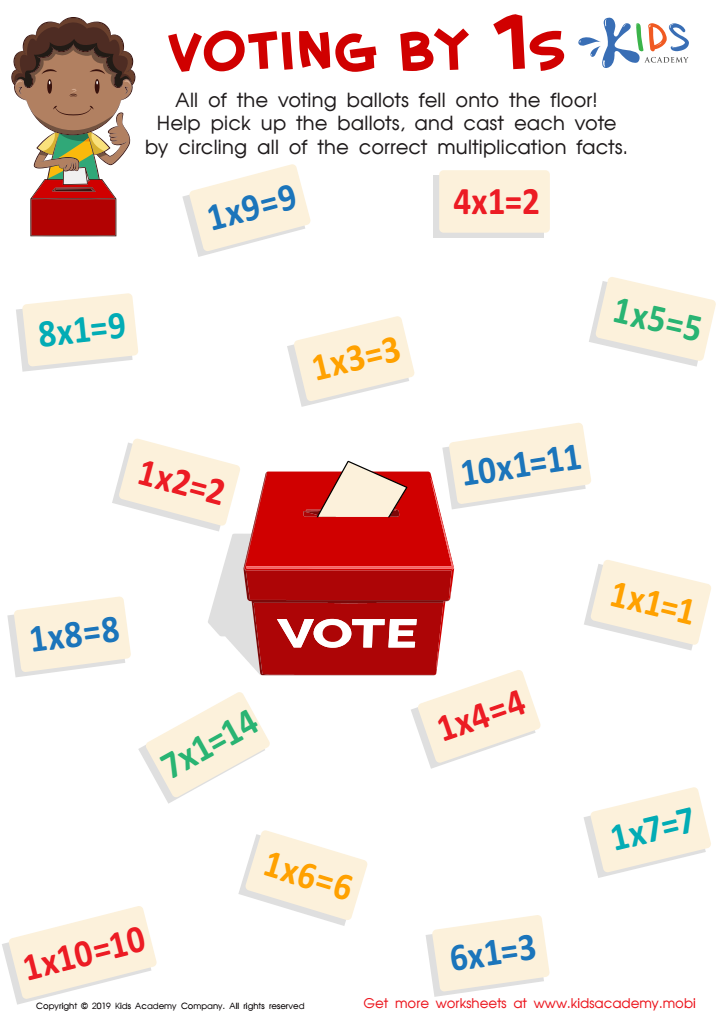
Voting by 1s Worksheet
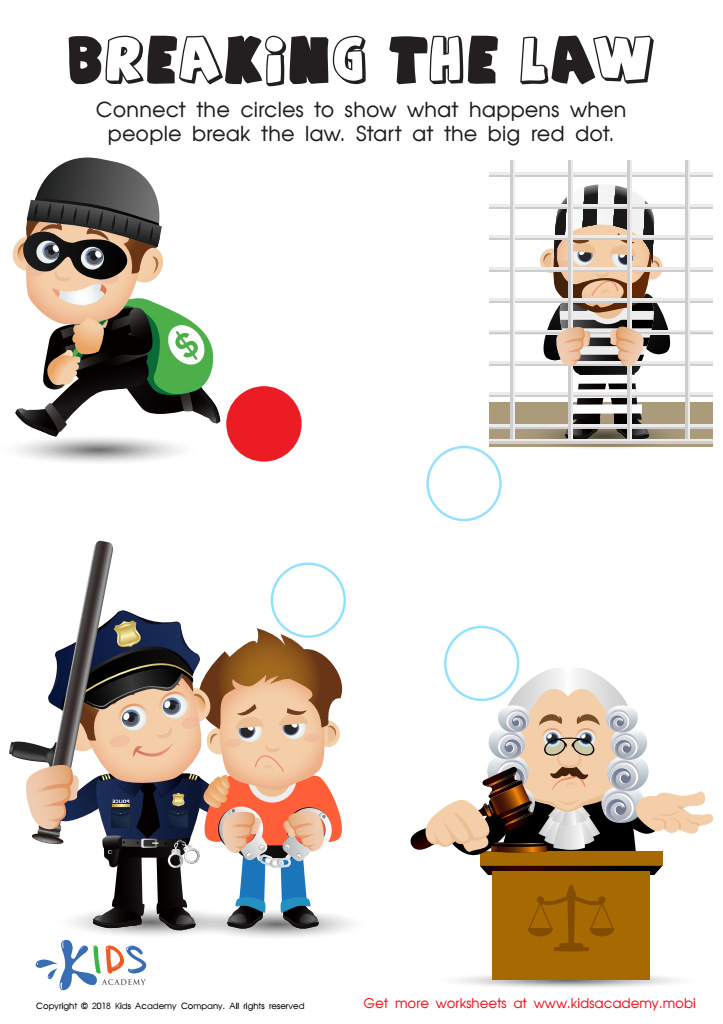
Breaking the Law Worksheet
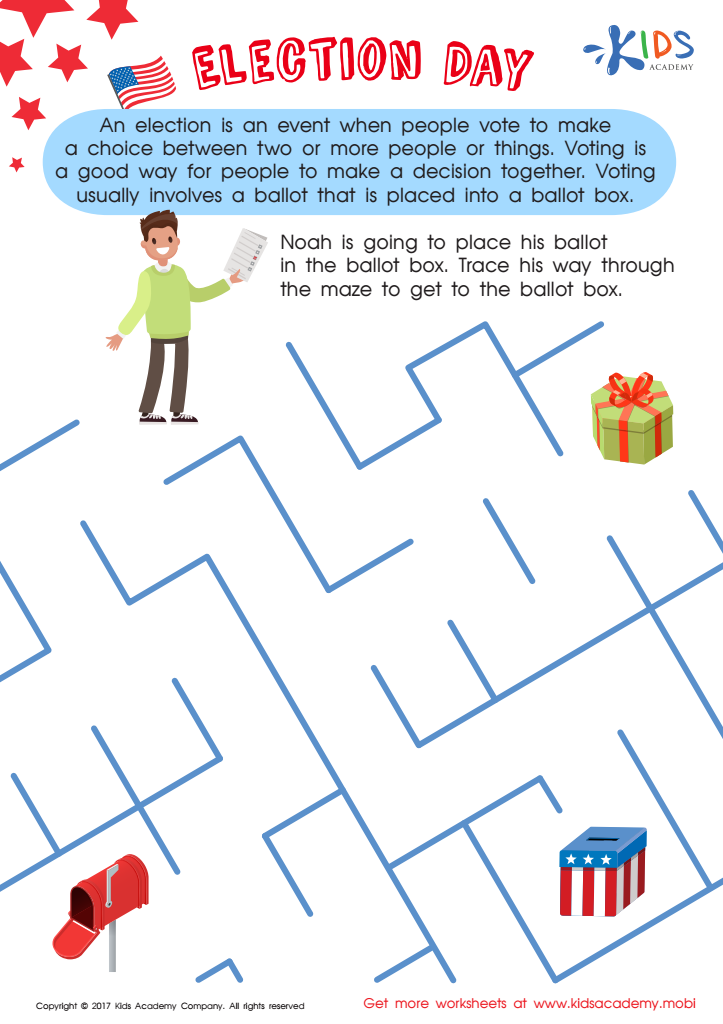
Election Day Worksheet
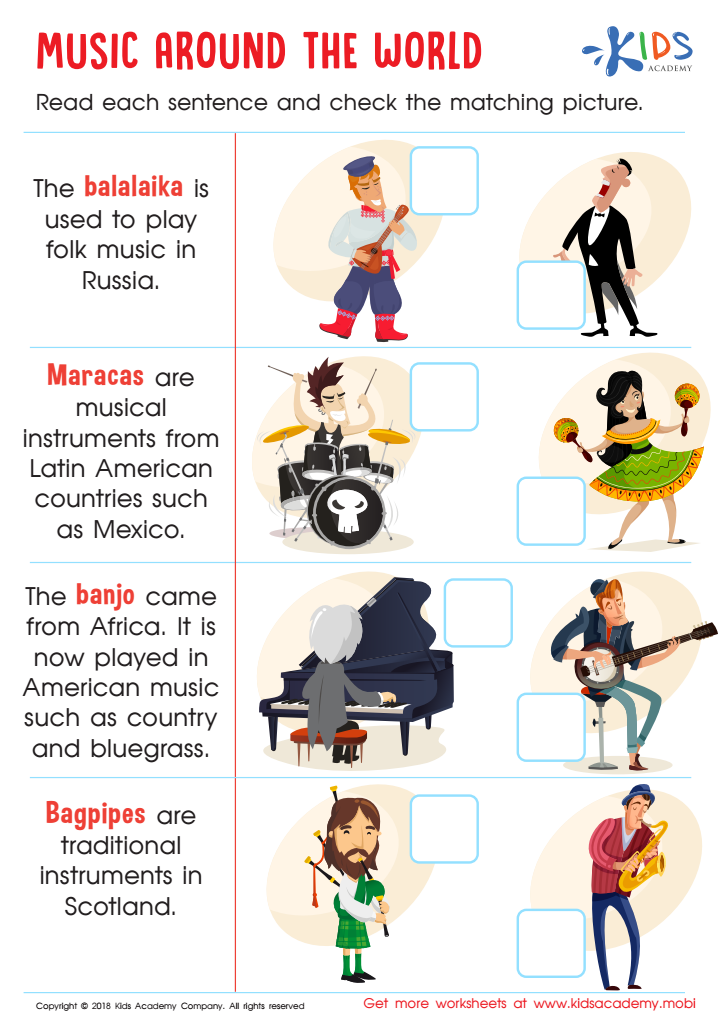
Music Around the World Worksheet
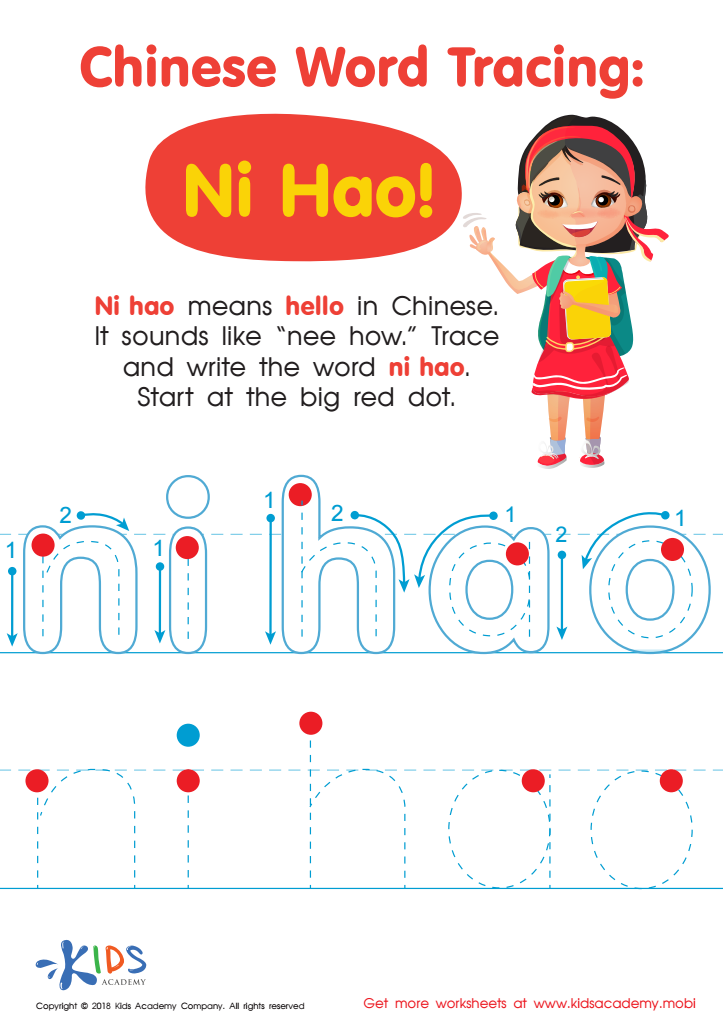
Chinese Word Tracing: Ni Hao Worksheet
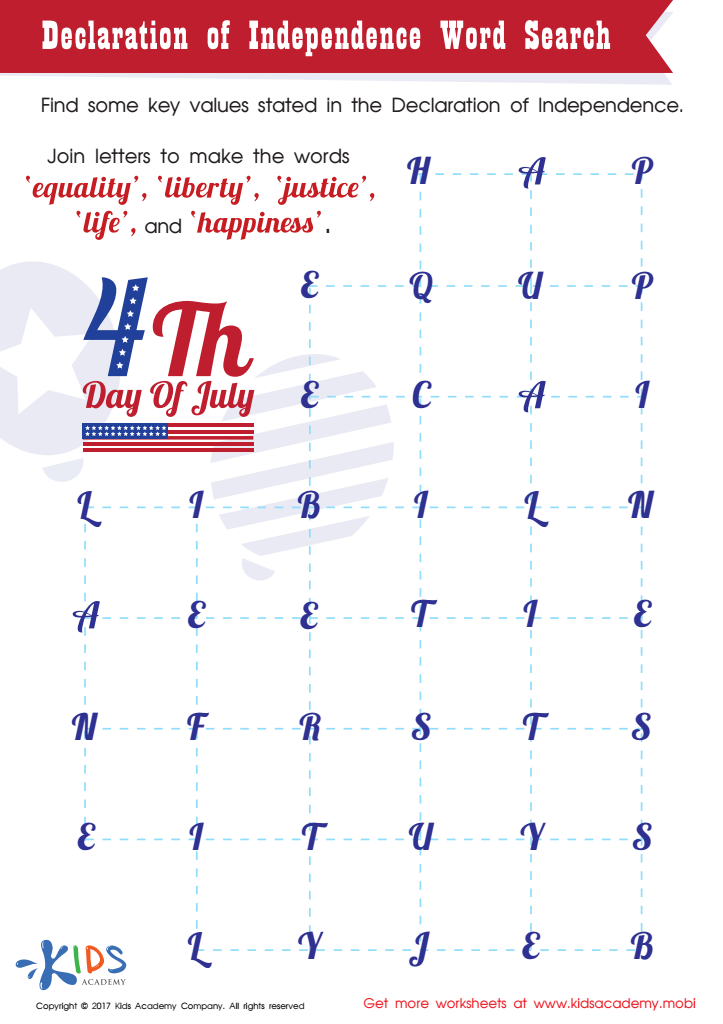
Declaration of Independence Word Search Printable
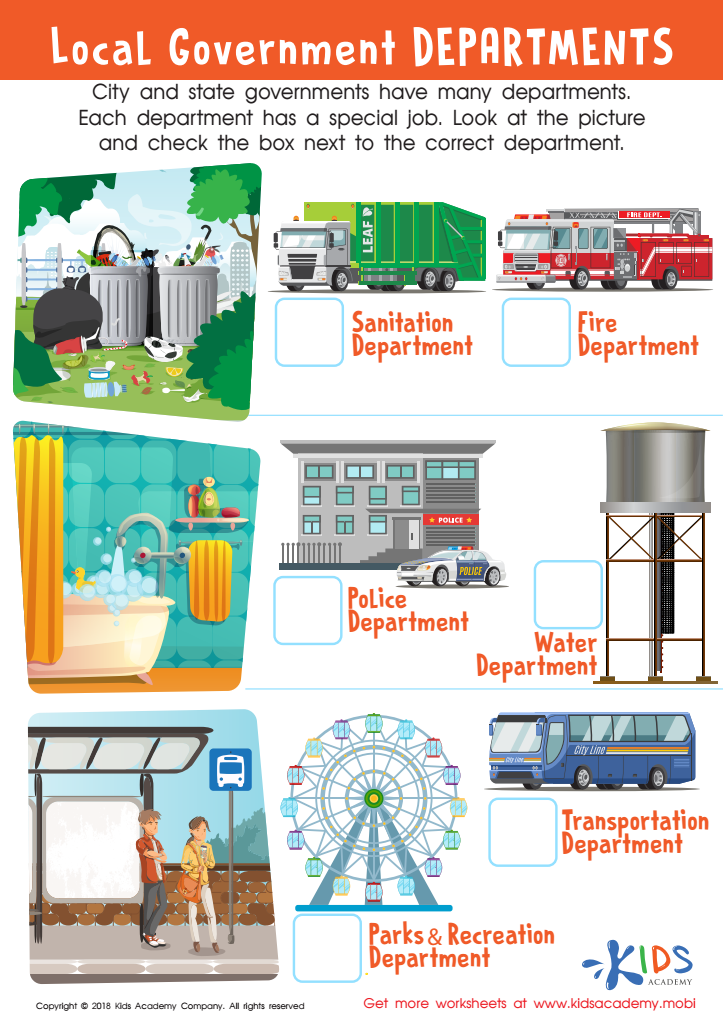
Local Government Departments Worksheet
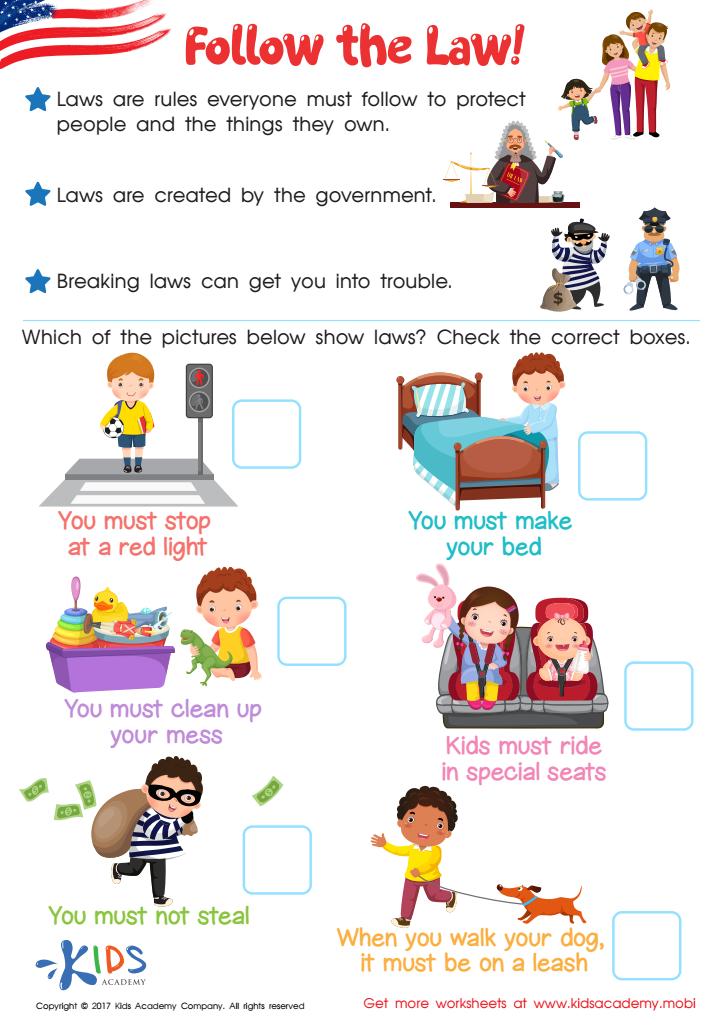
Follow the Law Worksheet
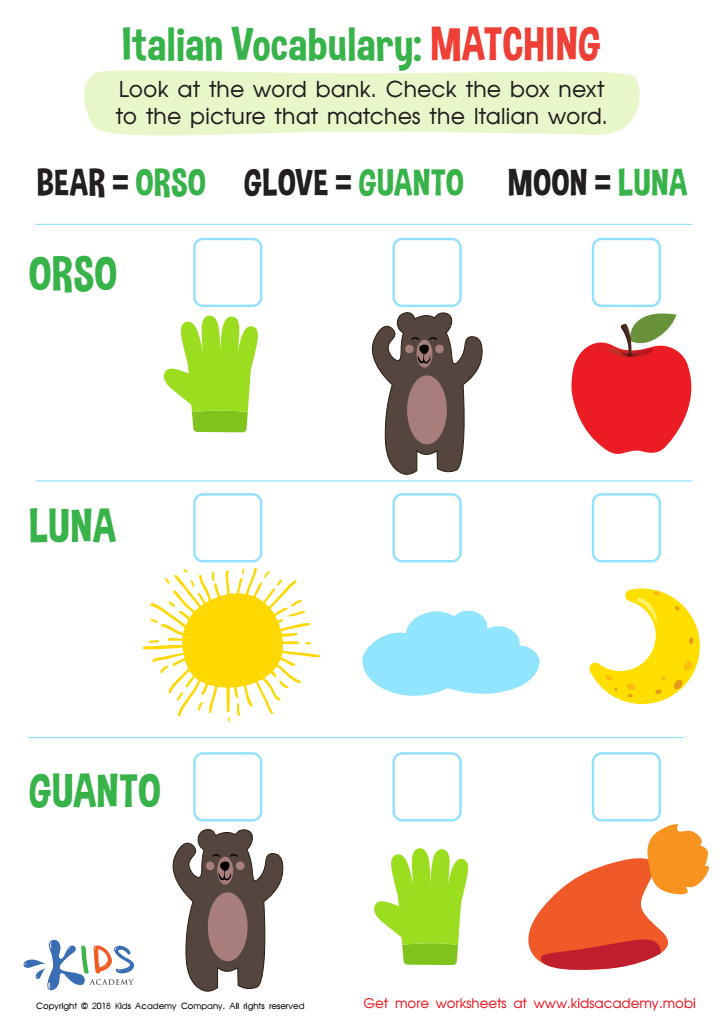
Italian Vocabulary Matching Worksheet
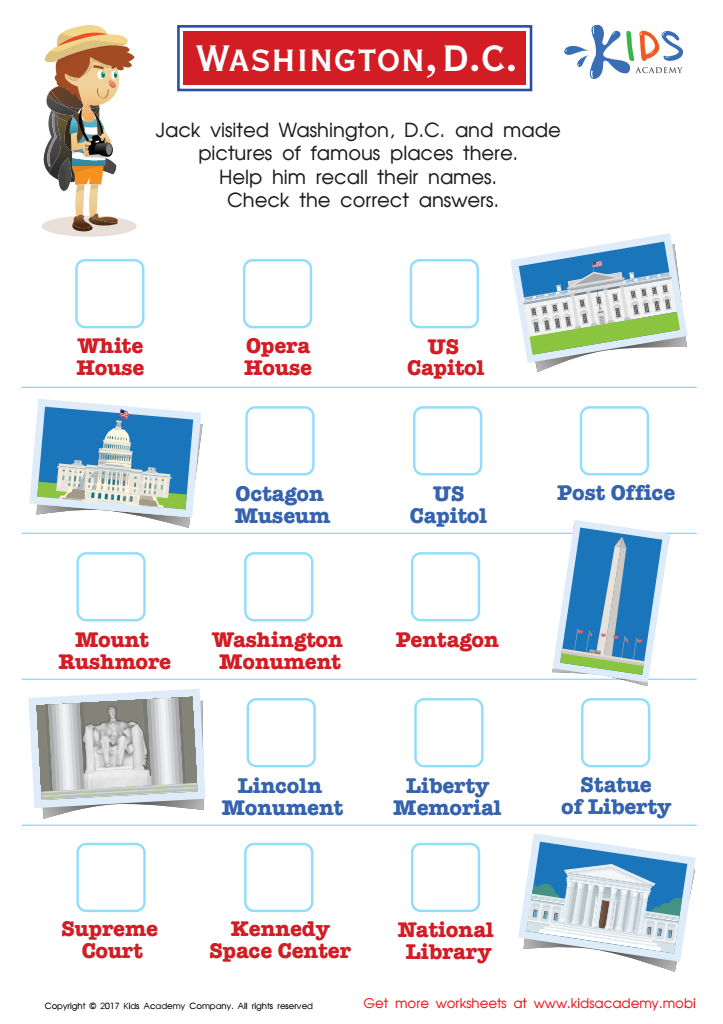
Washington D.C. Printable Worksheet
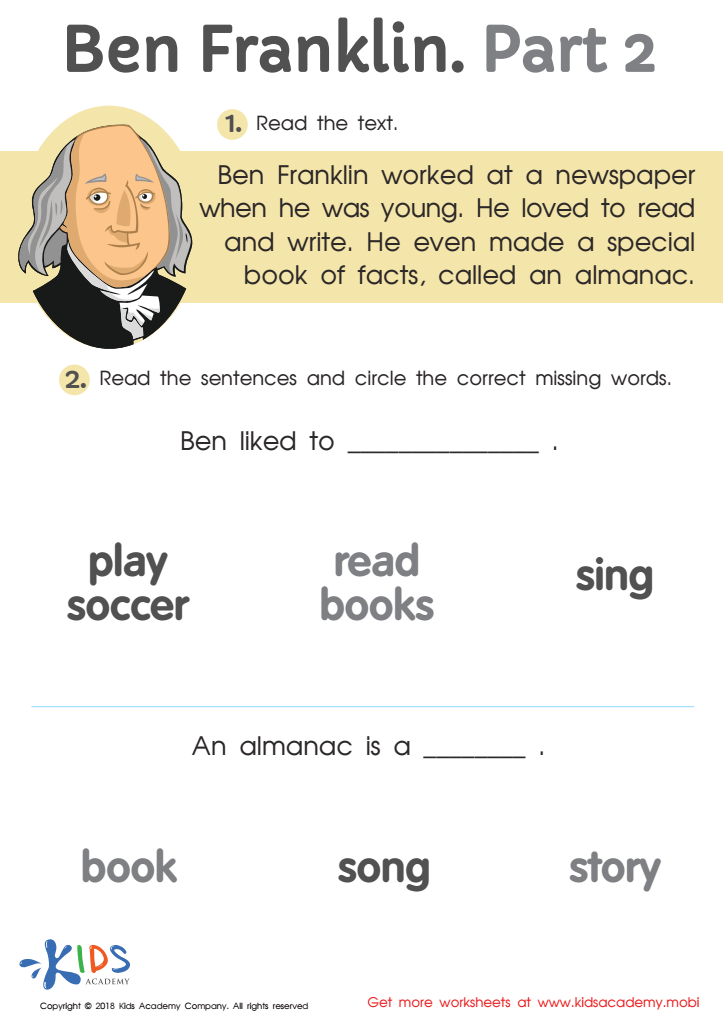
Ben Franklin Part 2 Worksheet
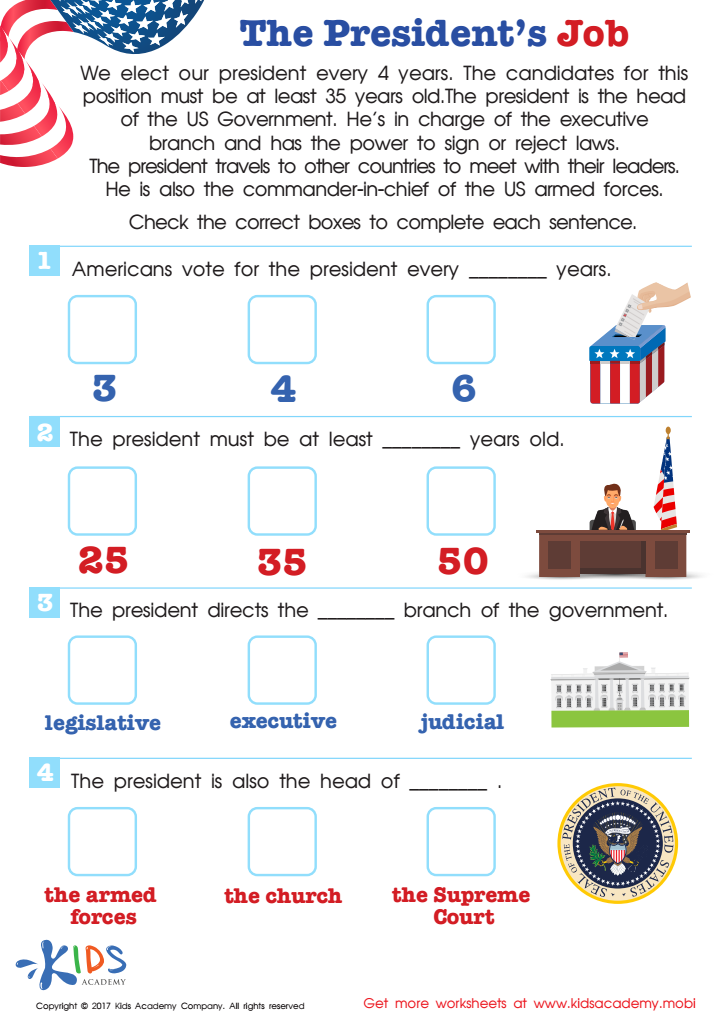
President of the USA Job Description Worksheet
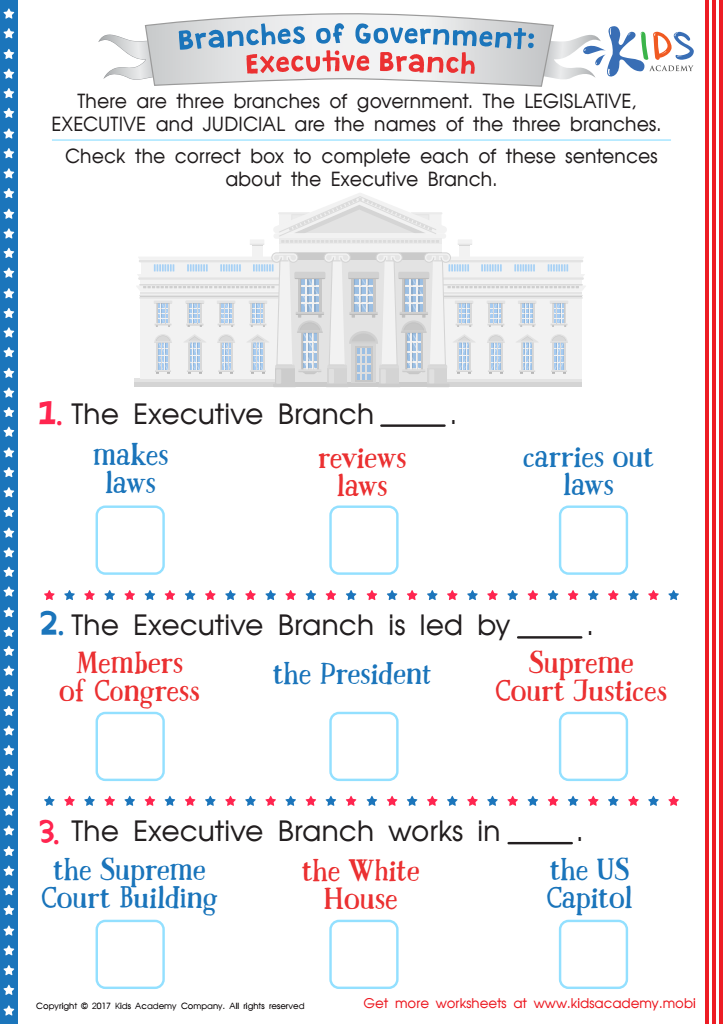
Branches of the Government: Executive Branch Printable
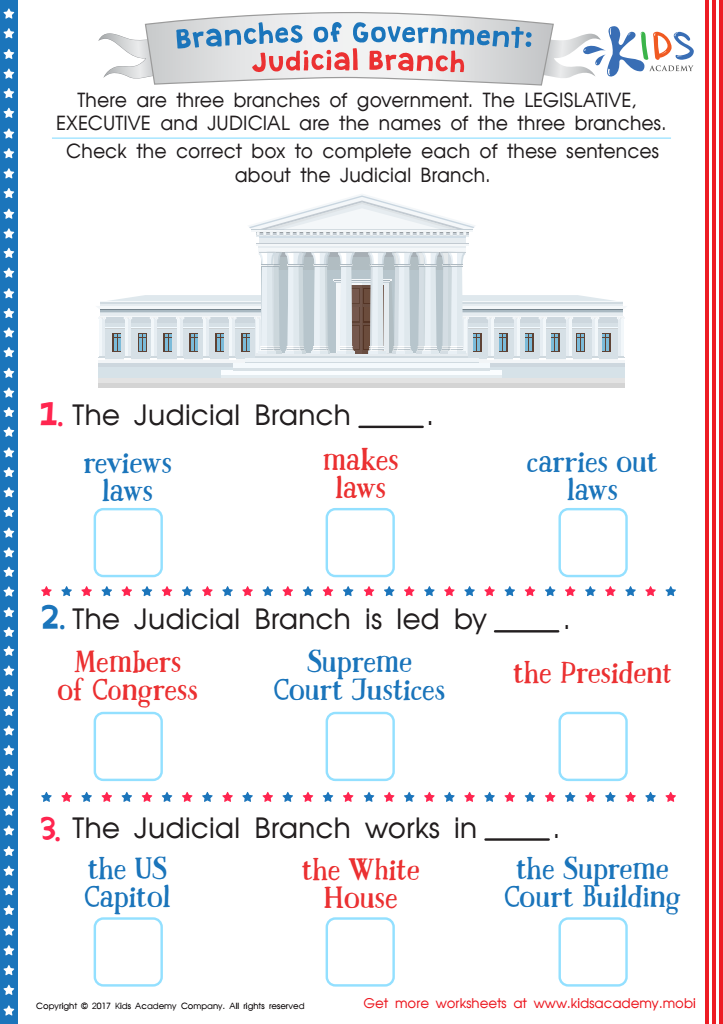
Braches of the Government: Judicial Branch Worksheet
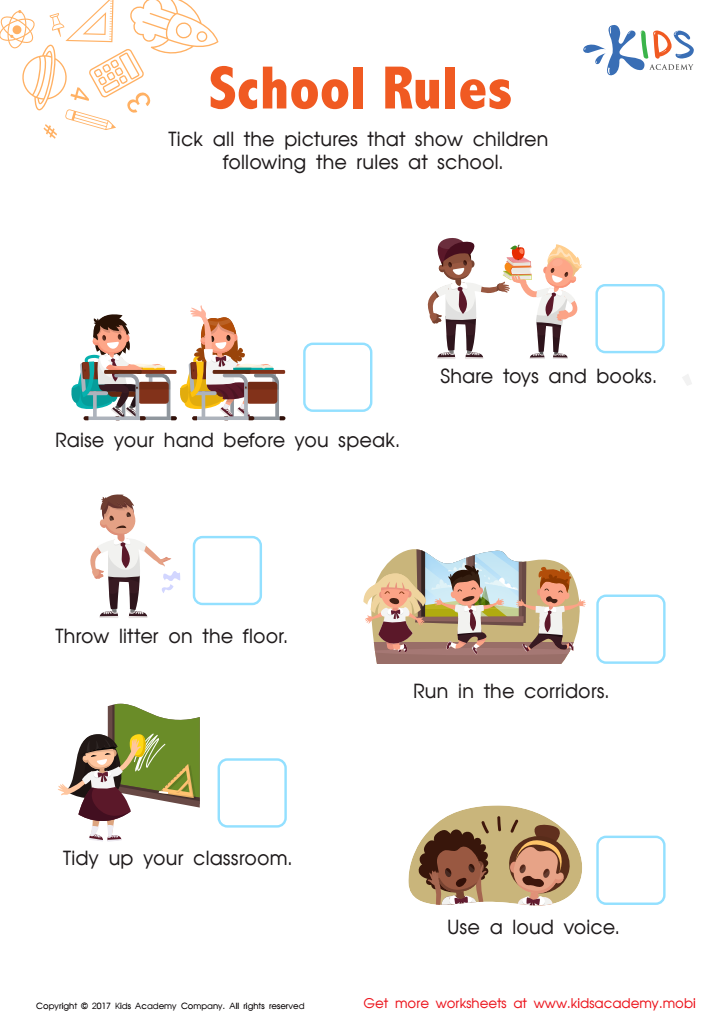
School Rules Worksheet


Introducing concepts of governance and civics to children aged 5-8 is crucial for building a foundation of responsible citizenship and social awareness. At this young age, children are highly impressionable and curious, making it an optimal time to teach fundamental ideas about community, fairness, rules, and cooperation. Understanding governance helps them grasp why rules exist and how they contribute to order and safety, both in the classroom and within the larger society.
Discussing civics introduces children to the importance of participation and responsibilities, fostering their sense of belonging and influence within a community. By learning about roles of leaders and public servants, children can better appreciate concepts of empathy and service, guiding them towards becoming considerate and proactive members of society.
Moreover, teaching these subjects supports the development of critical thinking and decision-making skills. It encourages children to think about consequences and benefits of their actions, laying groundwork for moral and ethical reasoning. Including stories and activities about fairness and justice can stimulate discussions that enhance children's emotional intelligence and conflict resolution skills.
Ultimately, prioritizing governance and civics education for young children contributes to shaping well-rounded individuals who understand their role and power in contributing positively to the world around them.