Normal Initial and Final Consonant Blends Worksheets for Ages 5-9
5 filtered results
-
From - To
Explore our engaging Normal Initial and Final Consonant Blends Worksheets designed specifically for children aged 5-9! These educational resources help young learners develop crucial phonemic awareness by blending initial and final consonant sounds. By practicing with these worksheets, students enhance their reading skills and boost their confidence while decoding words. Fun and interactive, each worksheet offers a variety of exercises, including matching, filling in blanks, and word sorting, to cater to different learning styles. Perfect for classrooms or at-home learning, our worksheets make mastering consonant blends enjoyable and effective! Bring curiosity and joy to your child's reading journey today!
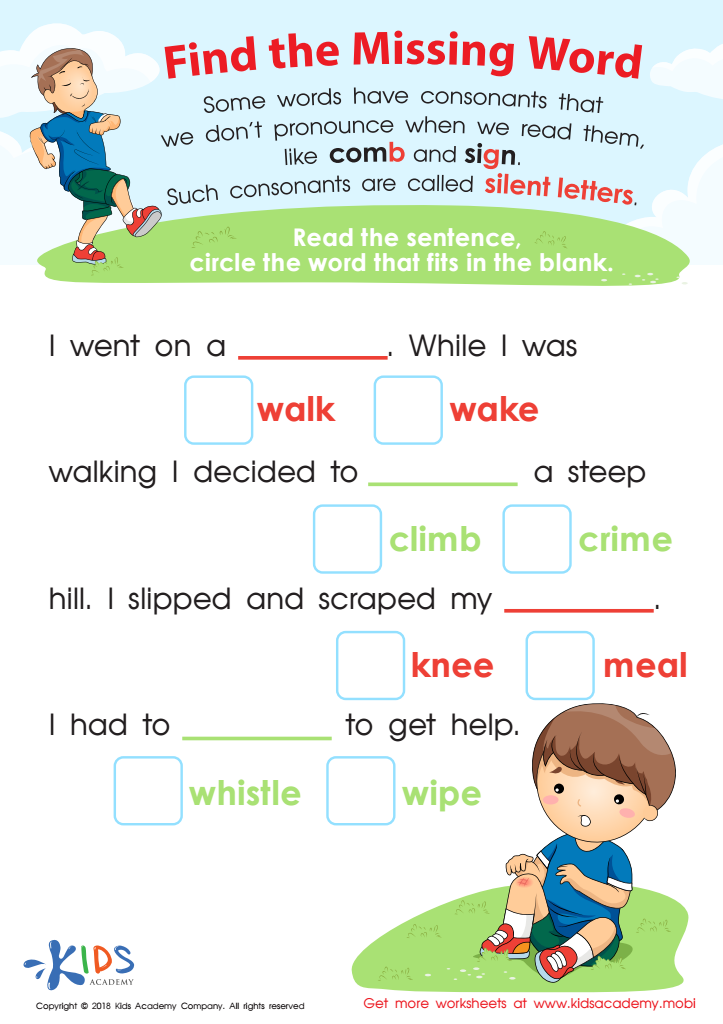
Find The Missing Word Worksheet
 Assign to My Students
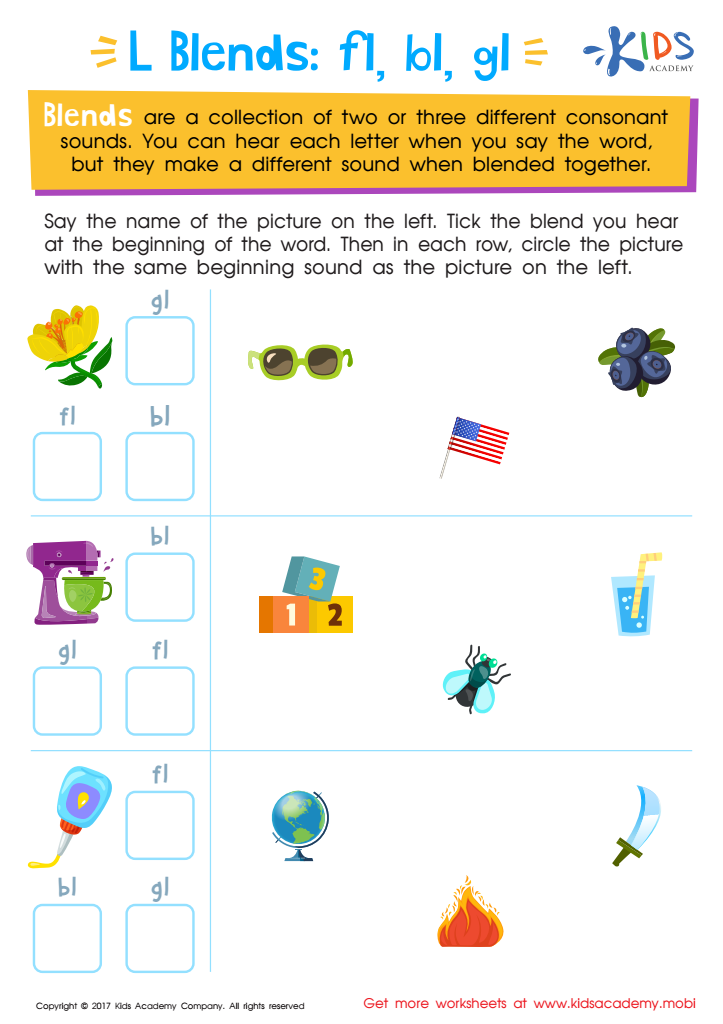
Blending Consonants: "Fl", "Bl" and "Gl" Printable
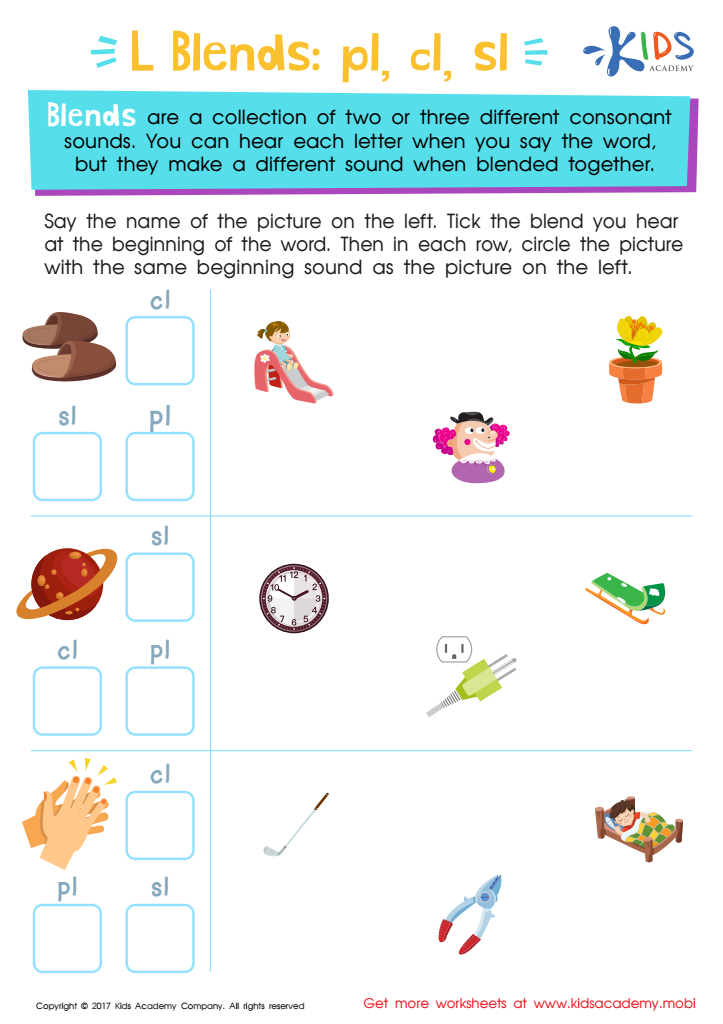
L Blends: "Pl", "Cl" and "Sl" Printable
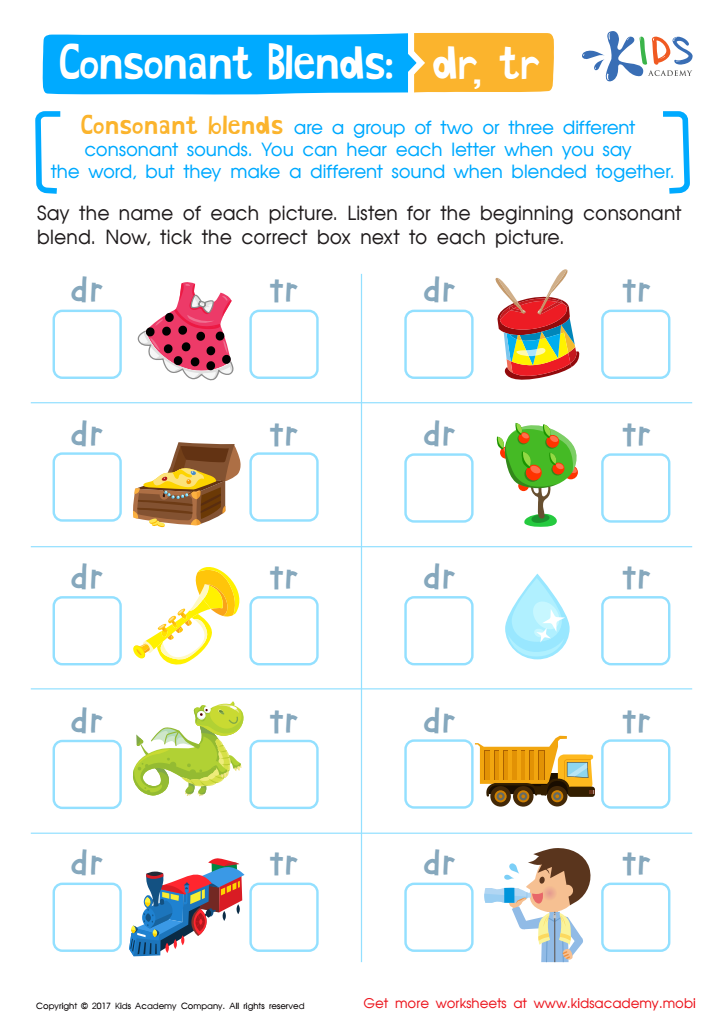
Consonant Blends: "Dr" and "Tr" Printable
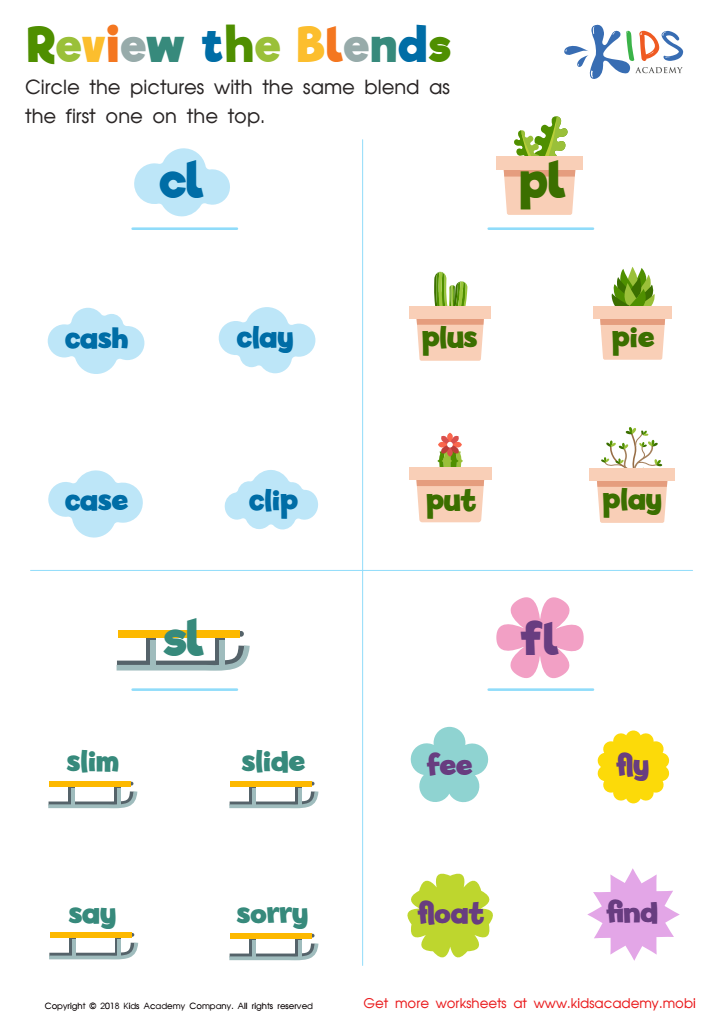
Review the Blends Worksheet


Normal initial and final consonant blends are crucial components of early literacy development for children ages 5-9. These blends, combinations of two or three consonants that appear together either at the beginning (initial) or end (final) of words, form the building blocks for proficient reading and writing. When children learn to recognize and articulate these blends, they enhance their phonemic awareness, which is essential for decoding unfamiliar words.
For parents and teachers, understanding the significance of consonant blends is vital because it directly influences a child’s reading fluency and spelling abilities. Strong skills in blending allow children to tackle more complex vocabulary, paving the way for improved comprehension and effective communication. As evidenced in literacy research, children who master blends tend to read more confidently and are better equipped to understand texts.
Additionally, working on blends fosters a child's phonological processing skills, which helps in the development of overall language proficiency. Engaging with blends through games, songs, and reading activities encourages a playful approach to learning, reinforcing positive attitudes toward literacy. Ultimately, prioritizing these elements in early education equips children with foundational skills that benefit their academic journey and lifelong learning.








