Normal Graphs Worksheets for Ages 5-9
4 filtered results
-
From - To
Welcome to our collection of "Normal Graphs Worksheets" designed specifically for children ages 5-9. These engaging worksheets introduce young learners to essential graphing concepts, making math exciting and accessible. Featuring a variety of colorful and interactive activities, children will practice interpreting data, plotting points, and understanding basic graph types. Our worksheets support skill development in a fun, nurturing way! Perfect for classroom use or at-home learning, our resources are ideal for helping kids build confidence in math. Explore today and watch your child's graphing skills flourish while they enjoy the journey of learning! Start their math adventure now!
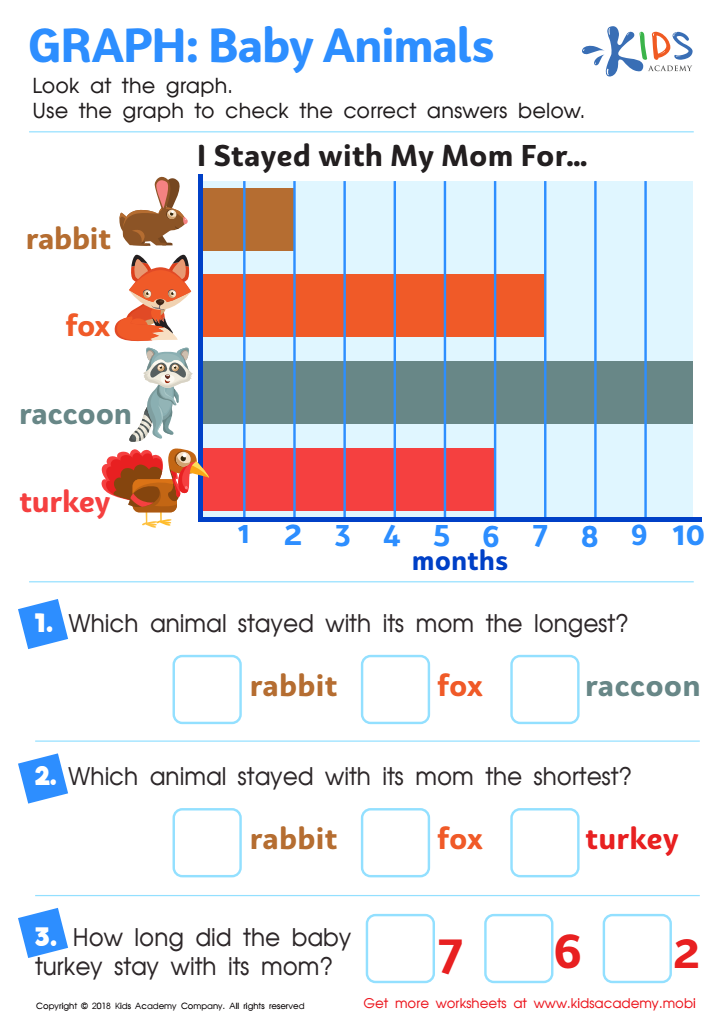
Graph: Baby Animals Worksheet
 Assign to My Students
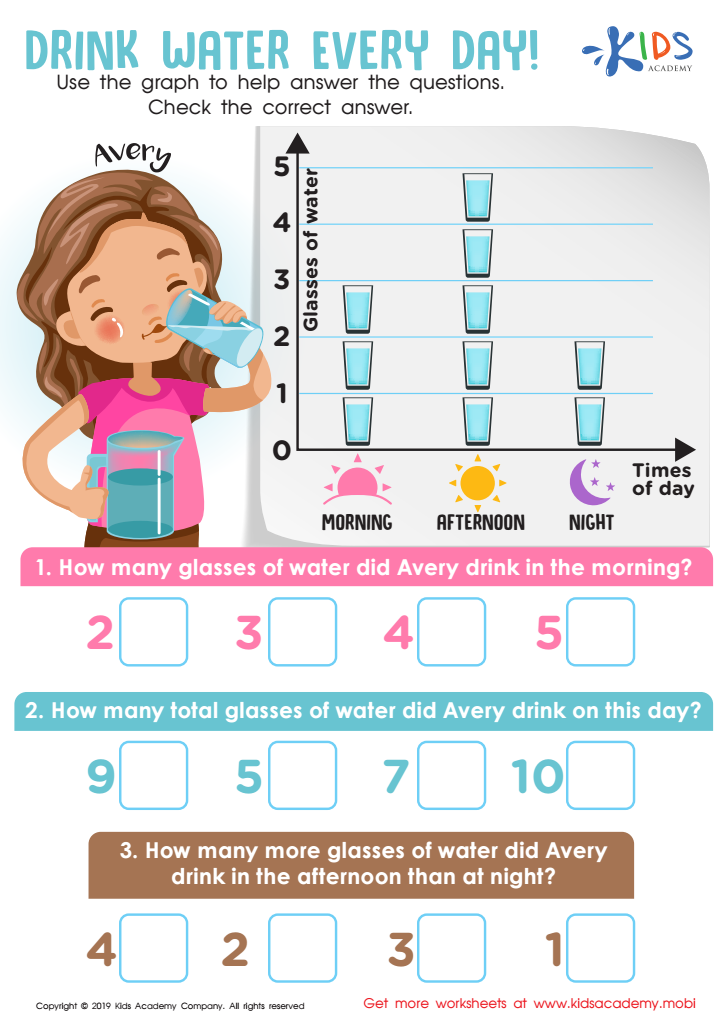
Drink Water Every Day! Worksheet
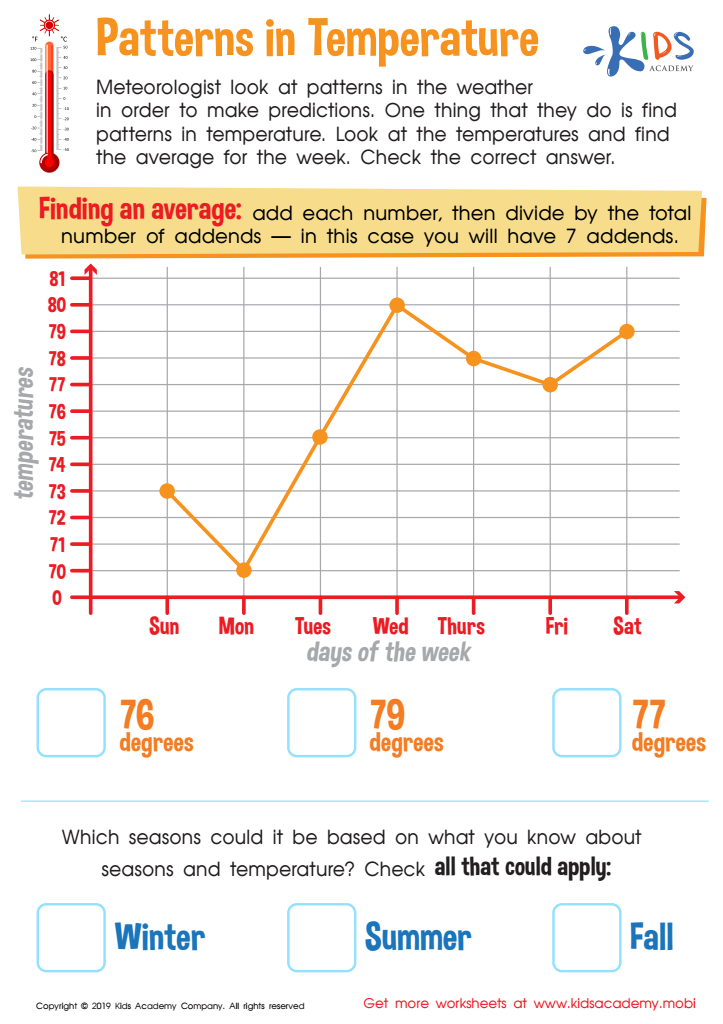
Patterns in Temperature Worksheet
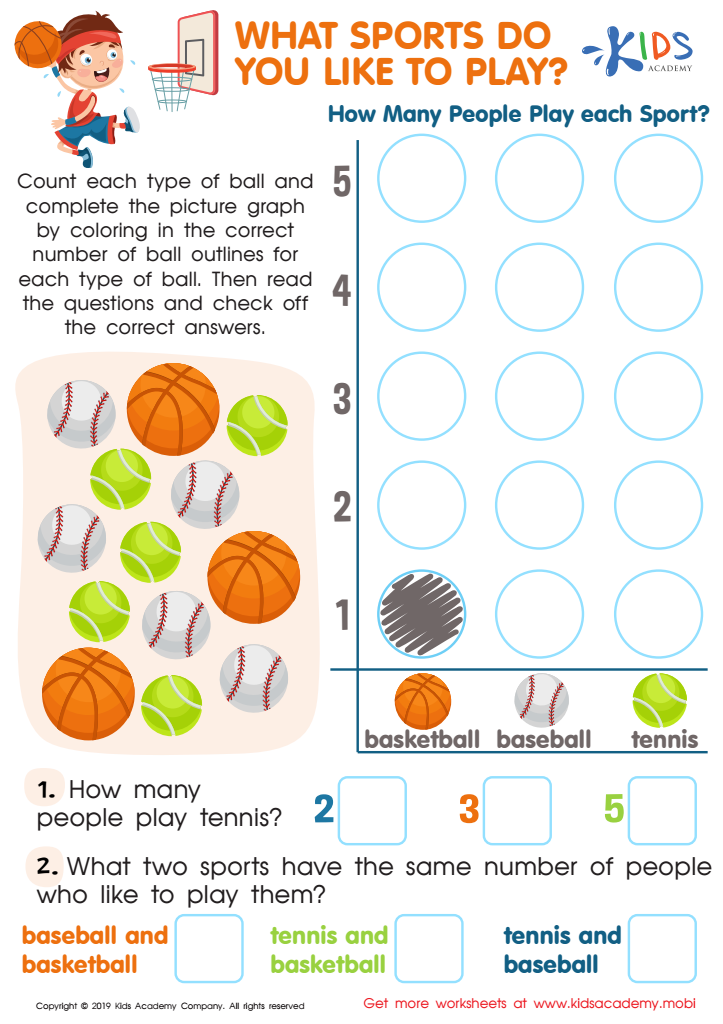
What Sports Do You Like to Play Worksheet







Normal graphs, or bar graphs that represent data in a visual format, are crucial tools for children aged 5 to 9 as they lay the foundation for understanding mathematics and data interpretation. Parents and teachers should care about introducing these concepts early for several reasons.
Firstly, normal graphs help children visualize relationships and compare quantities, enhancing their critical thinking skills. By interpreting simple datasets, children learn to analyze information, recognizing trends and patterns. This skill is invaluable as they grow, influencing their ability to evaluate real-world scenarios.
Secondly, using normal graphs fosters communication skills. As children discuss their findings with peers and adults, they learn to express ideas clearly and justify their reasoning. This collaborative discussion enhances social skills and builds confidence.
Moreover, normal graphs directly align with early math standards. Mastery of graphical representations contributes to a stronger mathematical foundation, making future concepts like statistics and algebra more approachable.
Finally, engaging with normal graphs can ignite a child's curiosity about the world. By relating data to their interests—like favorite fruits or games—they become more invested in learning, making mathematics enjoyable and relevant. Thus, integrating normal graphs in early education benefits cognitive, social, and emotional development.








