Normal Initial and Final Consonant Blends Worksheets for Ages 7-8
5 filtered results
-
From - To
Discover engaging worksheets designed to enhance literacy skills through "Normal Initial and Final Consonant Blends" for children ages 7-8. These carefully crafted activities help young learners master the combination of consonants at the beginning and end of words, fostering phonemic awareness and improving reading fluency. Featuring a variety of practice exercises, these worksheets encourage critical thinking and word recognition, making learning both enjoyable and effective. Perfect for homeschooling parents and educators, our resources support literacy development in a fun and interactive way. Empower your child’s reading journey with these essential blends worksheets, available for instant download!
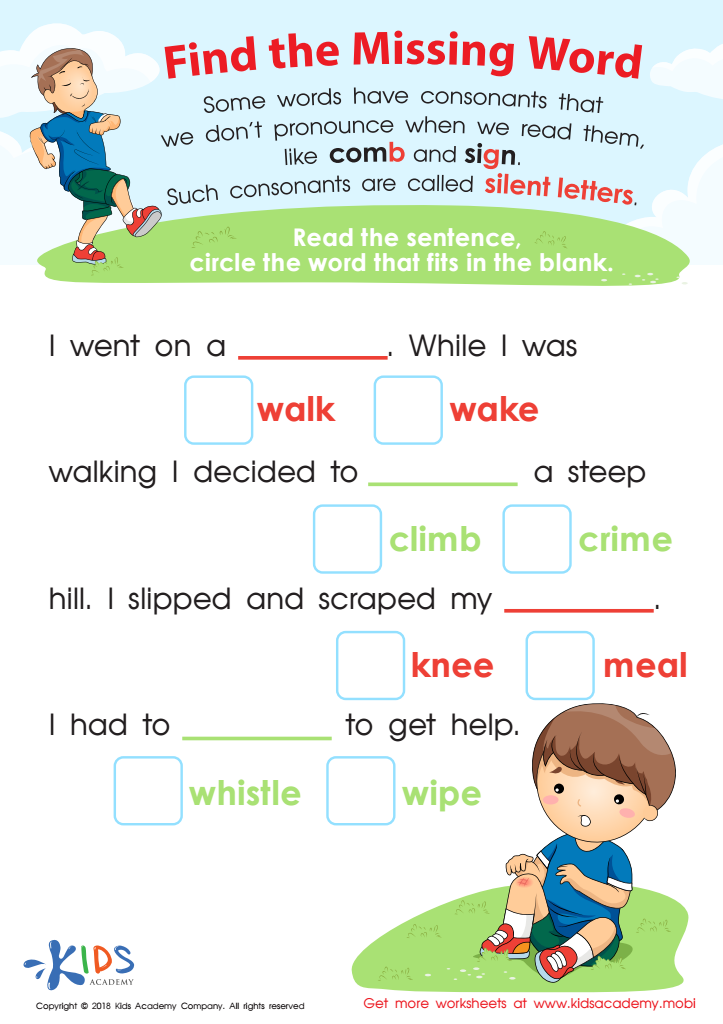
Find The Missing Word Worksheet
 Assign to My Students
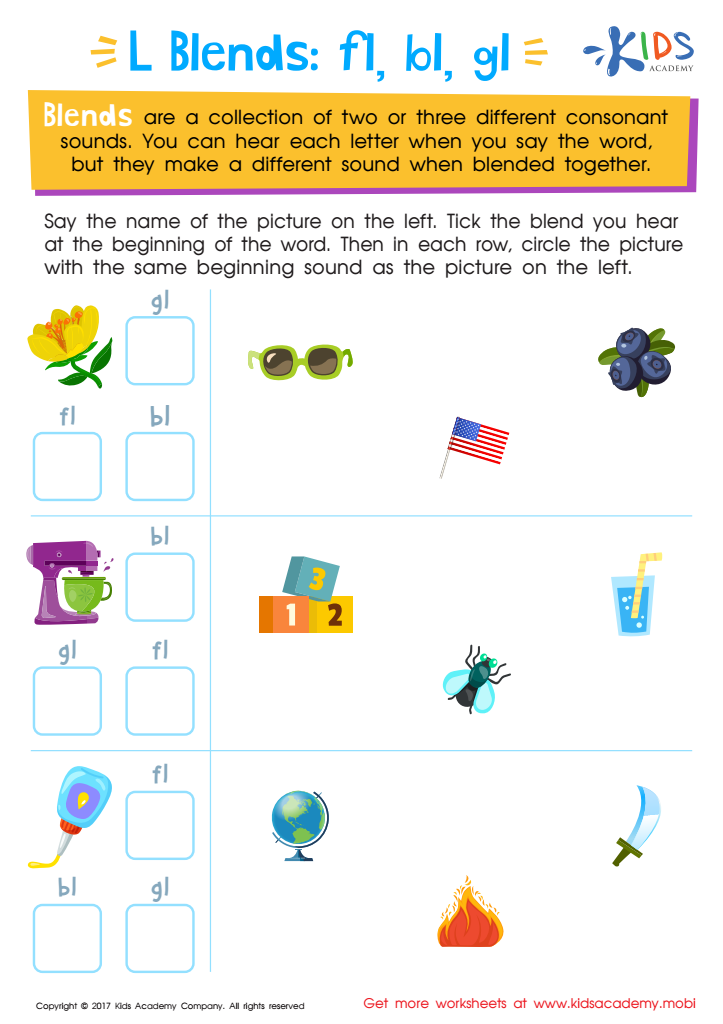
Blending Consonants: "Fl", "Bl" and "Gl" Printable
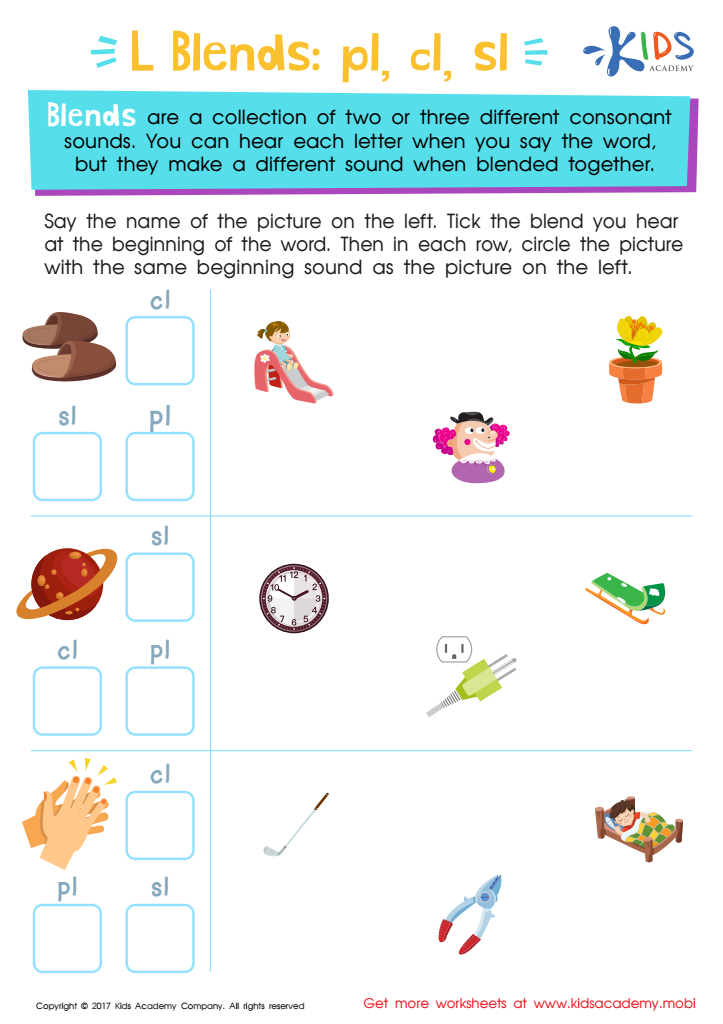
L Blends: "Pl", "Cl" and "Sl" Printable
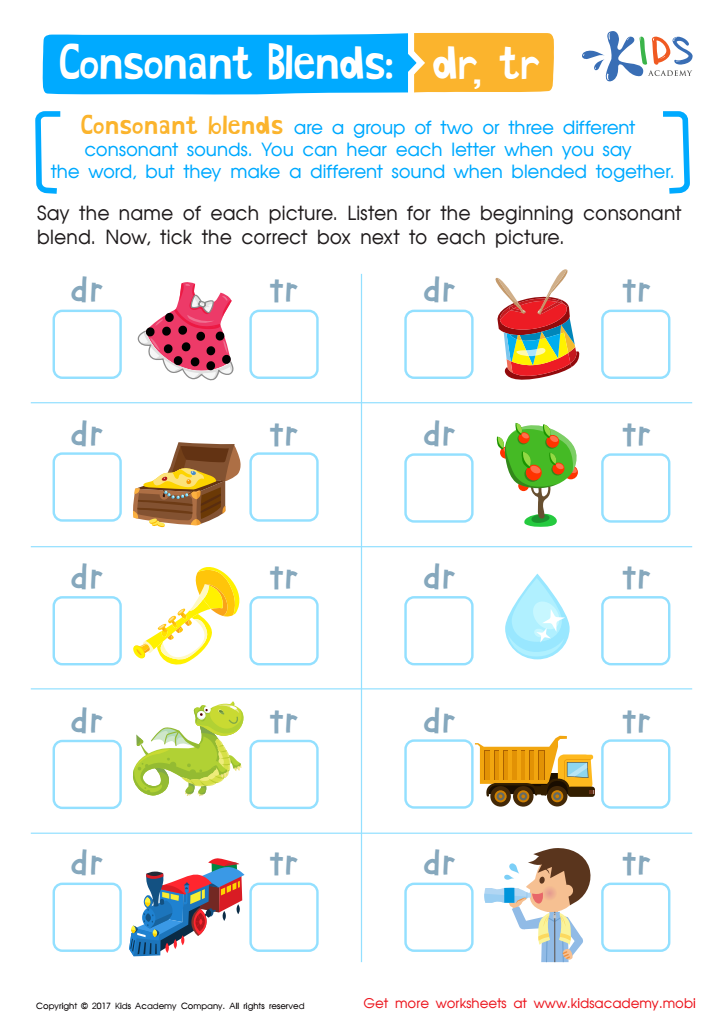
Consonant Blends: "Dr" and "Tr" Printable
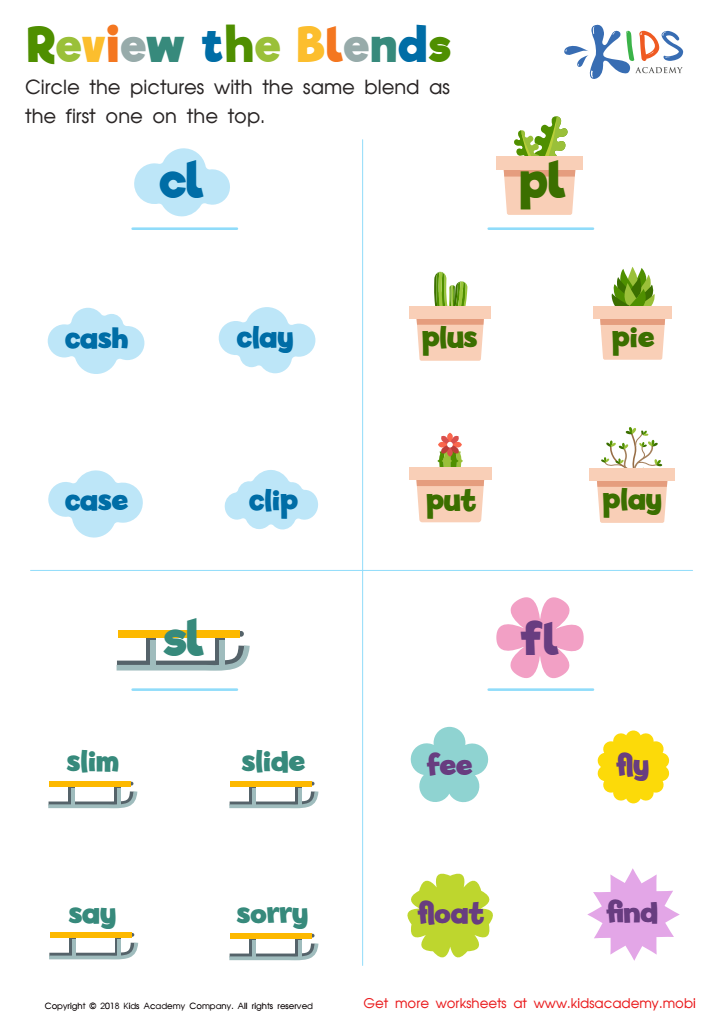
Review the Blends Worksheet


Parents and teachers should prioritize the understanding of normal initial and final consonant blends for children aged 7-8 because these skills form the foundation for more advanced reading and spelling abilities. Consonant blends are clusters of two or three consonants that appear together in words, such as "bl" in "blue" or "nd" in "find." Mastering these blends helps children decode unfamiliar words, improving their reading fluency and comprehension.
At this age, many students are transitioning from learning to read to reading to learn. Strong skills in recognizing and producing consonant blends can boost their confidence and motivation, enhancing their overall literacy development. Additionally, these skills support phonemic awareness, which is crucial for spelling and writing. When children can identify and manipulate blends, they are better equipped to tackle more complex language tasks.
Furthermore, familiarization with consonant blends can enhance vocabulary growth, allowing children to engage with a broader array of texts. For teachers, building these skills through targeted phonics instruction, games, and engaging activities aligns with literacy learning goals, ultimately fostering a more comprehensive understanding of language and literacy in their students. Thus, attention to consonant blends is essential for nurturing proficient readers and writers.








