Normal Missing Letters Worksheets for Ages 7-8
4 filtered results
-
From - To
Enhance your child’s literacy skills with our engaging Normal Missing Letters Worksheets designed for ages 7-8. These worksheets focus on helping young learners recognize letters and understand alphabetical order. Each activity is curated to reinforce spelling, improve reading fluency, and build confidence in writing. Kids will enjoy filling in the missing letters to complete words, making learning both fun and interactive. Perfect for classroom practice or home reinforcement, our worksheets cater to different skill levels and provide ample opportunity for growth. Explore our collection today and give your child the tools they need for successful reading and writing!
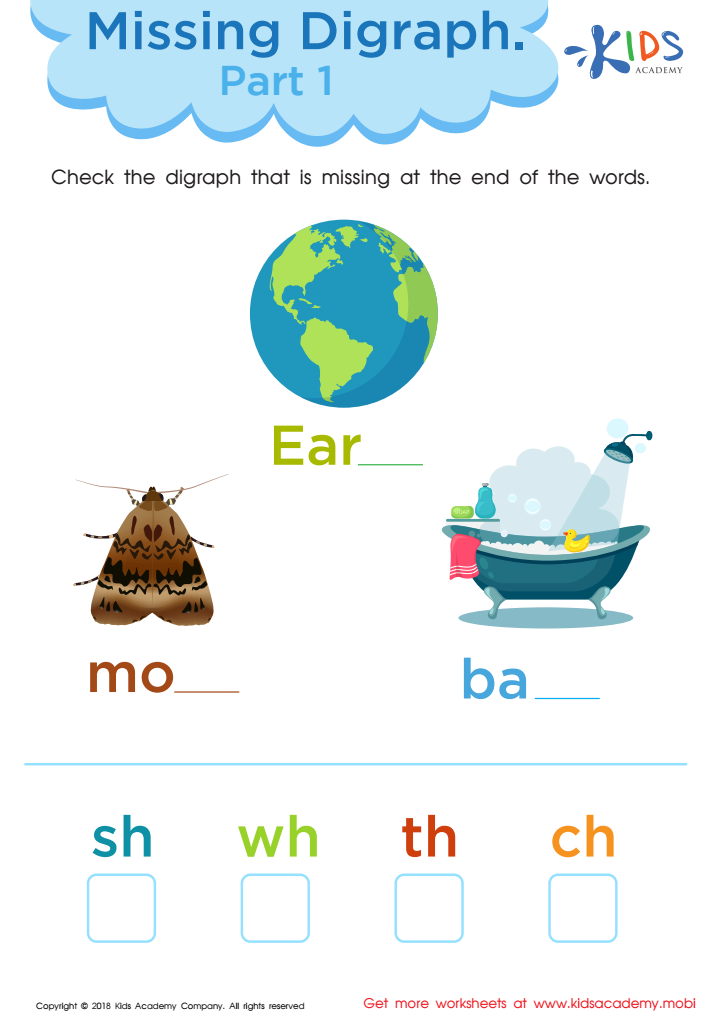
Missing Digraph: Part 1 Worksheet
 Assign to My Students
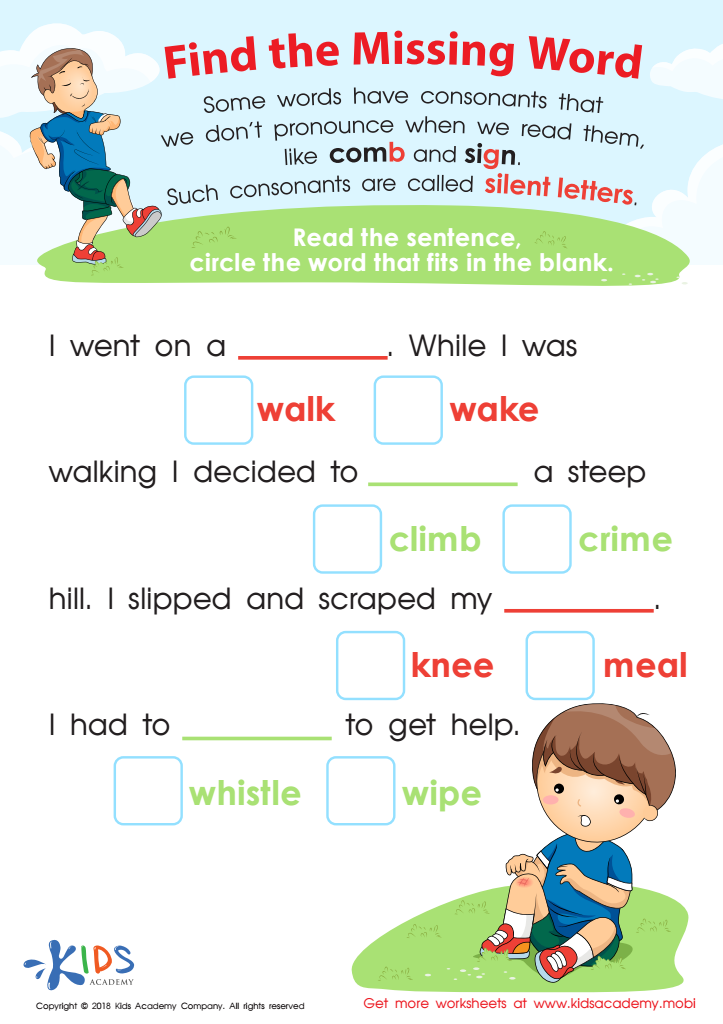
Find The Missing Word Worksheet
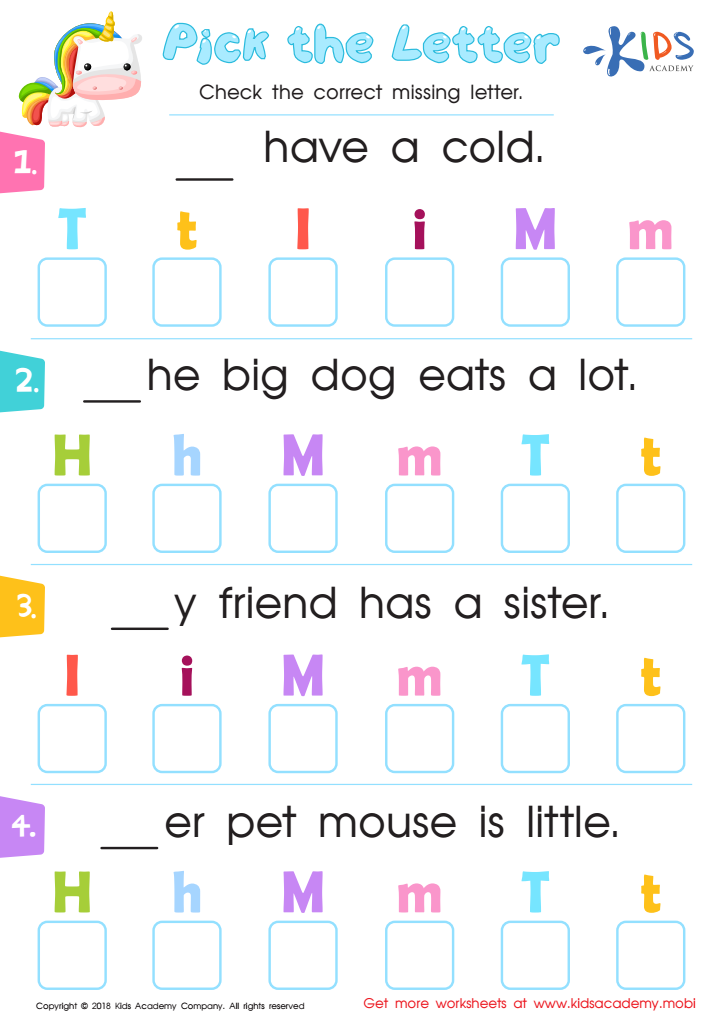
Pick the Letter Worksheet
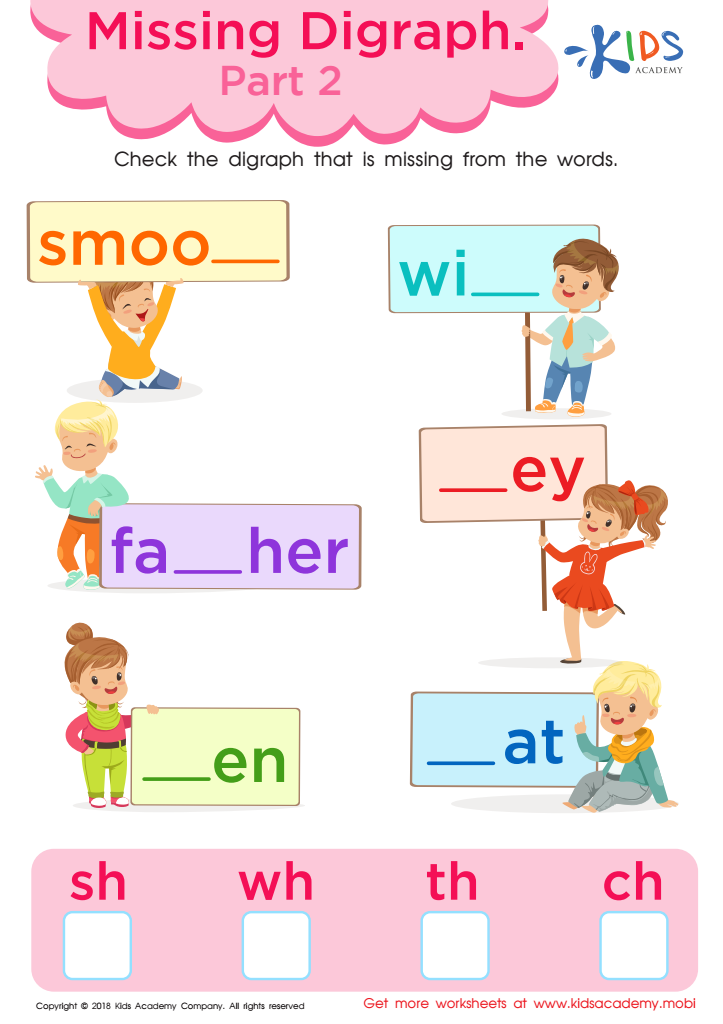
Missing Digraph: Part 2 Worksheet



Parents and teachers should prioritize the "Normal Missing Letters" activity for children aged 7-8 because it plays a crucial role in developing literacy skills. At this age, children are refining their reading and writing abilities, and identifying missing letters fosters phonemic awareness, which is vital for proficient reading. Engaging in this activity strengthens their understanding of letter-sound relationships, helping to improve decoding skills vital for reading fluency.
Additionally, recognizing letter patterns enhances spelling skills, making them more confident in their writing. When children engage with "Normal Missing Letters," they enhance their problem-solving abilities, as they learn to think critically about word structure and composition. This activity also encourages creativity, as children may generate words or sentences around the given letters.
Furthermore, it can be integrated into fun, interactive learning experiences at home or in the classroom, making learning enjoyable. By caring about this aspect of literacy, parents and teachers equip children with foundational skills essential for their academic journey, paving the way for lifelong learning and communication success. Ultimately, these skills not only support academic achievement but also foster a love for reading that can continue to benefit children throughout their lives.







