Normal Arrays Worksheets for Ages 7-8
11 filtered results
-
From - To
Discover a world where math is fun with our engaging Normal Arrays worksheets, specially designed for Ages 7-8. These worksheets are crafted to introduce young learners to the concept of arrays in a simple and captivating manner. Through a series of thoughtfully structured activities, children will explore the fundamentals of arrays, enabling them to visualize and understand multiplication and division concepts better. Perfect for both classroom and at-home learning, our Normal Arrays worksheets will empower your child with the confidence to tackle mathematics with ease and enthusiasm. Dive into this mathematical adventure and watch your child's numeracy skills flourish!
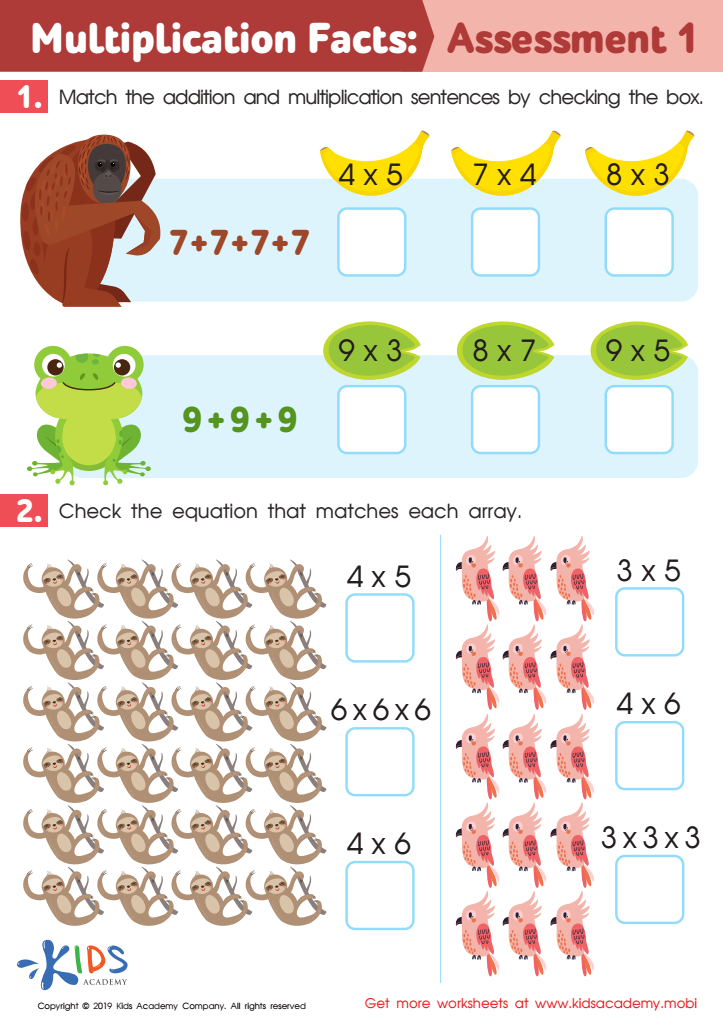
Multiplication Facts: Assessment 1 Worksheet
 Assign to My Students
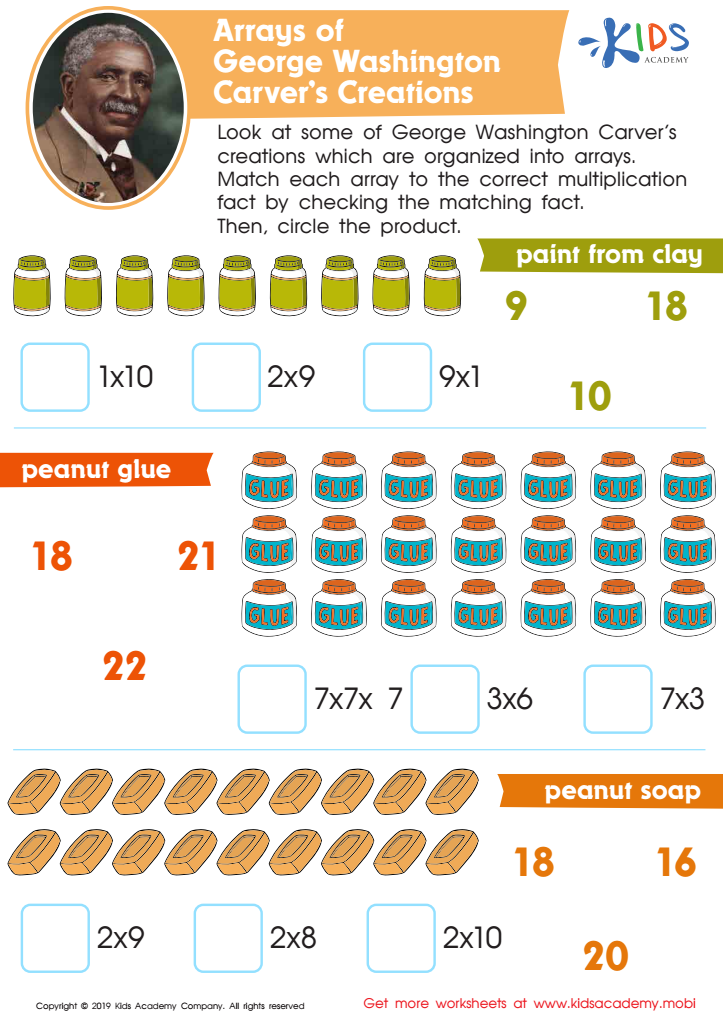
Arrays of George Washington Carver’s Creations Worksheet
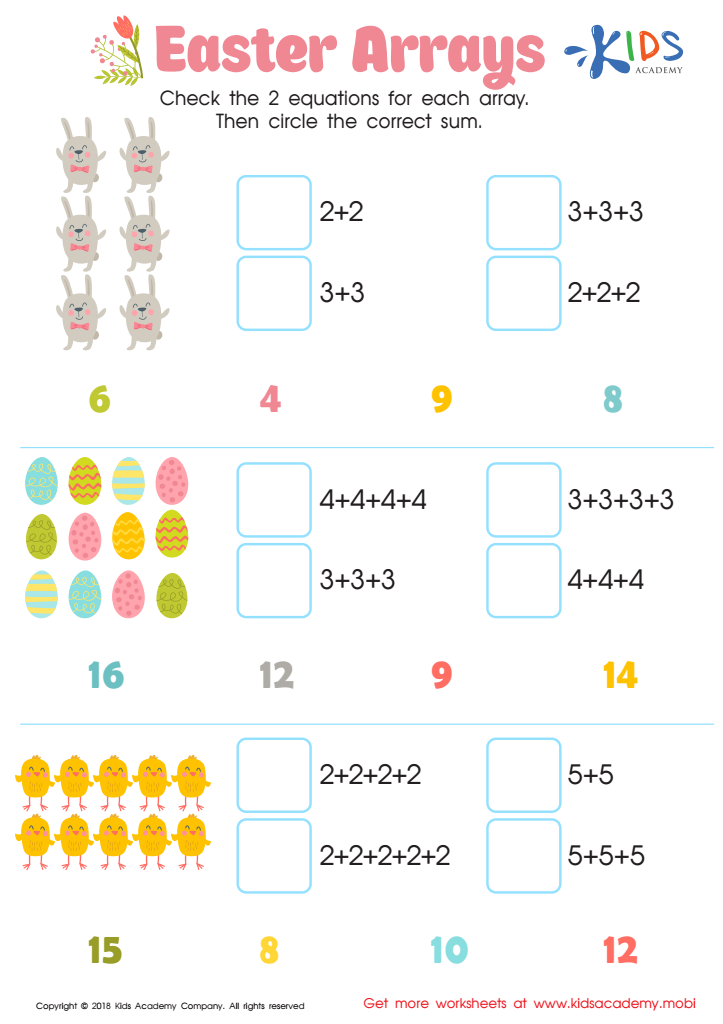
Easter Arrays Worksheet
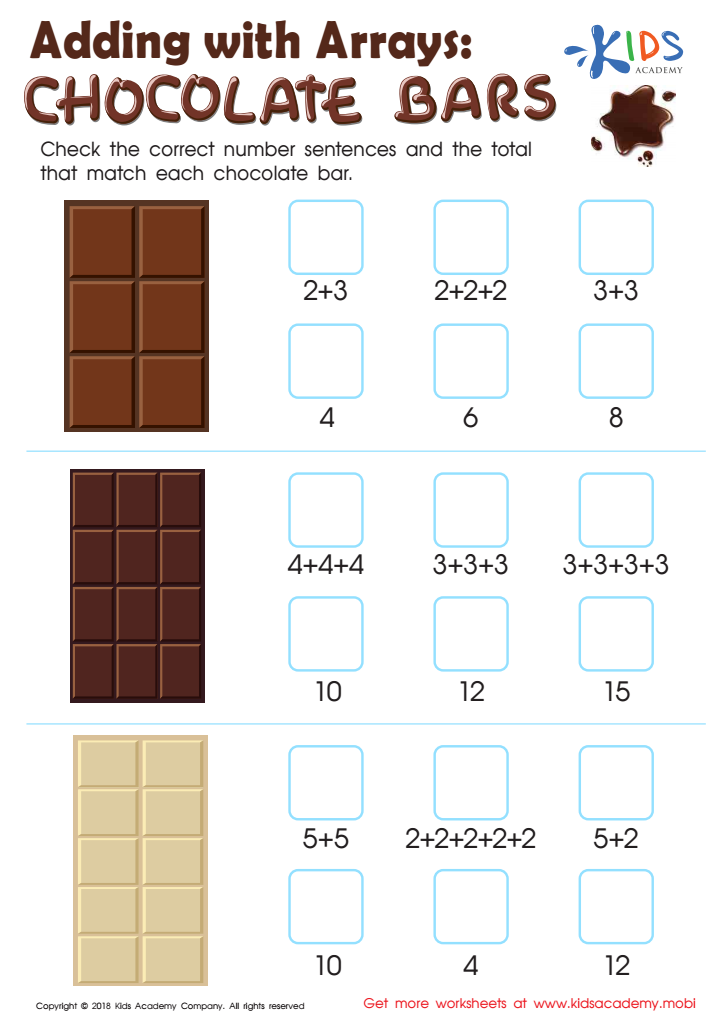
Adding with Arrays: Chocolate Bars Worksheet
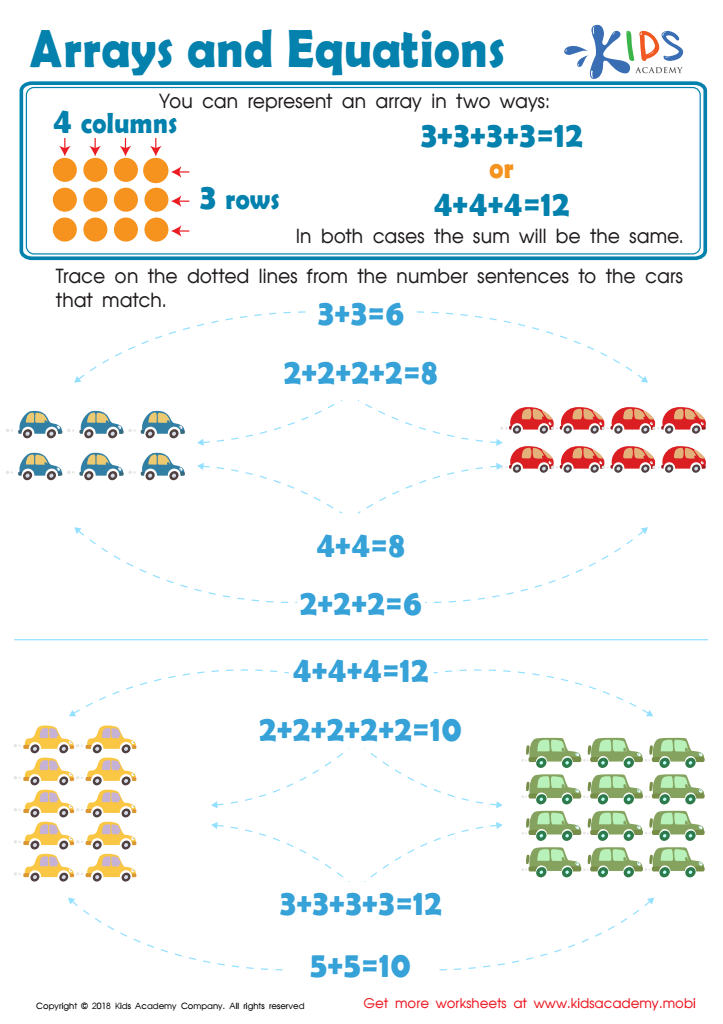
Arrays and Equations Worksheet
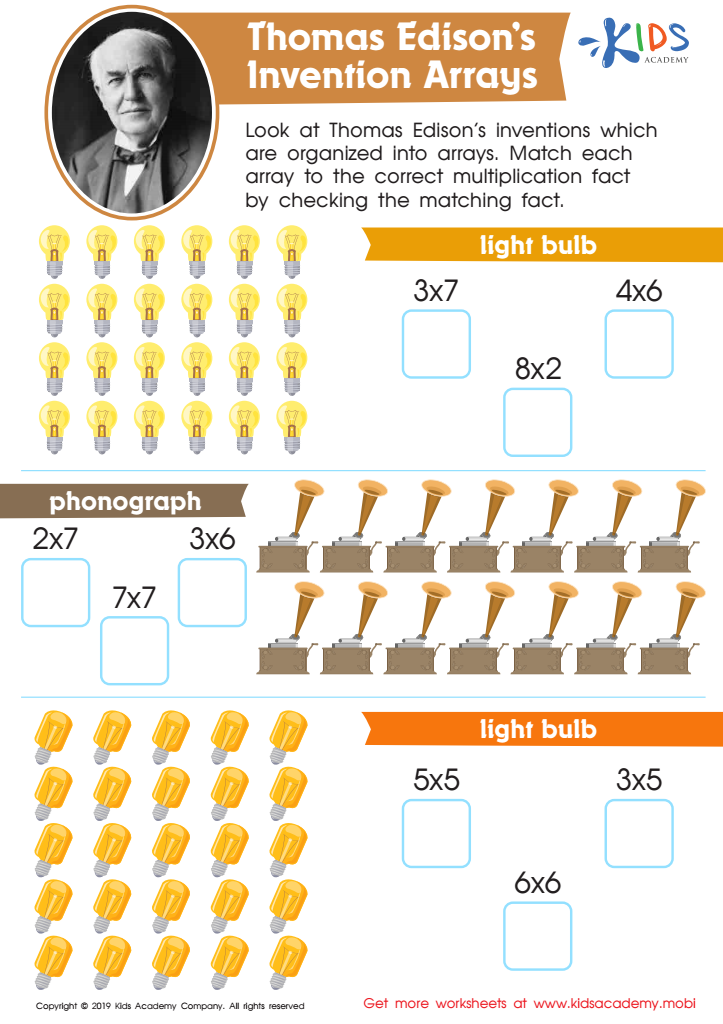
Thomas Edison’s Invention Arrays Worksheet
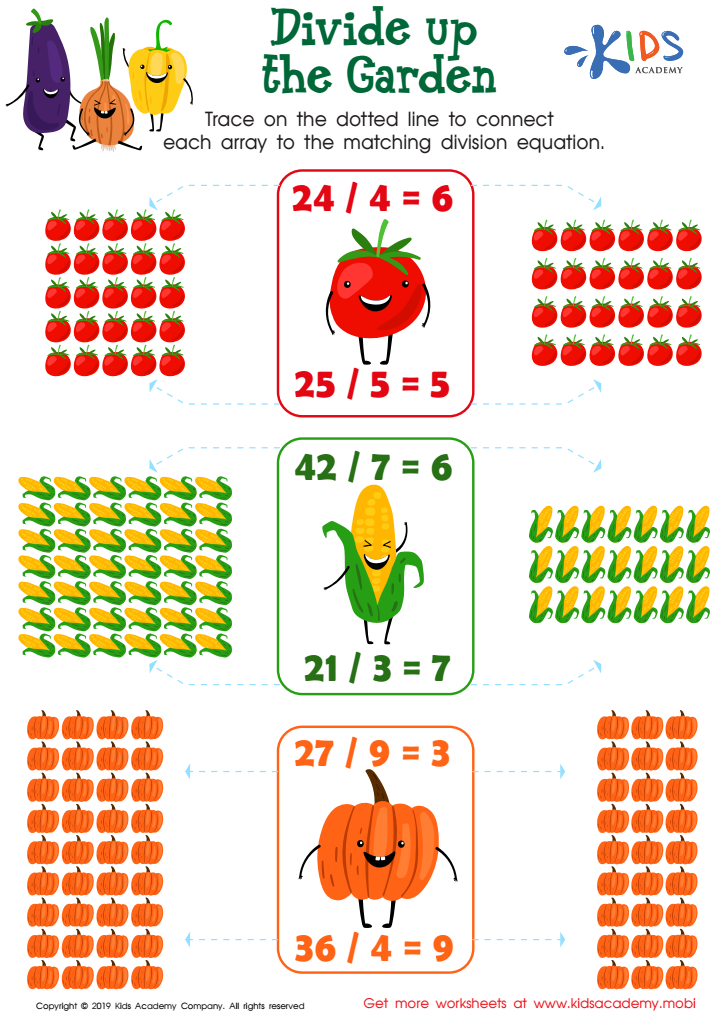
Divide up the Garden Worksheet
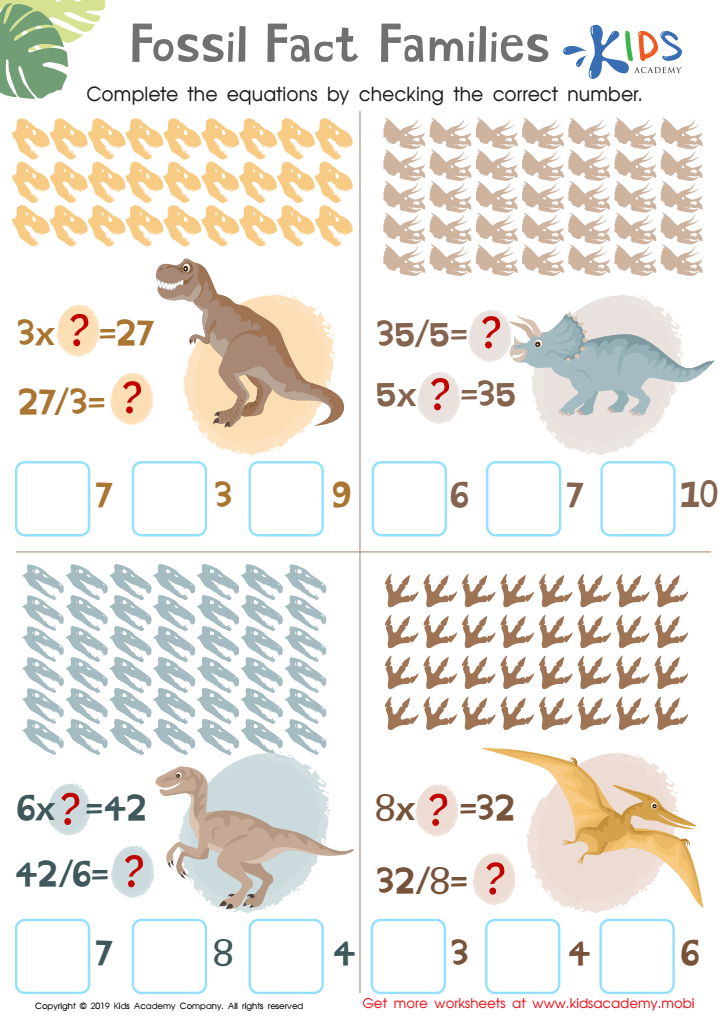
Fossil Fact Families Worksheet
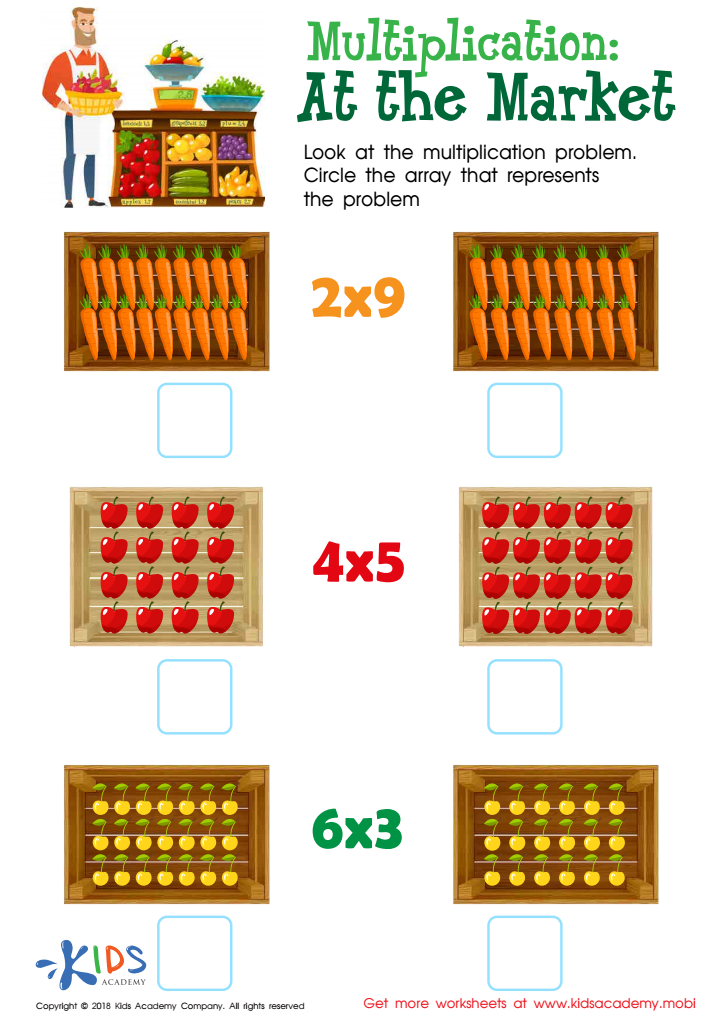
At the Market Worksheet
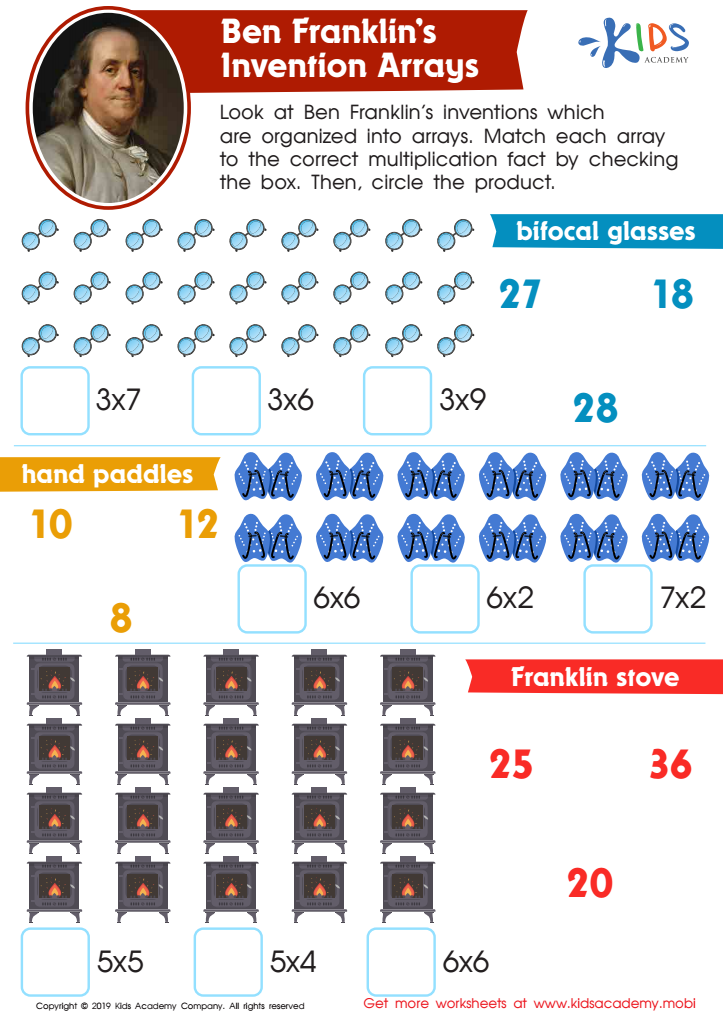
Ben Franklin’s Invention Arrays Worksheet
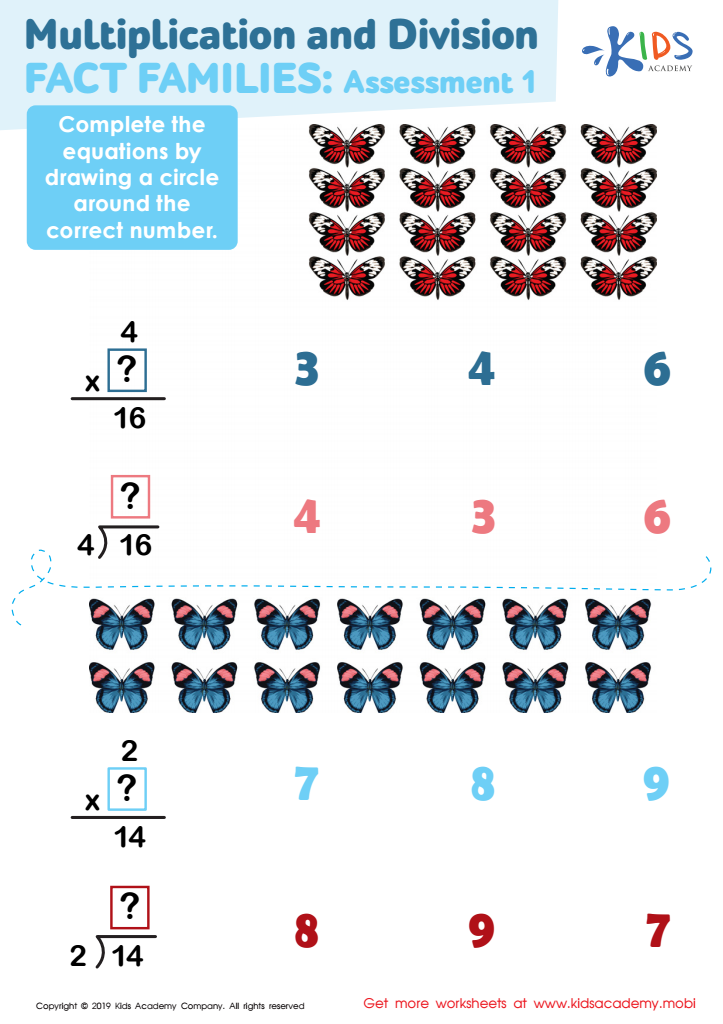
Multiplication and Division Fact Families Assessment 1 Worksheet








Normal Arrays for Ages 7-8 are incredibly useful tools in the realm of early childhood education, especially when it comes to mastering the fundamentals of mathematics. For children aged 7 to 8, normal worksheets on arrays serve as a bridge between concrete understanding and abstract mathematical concepts. These worksheets are meticulously designed to introduce young learners to the concept of arrays in a manner that is both engaging and age-appropriate.
The use of normal arrays helps children visualize multiplication and division in a straightforward way. For instance, arranging objects in rows and columns enables students to see the relationship between numbers, fostering a deeper understanding of multiplication as repeated addition and division as the process of distribution. This visual representation is key at ages 7-8, a stage when children are developing their ability to grasp more complex mathematical operations.
Moreover, normal arrays for Ages 7-8 encourage the development of critical thinking and problem-solving skills. Through the structured practice these worksheets offer, students learn to identify patterns, make predictions, and logically reason through problems. This not only enhances their mathematical abilities but also contributes to their overall cognitive development.
In summary, normal worksheets on arrays are a fundamental resource in the educational toolkit for children aged 7 to 8. They not only make learning math more accessible and less intimidating but also lay a solid foundation for future mathematical learning and reasoning skills.








