Filters

12 filtered results

Clear all filters
Favorites
With answer key
Interactive

12 filtered results

Difficulty Level

Grade


Answer Keys for Normal Plants Worksheets for Grade 1

Discover our collection of Normal Difficulty Useful Plants Worksheets designed specifically for Grade 1 students! These engaging and educational worksheets help young learners explore the fascinating world of plants, enhancing their understanding of plant life, growth, and functions. Each worksheet comes with answer keys to support teachers and parents in guiding students through the activities effectively. Our resources encourage creativity and critical thinking while making science enjoyable. Perfect for classroom use or at-home learning, these worksheets are tailored to help first graders develop a strong foundation in science. Download now and inspire your child's curiosity about the natural world around them!

Check out this FREE Grade 1 Trial Lesson on Plants!

Plant Structures and their Functions

Favorites
With answer key
Interactive
  • Grade 1
  • With answer key
  • Plants
  • Normal
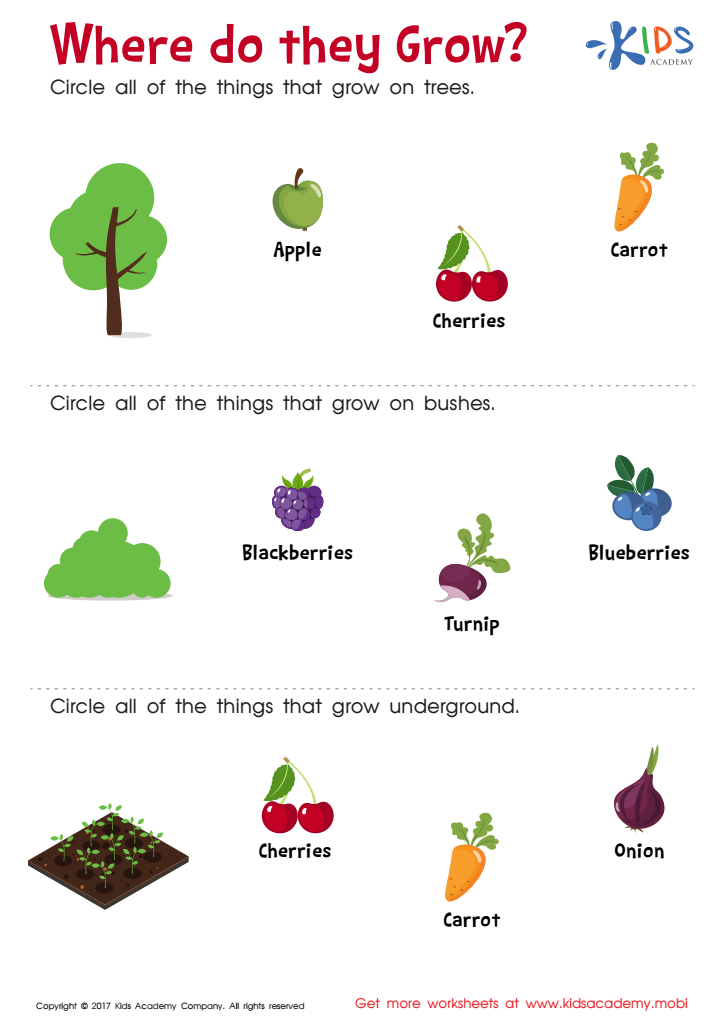
Where Do They Grow
Where Do They Grow

Where Do They Grow Worksheet

With this worksheet, your child can learn about apples, cherries, and blueberries and gain important science skills.
Where Do They Grow Worksheet
Worksheet
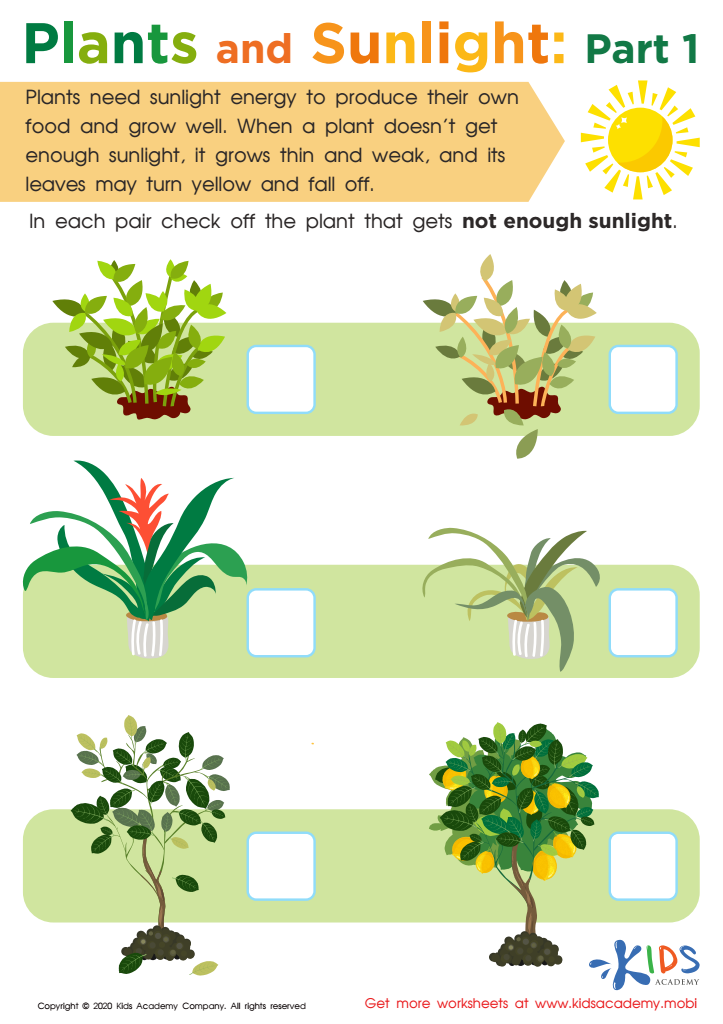
Plants and Sunlight: Part 1 Worksheet

Plants and Sunlight: Part 1 Worksheet

Plants need the sun to grow big and strong, just as much as they need water. Without sunlight, plants can’t grow or flower. Use this worksheet to teach your child the importance of sun for plants. Have them read the passage and analyze the pictures to determine which plants are struggling due to lack of sunlight.
Plants and Sunlight: Part 1 Worksheet
Worksheet
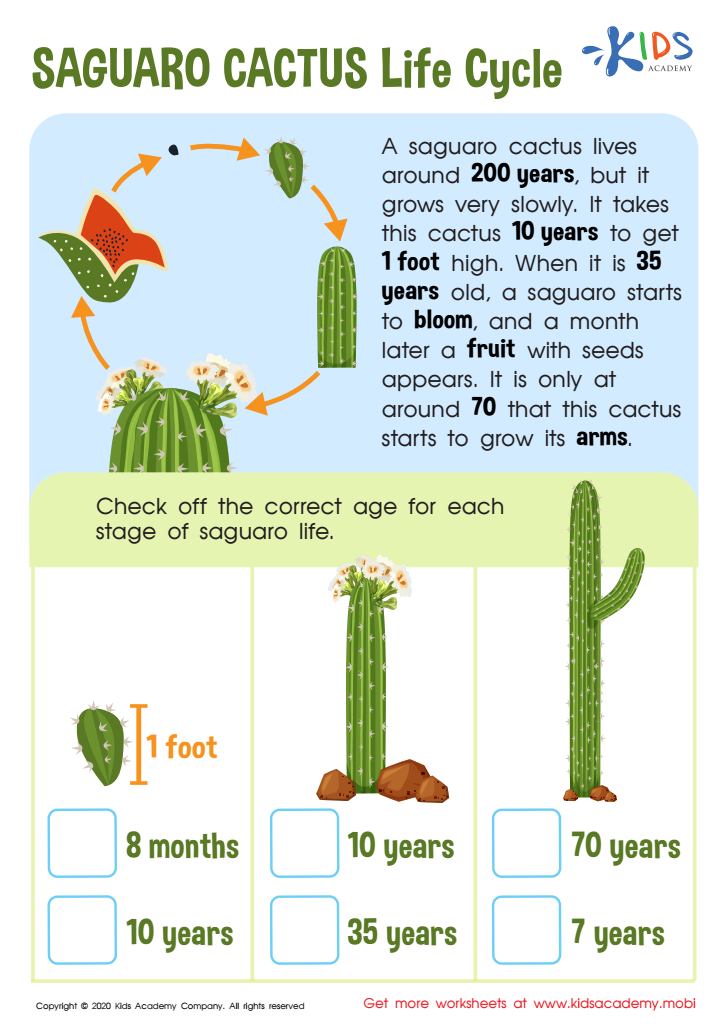
Saguaro Cactus Life Cycle Worksheet

Saguaro Cactus Life Cycle Worksheet

Teach your child about the saguaro cactus, which takes 35 years to bloom and can live up to twice the lifespan of a human! Print this free PDF worksheet to engage learners with an interesting passage. Check off the correct answers to reflect their learning!
Saguaro Cactus Life Cycle Worksheet
Worksheet
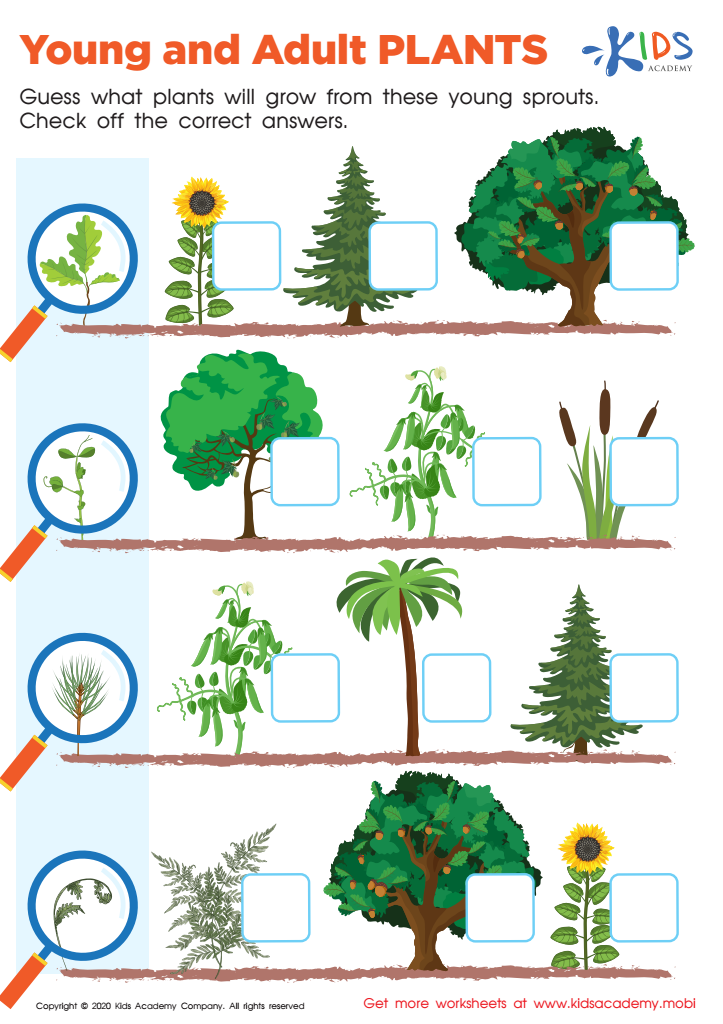
Young and Adult Plants Worksheet

Young and Adult Plants Worksheet

Examine the sprouts, then compare the leaves of the nearby trees. Check the box next to the tree that looks similar to the sprout to complete the worksheet. Problem-solving and analysis skills will be put to the test! 80 words.
Young and Adult Plants Worksheet
Worksheet
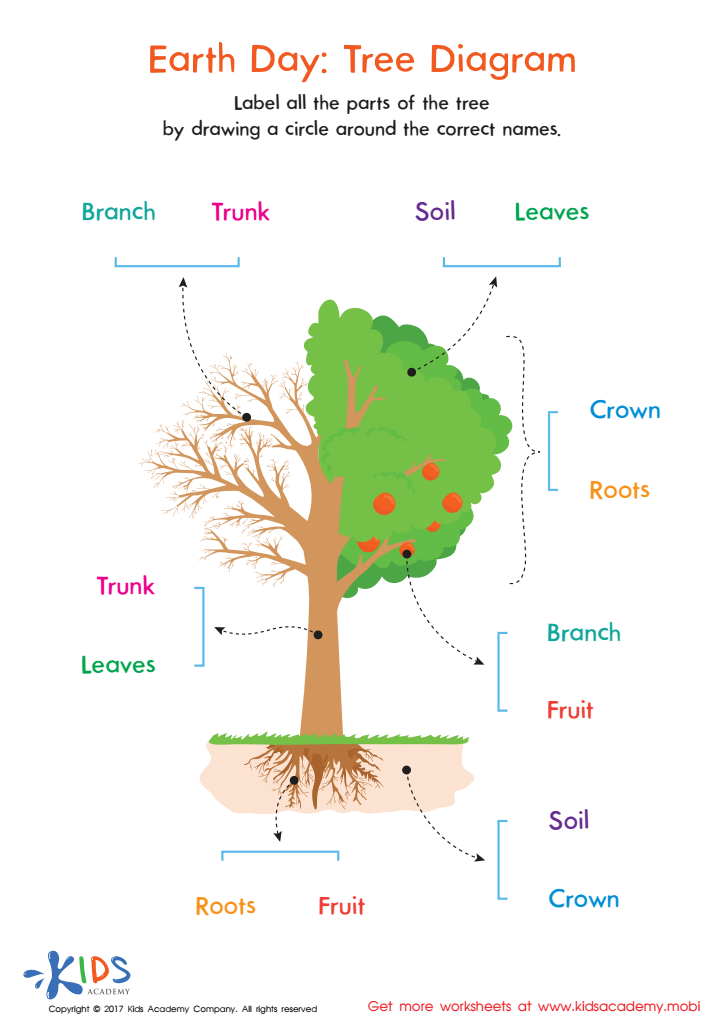
Parts of a Tree Worksheet

Earth Day: Tree Diagram Worksheet
Teaching our kids about environmental science is essential. Get your child excited about plants and nature with our colorful parts of a tree worksheet! It will help them gain an understanding and appreciation of trees, plants, and the earth. Download it now and open the door to the natural world of your child's everyday!
Earth Day: Tree Diagram Worksheet
Worksheet
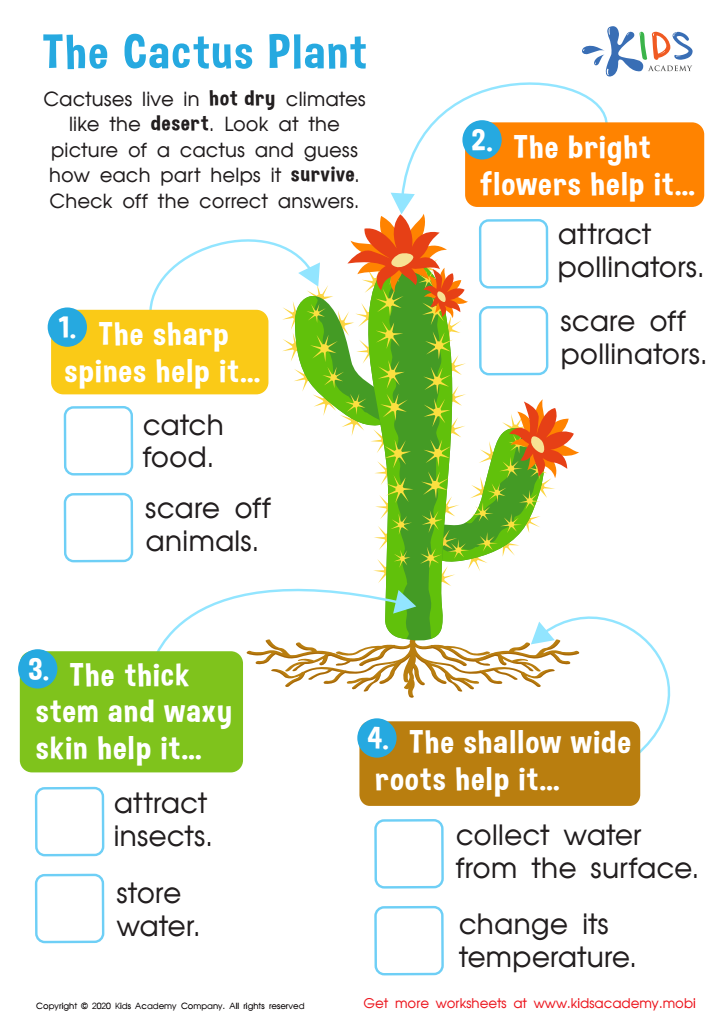
The Cactus Plant Worksheet

The Cactus Plant Worksheet

Encourage your little scientist to review cacti with this free biology worksheet. Check off the correct answer to show how the cactus survives its harsh desert environment! With sharp spikes and the ability to store water like a camel, the cactus is a remarkable plant that has adapted to its climate.
The Cactus Plant Worksheet
Worksheet
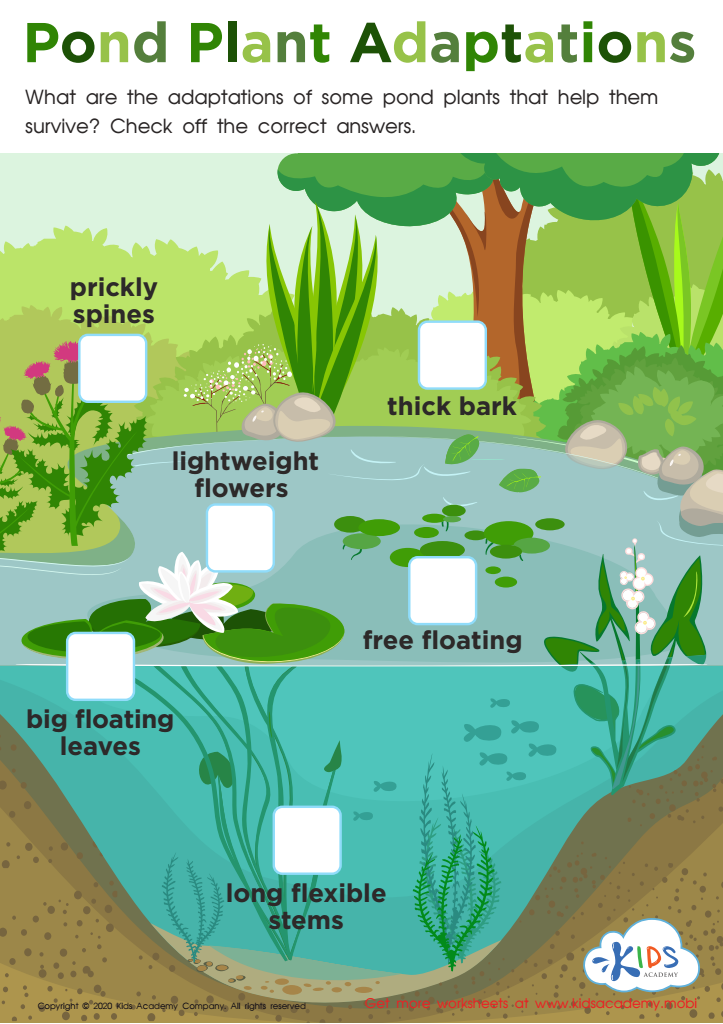
Pond Plant Adaptations

Pond Plant Adaptations

Plants can grow almost anywhere, even in water! How? Pond plants have amazing adaptations like free-floating, large leaves with long stems reaching down to the ground. Help your student learn about these adaptations by doing this fun worksheet.
Pond Plant Adaptations
Worksheet
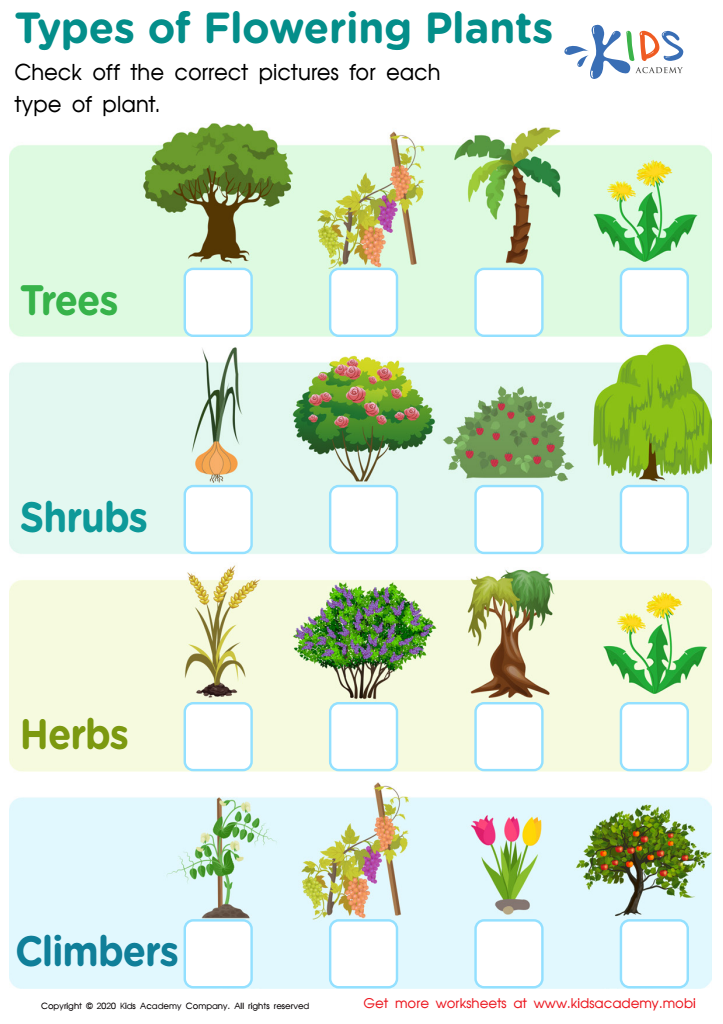
Types of Flowering Plants Worksheet

Types of Flowering Plants Worksheet

Help kids explore the variety of plants around them! Have them discover trees, shrubs, herbs, and vines with this fun science worksheet. Print it and let them match the plant pictures to their correct names. It's an exciting learning experience that'll let them check off the right images and explore the botanical world.
Types of Flowering Plants Worksheet
Worksheet
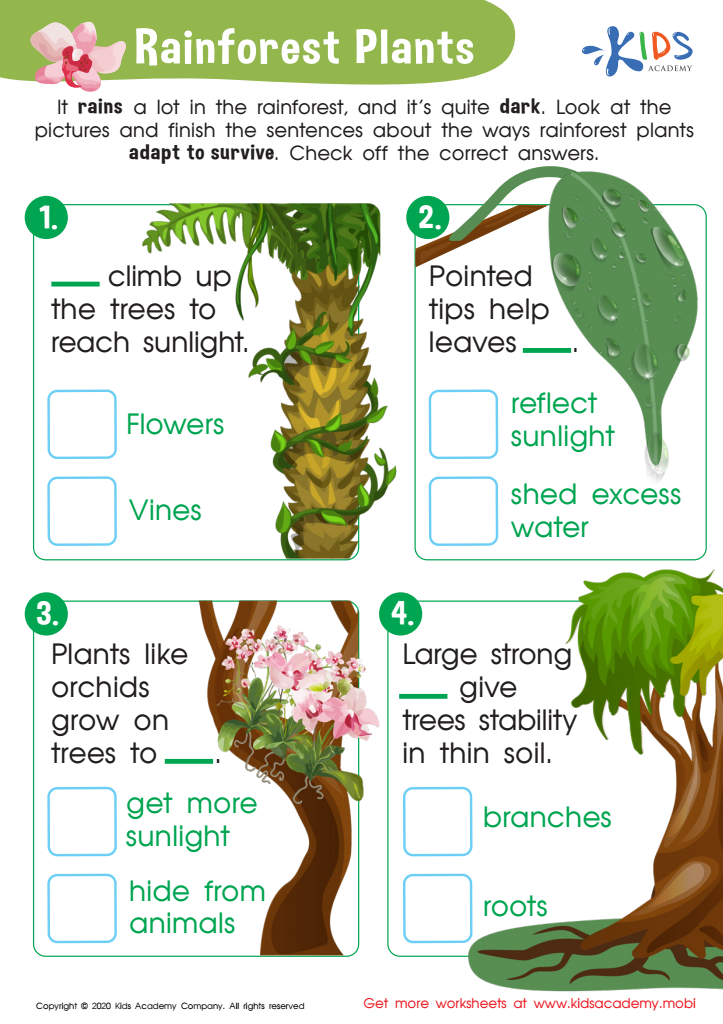
Rainforest Plants Worksheet

Rainforest Plants Worksheet

Rainforests get lots of rain, so plants need to adapt to survive! Pointy leaves help shed water, while tall trees reach more sunlight. This worksheet teaches kids how plants adapt. Explore the fascinating ways they stay alive!
Rainforest Plants Worksheet
Worksheet
Plants and Sunlight: Part 2 Worksheet

Plants and Sunlight: Part 2 Worksheet

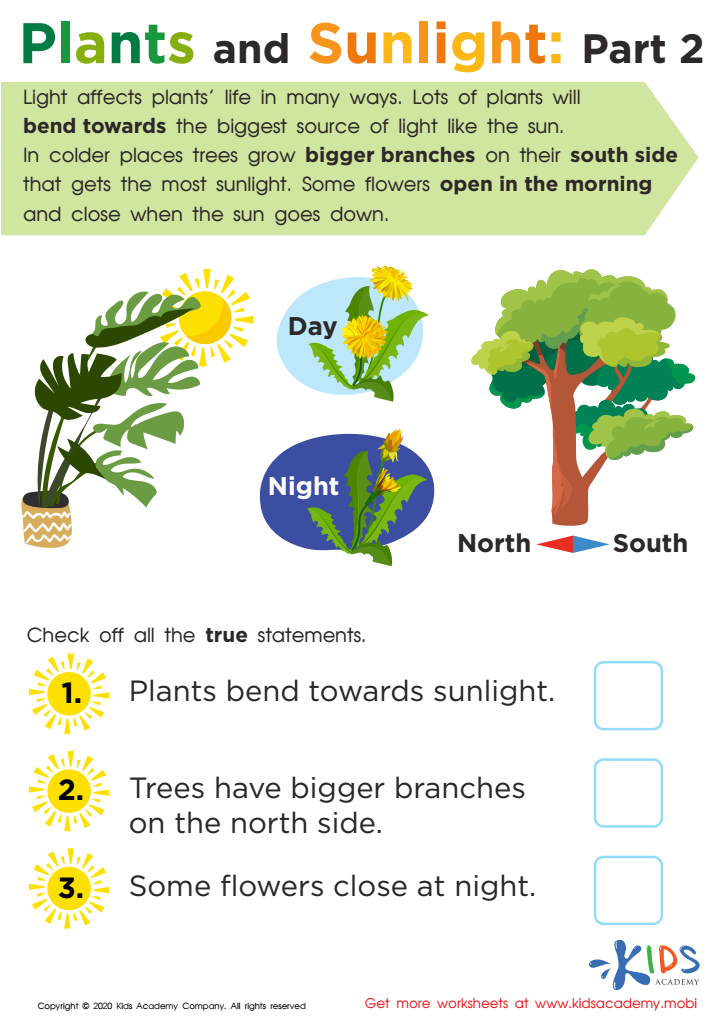
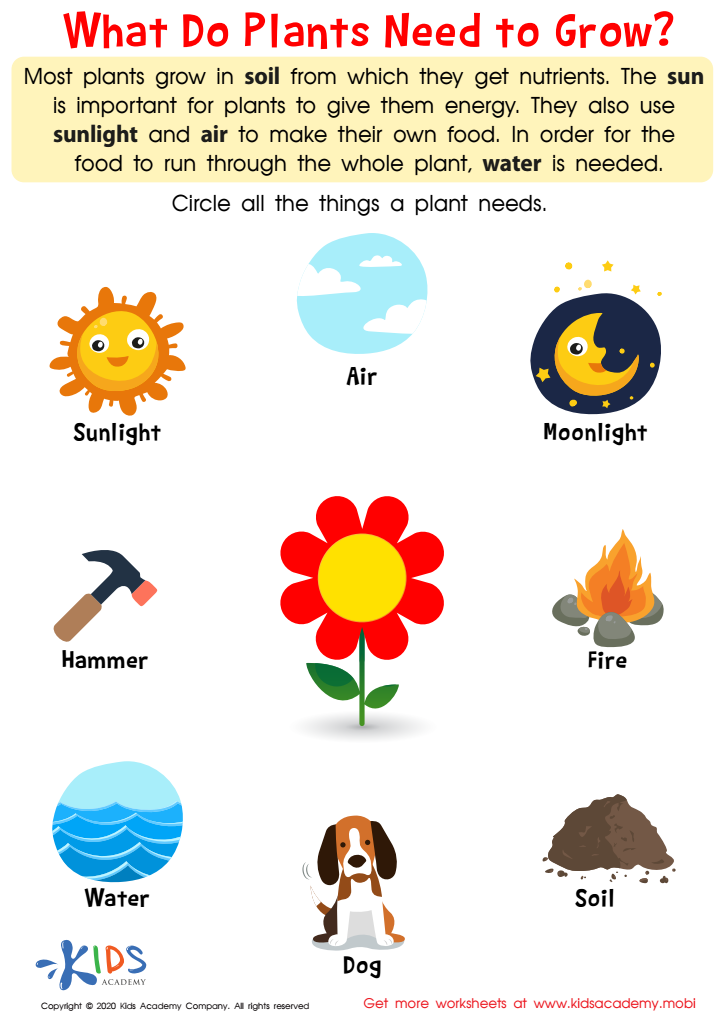
Place a houseplant near the window and observe how it bends to get more sunlight! The sun's effects on plants and trees are amazing - flowers opening and closing, trees growing stronger branches on the south side. Let your child learn with this free Kids Academy printable science worksheet!
Plants and Sunlight: Part 2 Worksheet
Worksheet
What Do Plants Need to Grow Worksheet

What Do Plants Need to Grow Worksheet

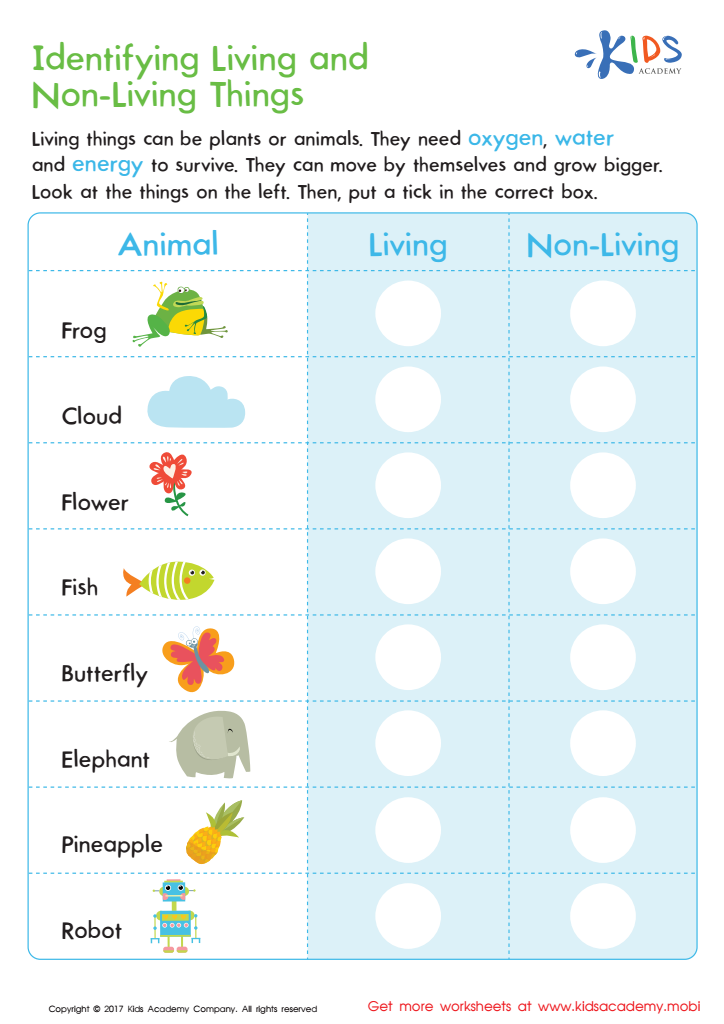
Help your child explore and discover the world of plants with this fun how do plants grow worksheet! They'll gain knowledge, sharpen problem solving skills, and build science foundations as they identify what plants need to grow. Afterward, plant a seed together and watch it sprout right before their eyes!
What Do Plants Need to Grow Worksheet
Worksheet
Living and Non-living Worksheet

Identifying Living or Non–living Worksheet

Help your child learn to sort and categorize in a new way! Teach them to classify things as living or non-living using this worksheet. It's the perfect way to build their scientific understanding, and to have some learning fun! Print this worksheet and watch them discover the world of science!
Identifying Living or Non–living Worksheet

Worksheet


Teaching grade 1 students about Normal Difficulty Useful Plants is essential for several reasons. Firstly, introducing young learners to plants fosters an appreciation for nature and promotes environmental awareness. Understanding their uses, such as for food, medicine, and decoration, encourages respect for biodiversity and the role plants play in our ecosystems.

Secondly, this knowledge enriches students' learning experiences. As they engage with topics like gardening, nutrition, and science, they develop critical thinking and literacy skills. Exploring how plants grow and the parts they play in our lives supports hands-on learning that enhances cognitive development.

Moreover, incorporating useful plants into the curriculum aligns with educational standards, making it easier for teachers to integrate practical lessons across subjects. For parents, recognizing the value of plants can stimulate enriching conversations at home, helping children make connections between their education and the world around them.

In short, engaging with Normal Difficulty Useful Plants educates grade 1 students about science, fosters curiosity, and builds a foundation for lifelong environmental stewardship. For parents and teachers, it’s a powerful way to nurture a child’s holistic development through dynamic, real-world connections.