Normal Difficulty Free Science Worksheets With Answer Keys for Grade 3 - Page 4
83 filtered results
Difficulty Level
Grade
Age
-
From - To
Subject
Activity
Standards
Favorites
With answer key
Interactive
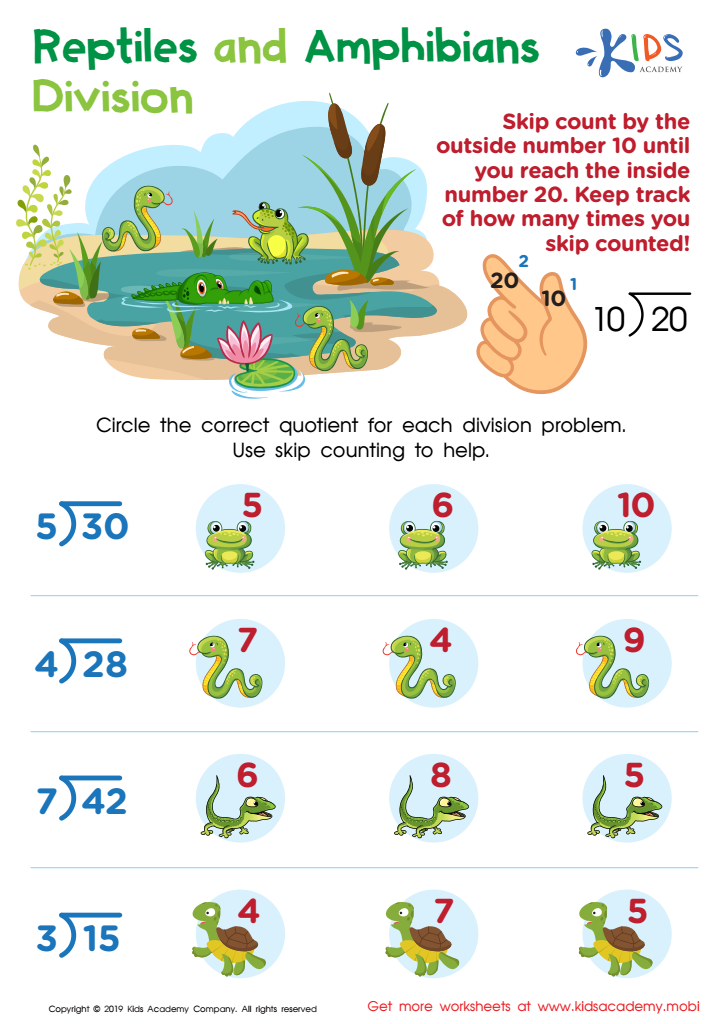
Reptile and Amphibians Division Worksheet
Skip counting is key in division. This PDF worksheet helps children practice this skill with fun reptile and amphibian friends. They must circle the right quotient among the choices given to reinforce their pattern recognition. Perfect for mastering division!
 Assign to My Students
Reptile and Amphibians Division Worksheet
Worksheet
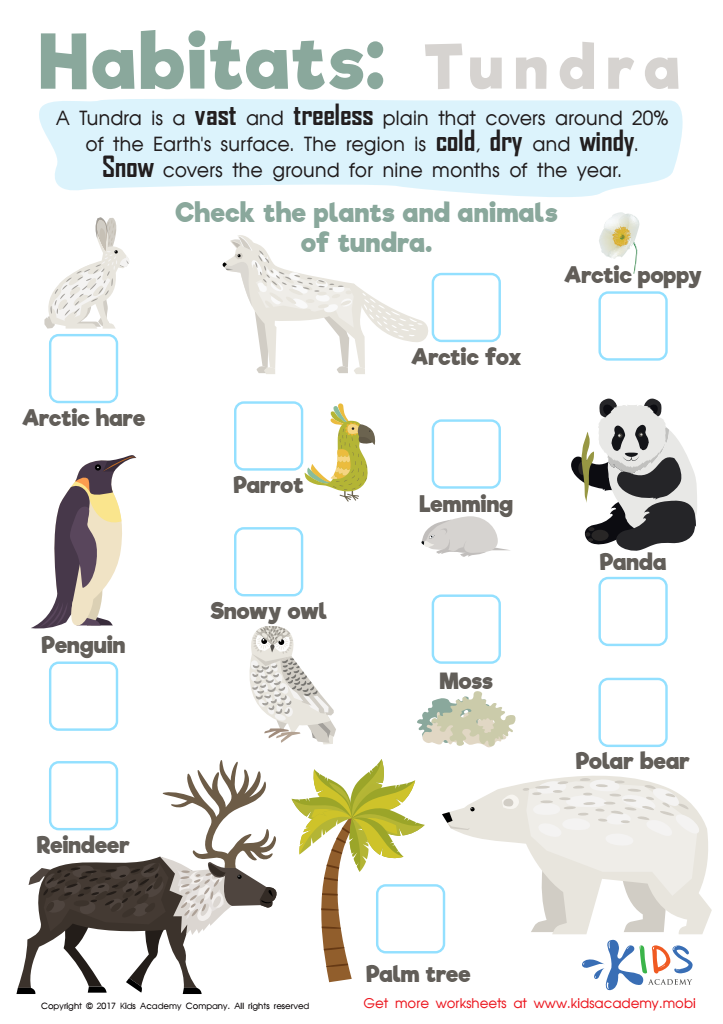
Tundra Habitats Worksheet
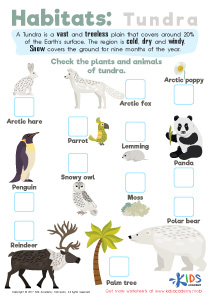
Kids can increase their scientific vocab and learn about tundra habitats with this worksheet. They'll start by reading facts about the tundra, then identify animals that live there using their knowledge. It's a great way to explore the world!
Tundra Habitats Worksheet
Worksheet
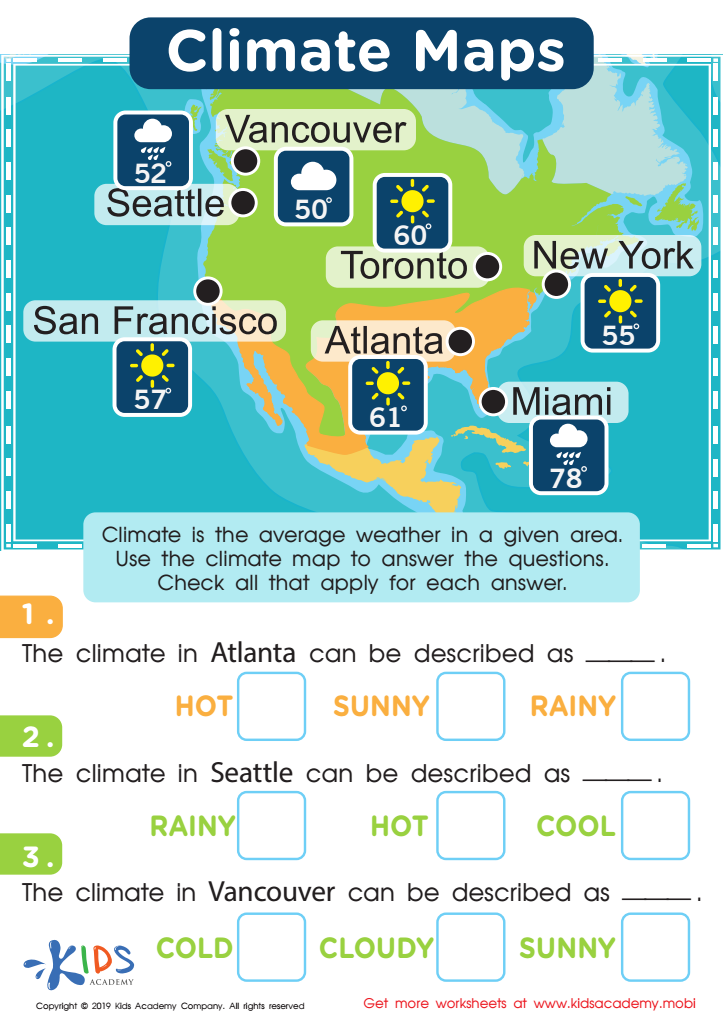
Climate Maps Worksheet
This map offers a fun way to teach kids about the varying climates across North America. They'll learn that Seattle and Miami have different temperatures, yet the same amount of rainfall. Plus other weather facts. This prepares them to answer reading comprehension questions with success!
Climate Maps Worksheet
Worksheet
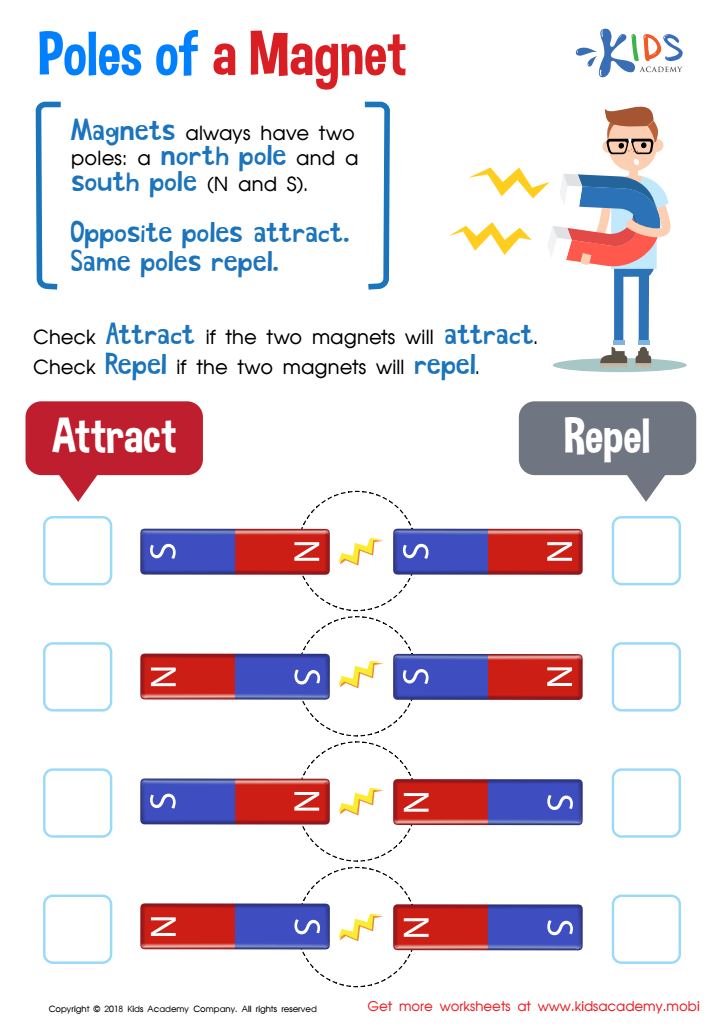
Magnet Poles Attract or Repel Worksheet
Kids can learn about magnets using this fun worksheet! They'll identify the polarities of magnets and see if they attract or repel. Pictures of magnets will help them understand the concept and get them excited about scientific exploration!
Magnet Poles Attract or Repel Worksheet
Worksheet
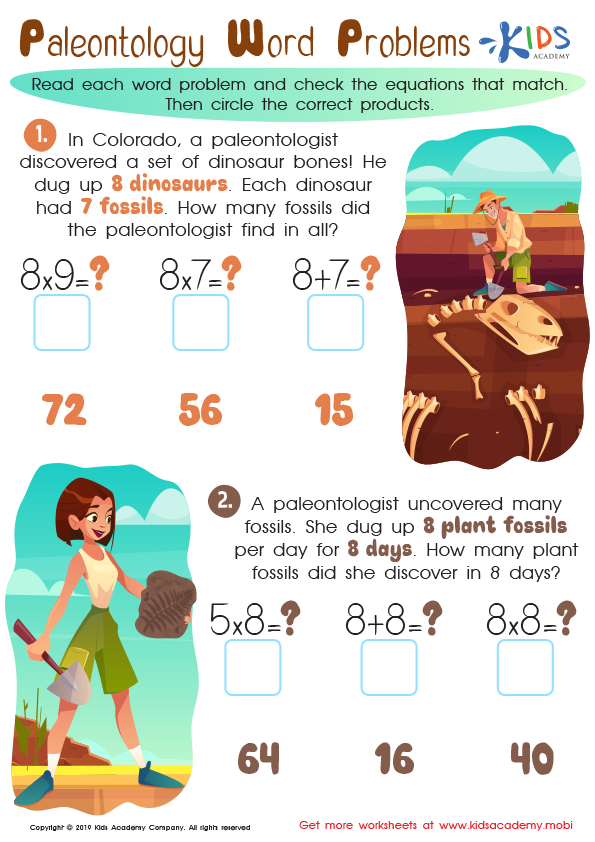
Archeology Word Problems Worksheet
Encourage your child to explore their career options! Show them an archeologist's job with this worksheet - featuring a picture of a dinosaur bone discovery. Read the accompanying text, then solve the word problems. Help your kids circle the correct answers to better understand this profession.
Archeology Word Problems Worksheet
Worksheet
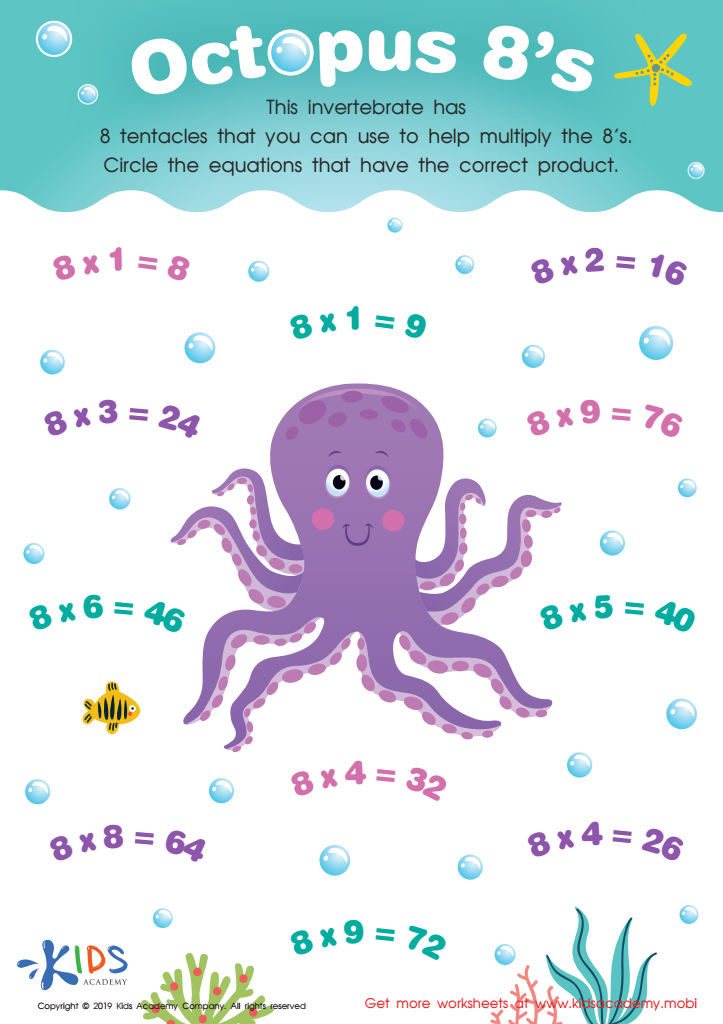
Octopus 8’s Worksheet
Can your child identify the octopus in the worksheet? It's an invertebrate with 8 tentacles. Have your child circle the equations with the correct products, and see if they can tell you some other features of the octopus too.
Octopus 8’s Worksheet
Worksheet
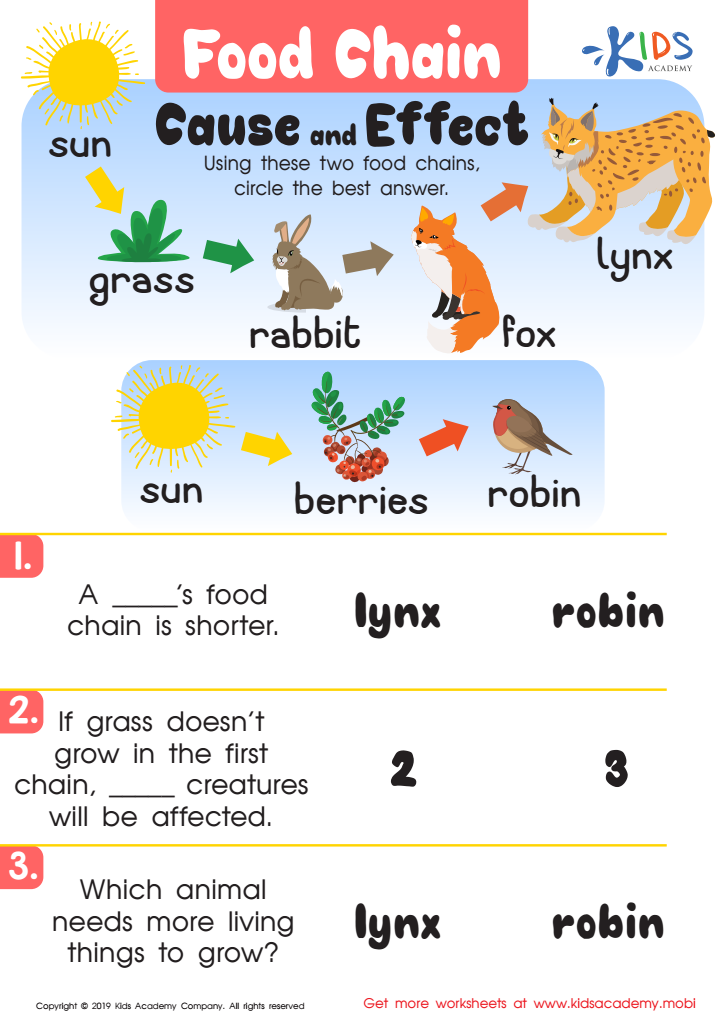
Food Chain Cause Worksheet
Help your little learner analyze ecosystems and compare food chains with this Kids Academy worksheet! Kids will compare a carnivore's and herbivore's food chain; which is longer and why? Questions at the bottom of the page will help them compare and circle the best answers. A great way to understand animal food chains!
Food Chain Cause Worksheet
Worksheet
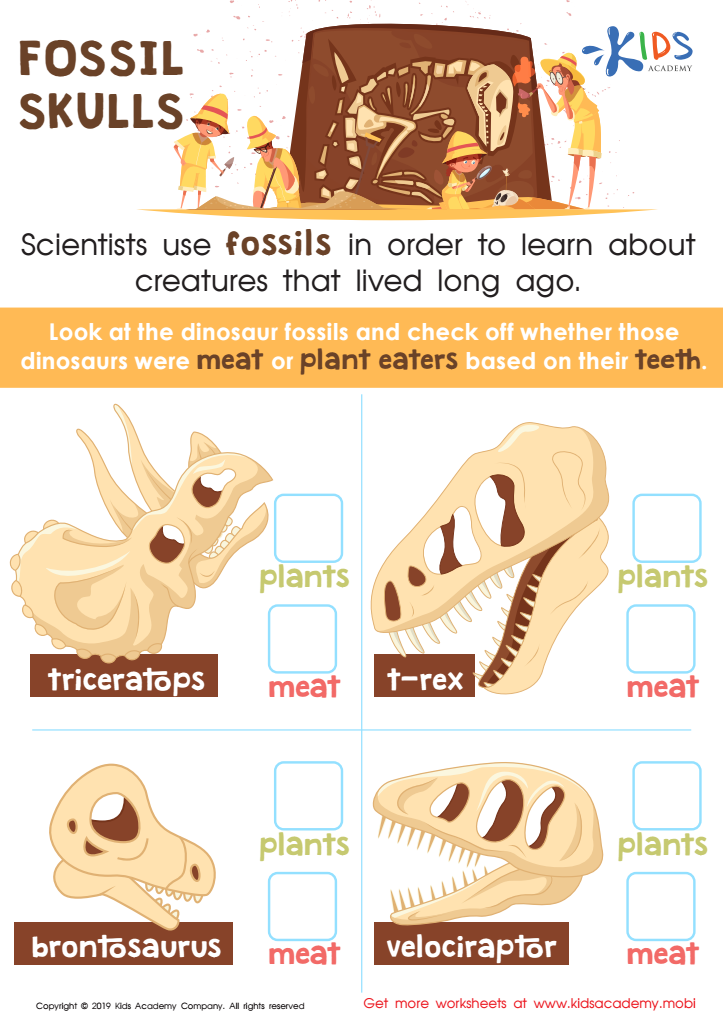
Fossil Skulls Worksheet
Your child is invited to join us on a fossil dig! With this free worksheet, they'll learn how paleontologists use fossils to discover what creatures ate long ago. Kids will examine dinosaur teeth to find out if the dinos were plant or meat eaters. It's a fun way to explore adaptation and how dinosaurs fed themselves.
Fossil Skulls Worksheet
Worksheet
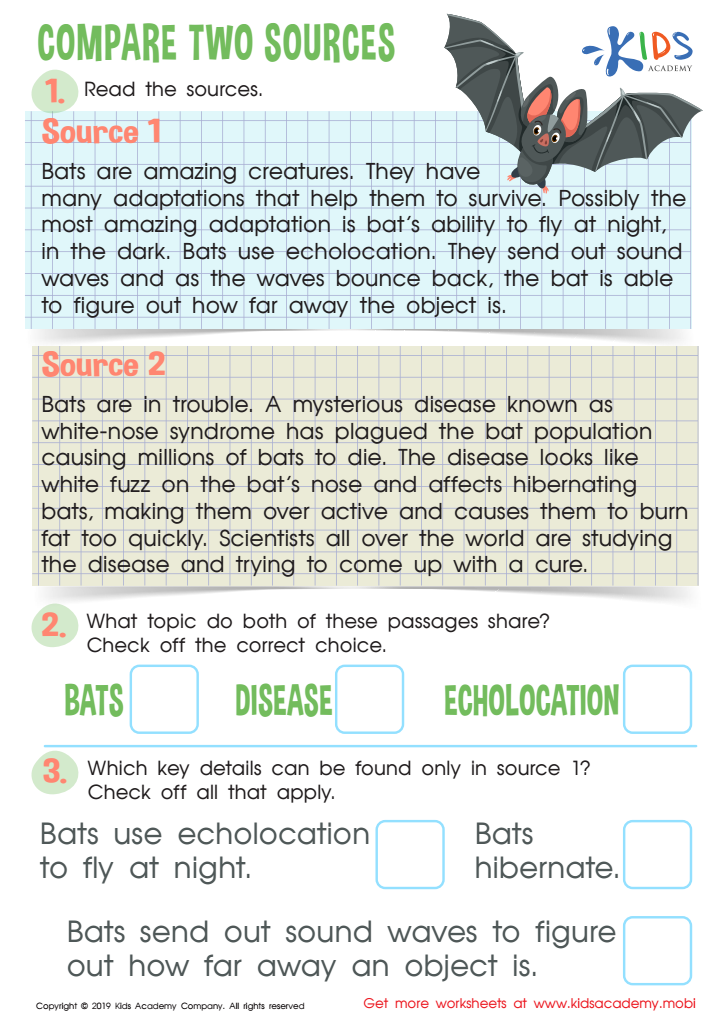
Compare Two Sources Worksheet
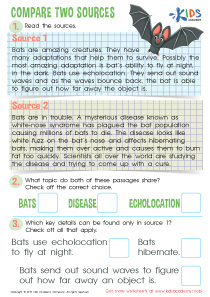
Reading exposes us to new words, spelling, and info about different topics. Kids can practice their reading skills, and learn about bats, with this worksheet. Read the two sources in the picture, then help your kids answer the questions at the bottom.
Compare Two Sources Worksheet
Worksheet
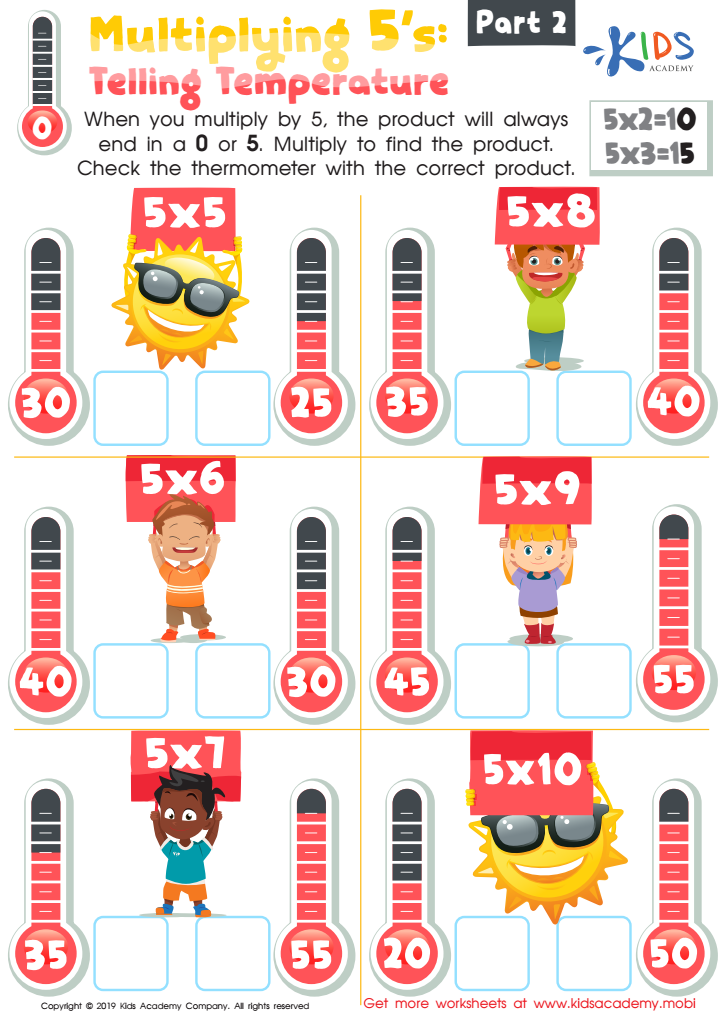
Multiplying 5’s: Telling Temperature Part 2 Worksheet
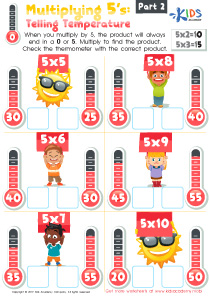
To help your child with multiplication, teach them some simple tricks. For example, when multiplying 10's the product always ends in a 0, and when multiplying by 5, the product will end in 0 or 5. Look at the problems in this worksheet and help your child find the product. Then, check the thermometer with the correct answer.
Multiplying 5’s: Telling Temperature Part 2 Worksheet
Worksheet
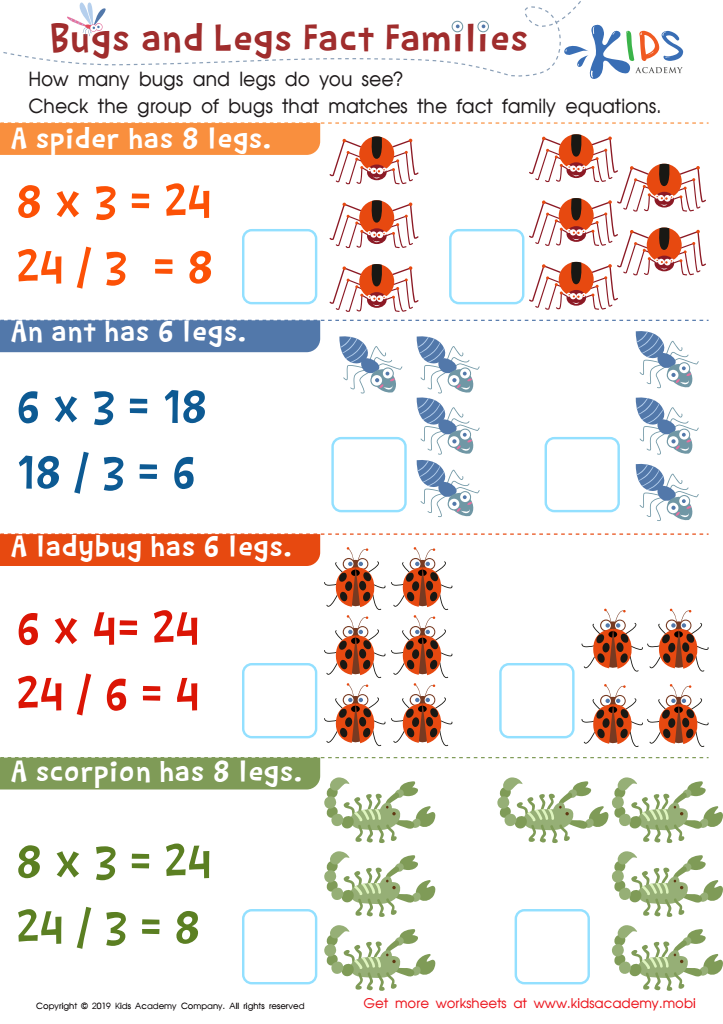
Bugs and Legs Fact Families Worksheet
This free worksheet uses bugs and insects to help young math students learn about fact families and recognize patterns in multiplication and division. It's a fun and colorful way to gain automaticity and efficiency in computation skills, without even realizing it's math!
Bugs and Legs Fact Families Worksheet
Worksheet
Join Kids Academy for Free
Who is primarily going to use this learning content?