
K.2 Individual Development and Cultural Identity worksheets With Answers for Kindergarten - Page 2
25 filtered results
Difficulty Level
Grade
Age
-
From - To
Subject
Activity
Standards
Favorites
With answer key
Interactive
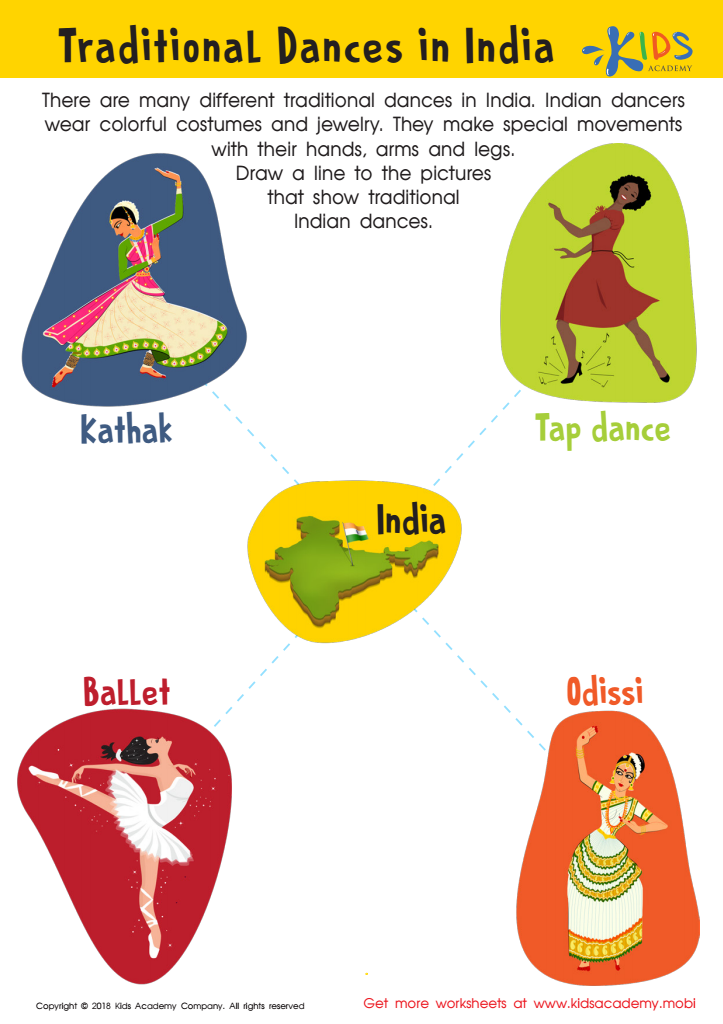
Traditional Dances in India Worksheet
Teach students to celebrate diversity! This free worksheet lets them explore Indian traditional dances, costumes and jewelry. They'll discover Kathak and Odissi, while practicing motor skills tracing the matching lines. Give them a glimpse into the global community!
 Assign to My Students
Traditional Dances in India Worksheet
Worksheet
Join Kids Academy for Free
Who is primarily going to use this learning content?




%20(1).jpg)

Parents and teachers should deeply care about K.2 Individual Development and Cultural Identity because understanding a child's growth and cultural background is vital for fostering a supportive learning environment. In kindergarten, children are exposed to new experiences and social dynamics, and developing their individual identities plays a crucial role in their overall well-being and sense of belonging.
Recognizing and celebrating a child’s cultural identity can enhance their self-esteem, helping them feel valued and understood. When children see their culture represented in the classroom, they develop a positive self-image and become more open to learning about others. This diversity enriches peer interactions, leading to a community that respects and appreciates differences.
Moreover, teachers equipped with knowledge about individual development and cultural contexts can tailor their teaching methods. They can create inclusive learning activities which reflect diverse perspectives, engaging children in ways that resonate with their backgrounds. This approach not only supports cognitive development but also nurtures social skills critical for teamwork and empathy.
Ultimately, fostering a positive environment around individual development and cultural identity lays the groundwork for lifelong learning, encouraging respect and understanding in a multicultural world. Supporting this foundation is essential for raising well-rounded children today.








