K.2c Individual Development and Cultural Identity worksheets With Answers for Kindergarten
1 filtered results
-
From - To
Explore our engaging K.2c Individual Development and Cultural Identity worksheets designed specifically for Kindergarten students. These interactive resources help young learners understand their unique identities and appreciate diverse cultures. Each worksheet includes fun activities that promote self-discovery and cultural awareness, ensuring a holistic educational experience. We've also provided answer keys to assist educators in evaluating progress and facilitating discussions. Perfect for classroom use or at-home learning, these worksheets offer a fantastic way for children to explore personal and cultural identities in a supportive environment. Boost your students' understanding of diversity and self-awareness with our thoughtfully crafted materials!
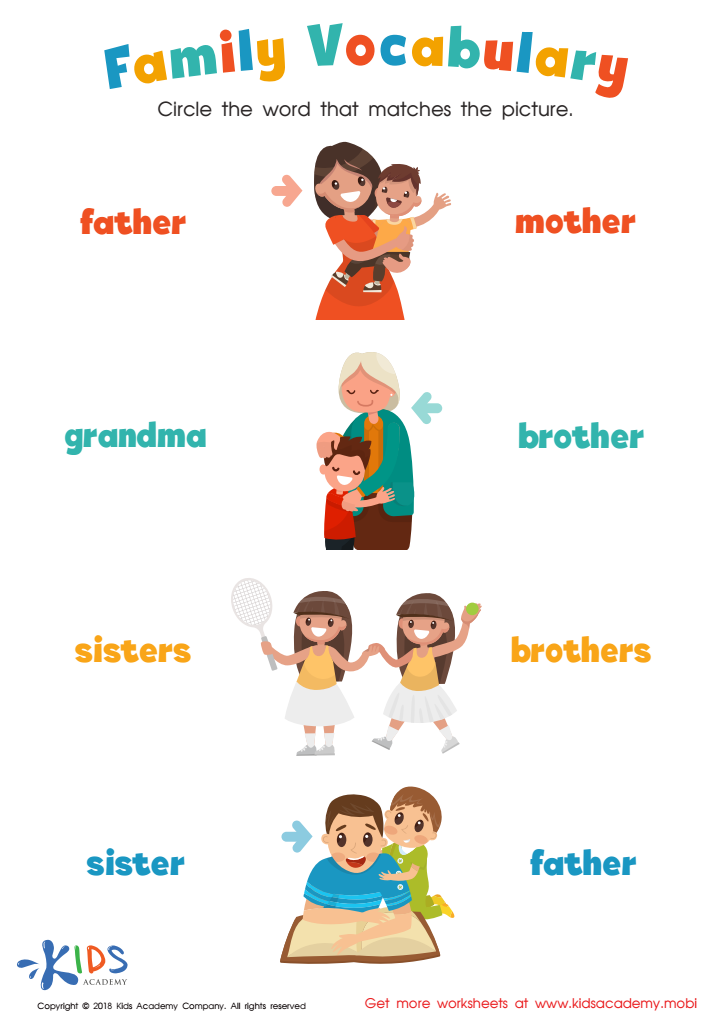
Family Vocabulary Worksheet
 Assign to My Students






K.2c Individual Development and Cultural Identity is essential for both parents and teachers because it fosters a child's sense of self and belonging. At this stage, children begin to explore their own identities, understanding who they are in relation to their family, community, and the broader world. Recognizing and valuing each child's cultural background enriches the learning environment, promoting inclusivity and respect.
Parents play a crucial role by providing their children with a strong foundation of cultural knowledge, values, and traditions. When parents share stories, customs, and experiences from their own backgrounds, they help children form a positive self-image and appreciate their uniqueness.
Teachers, on the other hand, are instrumental in creating an educational atmosphere that celebrates diversity. By incorporating various cultural elements into the curriculum—such as books, music, and art from different cultures—teachers can help children not only learn about the world but also respect and appreciate it. This inclusivity encourages empathy and understanding among peers, laying the groundwork for positive social interactions.
Ultimately, K.2c fosters open dialogue about identity and culture, preparing children for a diverse world where they can actively engage and contribute positively to society. Celebrating individual development and cultural identity helps children feel valued, understood, and empowered.








