Reading: Literature worksheets for Grade 3 - Page 2
25 filtered results
-
From - To
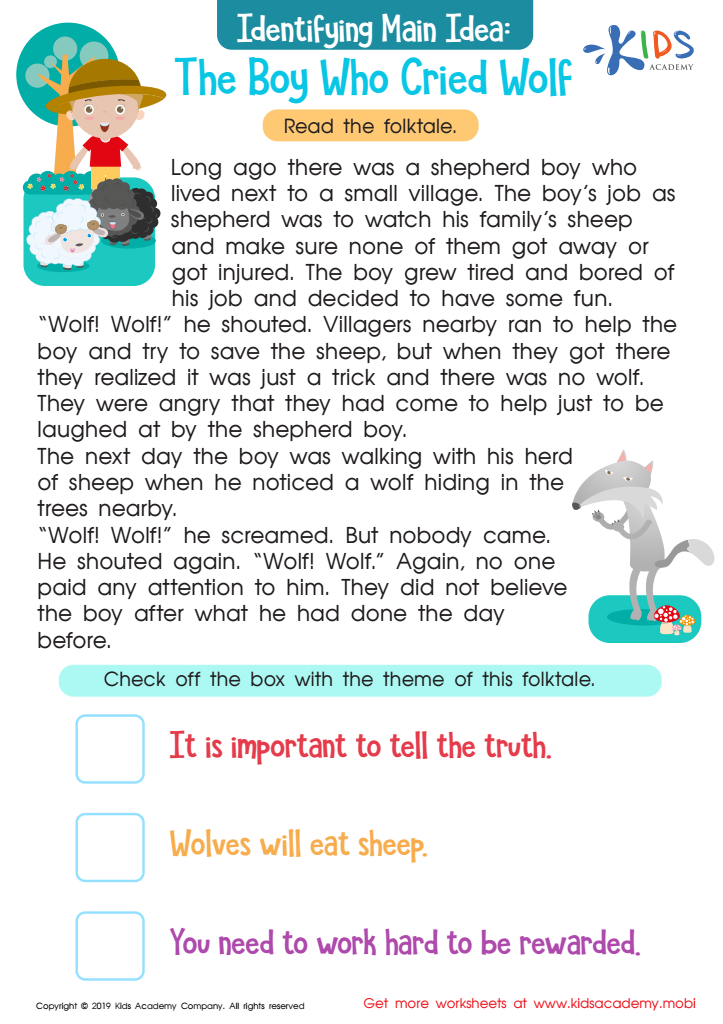
The Boy Who Cried Wolf Part 2 Worksheet
 Assign to My Students







Parents and teachers should prioritize Reading: Literature for Grade 3 students as it plays a pivotal role in a child's overall development. At this stage, children are transitioning from learning to read to reading to learn, making literature a crucial tool for cognitive growth. Engaging with diverse stories fosters imagination and creativity, allowing children to explore various cultures, experiences, and perspectives.
Moreover, reading literature enhances vocabulary and language skills, facilitating better comprehension and communication. As children dissect plots, identify themes, and relate to characters, they also develop critical thinking skills essential for academic success. These discussions can help refine their analytical abilities and comprehension.
Additionally, literature serves as a foundation for emotional intelligence. As students navigate complex characters and situations, they learn empathy, recognizing and understanding the emotions of others. By engaging in narrative discussions, children can also reflect on their own feelings and experiences, paving the way for personal growth.
Furthermore, fostering a love for reading early stimulates lifelong learning habits. In an increasingly interconnected world, strong reading skills are vital for future opportunities in higher education and beyond. Therefore, nurturing a vibrant literary environment for Grade 3 learners is essential for their academic, social, and emotional development.