Strategic thinking Chess Worksheets
3 filtered results
Difficulty Level
Grade
Age
-
From - To
Subject
Activity
Standards
Unlock your child's potential with our Strategic Thinking Chess Worksheets from Kids Academy! Designed to enhance critical thinking and problem-solving skills, these worksheets offer engaging activities that help young learners master strategic moves on the chessboard. Each worksheet introduces essential chess concepts and tactics, guiding children through fun, educational exercises that build confidence and analytical prowess. Perfect for beginners and advanced players alike, these worksheets are an excellent resource for both classroom settings and home practice. Empower your child to think ahead and make smart decisions with our expertly crafted chess worksheets.
Favorites
With answer key
Interactive
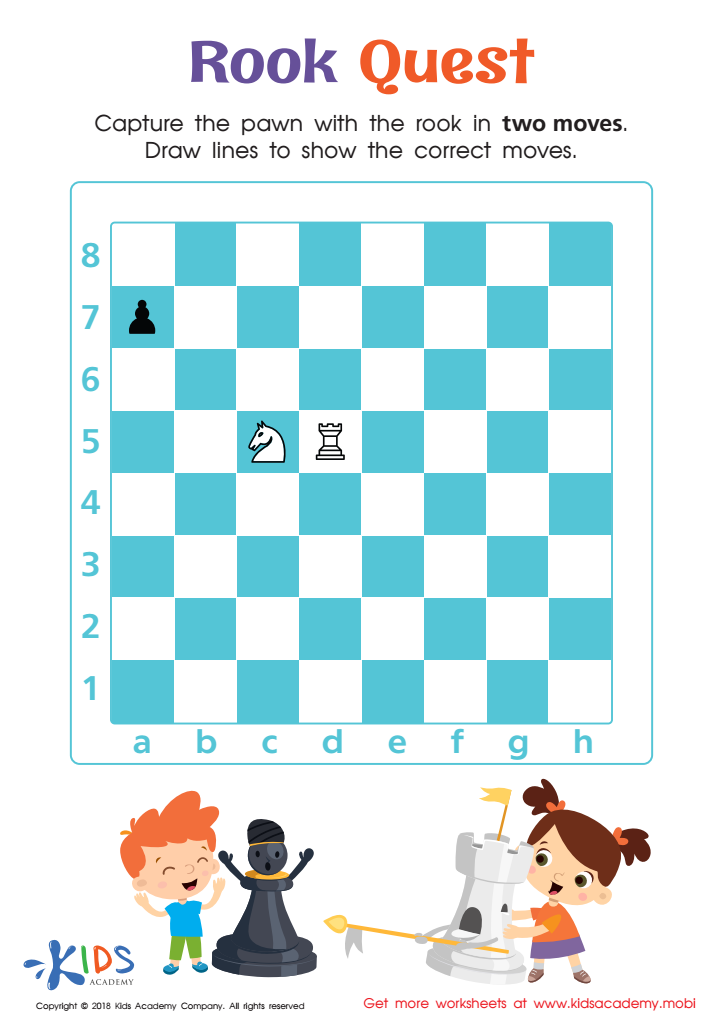
Rook Quest Worksheet
Is your child a chess whiz? Check their progress with this rook quest: get the enemy's pawn piece in just two moves. Have them draw the lines for the moves they'll make. See how quickly they master it!
 Assign to My Students
Rook Quest Worksheet
Worksheet
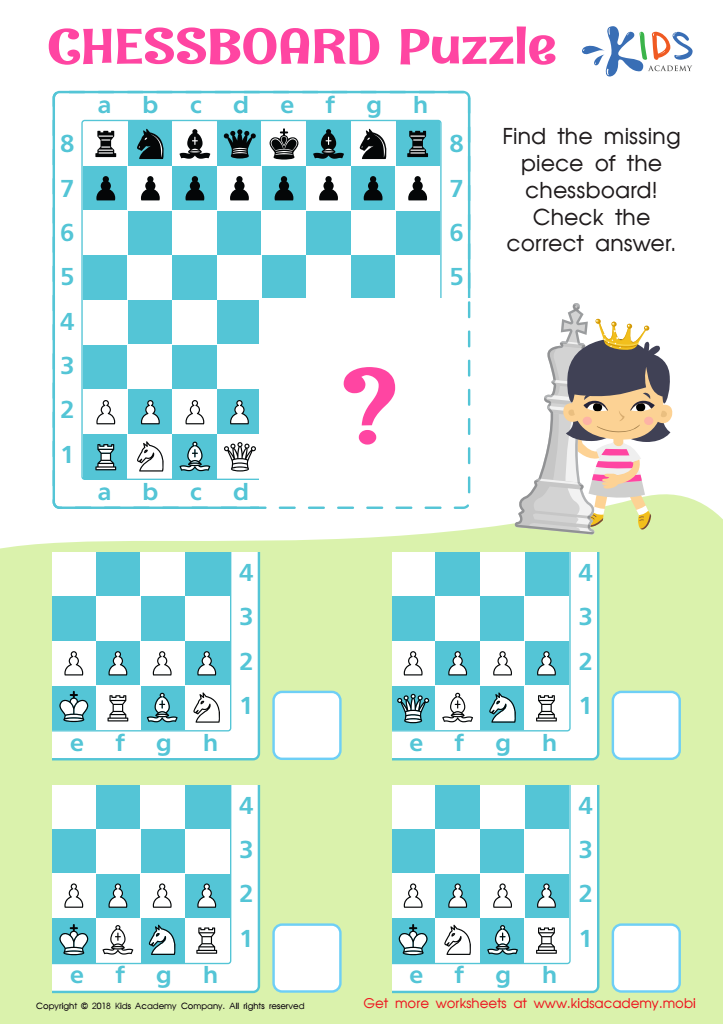
Chessboard Puzzle Worksheet
Test your child's chess prowess with this simple worksheet. They must find the missing pieces to complete the white side of an empty chessboard. The black pieces are already arranged properly on the board. Correct answers are provided so you can see how they did!
Chessboard Puzzle Worksheet
Worksheet
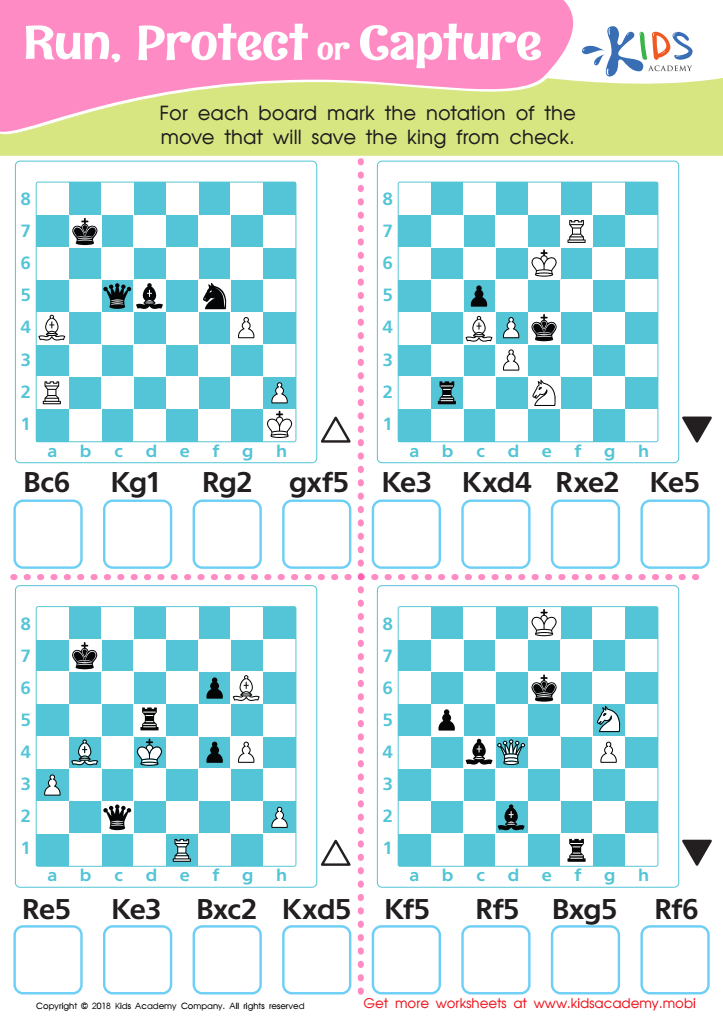
Run, Protect or Capture Worksheet
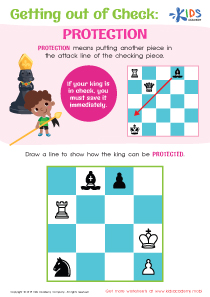
When kids play chess, they're not only striving to win - they're sharpening their critical thinking and problem-solving prowess. With this free PDF worksheet, they learn how to protect their king from check, whether it's running away, shielding it or capturing the checking piece. Sample boards offer them the chance to practice.
Run, Protect or Capture Worksheet
Worksheet
Join Kids Academy for Free
Who is primarily going to use this learning content?






Strategic thinking in chess is a foundational skill that represents much more than just the ability to play a game; it nurtures cognitive development and life skills essential for both children and adults. Through playing chess, individuals learn critical thinking and problem-solving capabilities. Every move in chess requires analysis, prediction of outcomes, and thoughtful decision-making, which involves forward planning and adhering to a strategy under changing circumstances. This practice strengthens the mind's ability to tackle complex problems systematically.
For children, this means better performance in academic disciplines. Studies have indicated that regular engagement with chess can improve memory, enhance concentration, and boost IQ scores. Moreover, the game teaches patience, discipline, and the value of hard work, as players refine their strategies through practice and learning from mistakes.
Teachers and parents should also recognize the social benefits of advocating for chess. It encourages healthy competition and resilience—children learn to graciously accept losses and wins, fostering emotional intelligence. Additionally, the game’s universal language bridges cultural and linguistic barriers, promoting inclusiveness and learning in diverse environments.
Integrating chess into educational settings or family activities thus not only creates smart, strategic thinkers but also well-rounded individuals equipped with essential life skills, contributing to their holistic development.