Easy Lowercase/Small Letters Worksheets for Ages 3-5
3 filtered results
Difficulty Level
Grade
Age
-
From - To
Subject
Activity
Standards
Discover a delightful collection of easy lowercase/small letters worksheets designed specifically for children ages 3-5! These engaging, printable activities cater to early literacy development and help young learners master their ABCs in a fun and interactive way. Featuring vibrant illustrations and simple exercises, our worksheets encourage recognition and writing of lowercase letters, making learning enjoyable. Perfect for preschool and kindergarten settings, each worksheet promotes fine motor skills and letter familiarity. Empower your little ones with confidence as they explore the world of letters through our carefully crafted resources. Start their literacy journey today with our easy-to-use worksheets!
Favorites
With answer key
Interactive
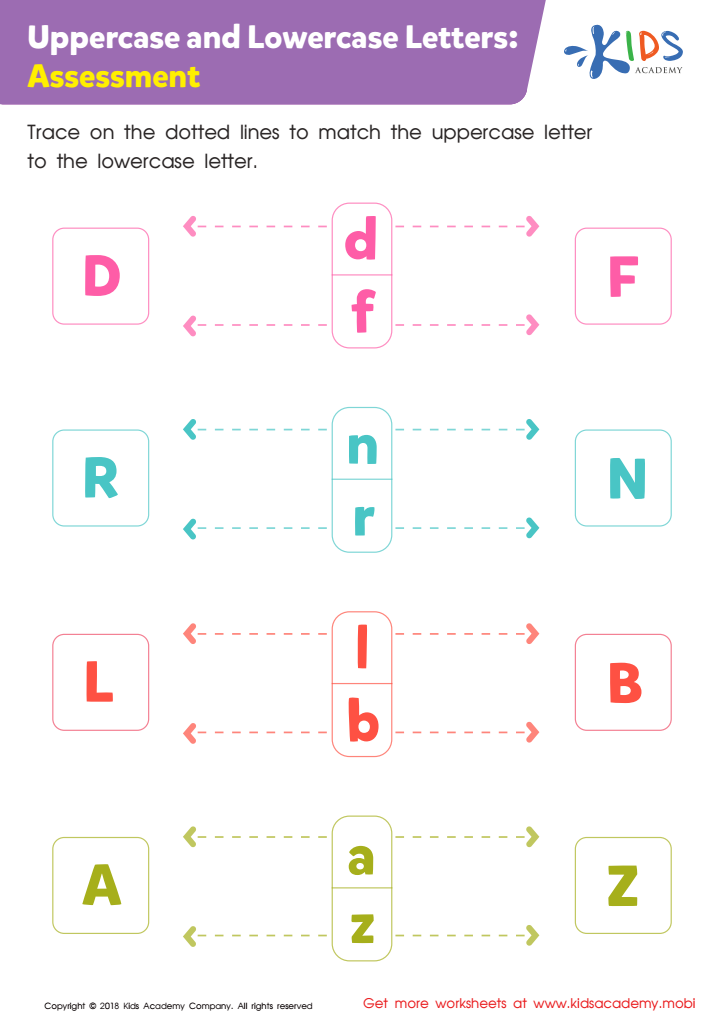
Uppercase and Lowercase Letters: Assessment Worksheet
Assess your child's knowledge of upper- and lowercase letters with this worksheet. Have them trace the dotted lines to match the lowercase letters with their uppercase counterparts. This is a great way to gauge their progress and identify any areas of difficulty. Get a better understanding of your child's capabilities and encourage their development!
 Assign to My Students
Uppercase and Lowercase Letters: Assessment Worksheet
Worksheet
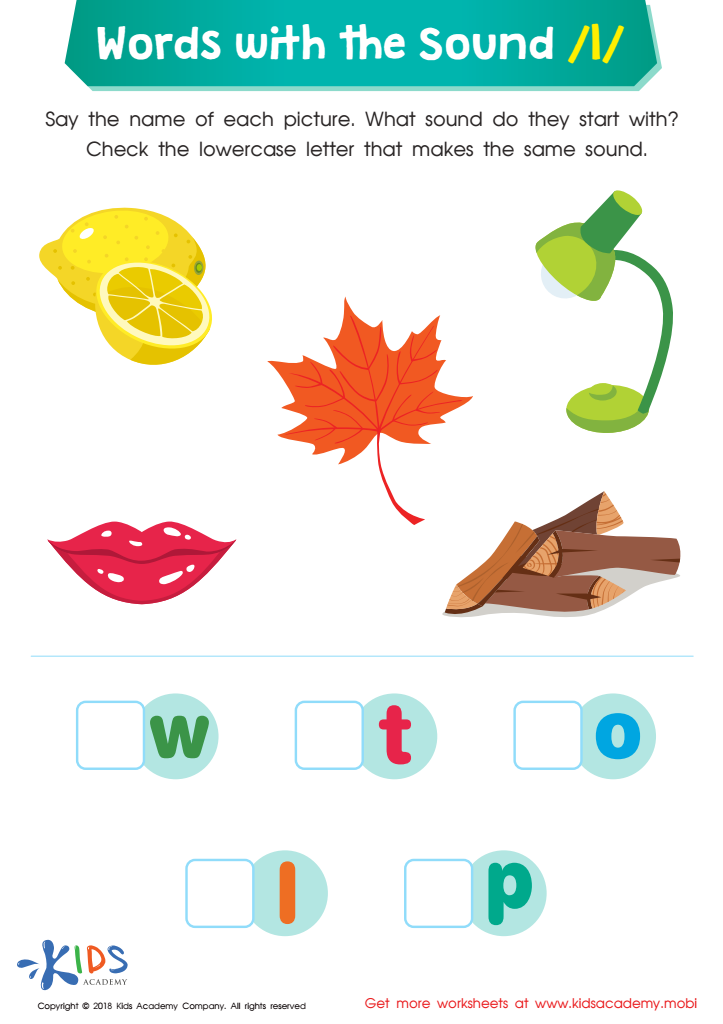
Words with Sound L Reading Worksheet
This PDF worksheet is great for helping emerging readers isolate initial sounds. Kids name familiar pictures, then identify the correct letter for the "l" sound. This worksheet strengthens fine motor skills, plus builds visual discernment. It's fun and colorful too!
Words with Sound L Reading Worksheet
Worksheet
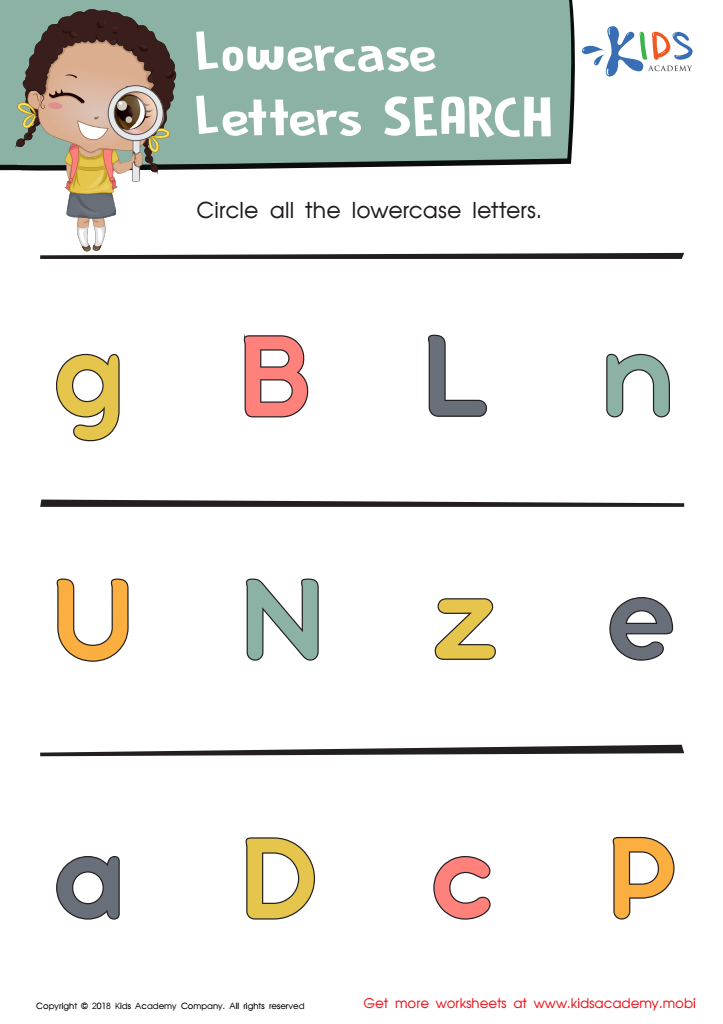
Lowercase Letters Search: Assessment Worksheet
Circle all the lowercase letters in this worksheet. Identify them among a mix of uppercase and lowercase letters. Your child will have fun with this exercise thanks to its bright primary colors. Enjoyment and learning go hand-in-hand!
Lowercase Letters Search: Assessment Worksheet
Worksheet
Join Kids Academy for Free
Who is primarily going to use this learning content?


Parents and teachers should prioritize teaching Easy Lowercase/Small Letters to children aged 3-5 because this foundational skill is crucial for literacy development. At this early stage, children are beginning to develop language and communication skills, and understanding lowercase letters offers them a gateway to reading and writing. Most text appears in lowercase, making it essential for young learners to recognize these letters quickly and effortlessly.
Moreover, mastering lowercase letters enhances phonemic awareness, as children learn to associate sounds with specific letters. This understanding is instrumental in recognizing sight words, a critical component in developing reading fluency. By becoming familiar with lowercase letters, children also do better in early writing activities, allowing them to express their thoughts and creativity more effectively.
Additionally, engaging with lowercase letters in playful and interactive ways makes learning enjoyable, fostering a positive attitude toward reading. This builds a strong foundation for lifelong literacy skills, helping children succeed academically and socially. Therefore, the early introduction and practice of lowercase letters can significantly shape a child's educational journey and increase their confidence in language use, making it vital for both parents and teachers to focus on this essential aspect of learning.